Montevideo calling? Why selling OPVs to Uruguay is a great call for the Royal Navy
In one of my final duties as Director Navy Acquisition, I was tasked with visiting Rio de Janeiro to represent the First Sea Lord at a large defence expo. It was a tough gig.
I had meetings with senior officers from the Brazilian navy, who expressed delight at the service that they were receiving from both BAE Systems and Babcock, who support the Amazonas Class corvettes and NAM Atlantico (previously HMS Ocean), respectively. Such arrangements are good for both British business and our diplomatic influence in the region.
This week has seen reports emerging of a proposal for the Uruguayan navy to purchase the Royal Navy's three Batch 1 River Class offshore patrol vessels (OPVs).
This potential sale is a fantastic opportunity to similarly support the Uruguayans and build both UK influence and exports in that country too. The opportunity should be welcomed and pursued with alacrity and vigour.
But naval ships going out of service without an apparent replacement always generate unfavourable headlines and, on the face of it, are unwelcome news.
Digging deeper into the decommissions
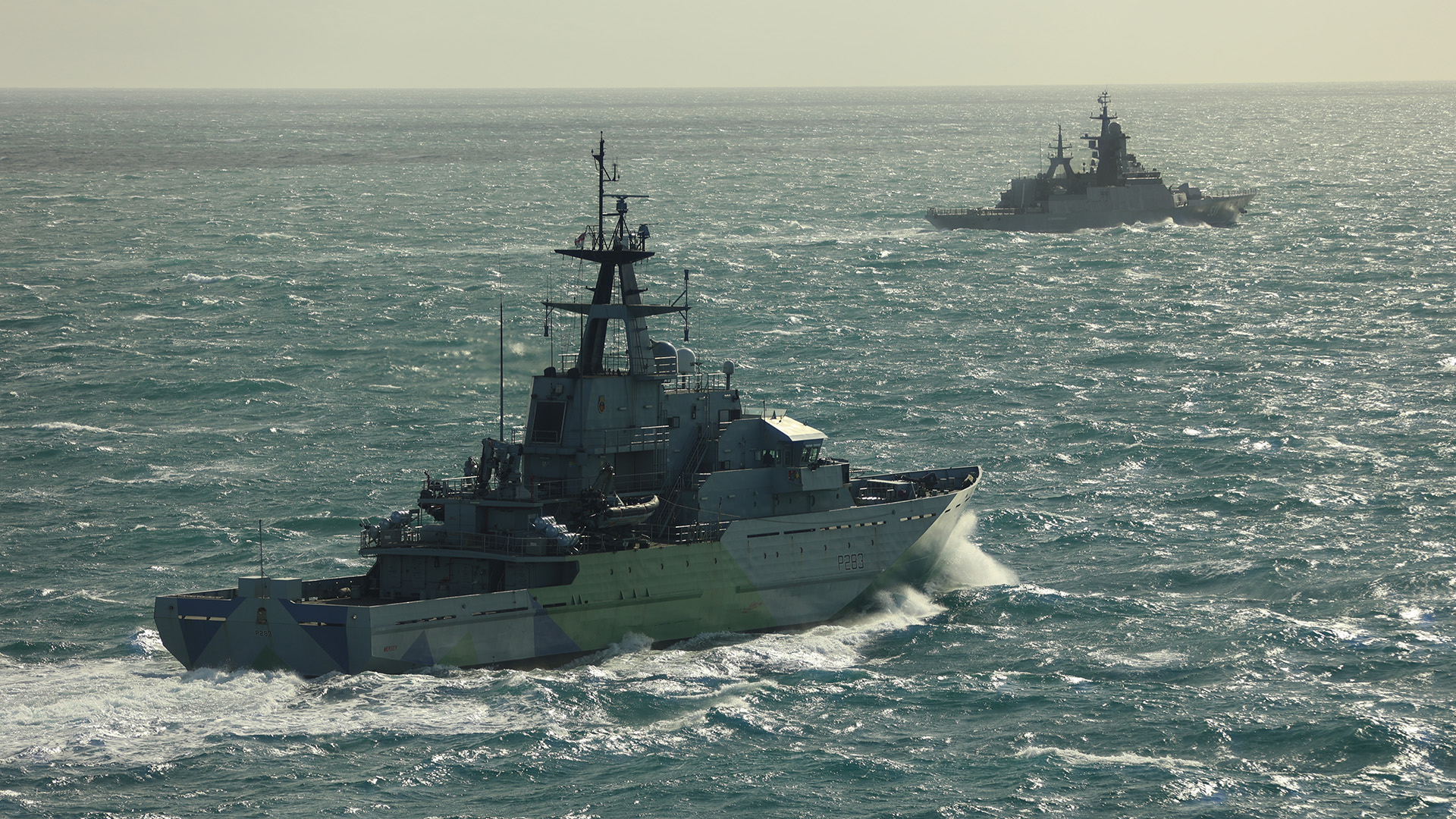
But let's dig a little deeper into the planned decommissioning of these ships in 2028.
The Royal Navy is undergoing a significant recapitalisation. The older ships are going out of service, and newer ones are coming down the pipeline.
This is true for the mine countermeasures vessels, the Hunt and Sandown classes, the Type 23 frigates and, even, our Vanguard class strategic missile submarines will be replaced in the coming years by the new Dreadnought boats.
Now, it is fair to say that the new ships should have been ordered sooner and built faster. That they weren't is largely a result of having to meet budgeting profiles, which, as ever, constrain the pace at which acquisition activity can be conducted.
There is only so much that the Ministry of Defence can afford to pay for each year, and the intricate sequencing of this is a byzantine process that weaves together all of the MOD's needs and allocates the resources to meet them on a priority basis.
Given that there is always more to do than the available resources, the process inevitably becomes about managing scarcity. Projects are delayed, deferred and descoped to make the numbers add up.
Much of the so-called failure of defence procurement is a consequence of this decision-making, rather than in the delivery of the projects themselves.
That said, many programmes run over budget and overschedule, or do not deliver the benefits promised at the outset. Much of this can be ascribed to over-optimism from both the MOD and the contractors at the outset of a project, knowing that they have to sign up to deliver what is needed for the available resources to stand any chance of getting the project approved in the first place.
A strategic failure decades in the making
All of this explains why the new ships and submarines coming down the pipeline are not yet ready, whilst the current ships are already reaching the end of their lives and being decommissioned and disposed of.
This, of course, leaves a gap in the availability of ships, which has been publicly exposed by the crisis in the Middle East and the struggle to generate maritime capabilities to deploy to that theatre of operations. A strategic failure that has been decades in the making.
In this context, then, it is easy to see why the reports this week of the OPV sales to Uruguay has led to some anguish as to further "cuts" to the Royal Navy.
In reality, these ships are reaching the end of their planned service life, and so these aren't cuts, per se, but rather the normal course of events in accordance with long-standing plans.
The Royal Navy actually has a surfeit of OPVs. The Batch 2 River Class OPVs were really built to keep the shipyards on the Clyde functioning whilst awaiting the orders for the Type 26 frigates rather than to meet an MOD operational requirement.
Brexit's impact
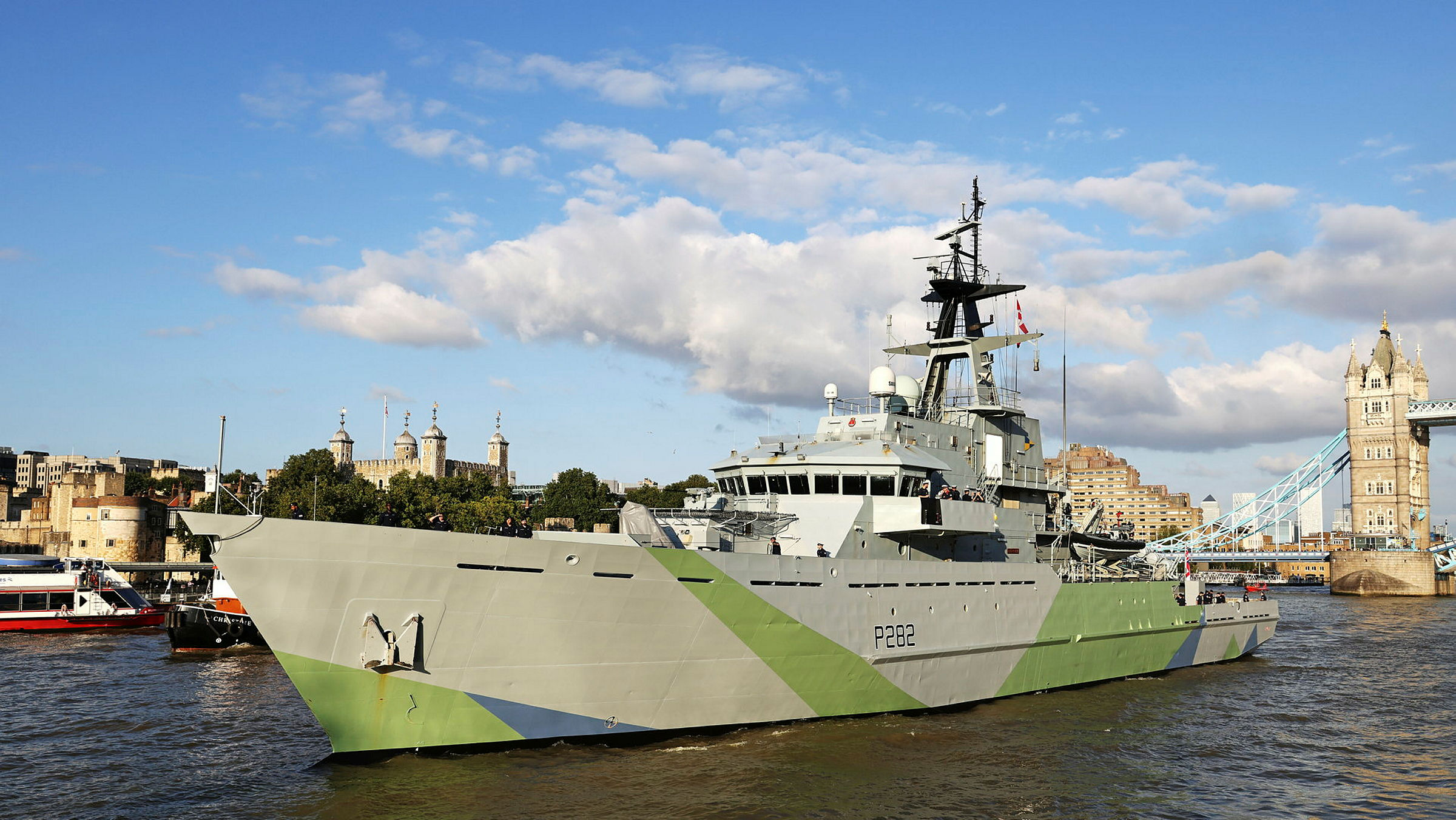
As these ships entered service, the intention was to retire the Batch 1 ships earlier, and, indeed, HMS Severn was decommissioned in October 2017.
She was recommissioned in August 2021 owing to the perceived need for increased patrol capability following Brexit, and the decommissioning of her sister ships, HMS Tyne and HMS Mersey, was postponed.
This gave the Royal Navy the opportunity to deploy the Batch 2 OPVs to the various corners of the globe, a forerunner of the intention to deploy the Type 31 frigates to deliver the Global Britain Global Navy strategy.
Remember that?
As such, the out-of-service dates of the Batch 1 ships were set to coincide with the Type 31 frigates coming into service and taking the global presence role, with the Batch 2 ships then able to 'come home' to undertake patrol duties in the UK's EEZ.
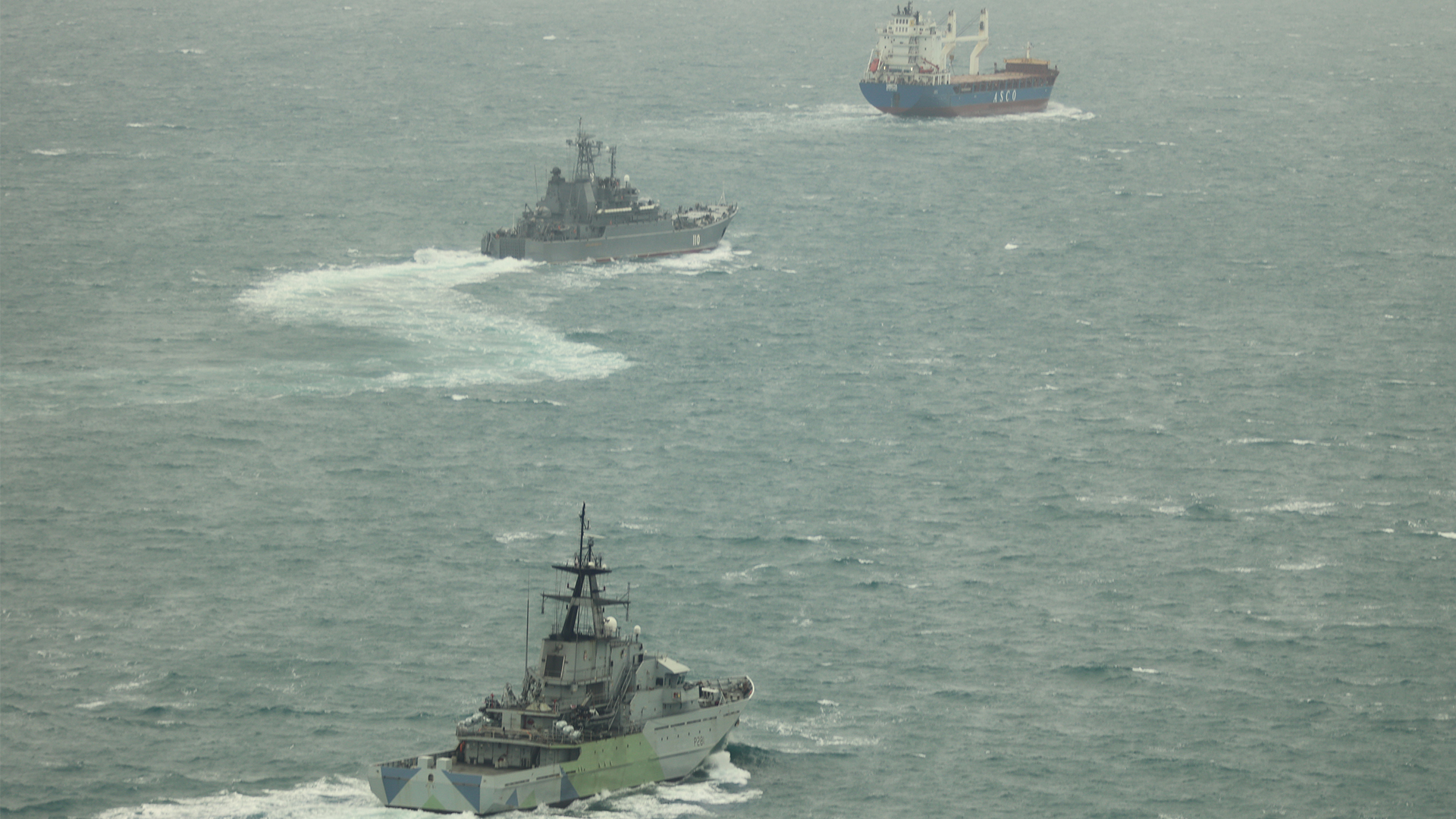
And given the paucity of frigates available for such roles, OPVs have been used to escort Russian ships through UK waters and to monitor suspicious activity. Such roles were traditionally assigned to combatant warships rather than OPVs.
The loss of the OPVs, therefore, before the arrival of the Type 31s, will mean some tough choices for the Fleet Commander in the allocation of such tasks.
Royal Navy needs to free up sailors
Nonetheless, the decommissioning of the River Class Batch 1s is also important from a workforce perspective.
Each of the Batch 1 OPVs has a crew of around 30 people. They are crewed on a '3 watch' basis, meaning that have around 150% of the required numbers.
This allows the 'off-watch' part of the ship's company to take leave and conduct training whilst the on-watch crew can maximise the availability of the vessel.
The sailors freed up from the decommissioning of the OPVs will be needed to join crews for the Type 31s emerging from build.
The last available figures for the Royal Navy tell us that between October 2024 and October 2025, the Navy lost 300 people from the full-time trained strength. That's around two frigates' worth of sailors! And, whilst recruitment is up, every sailor counts as we transition to the new ships.
There will be inevitable calls for the ships to be extended in service, but the reality is that the Royal Navy needs to free up both the people and the money to make way for the next generation of frigates.
And if the Uruguayan navy want to buy them, that's great! The selling of second-hand Royal Navy ships is a good British export. It's not just about the ships themselves, but the servicing and support contracts that go with them.
…And should the current First Sea Lord require an experienced hand to represent him in Montevideo, then I'm sure that I could be persuaded to dust off the old uniform for another trip to South America.
All in the interests of the patriotic cause, you understand!
Related topics
Join Our Newsletter