Challenger 3, the Army's next-generation main battle tank, has been revealed to the public for the first time during a demonstration at this year's Tankfest.
The MBT made a surprise appearance at The Tank Museum event in Dorset and was presented alongside the in-service Challenger 2 and the original Challenger 1, bringing together three generations in a single display.
Though it is yet to enter service, the 66-tonne armoured powerhouse offered spectators a rare glimpse at the future of the Royal Armoured Corps and demonstrated a step forward in the Army's capability.
The future of MBTs
Developed by Rheinmetall BAE Systems Land - a joint venture between UK-based BAE Systems and Germany-based Rheinmetall - Challenger 3 is described as the new MBT for the future.
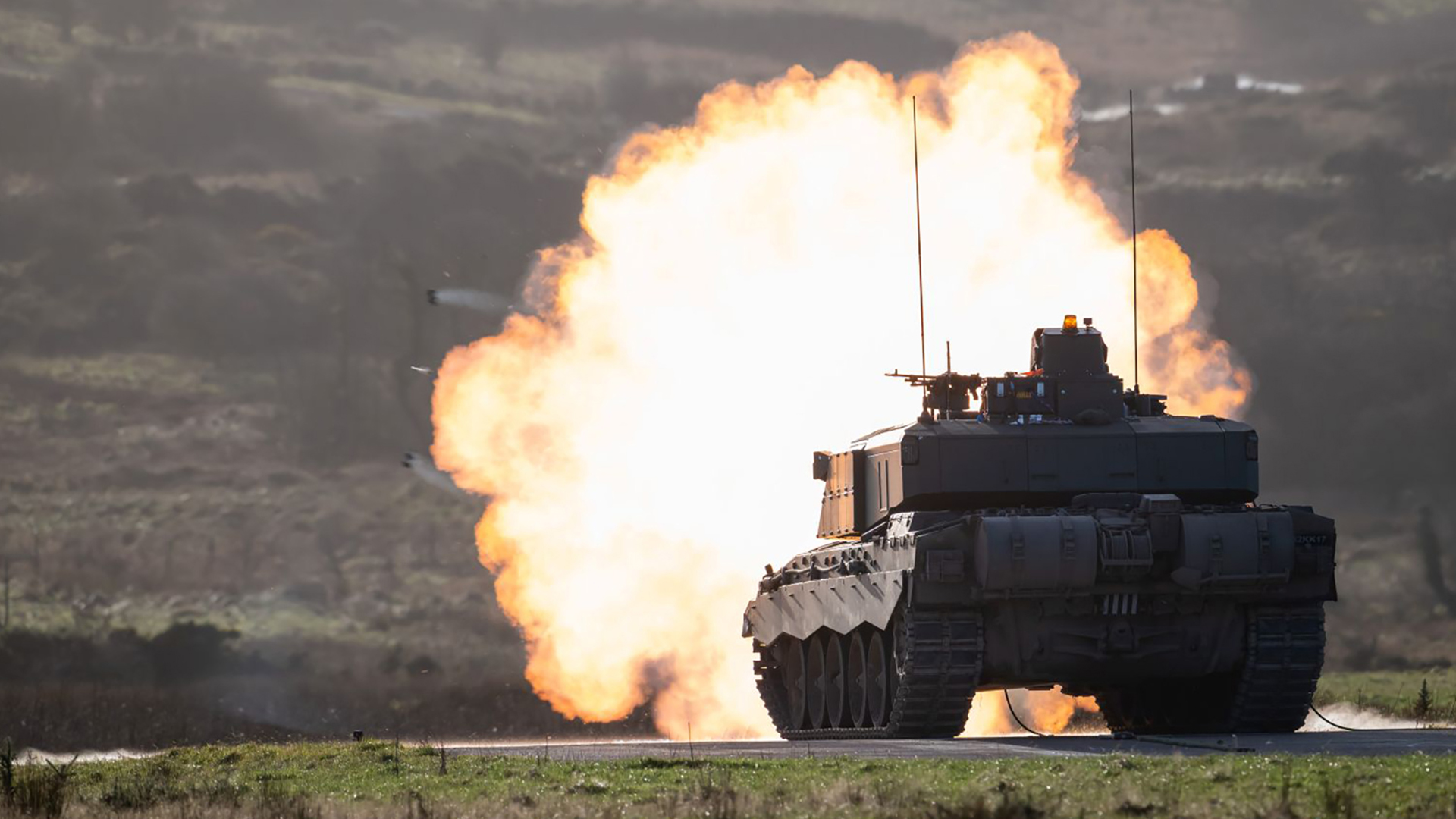
Designed as a 24-hour, all-weather tank, it is fitted with upgraded sights for commanders and gunners, improved tactical communications and enhanced hull protection.
Its primary armament is the Rheinmetall 120mm L55A1 smoothbore cannon, which can fire Nato-standard ammunition and is designed to deliver long-range accuracy and penetration.
It fires the latest kinetic-energy anti-tank rounds and programmable multipurpose ammunition, including advanced APFSDS rounds – armour-piercing, fin-stabilised, discarding-sabot.
This move brings the British Army into line with other Nato MBTs, increasing interoperability while reducing barrel wear.
The tank also uses new modular armour and active protection systems, including the Trophy Active Protection System.
Built and designed by Rafael Advanced Defence Systems, it acts as a miniature automated shield around the vehicle.
Using radar, it can detect and intercept incoming missiles and anti-tank projectiles, while automatically firing its own intercepting munitions.
A landmark display
Nik Wyness, director of marketing and engagement at The Tank Museum, said the appearance of Challenger 3 alongside its predecessors marked an important moment in British armoured history.
"It brings into sharp focus the evolution of the Army's main battle tank, from Cold War legacy to future capability, in a way only this event can," he said.
Related topics
Join Our Newsletter