I flew a plane over UK's aircraft carriers – and nothing happened, ex-defence minister says

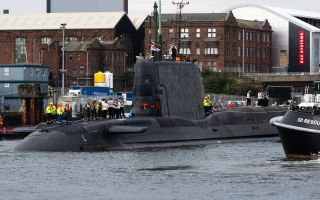
A former defence minister says his undisturbed flight over two aircraft carriers in Portsmouth illustrates the poor state of the UK's air defences.
Tobias Ellwood, who served with the Royal Green Jackets between 1991 and 1996, told BFBS' Sitrep podcast that he "couldn't believe it" as he did circles in a plane at roughly 1,000ft around the 65,000-tonne aircraft carriers.
"I can't think of any other country where that would be allowed," Mr Ellwood said. "Firstly, it's a recognition that we aren't in the mindset to protect our assets. And, secondly, I know for a fact that there's no air defence there."
The UK's lack of air defence
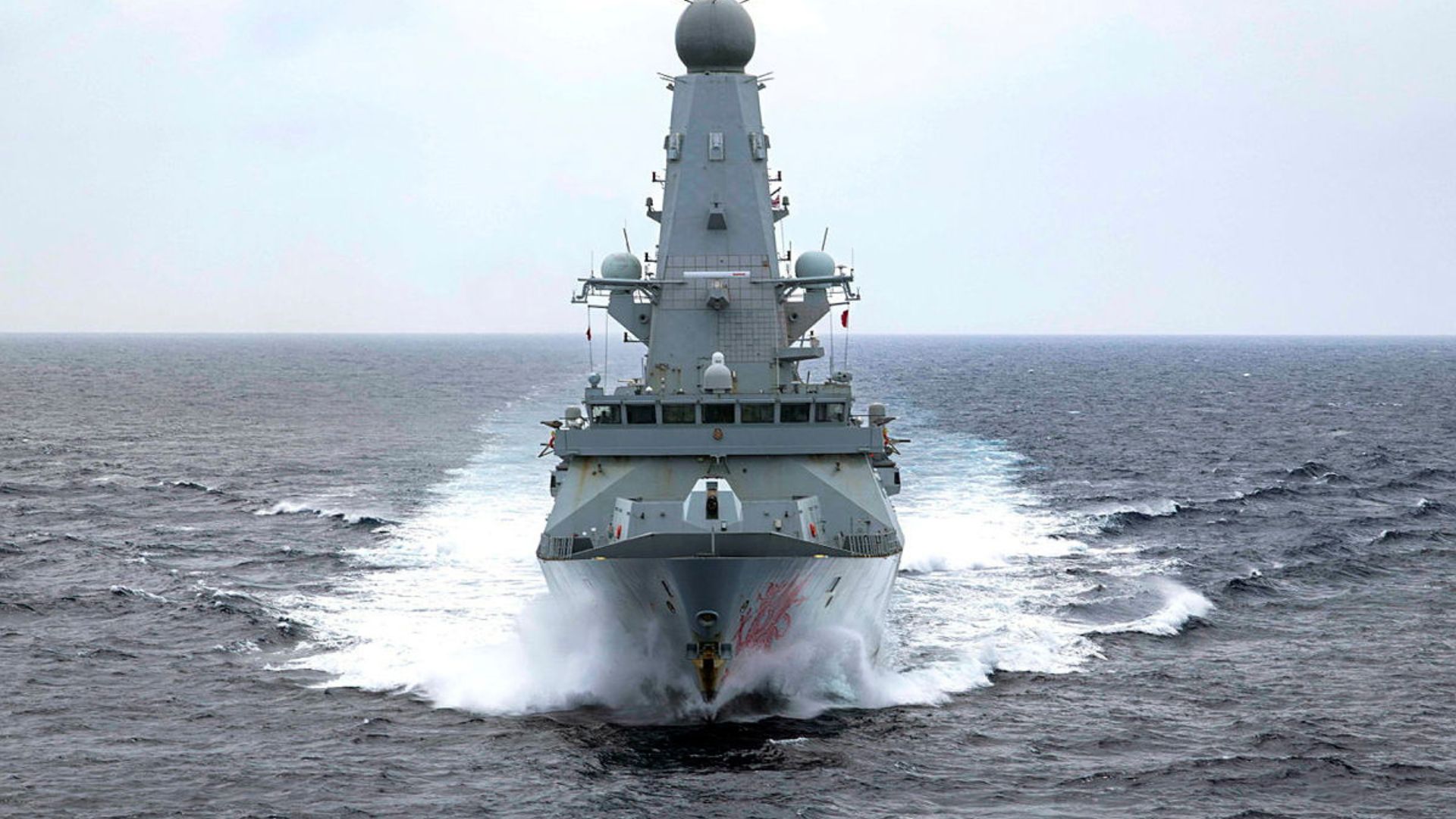
The UK does not have a recognised integrated air and missile system, but relies primarily on the Royal Navy's Type 45 destroyers, which are the only pieces of kit capable of taking down ballistic missiles.
The Armed Forces do have other air defence capabilities, such as Sky Sabre, which could destroy drones.
"How long is it going to be until one of those shadow fleet trawlers sends a Shahed or drone missile into the side of the aircraft carrier?
"Now, it won't do a huge lot of damage," Mr Ellwood, who formerly chaired the Defence Select Committee, told the podcast. "It might, but ultimately just shows that we're not even thinking about the type of warfare, the type of attack that we could be subject to.
"It would cause chaos, and there'll be big questions as to why we aren't doing more."
Gen (Ret'd) Sir Richard Shirreff, who also appears on the podcast, said that it does not shock and surprise him one bit.
"It's part of the complacency, and I think it's absolutely right that Tobias [Ellwood] highlights that egregious example of a failure to think through the worst case," he said.
Modern-era resilience is deterrence

Mr Ellwood also called on the government to consider a Finnish model of national service to protect against threats.
His plea reflects a call by the head of Britain's Armed Forces, who warned last year that we need a "whole of society approach" to build national resilience in the face of increasing threats and uncertainty.
Chief of the Defence Staff Sir Rich Knighton urged "our whole nation" to ensure that Britain can continue to function in a crisis in his first annual Royal United Services Institute (Rusi) lecture.
"They [Finland] have a tiny standing army, but [at] a moment's notice, because everybody is trained in one formula or other, and it could be in the land, sea and air domains," Mr Ellwood explained.
"But it could also be in making, producing things with 3D printers. It could be with cyber capabilities. There is a latent structure of support right across society."
Mr Ellwood also said that in a crisis the UK would rely on the Army to come in to help fix the situation.
"If something big happened, let's say: no power, no electricity, no water, no gas for 72 hours, you'd end up with looting taking place in the UK," he warned.
"Everybody would lean on the Army, our tiny standing Army. But they couldn't help a country of over 60 million.
"We all need to look to defend ourselves and that resilience, that capability, will actually deter as well."
Gen Sir (Ret'd) Richard agreed with Mr Ellwood's thoughts on national service to improve the UK's resilience.
"It's also coming back to the components of readiness: it's people; it's kit; it's sustainability; it's logistics and training," he added.
"And all those need to be properly satisfied and measured against a rigorous gap analysis of what do you need to fight with? What have we got? What is the gap?"
:: Tobias Ellwood's book Ten Steps to Prevent World War Three is available to buy now.
:: You can listen to BFBS' Sitrep wherever you get your podcasts, or on BFBS Forces News YouTube channel.
Related topics
Join Our Newsletter