The pocket rulebook on lethal force: How Card Alpha governs when soldiers can open fire

The prospect of British personnel being deployed to Ukraine as part of a potential future peacekeeping force has ignited discussions around how and when troops are lawfully permitted to use lethal force.
Whenever UK troops are deployed, they operate under a strict set of legal guidelines known as the rules of engagement, which can differ from country to country.
The rules are considered carefully by legal experts and are provided to troops, who are expected to learn and abide by them to the letter.
But what exactly are the rules, and how might they be written for a future deployment to Ukraine?
Card Alpha – fits in your pocket
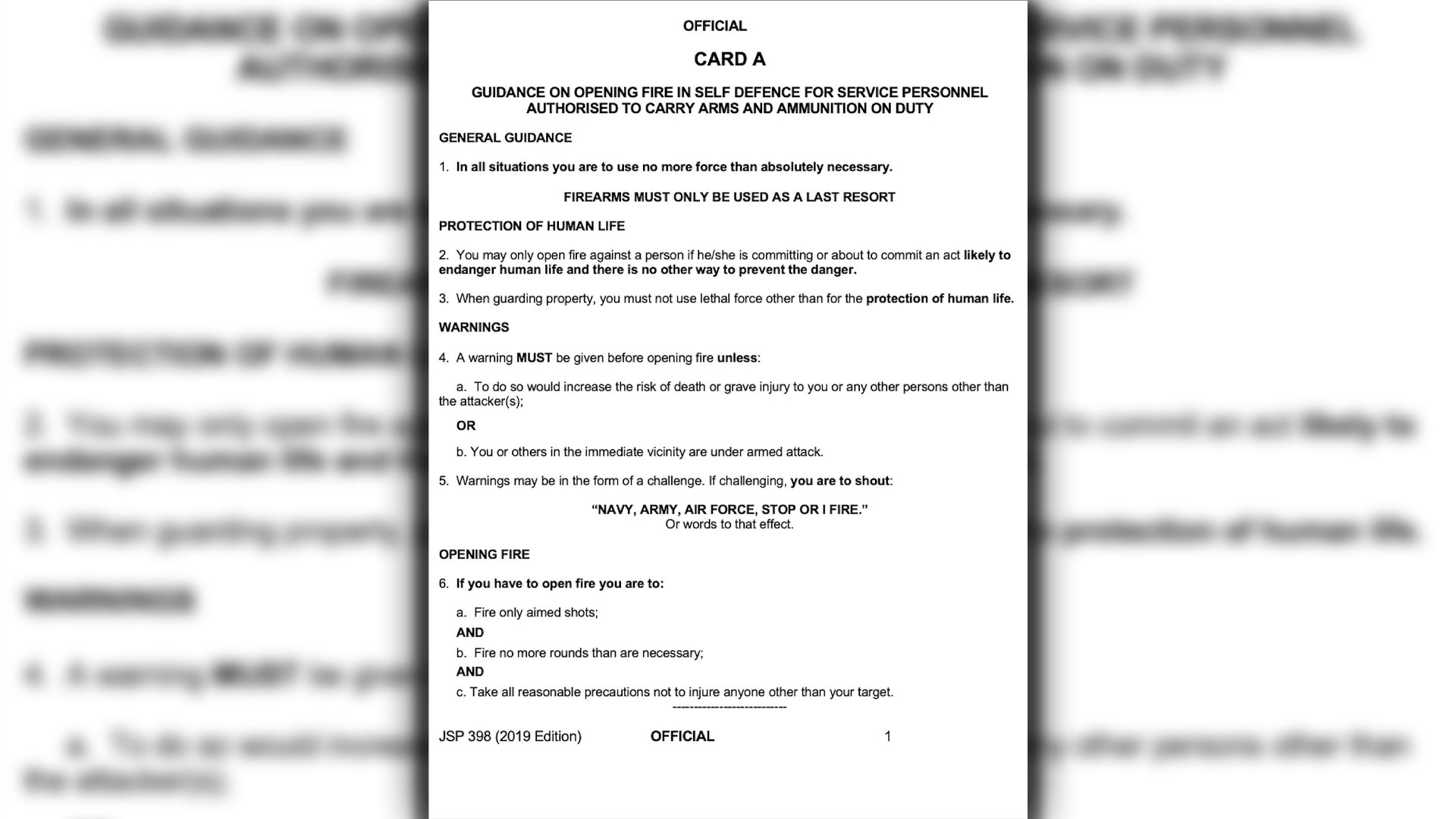
The Ministry of Defence provides official "guidance on opening fire in self-defence for service personnel authorised to carry arms and ammunition on duty".
This guidance is known as Card Alpha – which sets out the rules that troops must obey.
It's called Card Alpha because it is a physical document printed on card, which helpfully fits in the pocket of a soldier's jacket, where it is to be stored if a soldier is on duty, carrying arms.
Strictly speaking, the guidelines stated on the card are not rules of engagement per se – unless being used in the UK – but any rules of engagement drafted for operational deployments are variations of the fundamental principles set out on Card Alpha.
In the UK
Whenever you see a member of the Armed Forces guarding the gates of a base or barracks in the UK, if they are armed, under military regulations they must have in their possession a copy of Card Alpha.
In this respect, the guidelines on the document are rules of engagement for firing a weapon in self-defence, or for the protection of others.
It means if a base in the UK came under armed attack, by law personnel may be able to return fire.
The primary rule stated at the top of the document reminds the sailor, soldier or aviator that in all situations they are to use "no more force than is absolutely necessary".
This means that if one or two shots are enough to neutralise any threat, that is lawfully the extent of the protections provided by the guidelines.

Card Alpha tells the carrier that they are only authorised to open fire against a person "if he/she is committing or about to commit an act likely to endanger human life and there is no other way to prevent the danger".
There's also a reminder that to use lethal force, there has to be a threat to human life and not just to property.
Warnings
Card Alpha says that before lethal force is used, a warning of some sort must be given unless to do so would further endanger people, or unless the sailor, soldier or aviator is under armed attack.
The card suggests such a warning should be a variation of "ARMY, STOP OR I FIRE" – but stresses words to that effect are also permitted.
There are further rules printed on the card, too, such as only firing aimed shots, firing no more than is necessary and taking precautions not to injure anyone other than the intended target.
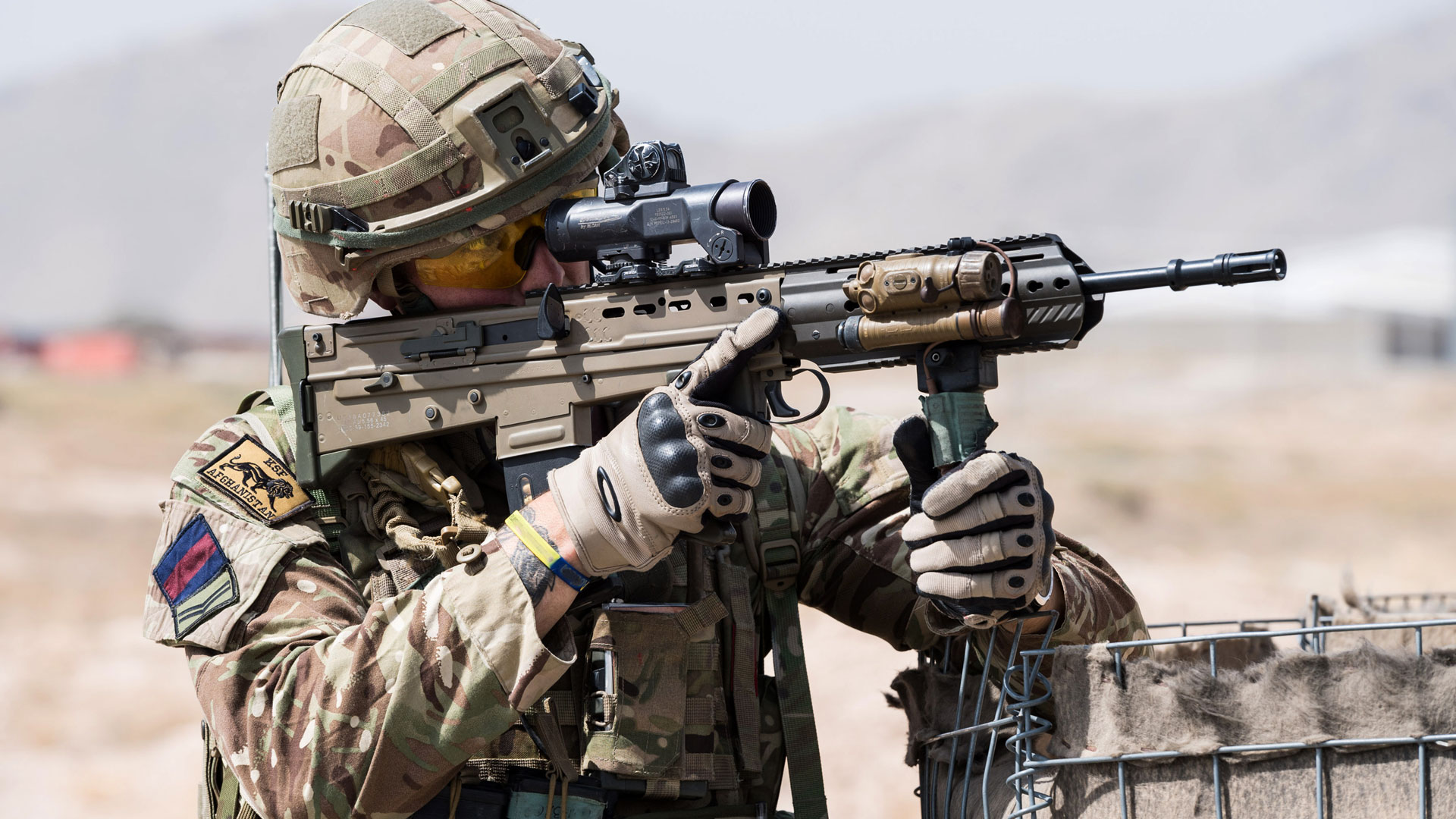
But what are the rules at war?
Rules of engagement differ by theatre, and tend to stick closely to the principles of self-defence set out on Card Alpha, though there are variations between conflicts.
There are also permitted rules of engagement around offensive action, meaning when personnel are ordered into action, they can legally engage enemy targets under the international law of armed conflict.
For example, in Afghanistan the rules of engagement permitted British personnel to open fire on positively identified enemy combatants even when they were not posing an immediate threat.
By contrast, under the rules of engagement established by the UN mandate in Bosnia in the 1990s, opening fire was restricted primarily to self-defence and the defence of friendly troops.
It meant British personnel had no mandate to intervene militarily to protect wider civilian populations or safe areas unless they themselves came under direct attack.
Inherent right to self-defence
Virtually all rules of engagement operate around the inherent right to self-defence.
Under British law, everyone has the right to apply force if there is a threat of harm to oneself or others.
Card Alpha works on this basis, as do variations of it on deployments or in theatres where UK troops find themselves carrying arms.
Related topics
Join Our Newsletter