Why the Army is preparing for a possible war in Europe thousands of miles away in Kenya
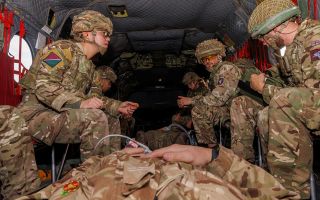
BFBS Forces News has visited 1st Battalion, The Duke of Lancaster's Regiment (1 Lancs) on an exercise in Kenya to find out how the training is preparing the soldiers for Operation Cabrit in Estonia the following year.
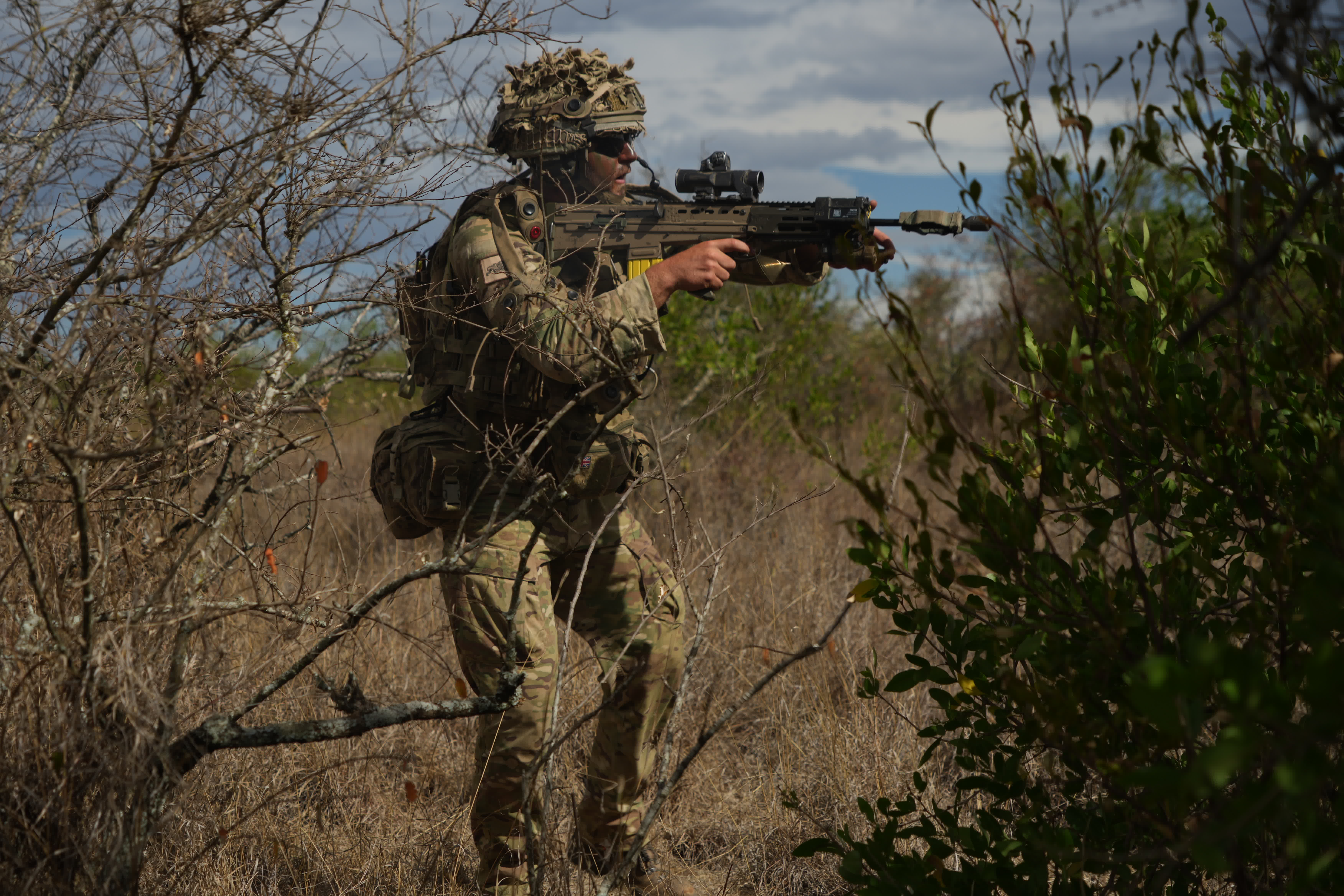
Five times the size of Salisbury Plain, the environment here is as arduous as it gets.
Rocky, uneven terrain and high temperatures make the conditions punishing, made even tougher by the 20kg of kit and equipment each soldier must carry.
We're exactly where we want to be
"It's austere, it's difficult, the terrain is hard, the weather conditions are hard," Major Alex Postles-Kime, Officer Commanding C Company, tells me.
"There are animals all over the place. That's definitely something you've got to take into consideration when we're out patrolling or night exercising."
The vast savannah stretching as far as the eye can see offers 1 Lancs more freedom than in the UK.
"It gives us space to be able to push out, manoeuvre, fly the drones and without any issues," Maj Postles-Kime added.
"For us this is perfect – this is exactly where we want to be."
Why Kenya?
The large training estate is particularly important when conducting live-fire serials, as it means each platoon can carry out larger attacks.
Second Lieutenant Richard Evans, 3 Platoon's commander, explained that in the UK you would struggle to conduct an attack at platoon level – typically 25 to 30 personnel – or company level, which involves around 100 to 150 personnel.
In Kenya, they can practise with an entire battlegroup, comprised of up to 1,000 personnel.
Although Estonia, where the soldiers are due to deploy next year, is much colder than Kenya, it serves the purpose of testing the soldiers in an austere environment.
2Lt Evans added: "Estonia is also a lot flatter. So if we're able to operate here in the heat and across tougher terrain, I think it sets up quite well."
Trench warfare
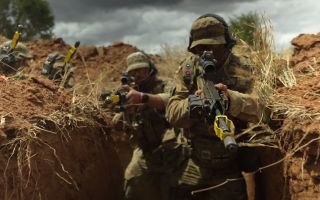
The soldiers have been practising trench warfare more than usual ahead of their deployment on Op Cabrit, the UK's military contribution to Nato’s forward land forces in the Baltic region and Poland.
General Sir Roly Walker, the head of the British Army, recently warned soldiers they need to be prepared to fight in close quarters – as near as 40m from the enemy, as "the things that are going to kill you are going to get that close".
That could be in trenches, tunnels, forests or buildings.
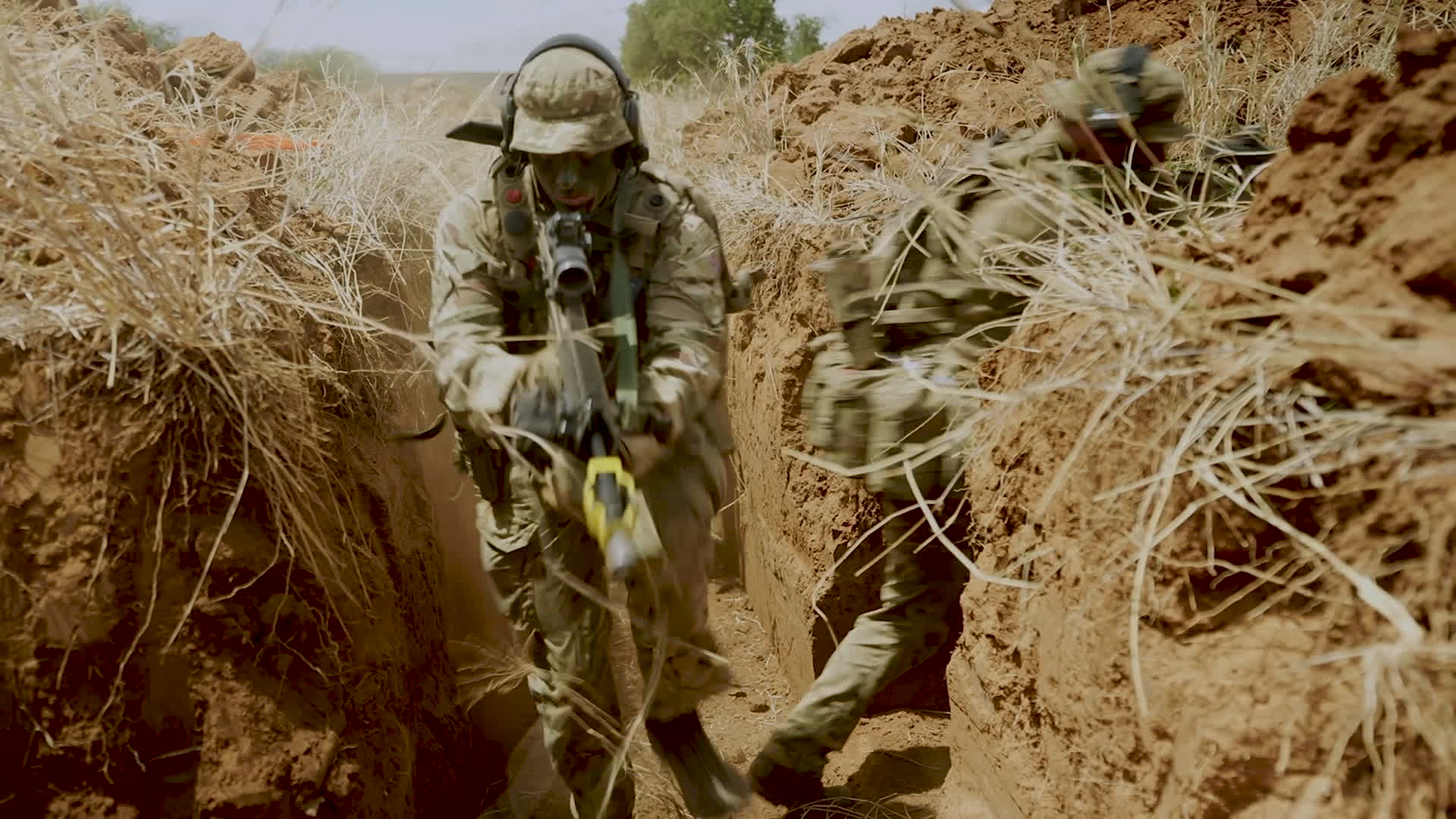
Lance Corporal Connor Brady, a section commander in Anzio Company, tells me they're doing a lot of trench warfare, with the design modelled on Russian-style trenches.
"The Z-shape of the trenches stops explosions and the passage of gas through the trench, so it gets blocked off on each corner instead of just one linear trench where the explosion can just carry through," he said.
I asked how it feels to be heading out to Nato's eastern border, on Putin's doorstep.
"It's more of an exciting feeling," he replied.
"A lot of the lads are really excited to get out there and actually do their first operational tour."
Kingsman Shea Rock from 3 Platoon added: "You've got to be very situationally aware when down in the trench.
“When you're travelling, you're looking for trip wires, or you could turn a corner and not see someone's barrel poking out a wall.
"Just little things. You've always got to be on your game when you're in here because it's the slightest thing that can be that for someone's life."
Drone technology
You'll know from seeing footage from Ukraine that soldiers are fighting in trenches like in the First World War, but the difference is that they're now fighting alongside unmanned aerial systems (UAS) too.
You might be thinking – drones aren't new.
And that's true, having been used for surveillance by the British Army for years.
However, attaching explosives to drones to destroy enemy targets, like what we're seeing in Ukraine, is new to Britain's infantry soldiers.
Ukrainian president Volodymyr Zelenskyy said that out of all the enemy targets they've destroyed, 80% of them have been destroyed by drones.
1 Lancs' Corunna Company, the battalion's recce-strike company, is experimenting with new battlefield tactics, using both surveillance drones and first-person view drones in tandem to hit targets way beyond the direct line of sight.
It means there is no longer a reliance on long-range weapons like mortars or artillery.
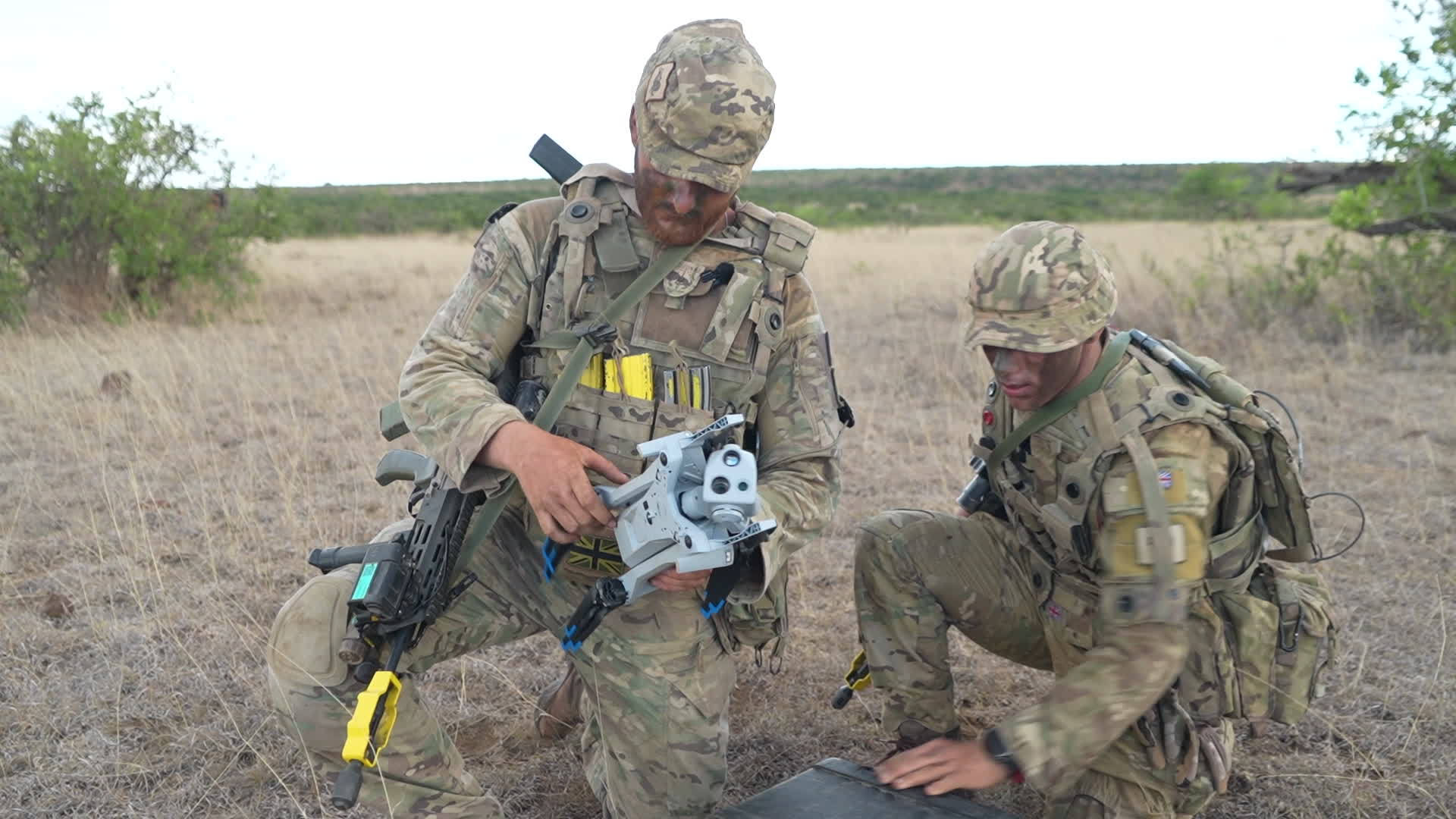
The company's role is to find and strike enemy targets 10km forward of the main battlegroup. Maj Postles-Kime explained what that means for the soldiers under his command.
"Mortars are a battlegroup asset," he said. "They'd usually be sat right to the rear, out of the way so that they're in a safe position.
"I've changed that. I've asked them to come forward with us, and that's different. That is a difficult process to change; a long doctrinal concept, and it's hard.
"But it's hard for a reason, and when it works it means we've got organic fire support at the front, but we're moving quickly.
"We're beading in the mortars quickly. We're getting rounds down quickly and then able to move on to the next target. It's a development piece, but it's getting there, and it's great to see."
Meanwhile, Lieutenant Freddie Dunn, commander of the company's strike platoon, gave a resounding "yes" when asked if he likes the new way of operating.
"It makes us better at doing the job that we all joined up to do," he said.
Nevertheless, it introduces another layer of complexity, with troops having to remain mindful of safety distances around drones carrying explosives and the flight time of the drones' batteries.
There's still a way to go, as Lieutenant David George Brereton, the commander of C Company's UAS Platoon, explained.
"Currently there's a lot of paperwork and regulations going with strapping explosives to the bottom of a drone, which at best can be temperamental with its signal and connection," he said.
"But hopefully the Army's moving forward and moving in the right direction."
Recce-strike
The British Army's recce-strike concept aims to speed up the kill chain, finding and destroying enemy targets within minutes.
Using AI-assisted targeting and different types of drones in combination with long-range precision weapons.
This means soldiers will not just be responsible for what happens on the ground, but also just above ground level, which is referred to as the near surface.
The soldiers in the 1 Lancs battlegroup will be on high alert when they get to Estonia next year, ready to defend Nato territory if fighting breaks out on the eastern border with Russia.
Join Our Newsletter