How troops, medics and civilian firefighters prepare for armoured vehicle emergencies
There has been an accident involving a British Army Jackal and pedestrians, leaving the crew injured.
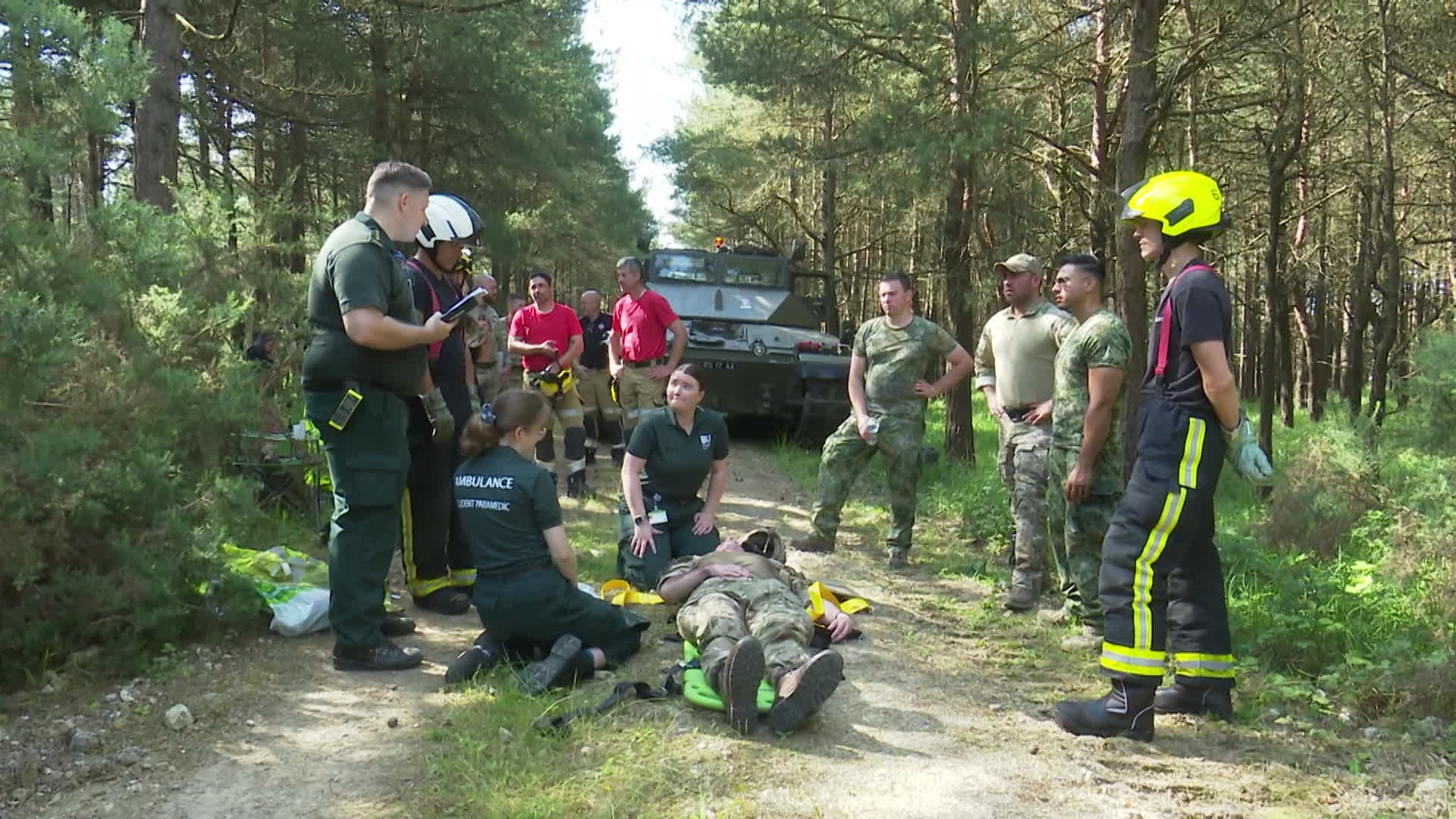
The medics and rescuers who arrive first have to begin appropriate treatment and remove any casualties after the incident.
Thankfully, this is all just an exercise.
"So, with the scenario that we have today, one of the Jackals has come off the road," Sergeant Ilaitia Ratuqalovi, an instructor, said.
"The reason why we do it is basically to get everyone from our own team, the Army and also the civilian rescue fire team, just to understand how to get casualties out safely.
"In order to understand also the platform itself and work with the equipment, they have to be safe on the platform and also when they are dealing with casualties on the side of the platform."
Simulated scenario training for professionals
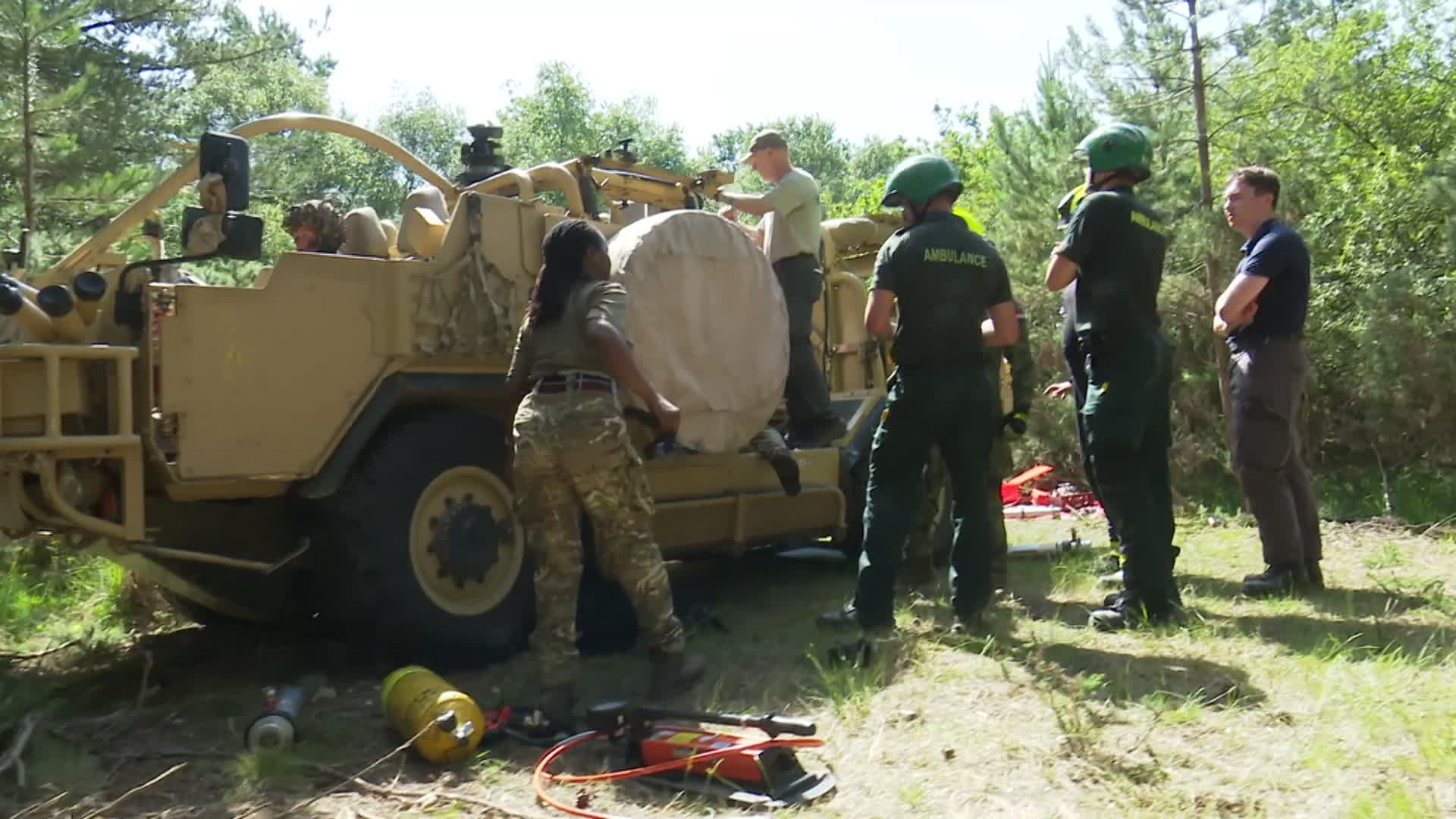
This is Exercise Armoured Rescuer 26, which took place on the Bovington Training Area in Dorset.
Around the heathland and woodland, several scenarios had been laid out, utilising military and civilian vehicles.
The training gives these military, medical, and rescue professionals the chance to practise their skills and learn new ones.
"My unit trains thousands of people every year to safely use armoured vehicles without incident," Lieutenant Colonel Tom Gibbs, Commanding Officer, Armoured Fighting Vehicles Schools Regiment, told BFBS Forces News.
"But we have to be ready for when something doesn't go correctly. And being able to bring in experts from around the world, [including] fire services, ambulances, [and] paramedics, etc, into one place to be able to learn from each other.
"That's just an amazing thing for us to be able to do."
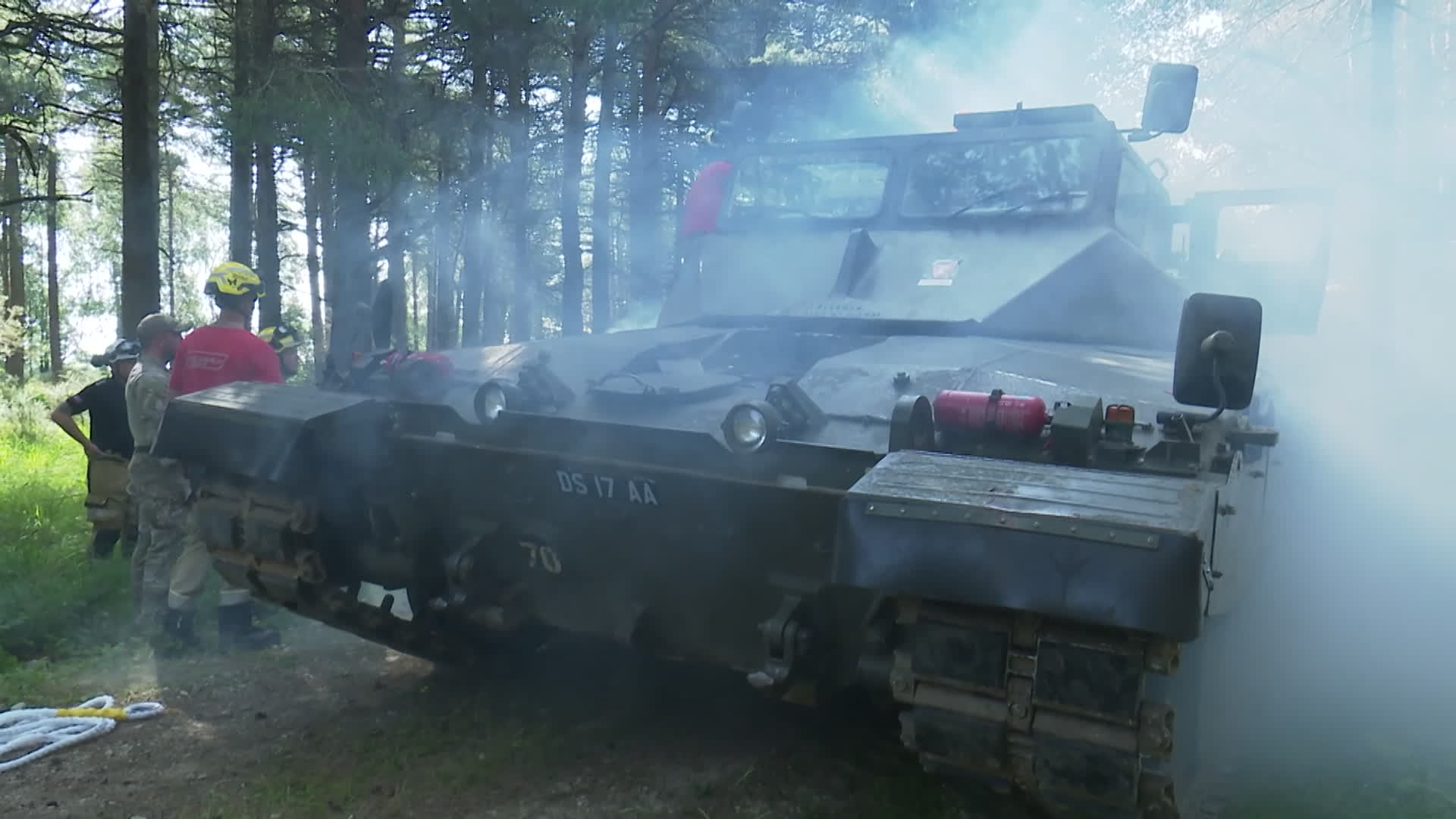
In another scenario, there is a fire in a military vehicle with a casualty trapped inside, and their condition is unknown.
This gives paramedics the opportunity to work alongside German firefighters and Dutch air force personnel, who need to assess the casualty's condition and get them safely out of the vehicle.
The German firefighters work at the Sennelager training area, well known to British military personnel.
Learning from each other and taking learnings back
Some personnel find this experience invaluable.
"We've been sent across because we've got the same sort of vehicles in Sennelager – a massive training area," Darren Rhodes, Station Manager, Sennelager, said.
"We're using this exercise to take a course back to Germany to pass on to the local authorities.
"So, it gives us insight of what could happen on armoured vehicles and then all this information can be used [by] the German authorities."
Everyone has different skills, abilities and techniques, so it proved to be a real place to learn from each other.
"We learn about the ways they work and how we work," said Corporal Ronald Van Thiel of the Royal Netherlands Air Force
"It's a good thing we share knowledge."
Armoured vehicles a different challenge to cars
The next task is a Challenger 2 tank with a casualty trapped inside, where a specialist winch is the only way to get them out.
"So, unlike a car, where you extract a casualty left and right fairly easily. It's quite difficult inside a tank. You've got space; you've got the position of the turret as well, which can also add complexities," Sergeant Oliver Fysh, an instructor, said.
No one ever wants there to be an accident, but it would be folly not to prepare for one.
Using realistic scenarios, some based on real incidents, this exercise equips those who would have to deal with the worst with the best chance possible for a successful outcome.
Join Our Newsletter