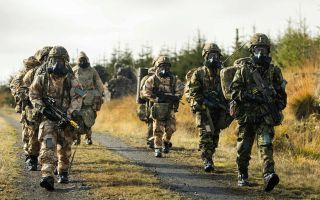
Gurkha musicians learn how to decontaminate a casualty with CBRN exposure
Personnel from The Band of The Brigade of Gurkhas are learning how to decontaminate a casualty who's suffered chemical, biological, radiological or nuclear exposure.
Staff Sergeant Kerry Wild from The Royal Corps of Army Music explained: "To get them [the casualties] treated, we need to remove their contaminated clothing to allow medical treatment to happen.
"And this is to train the guys in the skills and the speed to be able to do that, to effectively save as many people as we can."
First World War origins
The Gurkha trainees have spent five days at the Defence CBRN Centre in Salisbury on a course that isn't open to everyone, just military musicians.
SSgt Wild added: "It leads on historically from when we used to be stretcher bearers back in the First World War, moving casualties through the battlefield, and it's evolved over time."
If there was a CBRN incident where casualties were contaminated, they'd be brought to a facility to be decontaminated by soldiers wearing specialised kit, making the task even more challenging.
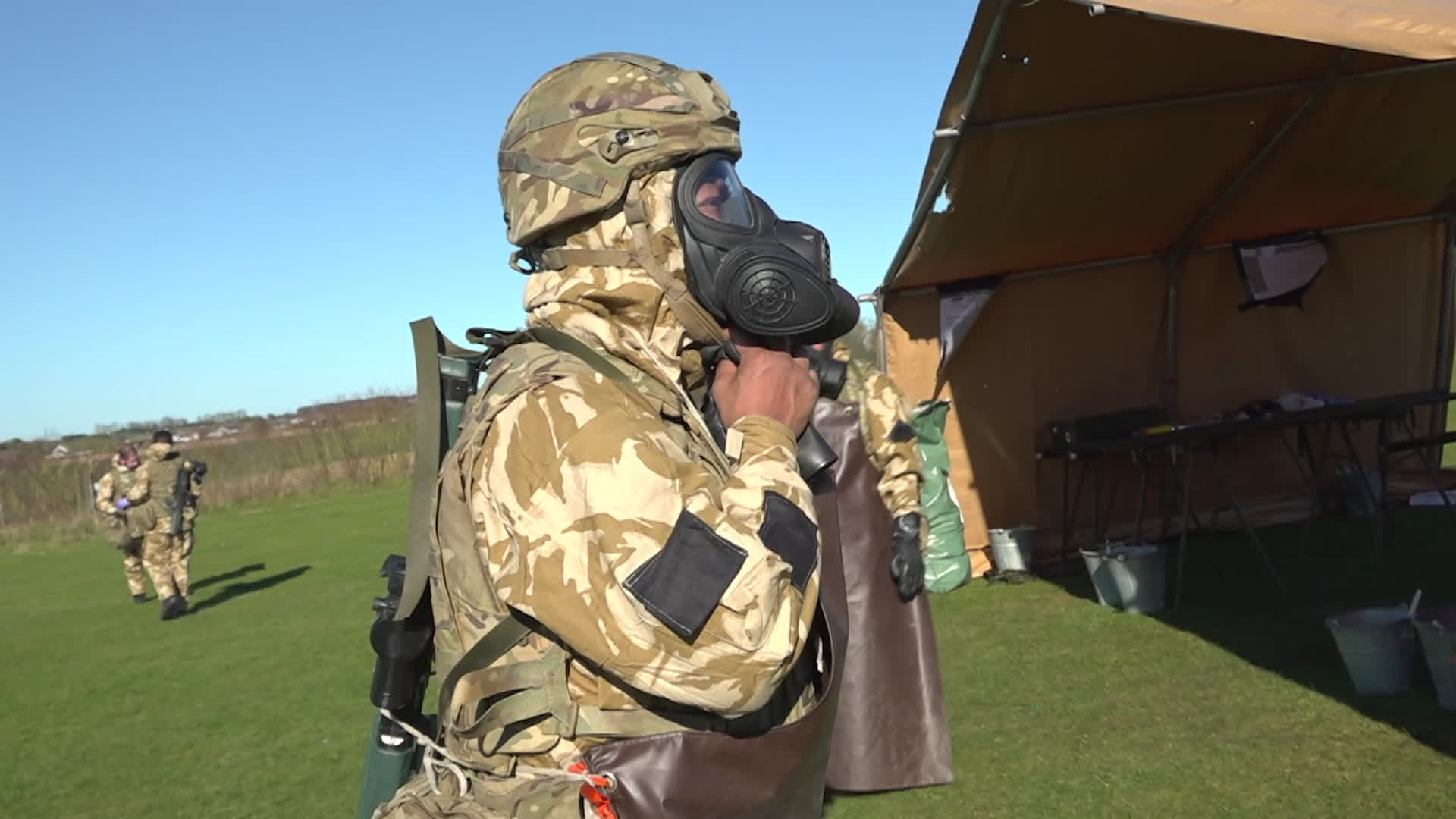
Musician Ankit Rai ran through some of the kit and pointed out how uncomfortable it could be to wear it.
"First of all [there's] the CBRN suit. So this suit protects us from any kind of chemical hazards or anything like that.
"And also the respirator. Overall, it feels very suffocating sometimes. Because it's not just... the suit you're wearing, but also your personal protection equipment... the weapons, the helmets and all.
"So it's quite heavy and quite suffocating at some point."
The decontamination process
Once a casualty is dropped off they'll be triaged by a medic, nurse or whoever happens to be there that has the capability to do it.
Colour Sergeant Jon Roberts of the Royal Marines Band Service explained how the casualty would then be taken to the triage holding area, then to the dry decontamination area, where they get any protective suits they're wearing cut off and their clothing removed.
"The people that work in this area have their normal CBRN PPE suit on, plus respirator, helmet, body armour, weapon, webbing," he said.
"But they also wear a butyl apron, which protects them from the chemicals that they might be dealing with as they're decontaminating the casualties.
"The medics within this area, they will be wearing nitrile gloves rather than butyl gloves because they need to get in amongst the medical treatments they're offering.
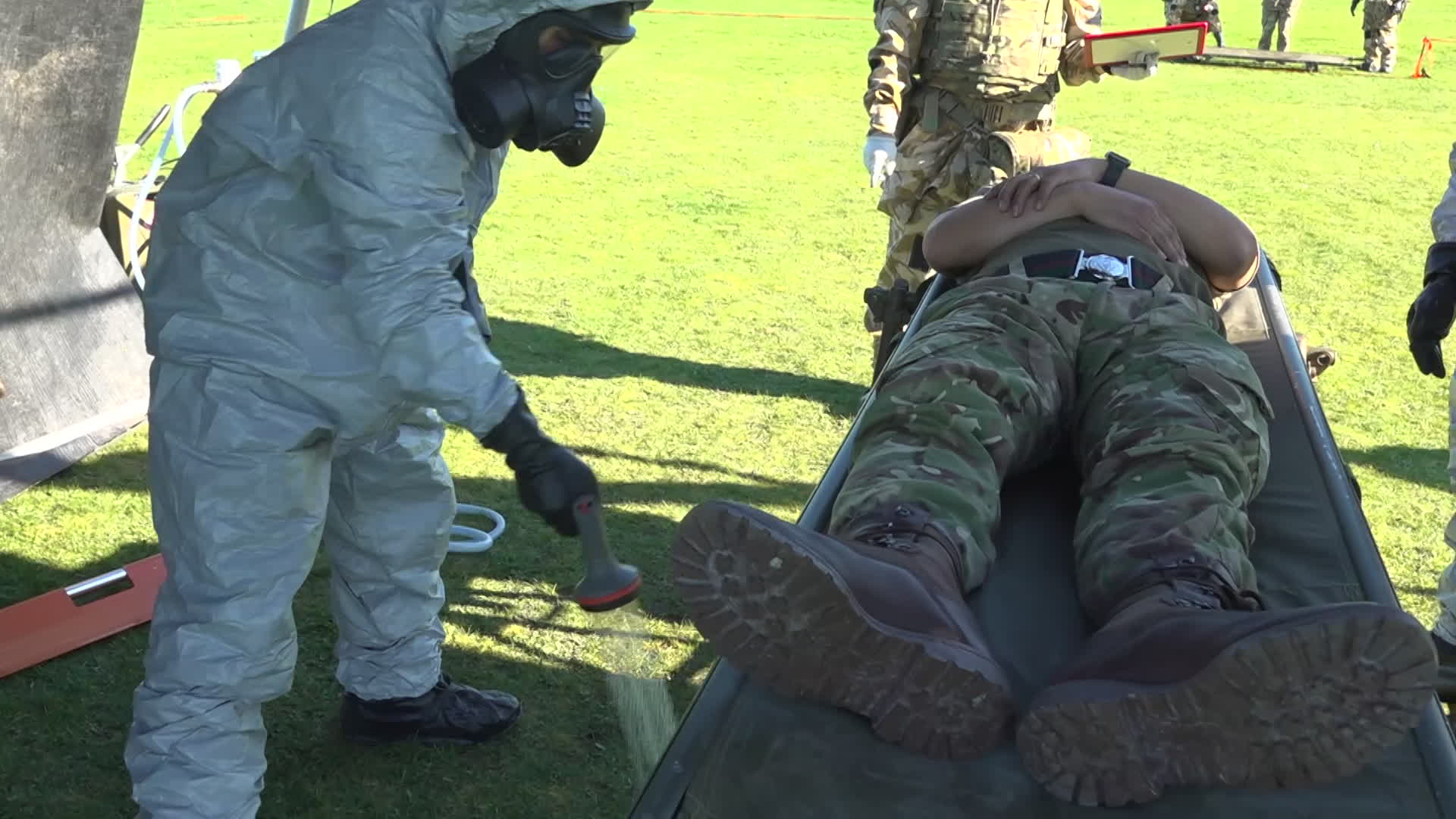
"Then the wet decontamination team will come through – they're wearing the grey Tyvek suits."
Protection, not comfort
These suits let the team wash the casualty with a warm water solution, while keeping their own protective clothing dry.
"This is the hottest part of the protective equipment that we wear," said CSgt Roberts.
"So they've got their full PPE underneath and we call it a boil-in-the-bag suit, the Tyvek suit on top of that, which stops the water from soaking through their PPE and keeps them protected.
"They'll clean the casualty and once they're happy that that casualty is decontaminated they'll move the casualty up to the clean dirty line."
From dirty to clean
The clean dirty line is the final stage, and chemical monitors are used to check that there is no contaminant left on the casualty.
"If they're at the point where they're happy that there's no contaminant, they will literally just pull that casualty across onto the clean side of the clean dirty line where they can take the casualty for further treatment at different medical facilities," CSgt Roberts added.
From collecting a casualty at the entrance to completing the process takes around 10 to 15 minutes.
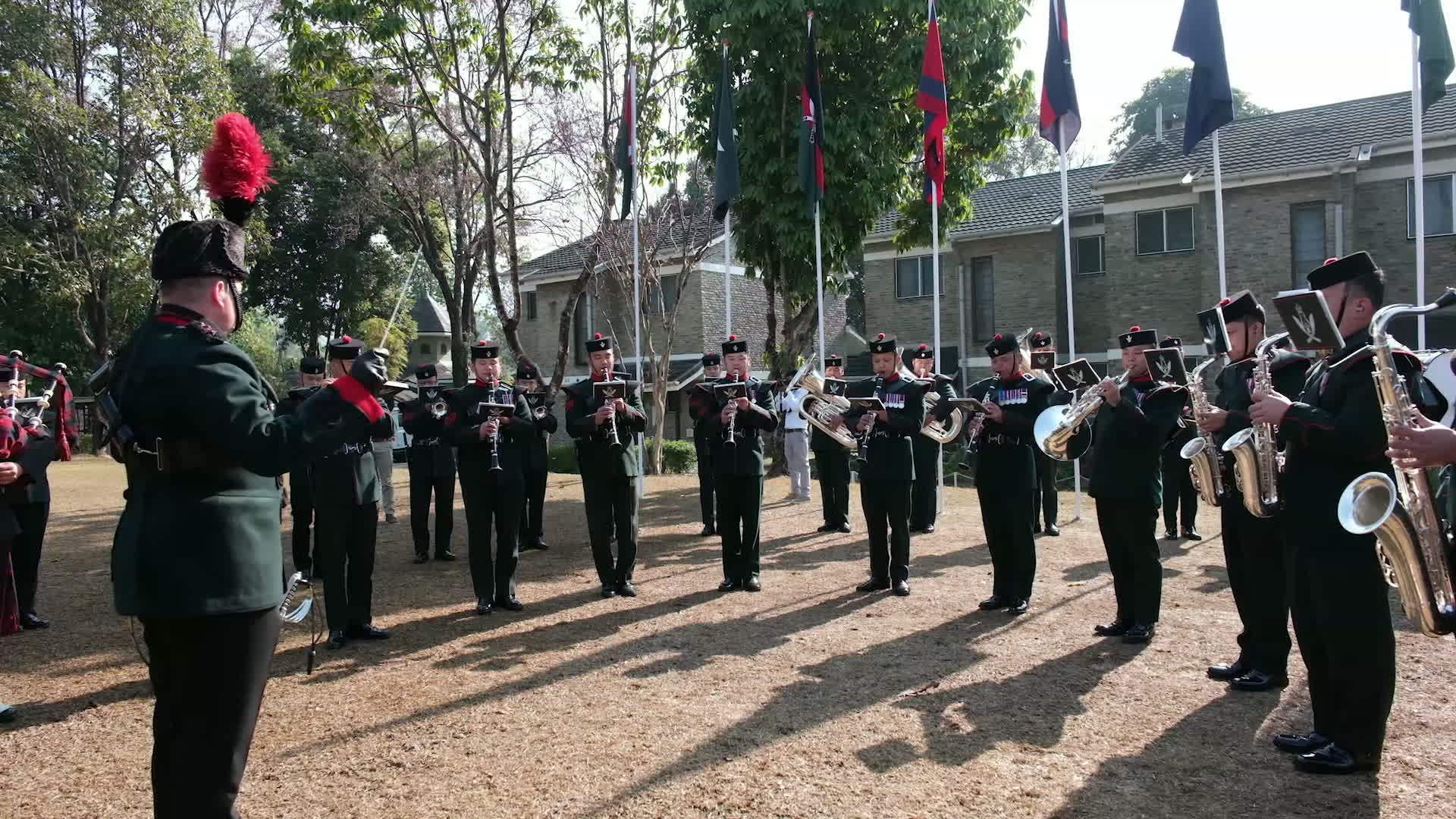
As soldiers and musicians, these Gurkhas could be performing anywhere in any environment when called on by defence to deploy quickly and perform this operational role on the battlefield.
Join Our Newsletter