Gurkhas honour those who fought and died fighting Japanese in Battle of Mogaung

Infanteers from 1st Battalion the Royal Gurkha Rifles have paid tribute to their forebears who fought and died in the Battle of Mogaung during the Second World War, including one soldier who earned the Victoria Cross.
Soldiers from C Company 1 RGR observed Mogaung Day – a regimental battle honour – at Sir John Moore Barracks in Folkestone.
Lieutenant Colonel J Jeffcoat, the CO of 1 RGR, Major Babindra Gurung, the Gurkha Major, and Major Subash Gurung, the OC of C Coy, laid wreaths on behalf of the battalion's members.
Kukri display
Following the parade, the soldiers from C Company, accompanied by their families, decamped to the visitor centre.
They were treated to three Gurkhas dressed in Second World War uniforms carrying out a display with their kukris, accompanied by music.
In addition to ceremonial use and the Gurkhas' cultural heritage, the kukri has a practical application too.
While other soldiers in the British Army are equipped with a bayonet to be attached to their SA80 L85s, Gurkhas use the kukri as a close-quarters fighting knife.
Burma 1944
The Battle of Mogaung was a series of engagements fought between 6 June and 26 June 1944 against Imperial Japanese forces in and around the Burmese town of Mogaung.
At the time, 3rd Battalion 6th Gurkha Rifles was part of the 77th Indian Infantry Brigade.
This brigade formed part of General Orde Wingate's special force known as the Chindits, which had been flown into northern Burma behind Japanese lines in March that year.
The soldiers had been tasked with harassing the enemy's communication and diverting its forces from the main battlefront. This operation was known as Operation Thursday.
The battalion had seen hard fighting in the first month of the campaign and was badly depleted in numbers due to battle casualties and sicknesses.
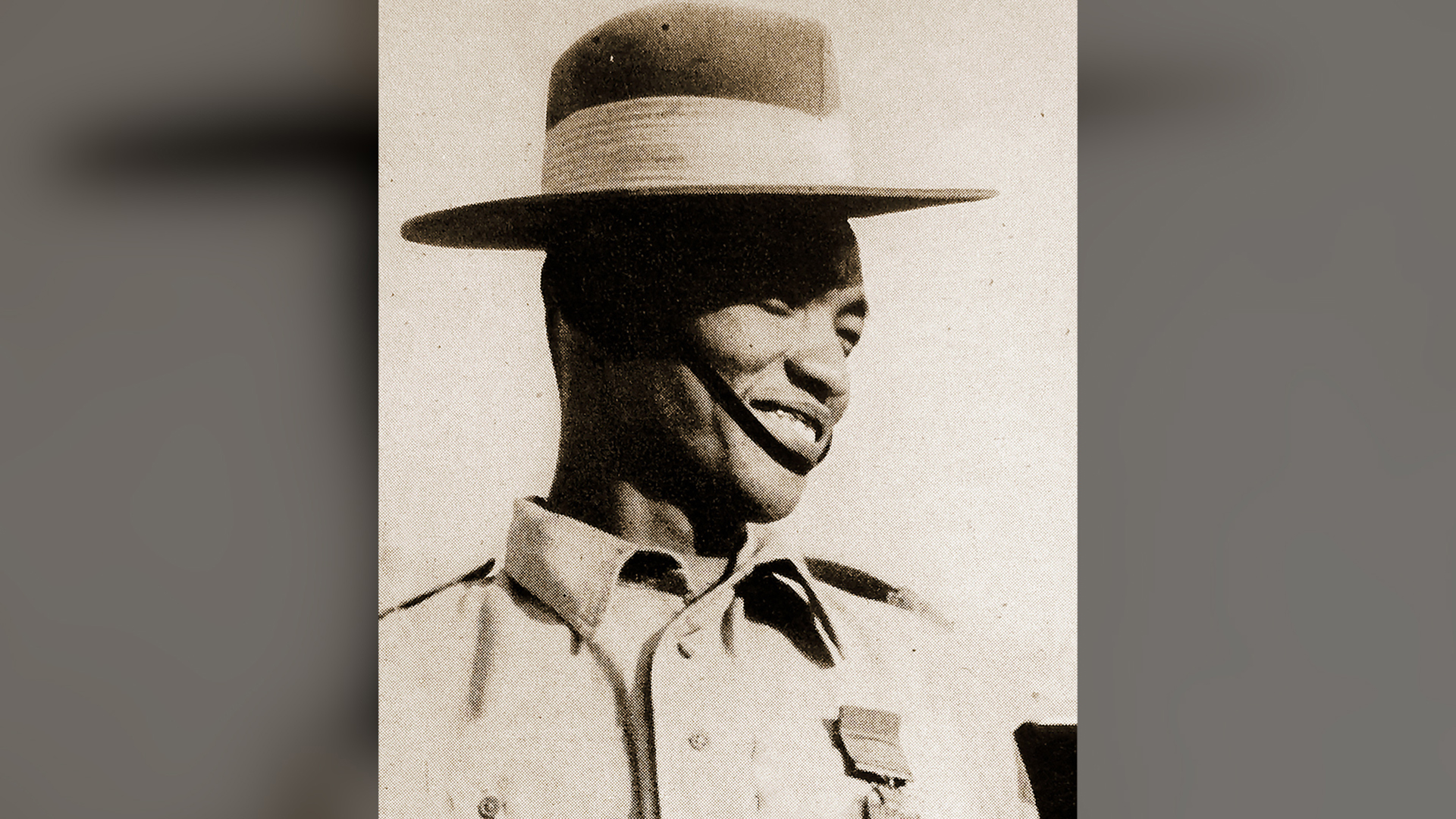
Tul Bahadur Pun VC
On 23 June 1944, during an attack on a railway bridge, a section of one of the platoons was wiped out with the exception of Rifleman Tul Bahadur Pun, his section commander and one other.
The section commander led a charge against a Japanese position, but was wounded, as was the third man.
Rifleman Pun, firing a Bren gun from the hip, continued the charge alone in the face of heavy enemy fire.
On reaching the position, he killed three Japanese soldiers and forced five more to flee, capturing two light machine guns and a quantity of ammunition.
He then lay down accurate supporting fire, enabling the rest of his platoon to reach their objective.
In addition to the Victoria Cross, Mr Pun was awarded 10 other medals, including the Burma Star, and later achieved the rank of honorary lieutenant.
Join Our Newsletter