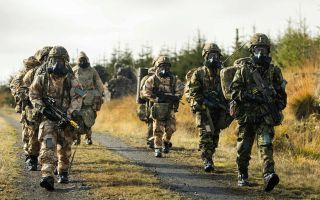
British Army reservists train for machine gun role on the frontline on two-week deployment

A microbiologist, a civil engineer and a barman. That's not the start of a strange joke, but a cross-section of the types of professions found in a typical group of Army reservists.
I've just spent the best part of a week with 65 of them, and what I found – beyond the fact they are highly capable and dedicated members of the Army Reserve – is that many regularly find themselves out of pocket in their efforts to serve their country.
But it doesn't put them off. Like so many reservists in the UK, they are proud to spend their free time in uniform as soldiers. And the British Army really needs them.
Guns and ammo
The unit I embedded with was the Scottish and North Irish Yeomanry (SNIY), a unique outfit made up of personnel drawn from across two devolved nations.
Getting the troops, their equipment and, crucially, weapons and ammunition all together in one place was itself a marvel of military logistical planning.
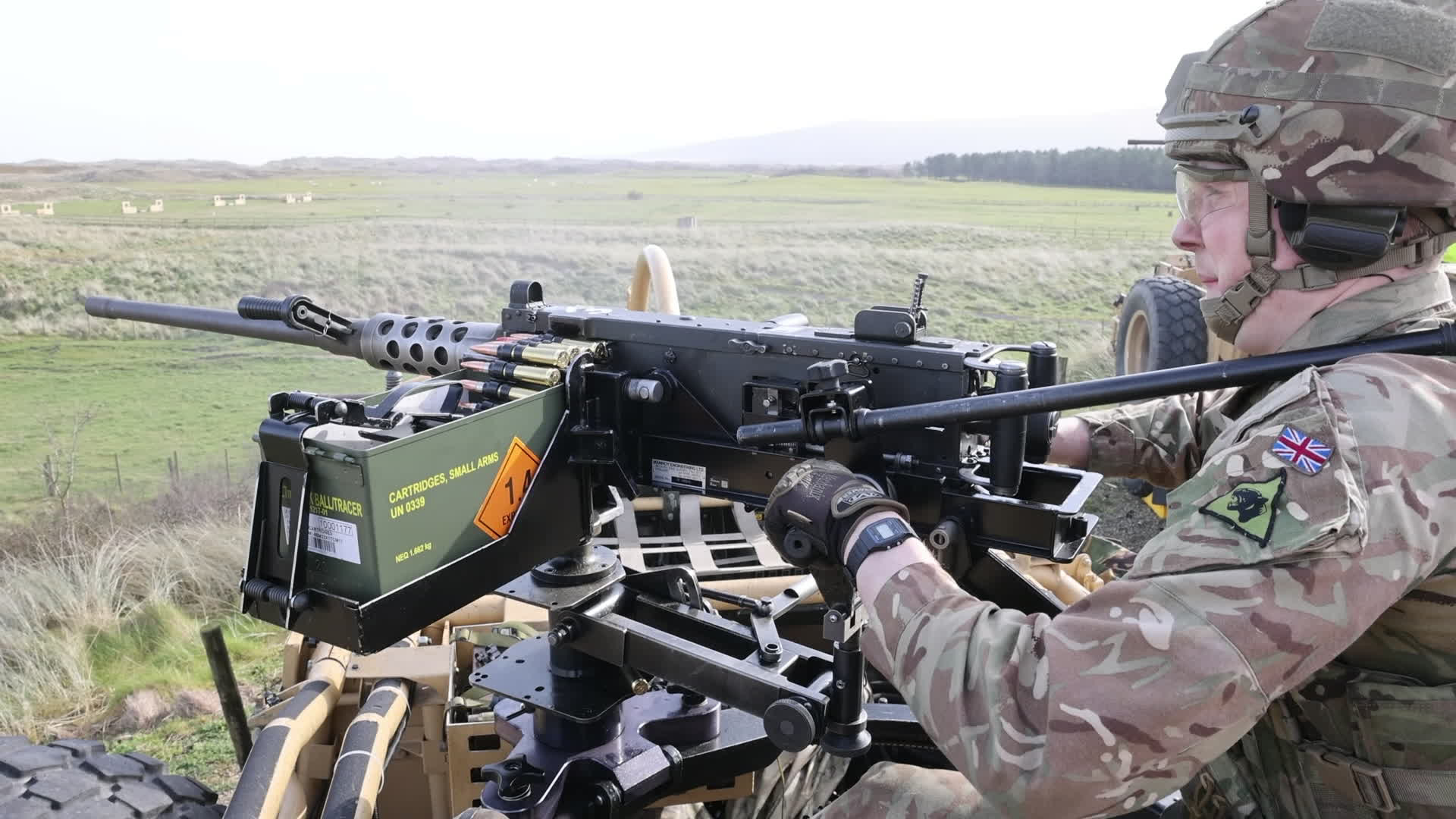
For me, it meant seeing these soldiers fire thousands upon thousands of rounds, using GPMGs and .50 cals – also known as the Heavy Machine Gun (HMG) – as the gunners worked towards a key qualification needed to deploy on operations.
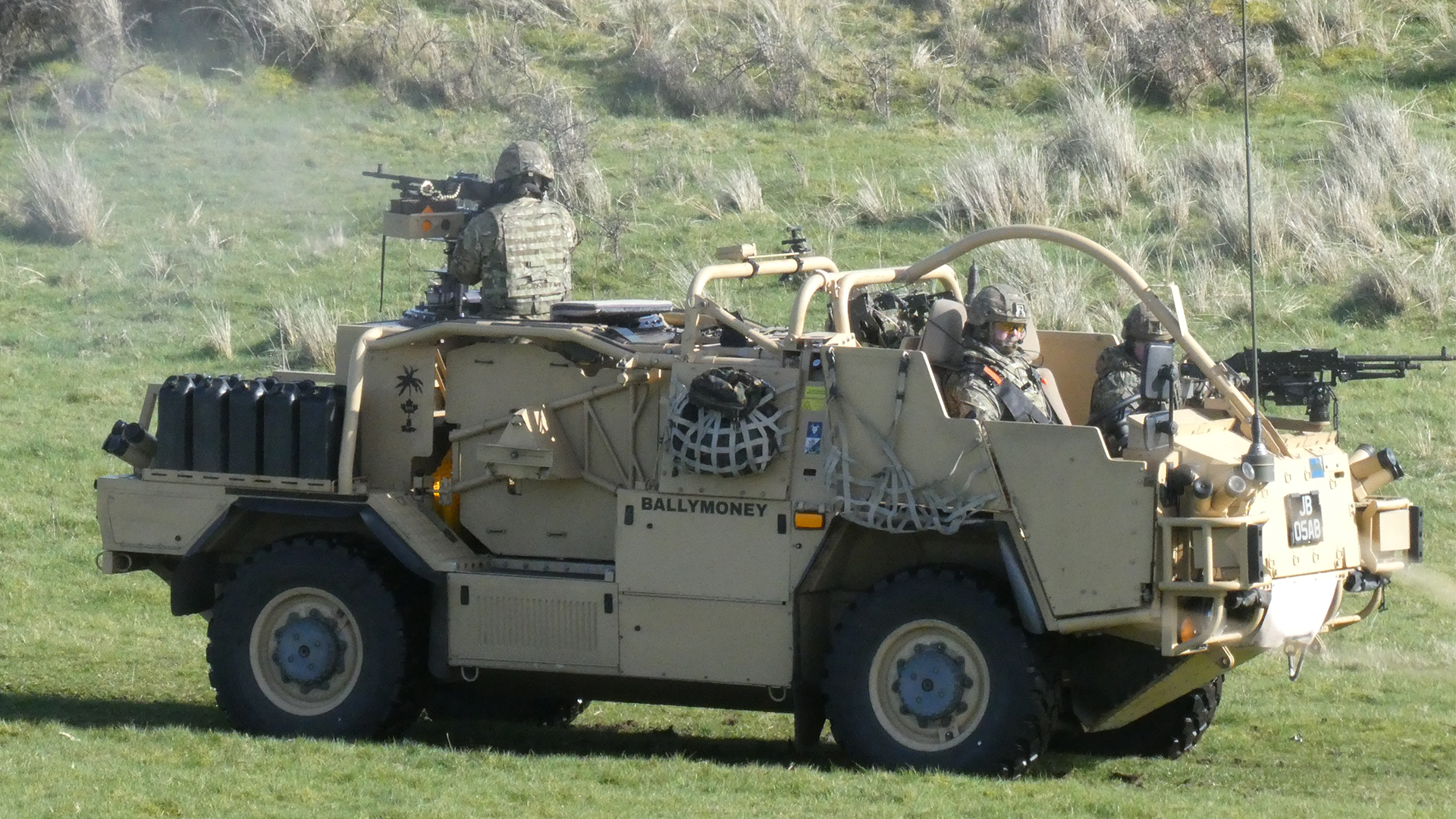
The qualification is called the Platform Weapon Operators Course and, once achieved, it allows soldiers to operate as gunners on Jackals – vehicles used in the modern world of light cavalry.
A commitment from employee – and employer
Most reservists are required to commit to 27 days' service per year. Those who do so, for the first five years of service, receive an annual tax-free bonus, which increases each year to around £2,200.
For this, reservists must complete their minimum days, including two weeks served continuously, either on an annual training camp or, as in this case, a combined courses camp.
These camps allow personnel to complete career courses, making them eligible for operations and enabling progression through the ranks.
The business world is more accommodating to reservists than it once was when it comes to providing paid time off – often known as reservist leave.
This makes part-time service in the Army Reserve much easier from a financial standpoint. But provision varies.
While some organisations, including the MOD, offer up to 15 days, others provide less, and many offer none at all. For the self-employed, service in the reserves can still mean a significant loss of income.
While the MOD does pay reservists for the time they spend in service, depending on individual circumstances, that pay may not equate to the same daily rate as they would make in their civilian role.
Some of the reservists I spoke to said it can feel as though the Army hasn't quite struck the right balance between its expectations and the realities of juggling civilian life with military commitments.
However, every single reservist I spoke to said they enjoyed their role in the SNIY, and none appeared to regret the time spent on camp.
A balancing act
We found ourselves in Game of Thrones territory on the Northern Irish coast, where the popular TV show was filmed for eight years.
It was a beautiful location, and for some members of the SNIY, it was just a stone's throw from their civilian lives. For others, the two-week deployment required a flight, or for equipment, a ferry across the Irish Sea.
On the first day, we met Trooper Anika Taylor. In civvy street, she works as a town planner. She said it can sometimes be complicated to balance her military duties with her main job.
"Obviously, different people have different levels of responsibility and commitment," she said. "I think as long as communication lines remain open and clear, then it is workable."
Anika was one of the gunners on the Platform Weapon Operators Course. We watched her participate in live-firing serials using both the GPMG and HMG.
After one such serial, in which she fired hundreds of rounds of 7.62mm from a mounted position on a Jackal, she reflected on her performance.
"I think I was hitting the target, which is what we want. So yeah, really good!" she enthused.
Asked what it was like to fire a GPMG, she said: "It's just exciting. This really powerful machine gun — it gives you quite a bit of confidence knowing that everything you've been practising, you're seeing the fruits of your labour."
The night shoot
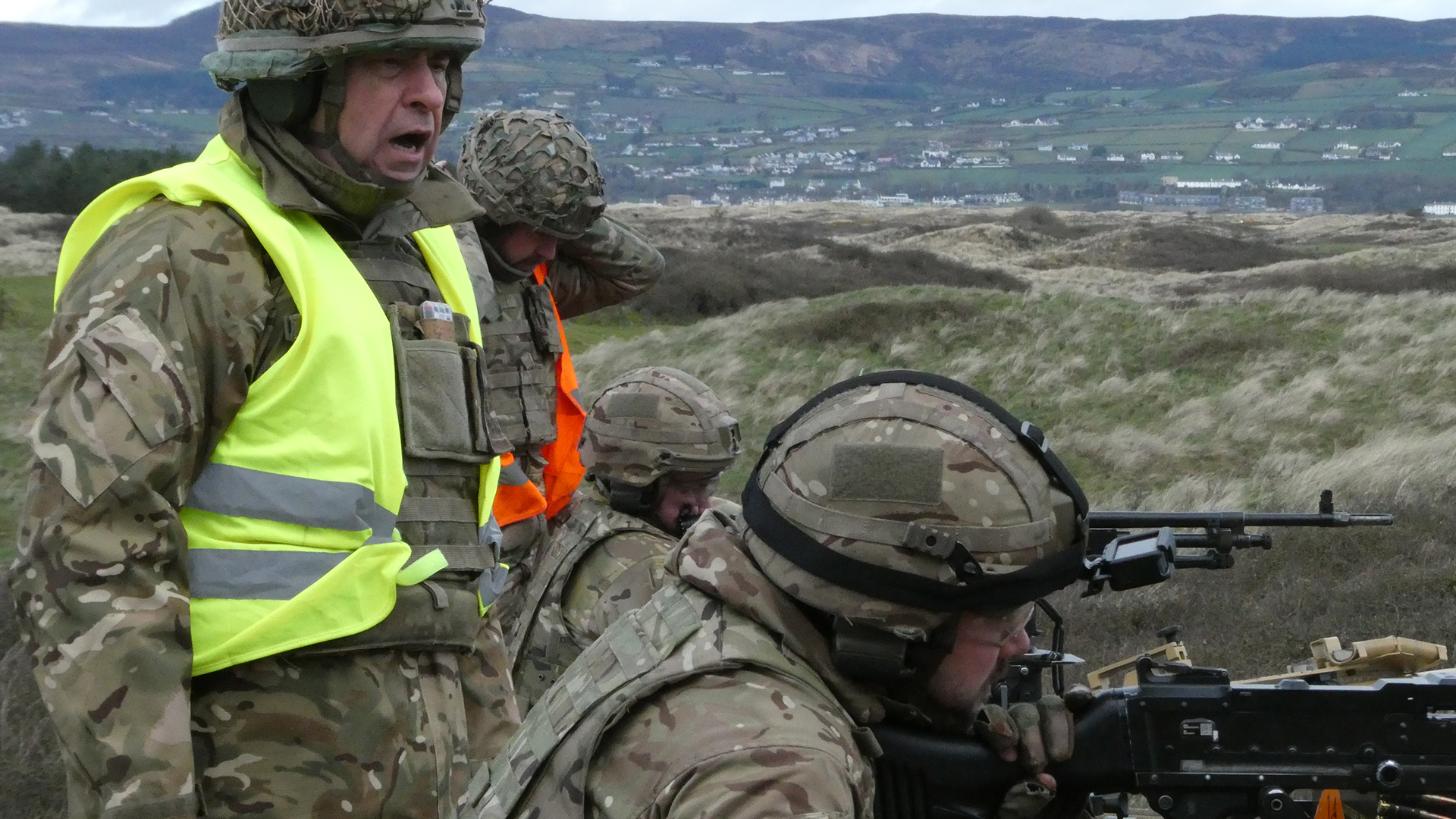
The man in charge of the course – and ultimately responsible for everybody's safety on the ranges – was Captain Si Talbot.
As well as determining whether the potential gunners passed or failed, he was also the Range Conducting Officer, and his word was law.
"Well, first and foremost, they need to pass the shoot. If they don't, they'll need to pass on re-test. If they fail to do that, unfortunately, they'll fail the course," he explained.
"It is a qualifying course to be a platform weapons operator, and that comes with a competency.
"For us, it's part of shaping activity for future deployments next year. In order to ensure we can field as many qualified troops as possible, they've got to complete the course."
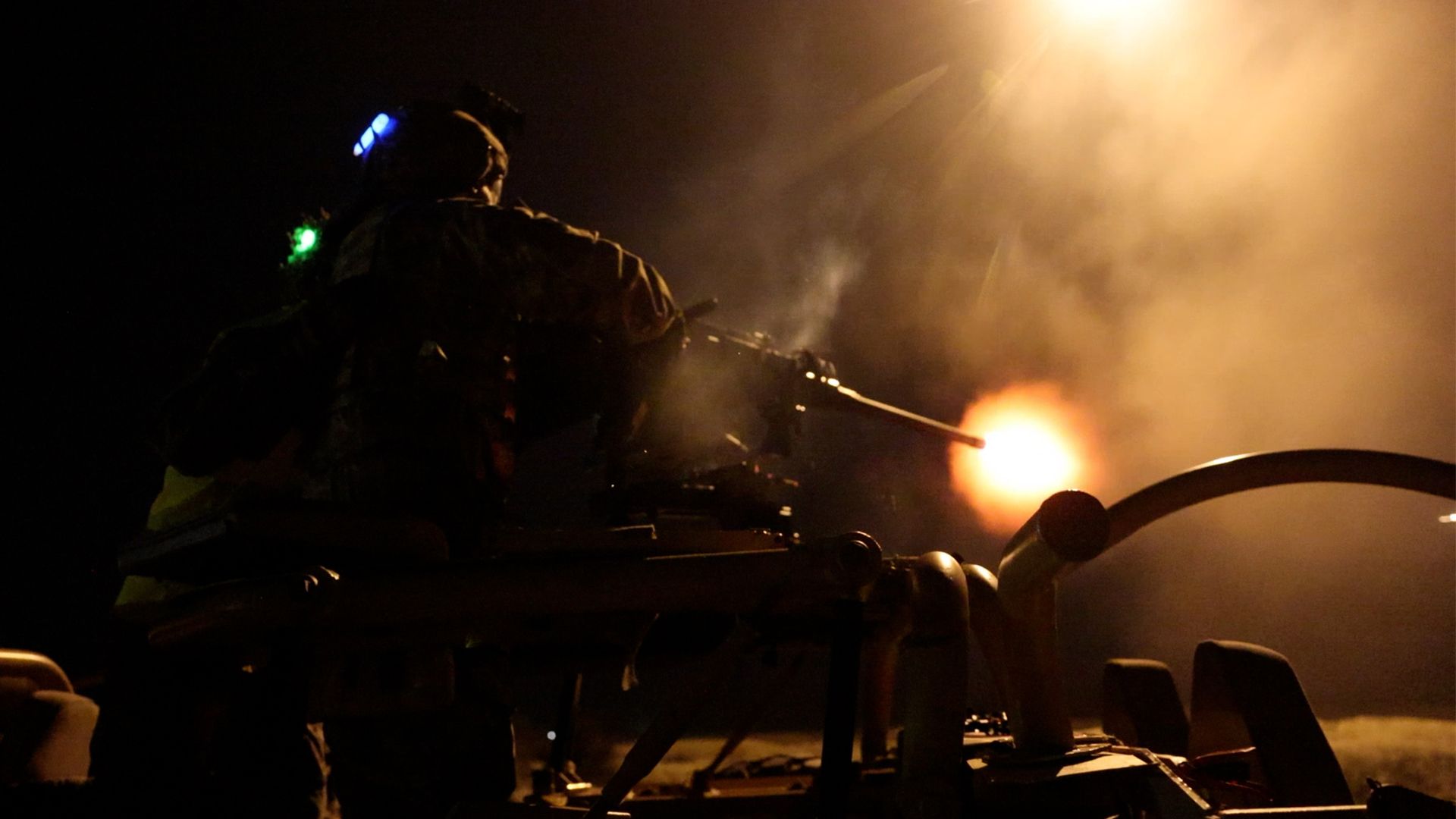
A key test came during a night shoot – an inherently more dangerous serial, where gunners fire at targets up to 1,200 metres away in the dark.
Control of movement was critical, and nobody was permitted to be anywhere other than exactly where Capt Talbot instructed. The risk of injury is significantly higher at night than in daylight.
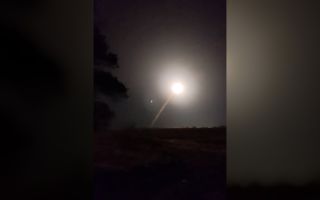
For a neutral observer like me, standing back and watching what became an almighty display of light – created by tracer rounds and flares, known as para illume – it was nothing short of box office.
Train together, but not fight
Another major difference between this unit and a regular one is that it is now highly unlikely that the unit would deploy together. In the regular Army, units train and fight together, building esprit de corps and bonds that can endure in war.
Reservist units, however, are no longer treated as whole formations to be deployed as a single entity. Instead, they are used to provide individuals to reinforce regular units.
For the SNIY, the most likely destination for mobilised personnel would be their paired regular unit – the Royal Scots Dragoon Guards.
Any scenario in which reservists are deployed individually brings its own challenges, particularly integrating into an already well-oiled regular unit.
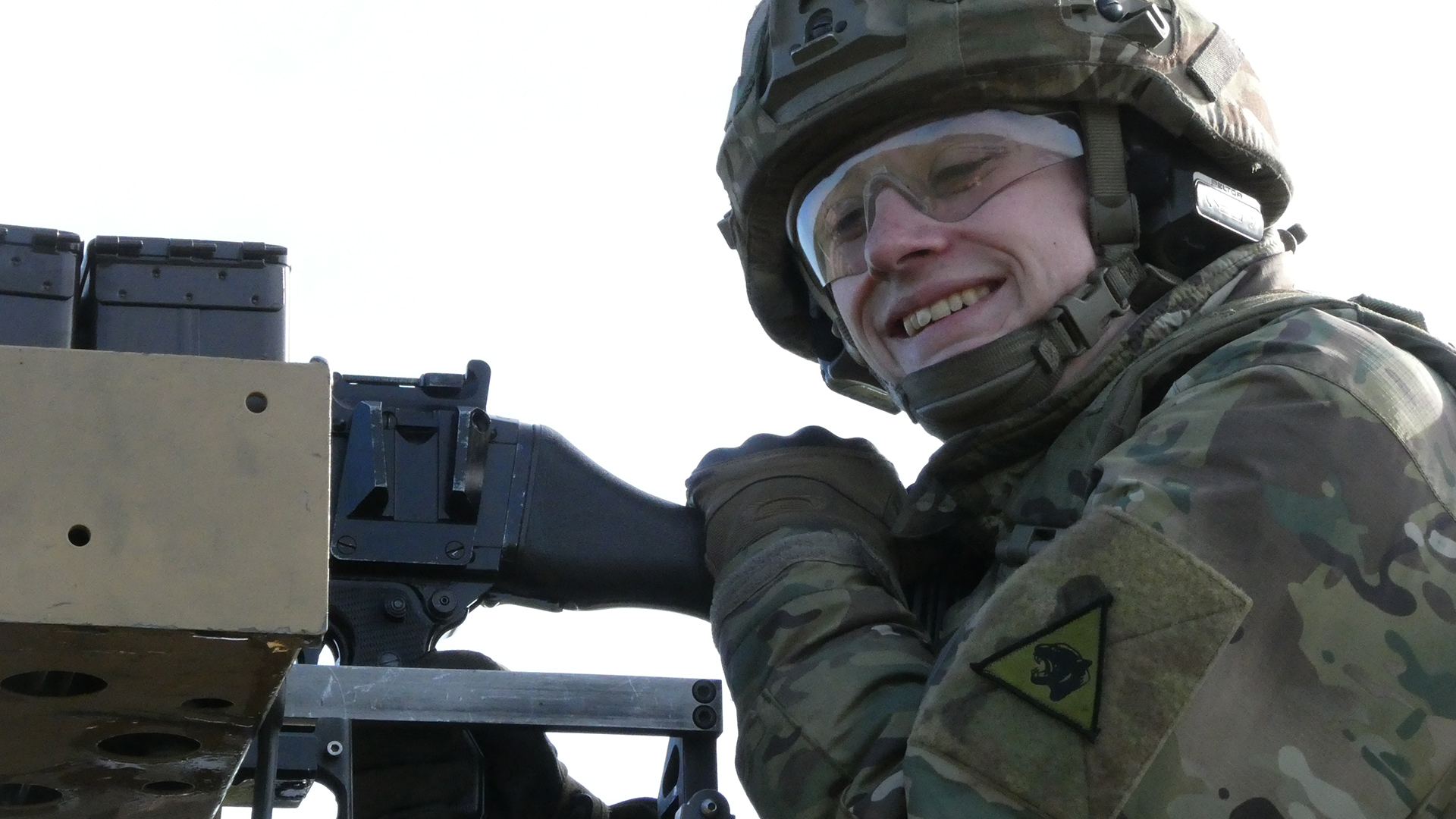
The following day, the gunners prepared for the final test – a crewed shoot, firing from both static and moving Jackal platforms under time pressure.
If they failed to hit their targets within the allotted time, they risked failing the course.
Under pressure, but winning
At this stage, the pressure was evident. Midway through the first serial, Capt Talbot intervened, noting that arcs were not being maintained and too much ammunition was being expended too quickly.
A sharp pep talk followed – and it worked. The gunners returned to the range, and this time they delivered.
By lunchtime, with the sun shining, the final shots rang out. For the instructors, it was a job well done. The SNIY can now count several newly qualified gunners among its ranks – a clear boost to its ability to support operations.
For the individual reservists, it was another two weeks of Army life under their belt – and thousands more rounds downrange.
Join Our Newsletter