Nepalese government instructed to reform UK agreement on Gurkha recruitment
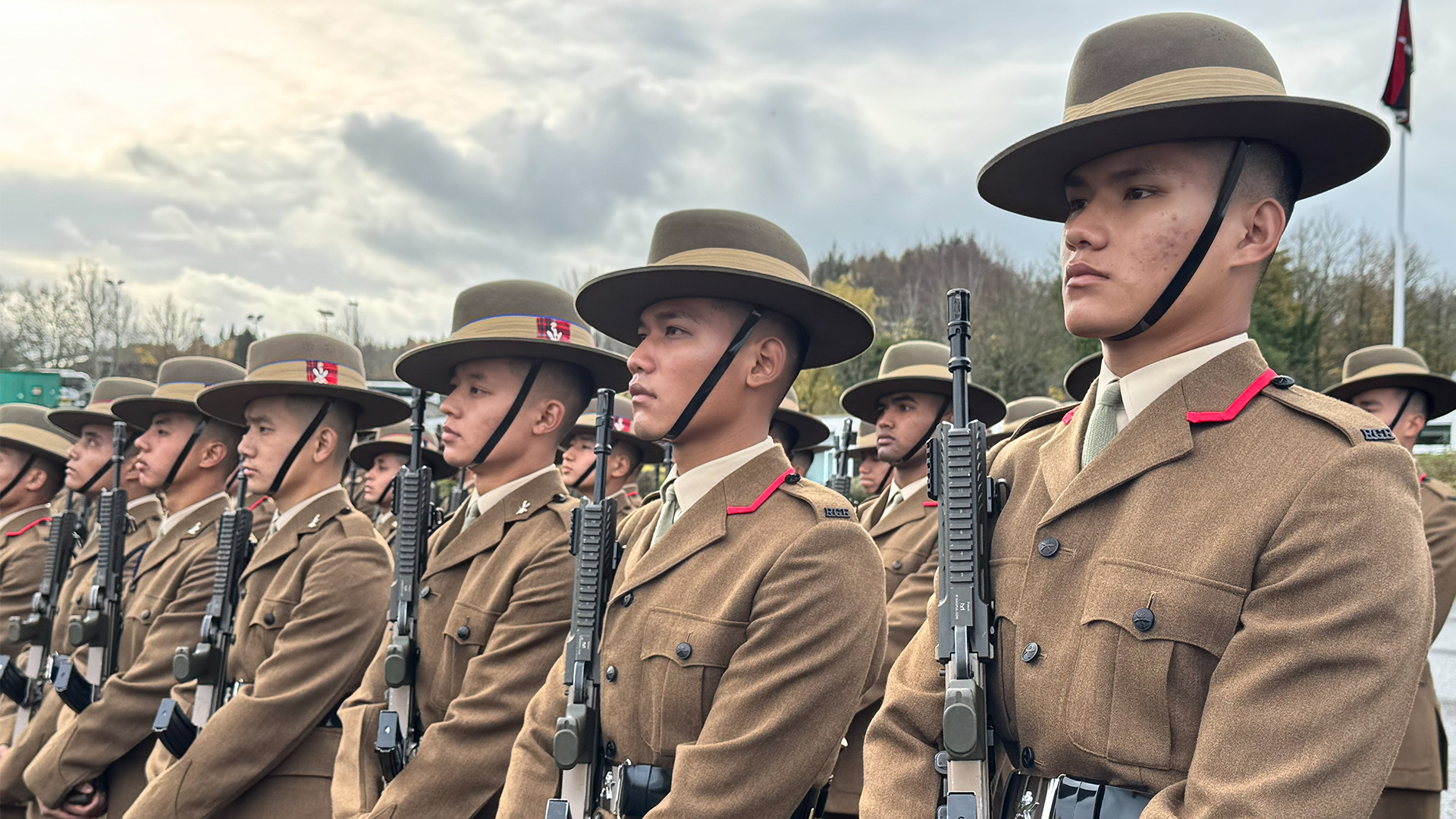
The Supreme Court of Nepal has directed the Nepalese government to review and replace its agreement with the UK on Gurkha recruitment.
The current terms are dictated by a 1947 tripartite pact originally signed between Nepal, India and the UK.
Campaigners say this is outdated and does not sufficiently safeguard Gurkha interests in today's world.
Rights and welfare
They are calling for it to be replaced with an arrangement that better protects the rights, welfare and benefits of Gurkha soldiers.
They also requested the halting of the recruitment process until a new agreement is made, although this demand was dismissed.
Following the writ petition presented by the British Gurkha Satyagraha Struggle Committee, the court stated that the government should review the tripartite agreement and work towards a bilateral understanding with the UK.
It recommended that a study be conducted on the relevance of the agreement.
The Supreme Court noted that the tripartite agreement failed to adequately protect the welfare and rights of Gurkha soldiers due to "unequal power balance".
The court emphasised that colonial-era agreements should not perpetuate unjust practices today, and called for diplomatic efforts to resolve the issue.
It also warned that continuous discrimination against Gurkha soldiers would automatically allow Nepal to limit or terminate its obligations under the principle of reciprocity.
UK aiming to address concerns
Veterans and People Minister Louise Sandher-Jones said: "The UK holds the distinguished service of the Gurkhas and the deep, historic ties between our country and Nepal in the highest regard.
"We note the recent judgment of the Supreme Court of Nepal and respect the important role it plays within Nepal's constitutional and democratic system.
"We are reviewing the court's decision closely, noting that it touches on a very broad range of issues, and we remain committed to engaging constructively with the government of Nepal through our established bilateral mechanisms.
"UK officials are investigating whether additional proposals could be achievable to address concerns.
These longstanding matters are best progressed collaboratively, through continued dialogue, shared understanding and mutual respect, and the UK will continue to work with Nepal to ensure that issues affecting Gurkha veterans and their families are considered in a balanced manner."

A brief look back
:: 1947 – Tripartite Agreement
Nepal, the UK and India sign the Tripartite Agreement allowing Gurkhas to serve in the British and Indian armies after India's independence.
Gurkha terms are largely aligned with Indian army conditions.
Gurkha veterans receive pensions under the Gurkha Pension Scheme (GPS), which is based on Indian army rates rather than British Armed Forces rates.
While these pensions are paid immediately upon retirement after just 15 years of service, they are significantly lower than those received by their British Army counterparts.
:: 1997 – Brigade relocates to the UK
The Brigade of Gurkhas moves its home base from Hong Kong to the UK. This date later becomes critical as the key cut-off for pension transfer eligibility.
:: 2000 – Increase in Gurkha pensions
Gurkha pensions under the Gurkha Pension Scheme increase to roughly double the highest band of Indian army pension rates.
: 2007 – Gurkha Offer to Transfer
The UK introduces the Gurkha Offer to Transfer (GOTT), allowing Gurkhas to transfer their pensions from the Gurkha Pension Scheme to the Armed Forces Pension Scheme (the British pension scheme) – but with certain conditions.
All service after 1 July 1997 would count fully toward the pension.
Pre-1997 service would count only partially (23-36% depending on rank), and those who retired before that date cannot transfer.
:: 2009 – UK settlement rights reform
Following a high-profile campaign supported by Joanna Lumley, the UK Government changes immigration rules, allowing many retired Gurkhas to settle in Britain.
:: 2013-2014 – Gurkha Welfare Inquiry
After hunger strikes and campaigning, the All-Party Parliamentary Group on Gurkha Welfare conducts an inquiry. It stops short of recommending full pension parity, but calls for pension rate reviews.
:: 2016 – UK-Nepal Dialogue Process
The governments of Nepal and the UK begin formal discussions to address Gurkha veterans' grievances, particularly over pensions and welfare.
:: 2018 – Technical Committee Report
A report identifies pension disparities as a major grievance, but does not lead to retrospective pension changes.
:: 2020 – UK Consultation on Pension Rates
The Ministry of Defence opens consultation on whether maintaining Gurkha pensions at double Indian army rates remains appropriate and affordable.
:: 2021 – Hunger strike in London
Members of Gurkha Satyagraha stage a hunger strike outside Downing Street, demanding equal pensions.
The protest ended 12 days later after the UK agreed to further talks and establish a bilateral committee.
:: 2026 – Nepal Supreme Court ruling
The Supreme Court of Nepal urges the Nepal government to replace the 1947 Tripartite Agreement with a bilateral Nepal-UK agreement to better safeguard Gurkha rights and welfare.
Join Our Newsletter