Double the speed, stealthier and uncrewed: Future Royal Marines multi-purpose landing craft
Royal Marines could be landing on hostile shores in a fast, low-signature craft capable of speeds up to 50 knots, as the UK looks to replace its ageing Landing Craft Vehicle Personnel fleet beyond 2027.
One of the options is the Littoral Strike Craft, a BAE Systems design developed with Norway to land commandos on beaches at high speed while reducing exposure to enemy detection.
Tank testing at the University of Southampton's Wolfson Unit suggests the hull can handle rough conditions with waves of up to four metres high.
- Drone race: Turkey's armour-piercer, Russia's entangler and Ukraine's underwater attacker
- The Swedish stealth submarine designed for a harsher fight over undersea cables
- Lies, deceit and disinformation: The fake news with the power to change the course of war
Rather than traditional beach assaults, the concept prioritises inserting small, dispersed teams which arrive fit to fight after travelling at speed from ships positioned further offshore.
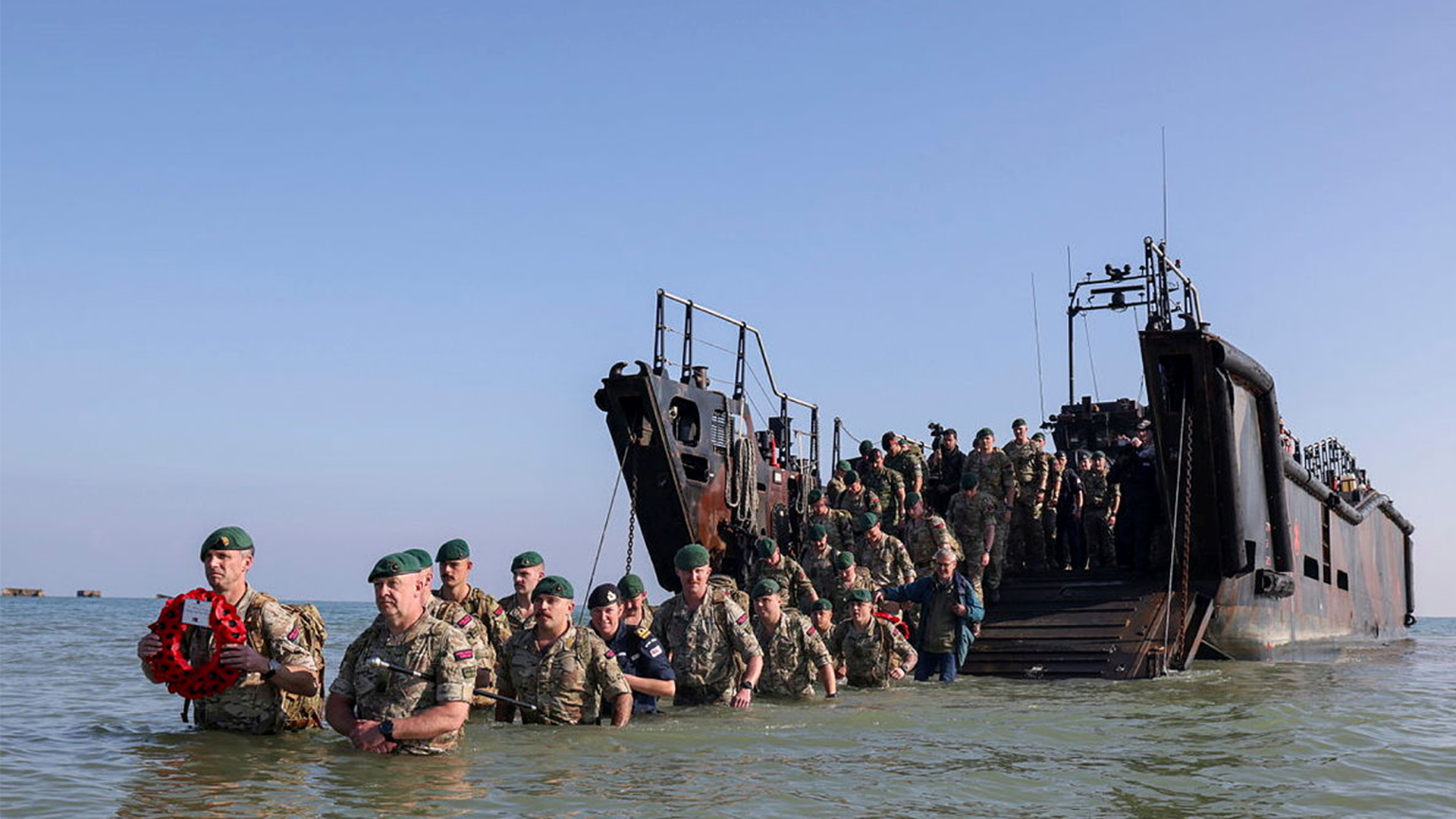
At 25 knots, the current Royal Marines landing craft, the LCVP MK5, can travel at roughly half the speed of the Littoral Strike Craft.
The Littoral Strike Craft is designed to reach a speed of almost 100km/h.
The craft is also designed to be reconfigured quickly for multiple roles, including surveillance, precision fire support, counter-uncrewed systems, defence and resupply.
Autonomy is expected to play a central role, with the platform designed to operate with minimal or no crew.
The UK-Norway project sits within a wider push among allied navies to rethink amphibious operations.
Australia is developing its own uncrewed landing craft, designed to operate autonomously or be configured into structures such as floating bridges or jetties.
That design can switch between logistics, reconnaissance and combat support roles, pointing to a future where landing craft are part of a wider, networked system rather than single-purpose vessels.
Join Our Newsletter