Navy urged to replace defective icebreaker urgently amid rising Falklands tensions
The Royal Navy's only ice patrol vessel has been towed into Devonport, reportedly with a double engine failure, raising fresh concerns over how the news will be interpreted by Argentina.
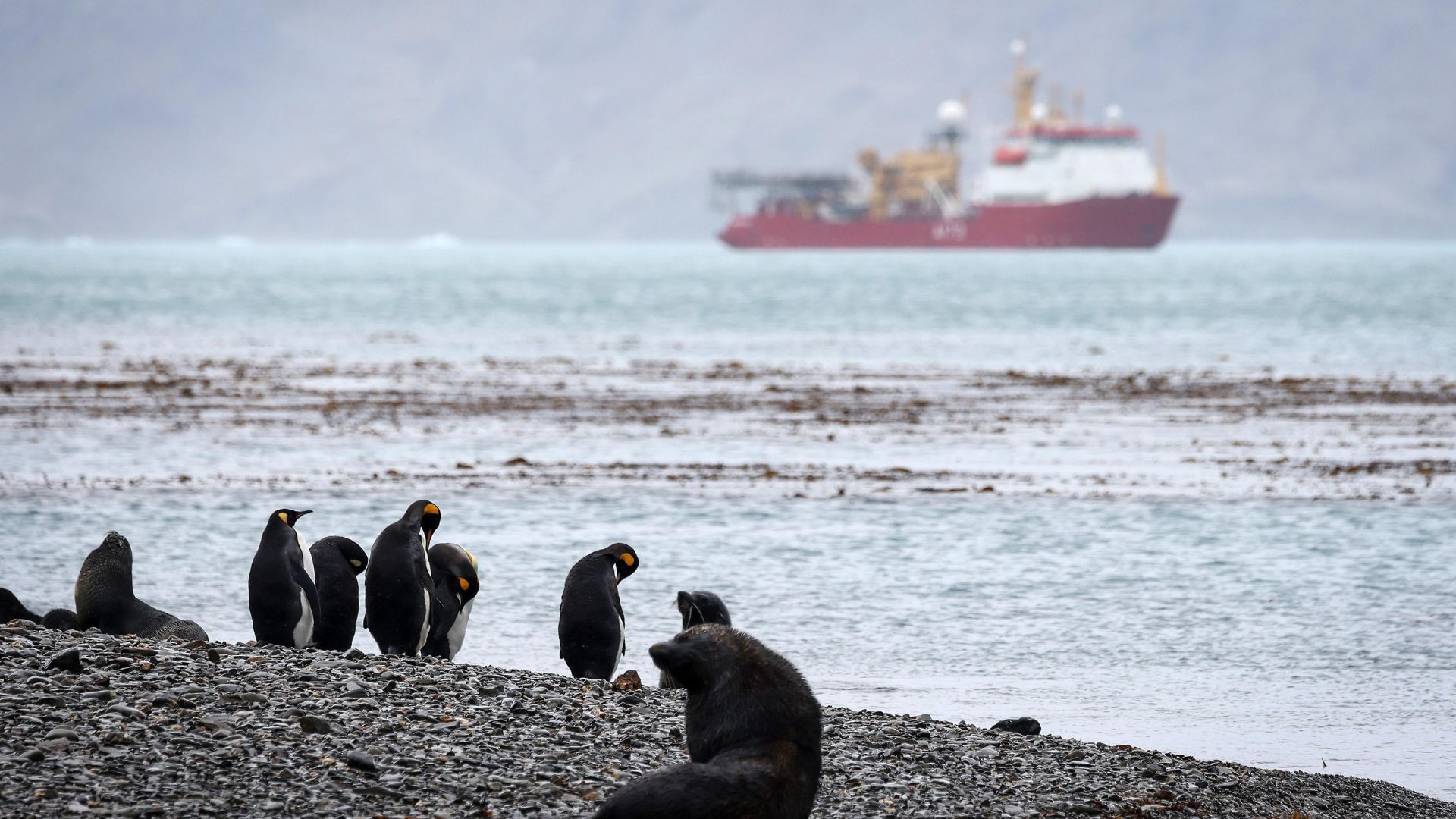
HMS Protector fulfils an icebreaking role to monitor the demilitarised Antarctic and support safe navigation for scientific research in challenging conditions.
According to the UK's Defence Investment Plan and the Royal Navy, she is due to be replaced by a more modern variant.
However, the document also highlighted the importance of the military's now-missing ice patrol capability to "maintain this essential presence and support Government activities in the Arctic and around the British Antarctic Territory".
Speaking to BFBS Forces News, retired Royal Navy Commodore Steve Prest assessed the geopolitical significance of the vessel's woes given Argentina's continued claim to the Falkland Islands.
"In those territories down in the South Atlantic, there is still some contestation over their sovereignty, and we've seen a resurgence of some of those claims from Argentina in recent weeks and months, emboldened by the political situation in America," he said.
"Let's not forget that it was the withdrawal of one of the previous ice patrol ships that was down there, HMS Endurance, that was one of the precipitating factors of the invasion of the Falklands.
"It was seen as a signal that the British weren't interested in the South Atlantic in quite the way they previously had been. So these things are important, not only in terms of the work that they do, but also the signalling that they send geo-strategically."
Don't be alarmed, but act quickly
Considering the international discourse, the timing of HMS Protector's defect, as described by the Royal Navy, demands new context applied to any concern over South Atlantic security.
The withdrawal of the previous icebreaker in the 1980s was seen as a retreat of the UK from some of its overseas territories and interests, Cdre Prest explained.
"I don't think we're in that situation at all now," he said. "I think we're absolutely crystal clear in terms of the UK Government's policy around the sovereignty of the British South Atlantic territories, the Falkland Islands and so on.
"We have significant military assets down there, not least fast jets and air defence teams and infantry companies. So the islands are well defended, far better defended than they were in 1982."
He added: "I don't think we should be too alarmed.
"The diplomatic and Foreign Office signalling is unambiguous with regard to sovereignty of the Falkland Islands. So I don't think there's going to be the same miscalculations.
"I don't think we need to worry about that. But these ships, HMS Protector and her predecessors, had a job of work to do down there. And that job of work will need to be done.
"And we should, in my view, both for reasons of doing that job of work, but also signalling that we still take our maritime responsibilities in that part of the world seriously, replace the ship as quickly as possible."
More modern variant to be introduced
A Royal Navy spokesperson said: "HMS Protector has returned to her home port of Devonport while investigations into a defect take place.
"As part of the Defence Investment Plan, HMS Protector will be replaced with a more modern variant to maintain the ice patrol capability.
"She remains part of the fleet, and any decisions on her immediate future will be made in due course."
Related topics
Join Our Newsletter