RAF armourers: Safely making aircraft dangerous since the First World War

"Without armament, there is no need for an Air Force."
This belief, held by Air Chief Marshal Lord Trenchard, the "Father of the Royal Air Force", underscores the vital role of the armourer.
Armourers, or weapons technicians as they are also known today, are curious, enjoy tinkering, are reliable and often have a wicked sense of humour.
Speaking to BFBS Forces News, Warrant Officer Chris Ainsworth explained their crucial role, saying: "[Armourers] sit in a very unique space within the RAF engineering family in that we are there at the beginning and we're there at the very end.
"We allow the aircraft to fly, and we allow the pilot, in the worst possible scenario, to stay alive."
RAF veteran Tony Lamsdale, along with co-author Phil Appleby, poignantly described in their book The RAF's Armourers the history of this role, noting that armourers have been "safely making aircraft dangerous since the First World War".
Here we explore what it means to be an armourer in the RAF.
What does an armourer do?
During the Second World War, RAF armourers were affectionately known as "plumbers" due to their responsibility for maintaining hydraulic and electronic systems, which involved considerable pipework.
Today, their role is incredibly diverse.
Mr Lamsdale, who served as an armourer for 12 years, lightheartedly notes that the job can sometimes be boring and repetitive, but underscores its vital importance, stating "there's a gravity associated with the job".
An RAF armourer's role encompasses a wide range of responsibilities, including fitting and maintaining ejection seats, weapons and various types of ammunition.
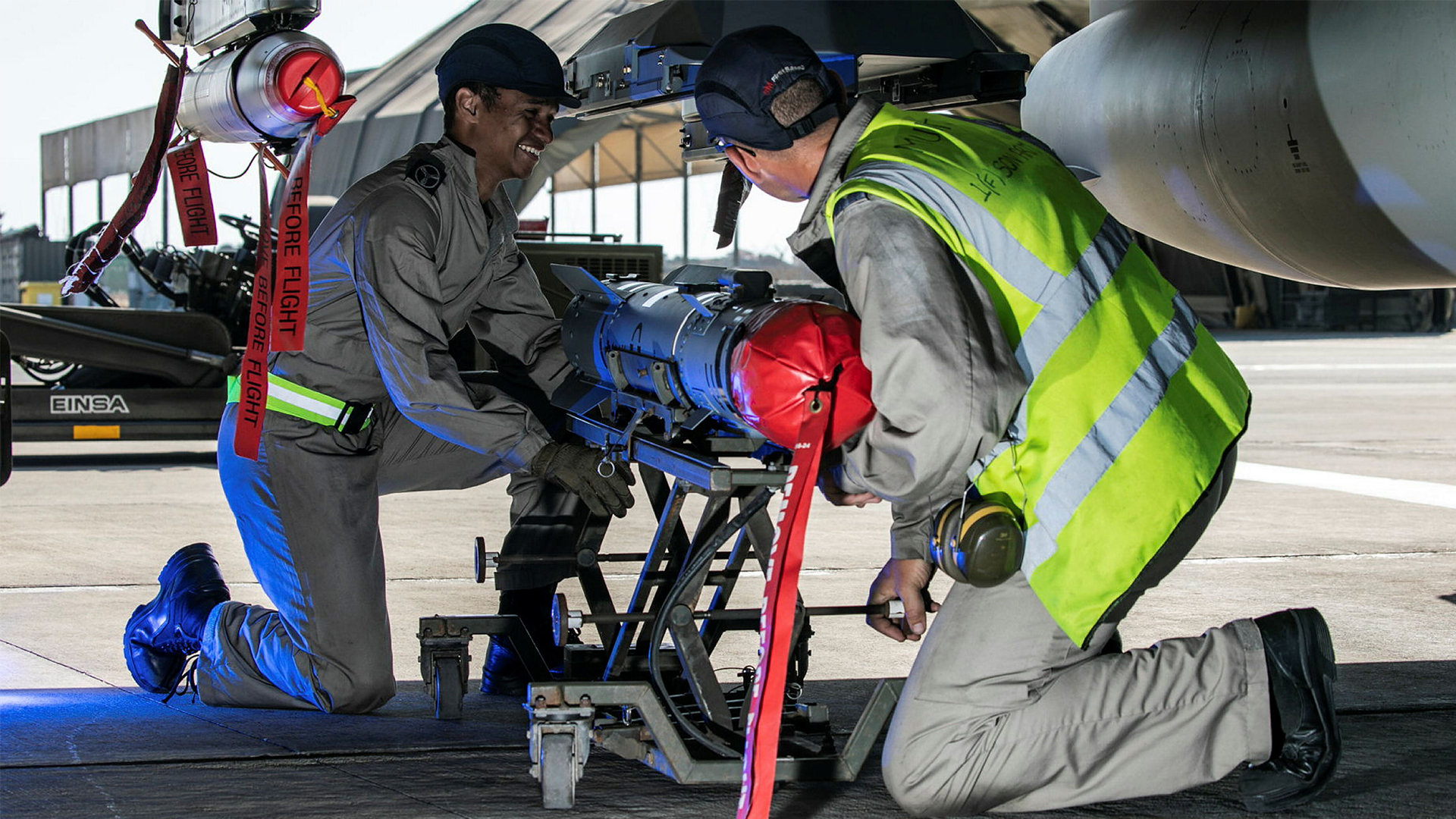
They also service light and heavy weapons, conduct safety checks in explosive storage areas and comply with strict regulations to ensure the safety of personnel and equipment.
This diverse trade requires expertise in both air and ground weaponry, making it a complex and vital role within the RAF.
WO Ainsworth said: "Over the generations, weaponry has evolved greatly.
"From handing various small bombs to aircrew to drop over the side of the aeroplane over the First World War trenches all the way to now where you've got complex weapons that are incredibly sophisticated."
Mr Lamsdale believes that without armament, the Royal Air Force is merely a "passenger service" and the ability to equip aircraft with bombs, missiles and weapons is fundamental to the RAF's mission.
When the Royal Flying Corps was established in 1912, aircraft primarily served reconnaissance purposes, providing observers with aerial views of the battlefield.
However, the focus quickly shifted towards a more aggressive role.
How would a WW2 armourer fare today?
Mr Lamsdale believes an armourer would feel at home in any era of the trade, saying: "They'd recognise what was going on and very quickly be able to get to grips with the job.
"And similarly, you could bring someone back from those days and pop them to where we are now on a Typhoon or something.
"But sometimes, you just can't beat the reliability of a trusty Mark I bayonet for clearing a minefield."
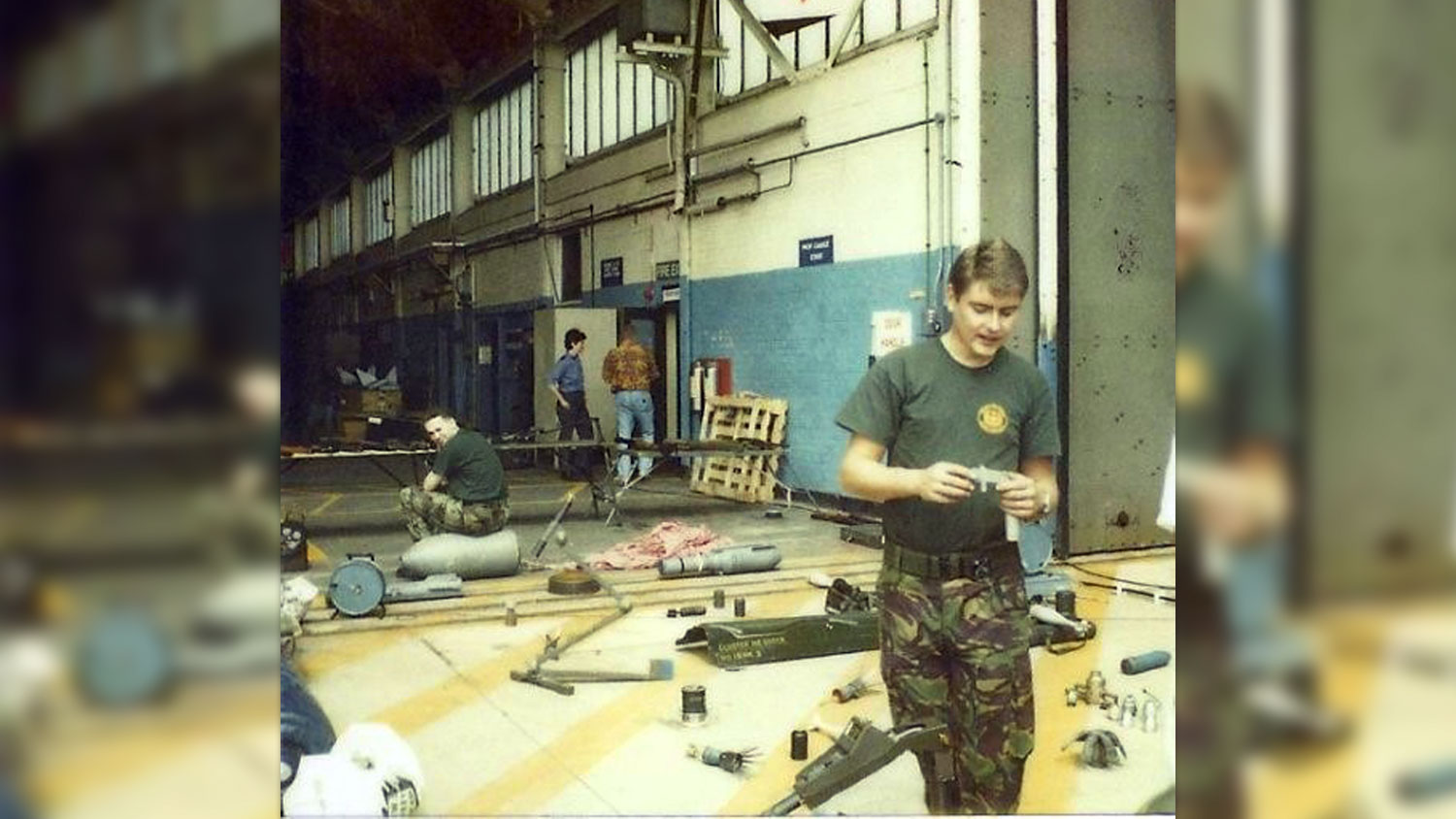
In the early 1990s, the former armourer found himself working with Explosive Ordnance Disposal equipment – a Mine Detector No, 4c – that was first issued during the Second World War.
Mr Lamsdale believes those who take on the role share universal traits: they are survivalists, dependable, trustworthy and full of integrity.
And crucially, the need to make intense, life-altering decisions helps to sharpen their focus.
He said: "If you think about what armourers deal with on a daily basis, you know, things that go bang and pop and can really ruin your day, if you have someone who isn't reliable, who isn't absolutely on it, or at least prepared to listen and take advice, then you have a very difficult day ahead."
A very different type of mission
As anyone in the Armed Forces knows, regardless of your role, if someone needs help and you are available, it's time to step up.
In a moment that leaves Mr Lamsdale feeling choked up, he shares a memory that has stayed with him for three decades.
One Christmas Eve in the 1990s, he and his colleagues were tasked to meet Sally Becker, founder and CEO of Save a Child, known as the "Angel of Mostar" for her humanitarian missions in Bosnia and Herzegovina.
Ms Becker was visiting the hardest-hit areas, gathering children who had been orphaned or injured, and the RAF was called upon to evacuate them to Italy.
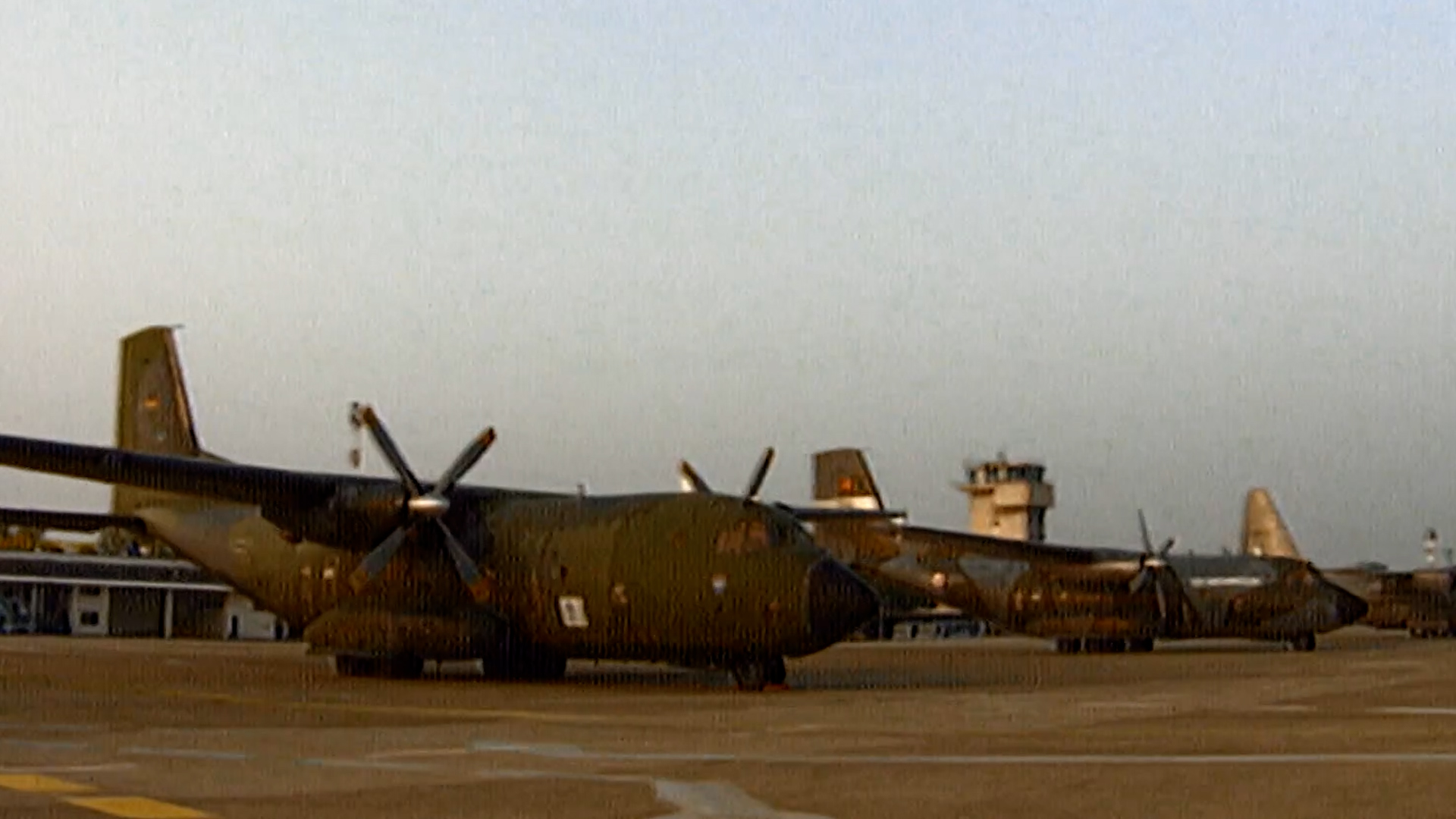
Mr Lamsdale and his colleagues waited in Mostar with their Hercules for the dozens of children to arrive, a sight he says he will never forget.
Alone and frightened, these children, all under 12, some on stretchers and desperately ill, arrived with nothing.
He said: "I can't describe the looks on their faces, but it will stay with me.
"We had these ration packs given to us, they were like a butty box, not the most appetising thing.
"There might have been a chocolate bar in there and it was like we'd given them gold."
Once they had landed in Italy, the men sat on the back of the Hercules, drank beer, sang carols and cried.
Mr Lamsdale highlights the importance of the social aspect of being an armourer, saying: "At the end of a tough day, it's crucial to decompress."
But he explained how friendship and camaraderie make "all of this survivable".
WO Ainsworth added: "If you were having a bad day, you could pretty much guarantee that somebody would recognise that and help you through it.
"We've always got a smile on our face, come what may and... we always bring biscuits!"
How are armourers honoured?
In September 2025, a memorial was dedicated to RAF armourers at the National Memorial Arboretum, honouring all who made the ultimate sacrifice or had been injured, as well as those who continue their important work.
Michael Haygarth, a retired armourer with 38 years of service and the author of From the Cold War to the War on Terror, was instrumental in bringing this memorial to fruition.
He said: "There have been numerous accidents and incidents during which armourers were killed or injured in the line of duty.
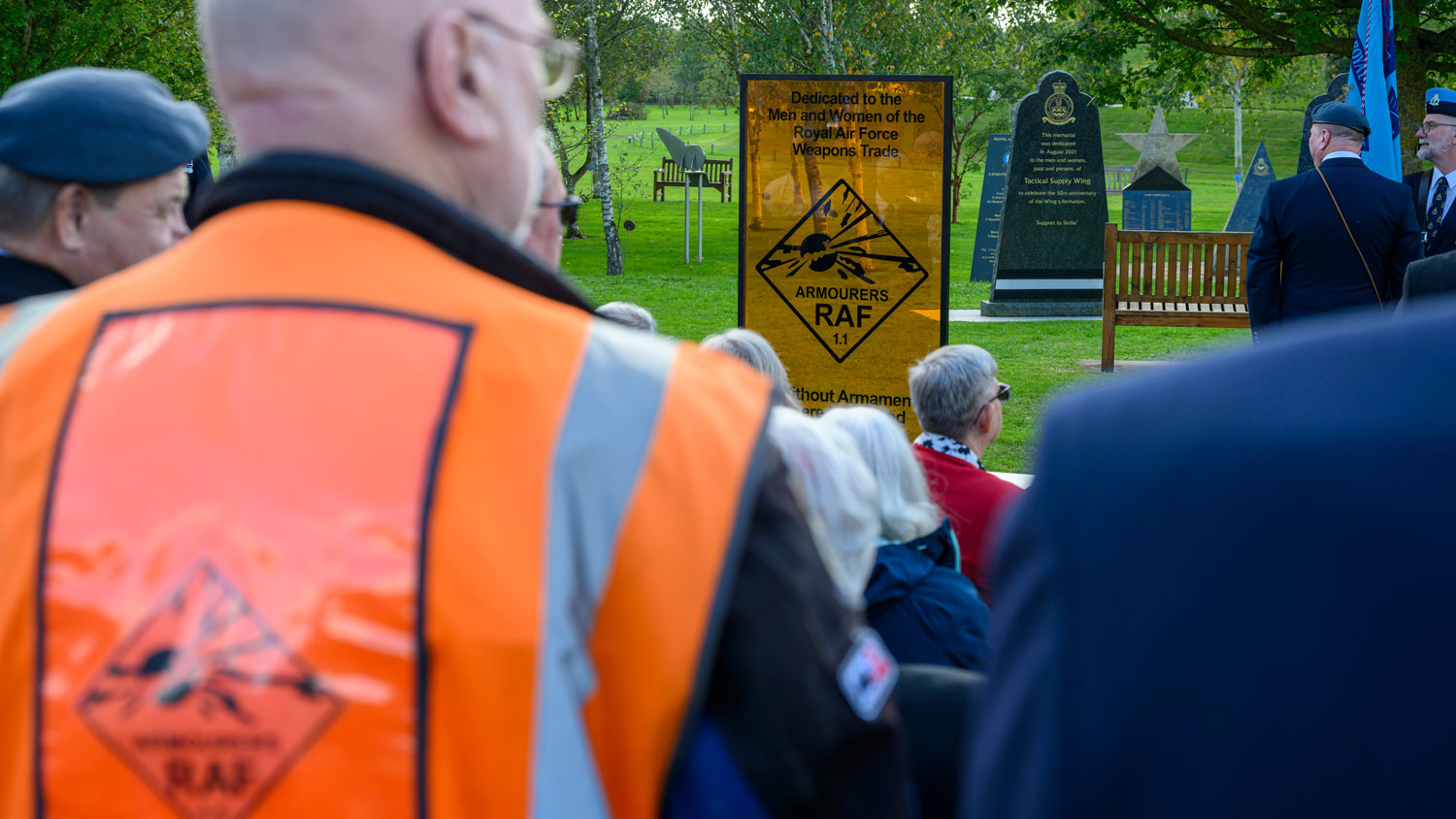
"The erection of a memorial... ensures that the great work and selfless dedication of the Royal Air Force armourers will forever be remembered by generations to come."
At the dedication of the memorial, Air Commodore Jamie Thompson spoke to those in attendance about the proud history and professionalism of the trade.
Of the first to take on the newly created role, he said: "They were pioneers in a new form of warfare.
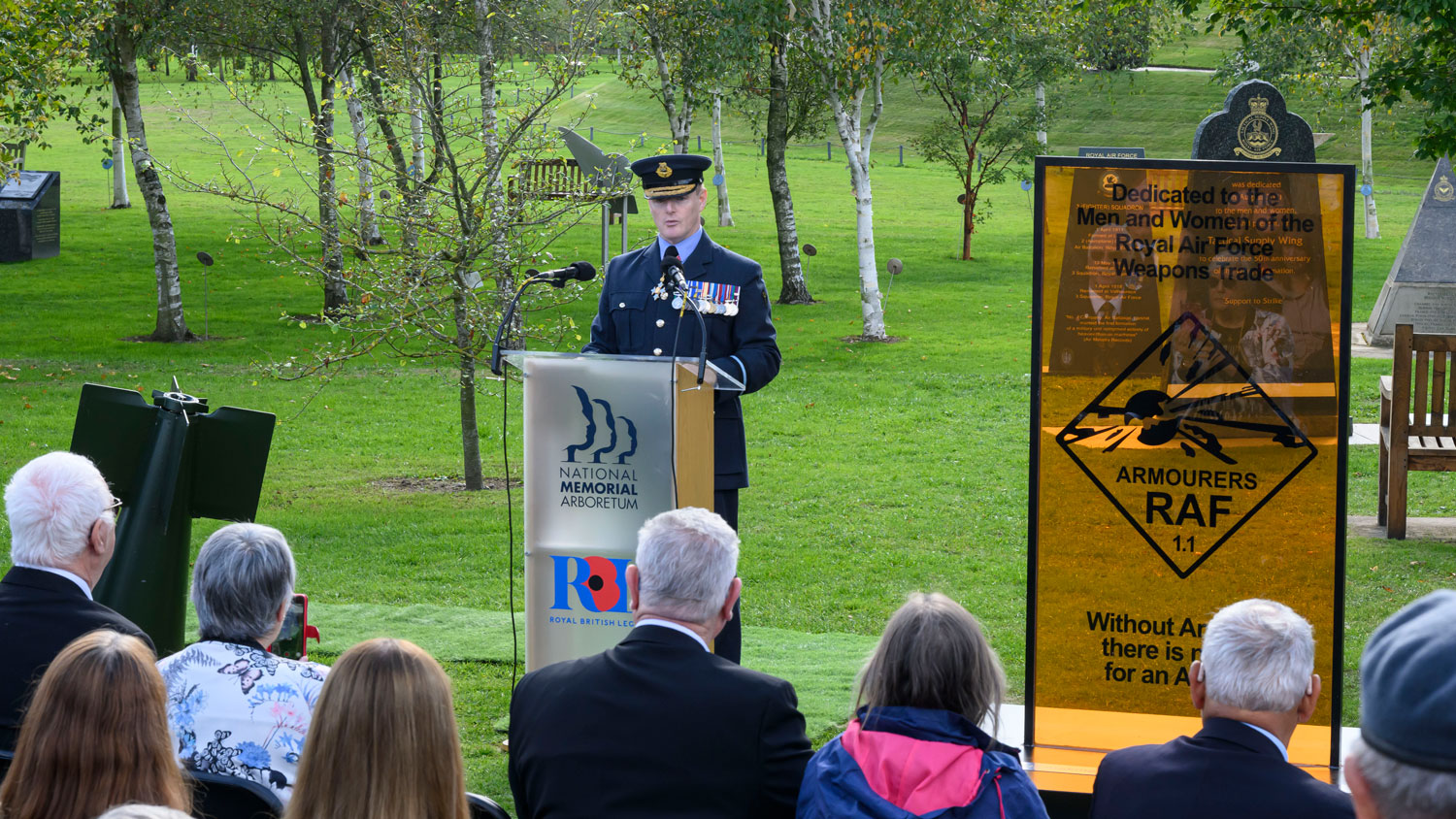
"They had to innovate, often under fire, solving problems that had never been faced before in aviation history."
Of armourers today, he added: "[They] will tell you about their humour, resilience and pride.
"They may joke about being the 'last to let you down' – a nod to their role with ejection seats – but behind that humour lies a serious commitment to keeping aircrew safe and the mission successful."
Related topics
Join Our Newsletter