Under the canopy: The former Royal Marine finding his freedom in free fall

Atop a mountain, 1,085 m high, with a light fog partially veiling the snowy valleys below, former Royal Marine Tim Howell steadies his breathing.
Running to the edge of the cliff face, he leaps off. Three heart-pounding seconds later, his canopy bursts above him, and he slowly drifts to the ground below.
It is all over in an instant. But those fleeting seconds marked the culmination of five years of meticulous planning and preparation, and he had just become the first person ever to ski base jump from the summit of Yr Wyddfa – or Mount Snowdon.
Falling with style
A niche and highly extreme subset of base jumping – the sport of leaping from fixed objects from a standing start – ski base jumping fuses alpine skiing with a cliff-edge take-off, typically with a parachute to control the descent.
It is as dangerous as it is technical, with no room for error.
So, what kind of individuals choose to combine two of the most dangerous action sports on the planet?
For Tim, his yearning for the extreme began aged just five, when he picked up his first set of skis. By 19, he had his sights set on the Royal Marines.
"It was pretty inevitable, my dad was a paratrooper – so I thought, I'm not doing that, I'm going to join the Marines," he laughed.
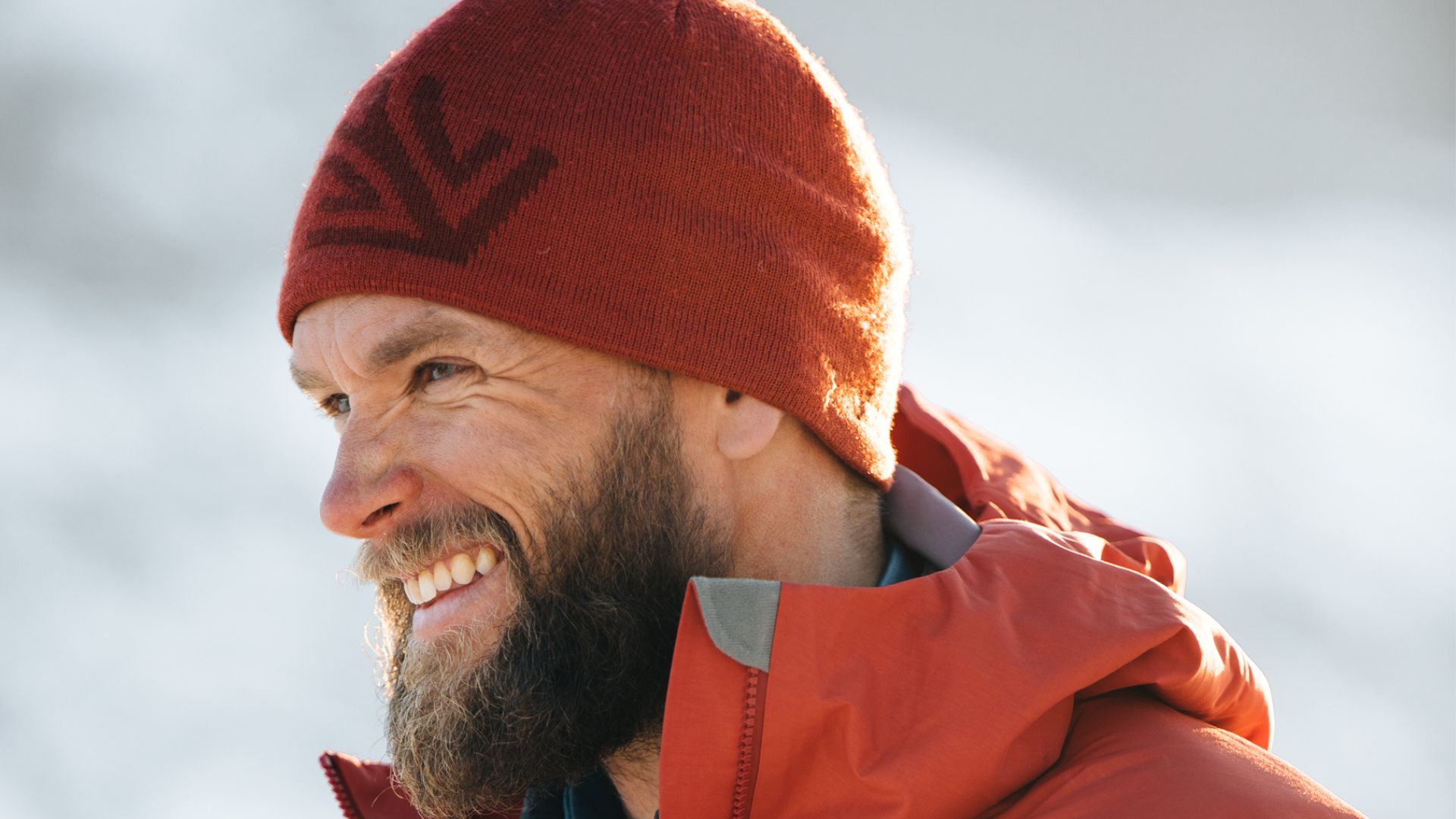
A tour of Afghanistan under his belt, he joined the prestigious Mountain Leader Cadre. It was there, he said, that he mastered the art of being "comfortable in the uncomfortable", and he seized any opportunity he could to pursue his passion.
"I'd started base jumping around the same time as I joined the corps, so it gave me the opportunity – if the hierarchy allowed me, which they often did – whenever we were in the world, I'd have a parachute with me.
"I could sneak off for a bit of R&R and get in a jump in, so that was really cool to travel the world with the Marines."
Finding opportunities to turn extreme sports into a career, Tim left the Royal Marines to pursue it full-time.
World firsts
Ski base jumping, he explained, adds another layer to this already niche sport. With 1,400 base jumps under his belt, he achieved his first ski base jump at just his 21st.
"It wasn't recommended, but it's about knowing about your own ability and knowing your skill set," he explained. "If you overstep the mark, it's got some serious consequences.
"But you manage to get some hang time when you jump off out from a 200 metre cliff instead of falling straight away – it's pretty special."
This freedom in freefall would see Tim navigating the world in search of spots never before attempted.
He became the first person on earth to wingsuit base jump from Aconcagua – the highest peak in both the Southern and Western Hemispheres at 6,961 meters – and the accolades do not stop there.
"First in the UK, Kenya, Angola, Vietnam – I love looking for countries that have never been jumped in, exploring them and going through the whole process of figuring out if it's possible or not."
Flow state
His latest and most recent? Wales's highest mountain – a rugged massif dominated by jagged volcanic rock.
"Someone might look at the video of the jump and go, right, it's a stunt, and he rocks up and goes 'oh this should work, roll the dice and see what happens'.
"But there's a lot of planning that goes into it – even trigonometry using a laser range finder," he explained. "Figuring out how far I can land, the vertical and horizontal distance to see if I can make the landing area.
"If I have a hesitation under the canopy and it takes me a second longer, am I going to have enough height? What speed do I need to clear the rocks below?"
And what exactly is going through his head as he readies himself?
"One hundred per cent a clear mind. If you are clear, calm and collected, you know something goes wrong and boom – you're straight on the problem solving and you can get it done."
When jumping from this low altitude, every second counts. Rocky terrains pose immediate dangers, and skiers must act quickly to ensure they release their skis mid-air to ensure safe parachute deployment and to avoid entanglement.
With any extreme sport, panic can creep in. In ski base jumping, it can cost you your life.
For Tim, he has an almost formulaic attitude: "There are two types of fear," he explained. "The fear you can't mitigate, it's something random – like a bolt of lightning hitting you.
"It's an uncontrollable risk, and if you can't control it, then what's the point in worrying about it?
"Look at why you're scared. Are you scared of your parachute not opening? Then you learn the ins and outs of packing. You get to learn, the more you practise, the more experience you get, and you don't have that fear anymore.
"Knowledge dispels fear," he added – and he's got the resumé to prove it.
Finding your limit – and going beyond it
The fire in Tim to push the boundaries has never dwindled, and in the future, he has set himself the ultimate goal – attempting the world's highest altitude wingsuit flight from the fourth-highest mountain on earth.
Lhoste, located in the Himalayas, stands at 8,516 metres above sea level and is often considered more technical than neighbouring Everest.
"We got to the exit point at 8,300 metres, but the weather came in," he explained. "This year we're hoping to go again."
Related topics
Join Our Newsletter