Training needs mostly met as Army and Royal Navy recruits give positive response

The attitude of recruits going through Phase 1 and 2 training is mixed across the Armed Forces, with Phase 1 training for RAF recruits of most concern, a survey has revealed.
While a similar survey of officer cadets gave the RAF the highest satisfaction rating, the story was not the same for rank and file trainee aviators.
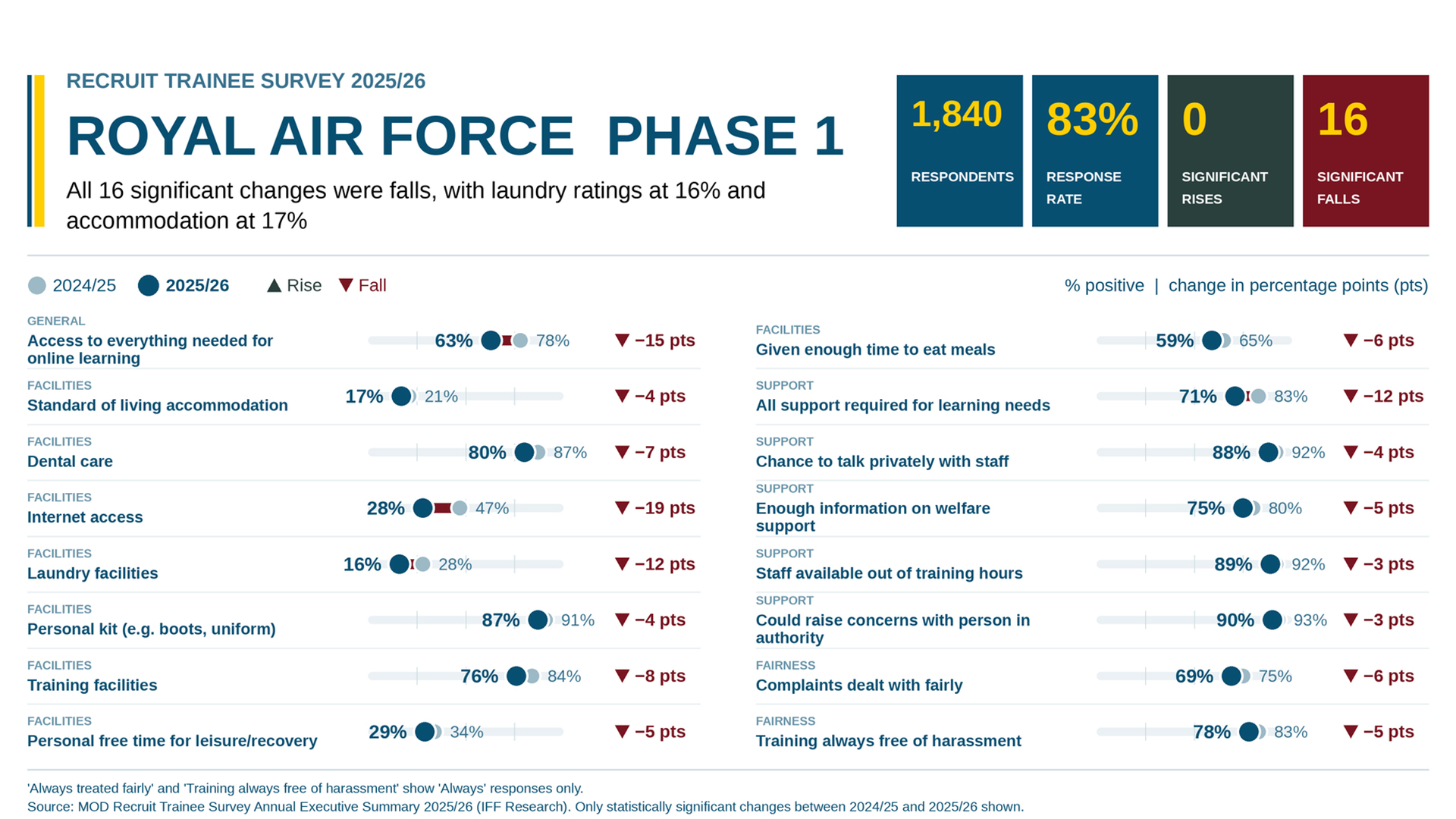
RAF Phase 1 recruits cited a combination of extremely low accommodation and laundry satisfaction, declining internet access, deteriorating fairness indicators and reduced welfare support.
Royal Marines training results are also of concern, with the survey results showing a fall in overall satisfaction, personal kit satisfaction and support for injured trainees.
However, while Royal Navy officer cadets were the least satisfied, Phase 1 recruits and Phase 2 trainees - along with Army Phase 2 trainees - showed there had been positive movement in several important areas.
The Recruit Trainee Survey Annual Executive Summary 2025-2026 questioned recruits and trainees, garnering 14,686 responses across the training populations, collected between 1 April 2025 and 31 March 2026.
The responses revealed a mixed picture across initial and subsequent military training.
There were positive developments in several areas across Royal Navy Phase 1 and Phase 2 training, Army Phase 2 and some RAF Phase 2.
However, RAF Phase 1 and Royal Marines Phase 2 results showed a substantial deterioration in living conditions, welfare access, fairness and overall training experience.
Royal Air Force
The responses from Phase 1 recruits showed there had been a big decline in their overall experience.
Accommodation, laundry, internet, welfare and fairness were of particular concern, with only 17% being happy with their accommodation and 16% with laundry facilities.
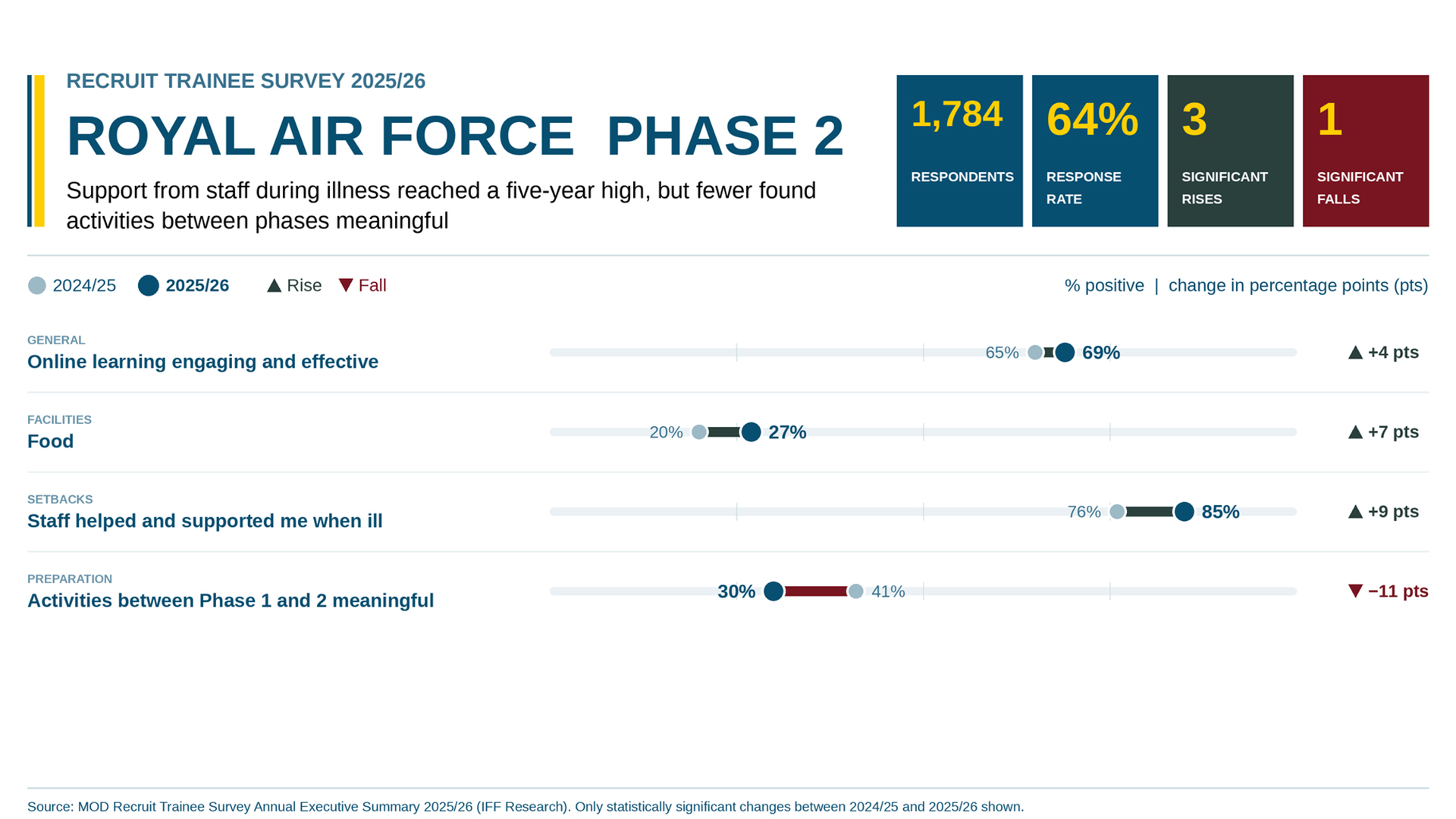
Phase 2 showed a much better level of satisfaction, with respondents citing Improvements in the support they received from staff during times of illness, food and online learning.
However, satisfaction with meaningful activities between training phases dipped to 30%.
Royal Navy
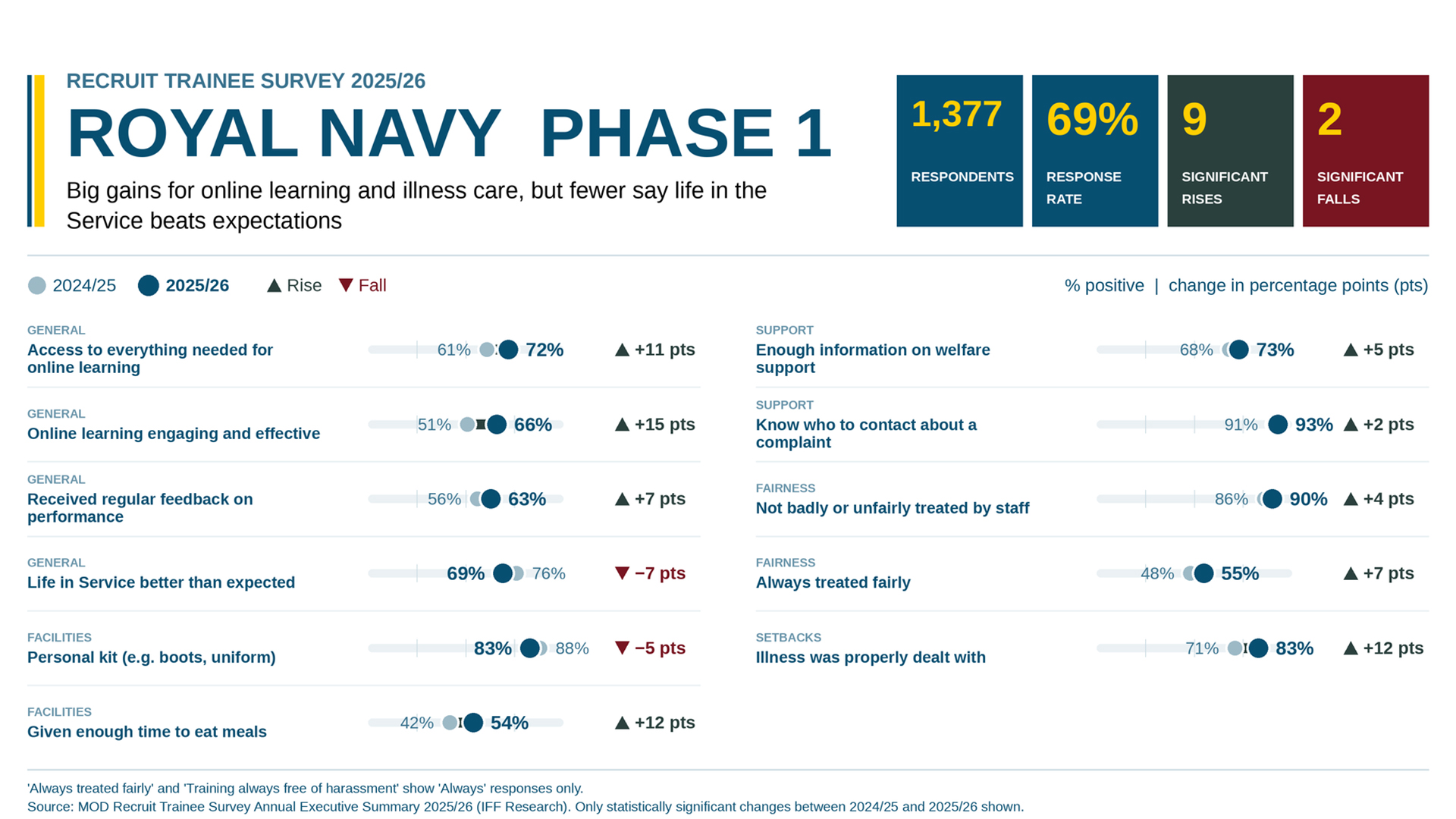
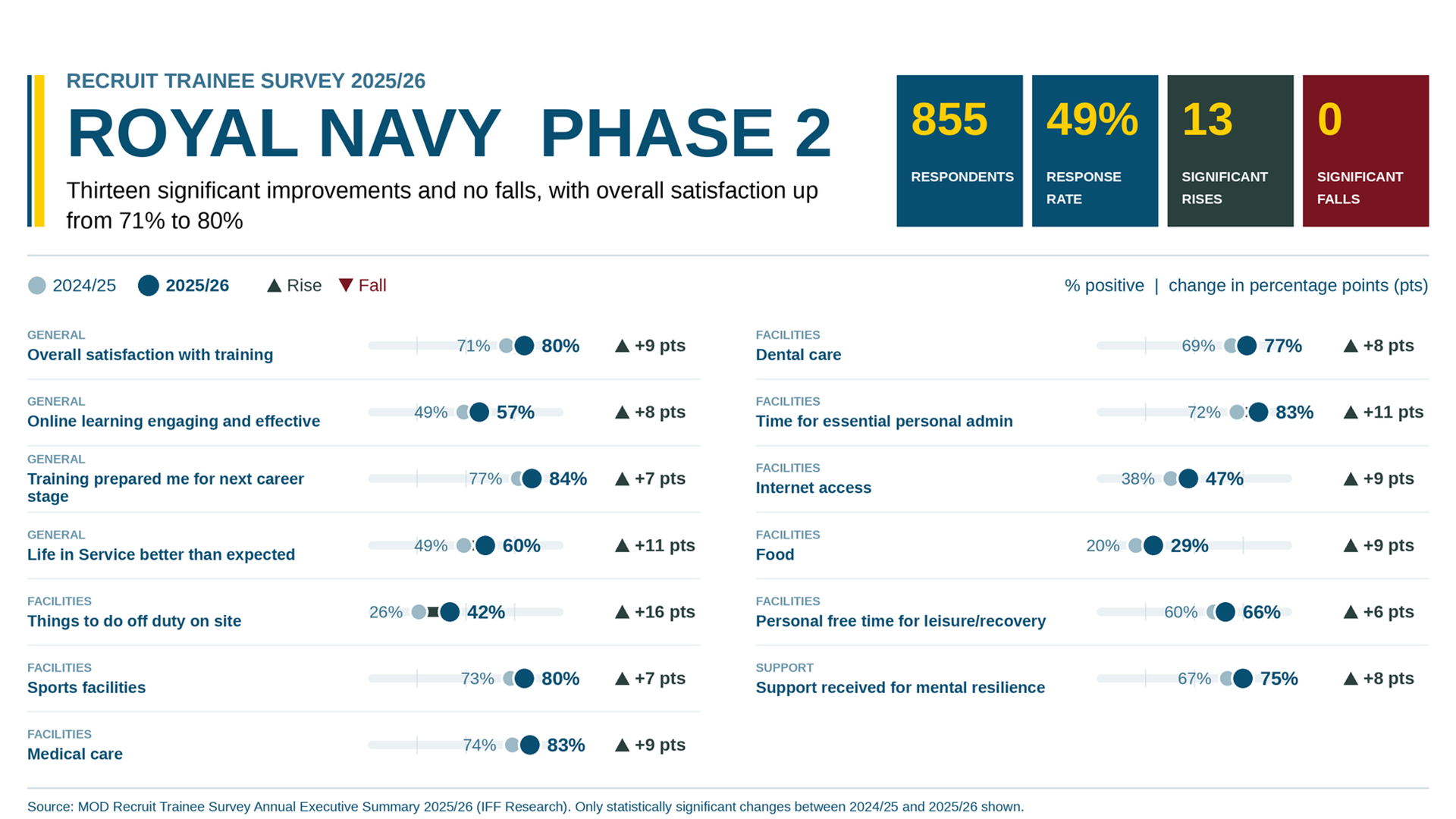
Results from recruits and trainees in the Royal Navy results indicate a solid improvement in their experience.
Phase 1 recruits reported improvements in fairness, feedback, welfare awareness, medical treatment and online learning, while trainees in Phase 2 said there had been improvements in satisfaction, preparedness, medical support, mental resilience and facilities.
Some weaknesses do remain however, notably with Phase 2 food satisfaction low at 29% and internet access at 47%.
British Army
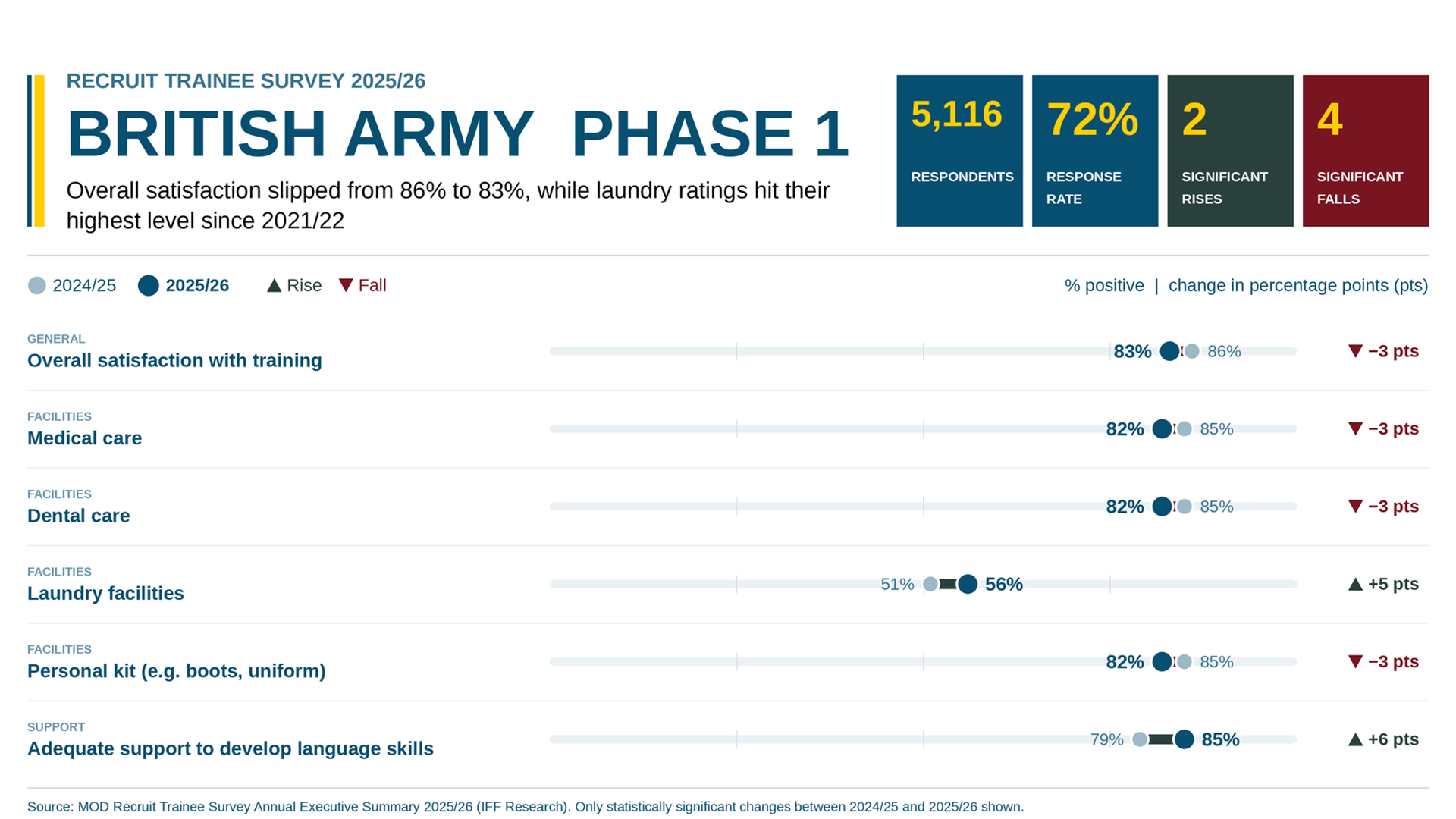
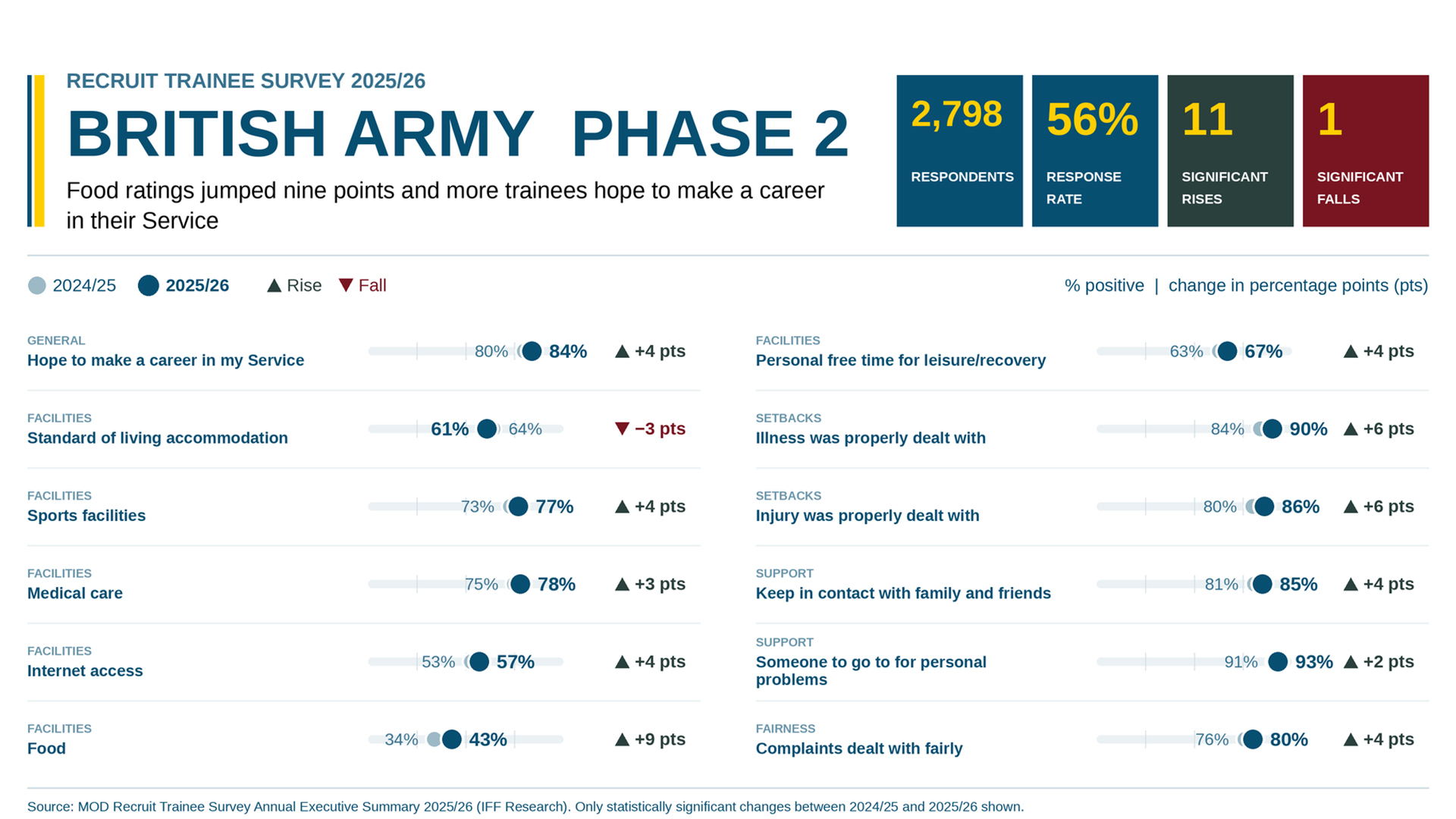
Army Phase 2 trainees' experience was broadly positive, while recruits going through Phase 1 training showed a slight dip in a few key areas.
Phase 1 recruit results showed declines in overall satisfaction, medical care, dental care and kit, but these were offset by improvements in laundry facilities and language support.
Phase 2 trainees were more upbeat, reporting strong improvements in medical and injury support, food, fairness and facilities, although accommodation remained a weakness across both phases.
Royal Marines
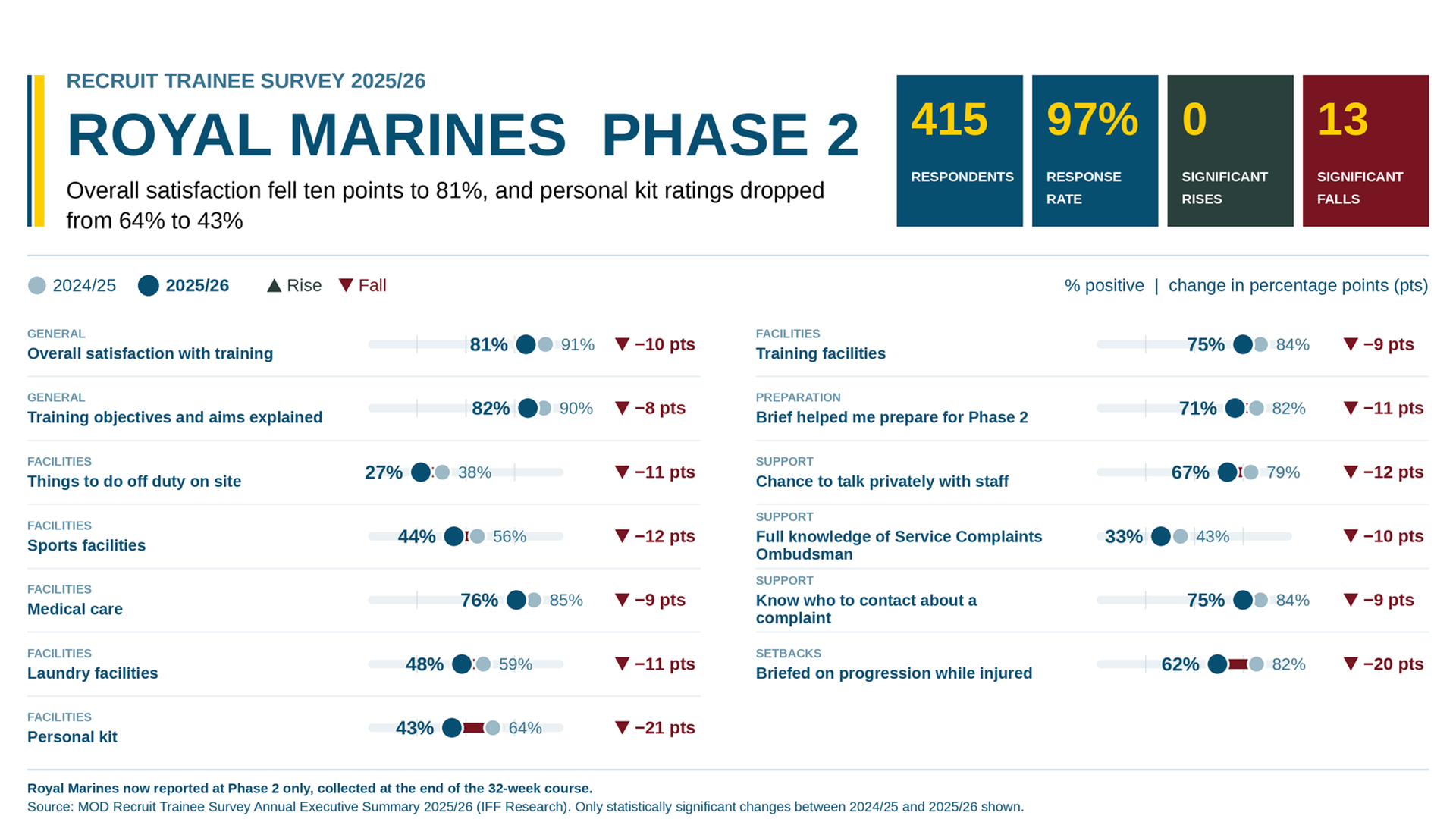
Royal Marines recruits undergo a different training regime, with the survey collating results under Phase 2.
The results suggested a general deterioration in the trainees' experience, with overall satisfaction down 10 percentage points to 81%.
Personal kit satisfaction fell sharply to 43%, alongside deterioration in sports, laundry and training facilities.
Cyber & Specialist Operations Command
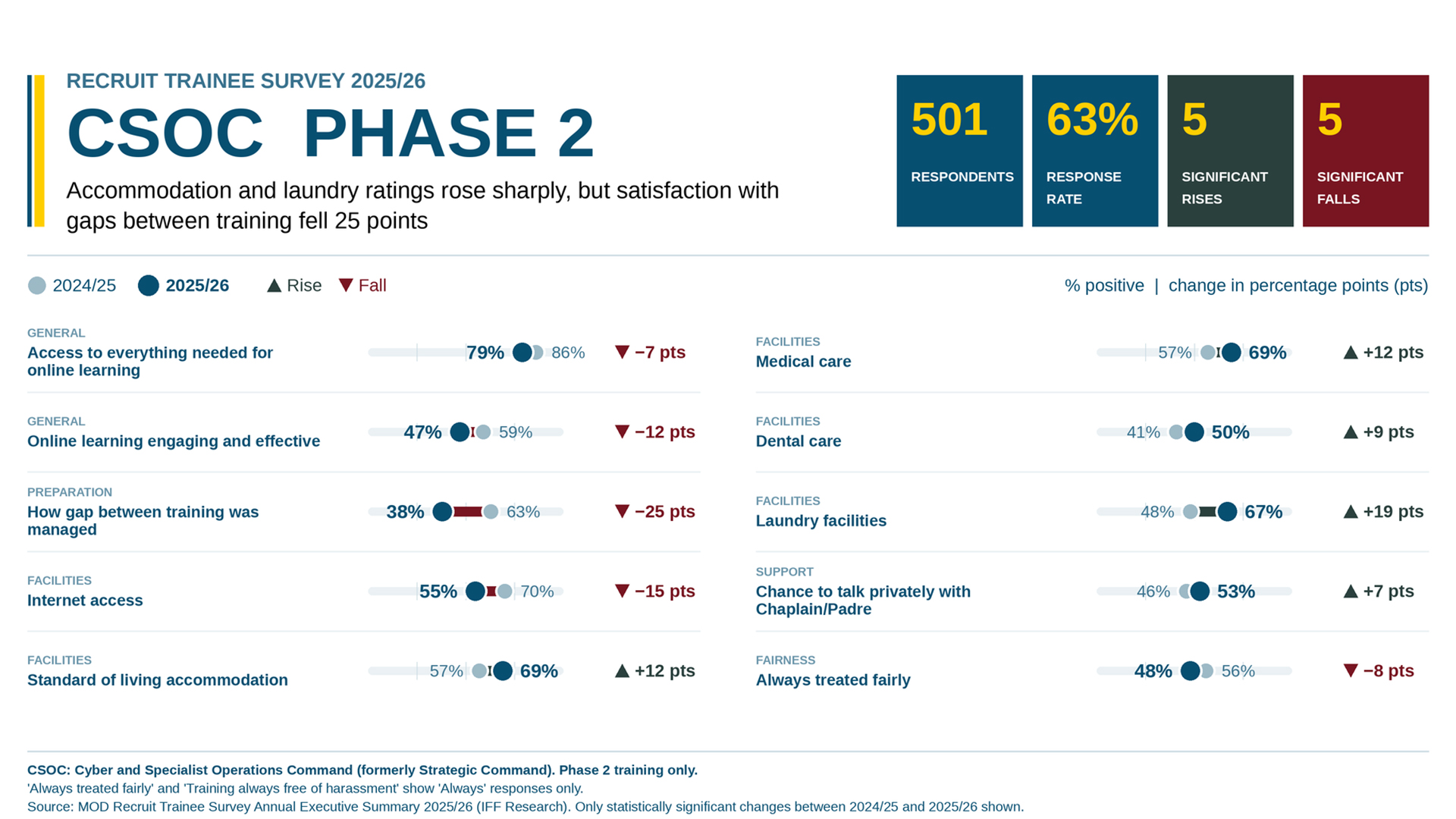
CSOC showed improvements in the physical environment and medical provision, while weaknesses remain in the quality of training.
Respondents said accommodation, medical, dental and laundry provision had all improved, while access to and engagement with digital learning had got worse.
The level of satisfaction with the way gap between training were managed fell sharply to 38, and only 48% of respondents said they were always treated fairly.
What the Armed Forces can do better as a whole
All four services can look to improve the quality of training as well as the quality of everyday life for recruits.
Accommodation and facilities are areas for improvement, as is the quality of food - and recruits should be given sufficient time to eat their meals.
Recruits would also benefit from uniforms and kit that fit them correctly and are comfortable to wear.
They would also fare better with more regular feedback from their training teams as well as being given meaningful activities during gaps in the training programme - and sufficient time for rest and recovery.
Related topics
Join Our Newsletter