Why UK cyber 'hunt forces' deploying overseas could hint at electronic warfare role

A new specialist unit set to deploy overseas to help defend the UK's defence network against cyber-attacks could also be tasked with conducting electronic warfare (EW) operations, a security expert has suggested.
Speaking to BFBS Forces News, Professor Tim Stevens, Professor of International Security at King's College London, explained that while cyber-operations can be executed anywhere in the world, EW must be delivered at a short distance.
Pointing to the war in Ukraine as a reference, he said: "We've seen Russian operators and others getting close to organisations, effectively buildings, that they want to affect in various ways, either through hacking Wi-Fi, which you can do relatively close, or by conducting electronic operations against those targets.
"Similarly, if you want to conduct jamming or something electronic, you also have to be adjacent to the target.
"So those may very well be part of the rationale here, rather than just pure cyber effects, because you can conduct those at a distance."
Preemptive and proactive
Announcing the unit to the Times, Major General Mike Fayers, Commander of the Defence Cyber and Electromagnetic Force, said the unit, which he described as "hunt forces", will be tasked with stopping plots in their infancy, preventing them from escalating into full-scale attacks.
He said: "Our adversaries are very cunning. This is not just an MOD issue; this is a whole-of-UK challenge.
"We've seen AI now exploiting vulnerabilities at a speed we have not seen before. Whereas historically we would have had a few days to fix vulnerabilities, we are now in double-digit minutes to respond to those vulnerabilities."
This broader, whole-of-UK challenge was echoed by Air Chief Marshal Sir Rich Knighton, who recently told BFBS Forces News that the country needs to develop its resilience as a nation to withstand a broad range of crises and threats, from natural disasters to armed attack.
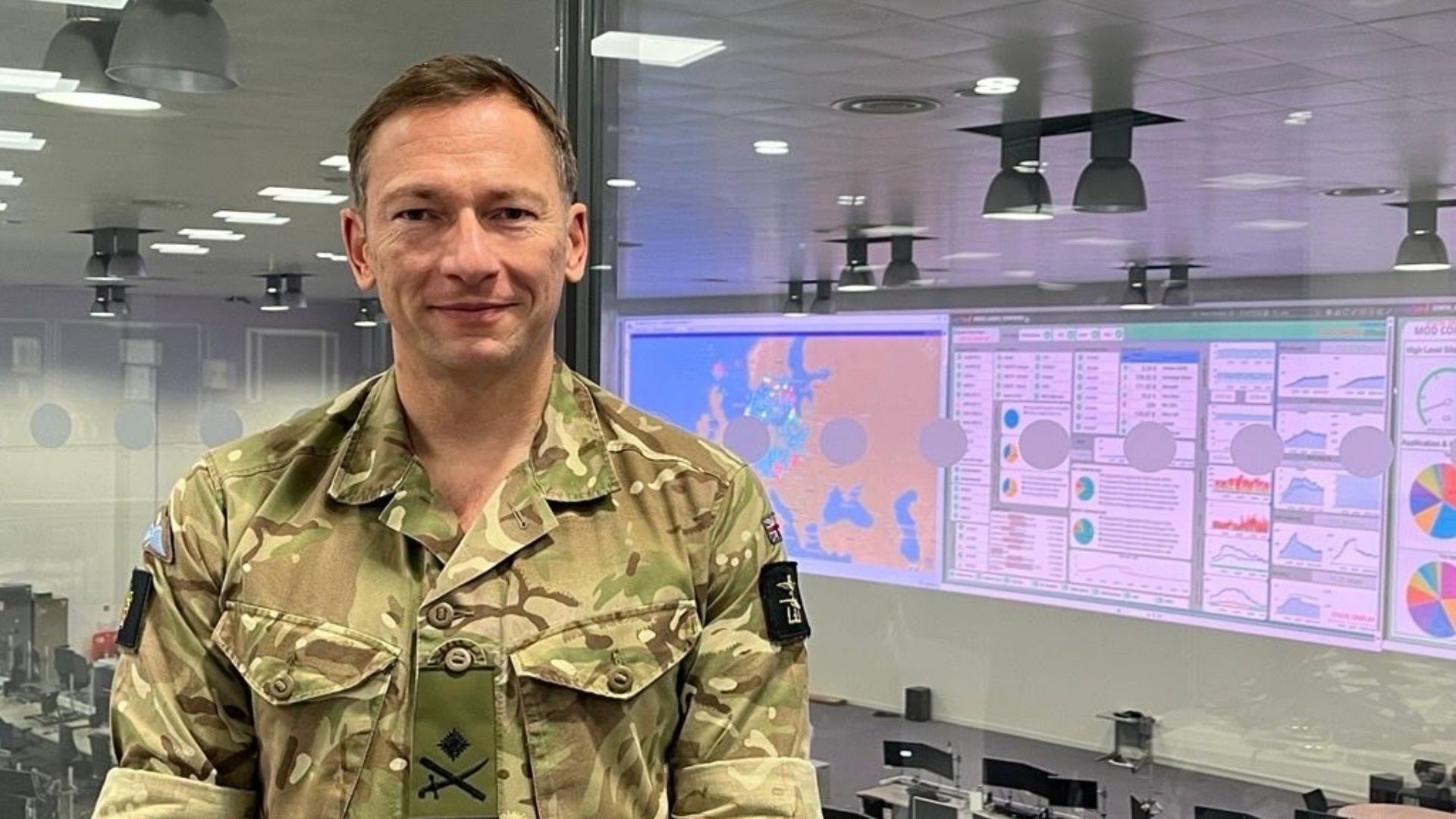
Maj Gen Fayers continued that specialist forces will try to hunt for adversaries "in places where they prepare before they target UK military systems".
"I mean sending people physically to places to virtually hunt for the adversary to protect our systems," he said.
In May last year, the MOD said it had faced 90,000 cyberattacks from "state-linked sources" over a two-year period. The figure was twice as high as in the previous two years.
"The threat continues to increase in both its complexity and its persistence," he added.
According to the Times report, hunt force missions will be conducted in countries where the host nation has approved. One such operation was already underway as Maj Gen Fayers spoke.
Working with international partners, UK cyber forces would deploy near the building or infected server room in a "forward-deployed operation" and disrupt the activity with a range of tools at their disposal.
Cyber frontline
Cyber operations rely on digital networks such as the internet or satellite links, meaning attacks or defences can be executed from anywhere in the world.
The RAF already has a unit that provides this capability on home soil: 90 Signals Unit, based primarily at RAF Leeming in North Yorkshire.
Their mission is twofold: first, to provide secure communications for the RAF and, more commonly these days, Nato, anywhere in the world; and second, to defend those networks from hostile attack.
With additional reporting by Rosie Laydon.
Related topics
Join Our Newsletter