Kawasaki EC-2: Japan's electronic warfare jet likened to a duck-billed platypus
The Kawasaki EC-2 is set to become the Japanese Air Self-Defence Force's newest electronic warfare aircraft.
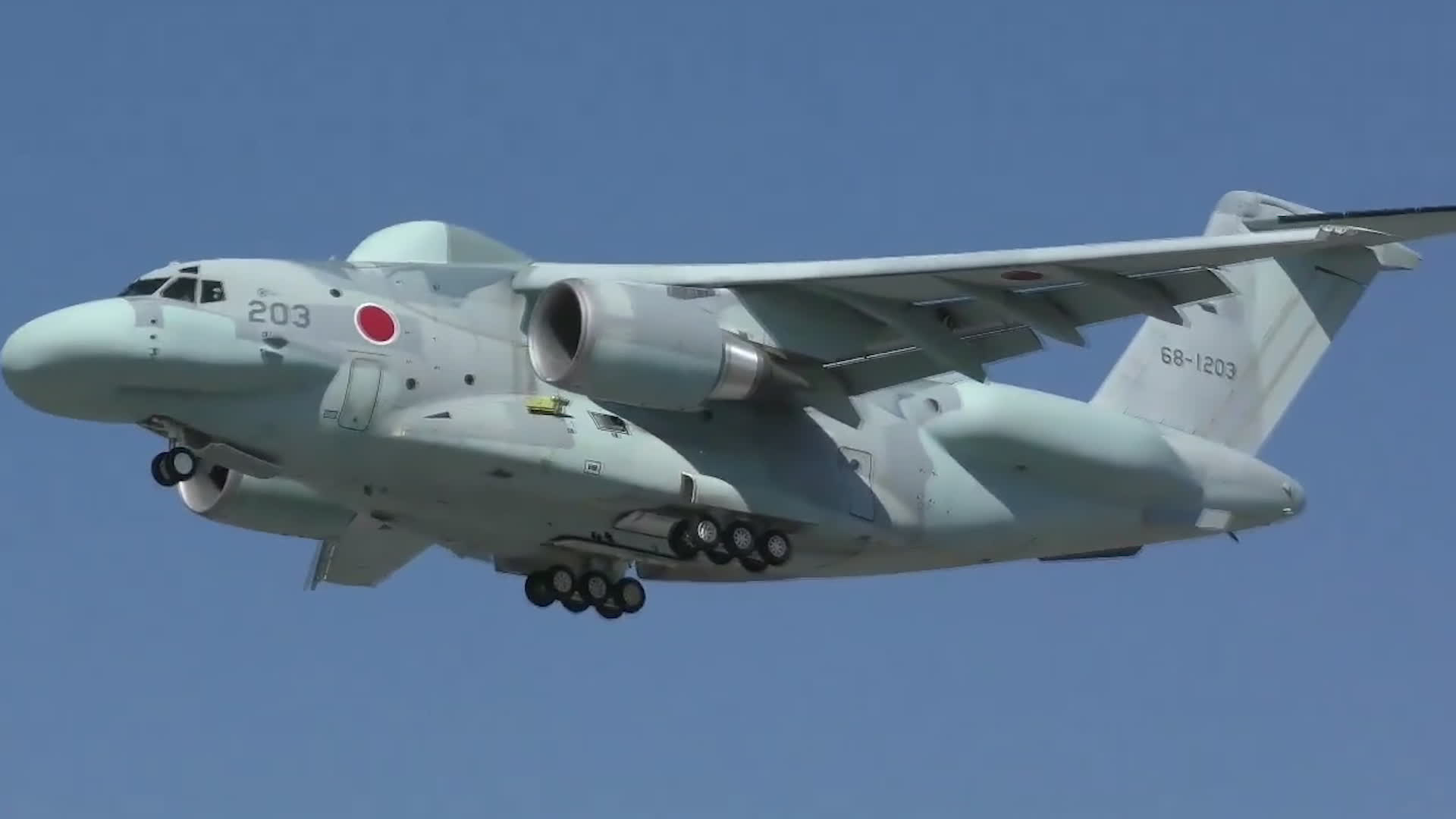
Despite its many technical attributes, its strange appearance has led to comparisons with Australia's duck-billed platypus.
Nevertheless, the EC-2 will be carrying out a very important job.
Duck-billed maybe, but no lame duck
It's the result of years of research by the JASDF's Air Development and Test Command.
As well as that distinctive nose, it has lateral fairings – non-structural components that can house equipment but preserve a smooth streamlined body – along both sides of the rear fuselage and two dorsal humps.
The aircraft is powered by two General Electric CF6 turbofan engines.
It's likely that the large nose contains radar-jamming antennas for use as the jet flies towards a target.
These are probably complemented by side-looking electronic countermeasures and electronic support measures sensors in those lateral fairings.
This combination allows the aircraft to detect hostile radar signals and jam them.
Inside the dorsal humps is probably a satellite communications array or jamming equipment to block enemy data links.
Only a year away from service
Japan's Acquisition, Technology & Logistics Agency intends to complete the development of the EC-2 by April 2027.
It's expected to enter service the same year and will probably be assigned to the Electronic Warfare Operations Group at Iruma airbase.
The EC-2 will replace the Kawasaki EC-1 when that aircraft is retired from service.
Development began in 2021 to create a new generation of aircraft that can suppress enemy systems in the radio-electronic range at a safe distance and out of reach of enemy air defences.
It's based on the C-2 military transport aircraft , similar in size to the American C-17 or C-130.
But whatever its new role and future missions, it's guaranteed to turn heads wherever it touches down.
Join Our Newsletter