Alchemist: The Ukrainian who tricks Russian missiles into thinking they're flying over Peru
In a secret location somewhere in eastern Ukraine, we are driven to meet a man known only by his call sign: 'Alchemist.'
He leads a shadowy unit called Night Watch, and this is the first time he has ever appeared on camera for Western media.
His face is concealed, his identity protected – because what he knows makes him a high-value target for Russia.
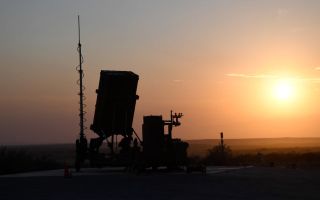
The Alchemist is one of the minds behind Lima, a powerful Ukrainian electronic warfare (EW) system that is quietly reshaping the battlefield.
According to Ukrainian officials, it has already helped bring down dozens of Russia's most advanced Kinzhal ballistic missiles, along with more than 20,000 kamikaze drones.
"Lima is an electronic warfare system," he explains.
"It creates an area where satellite navigation simply doesn't work. Any precision-guided weapon that relies on it loses its ability to find its target. Weapons worth millions – even tens of millions – are reduced to scrap metal."

The system was first developed by the Ukrainian start-up Cascade in 2022 and entered military service two years later.
Initially, it was designed to counter cruise missiles like the Kh-101 and Iskander. But as the war evolved, so did Lima.
"What made it different was its range," the Alchemist says. "But also, our ability to attack a missile's navigation system directly.
"Once a missile flew through our coverage area, it couldn't recover – even after leaving. It simply became useless."
Then came a new threat: Iranian-designed Shahed drones, used extensively by Russia. Cheaper than cruise missiles but more resilient, these drones featured multi-channel antennas that made them far harder to jam.
Ukraine adapted quickly.
"We developed a spatial jamming technique," he says. "Four electronic warfare units arranged in a square. When a drone enters that area, it automatically loses navigation."
That innovation has since influenced anti-drone systems used far beyond Ukraine.
Lima itself operates using clusters of antennas that can detect incoming threats from nearly 200 miles away.
Once identified, it has several ways to neutralise them: it can jam satellite signals, overwhelm sensors, or feed false coordinates – a technique known as spoofing.
But perhaps most remarkably, it can go a step further.
Lima can interfere with the guidance system itself, making the weapon pull incorrect data from satellites.
One of Night Watch's more unusual tactics is to convince incoming drones and missiles that they are flying over Lima, Peru – a trick that gave the system its name.
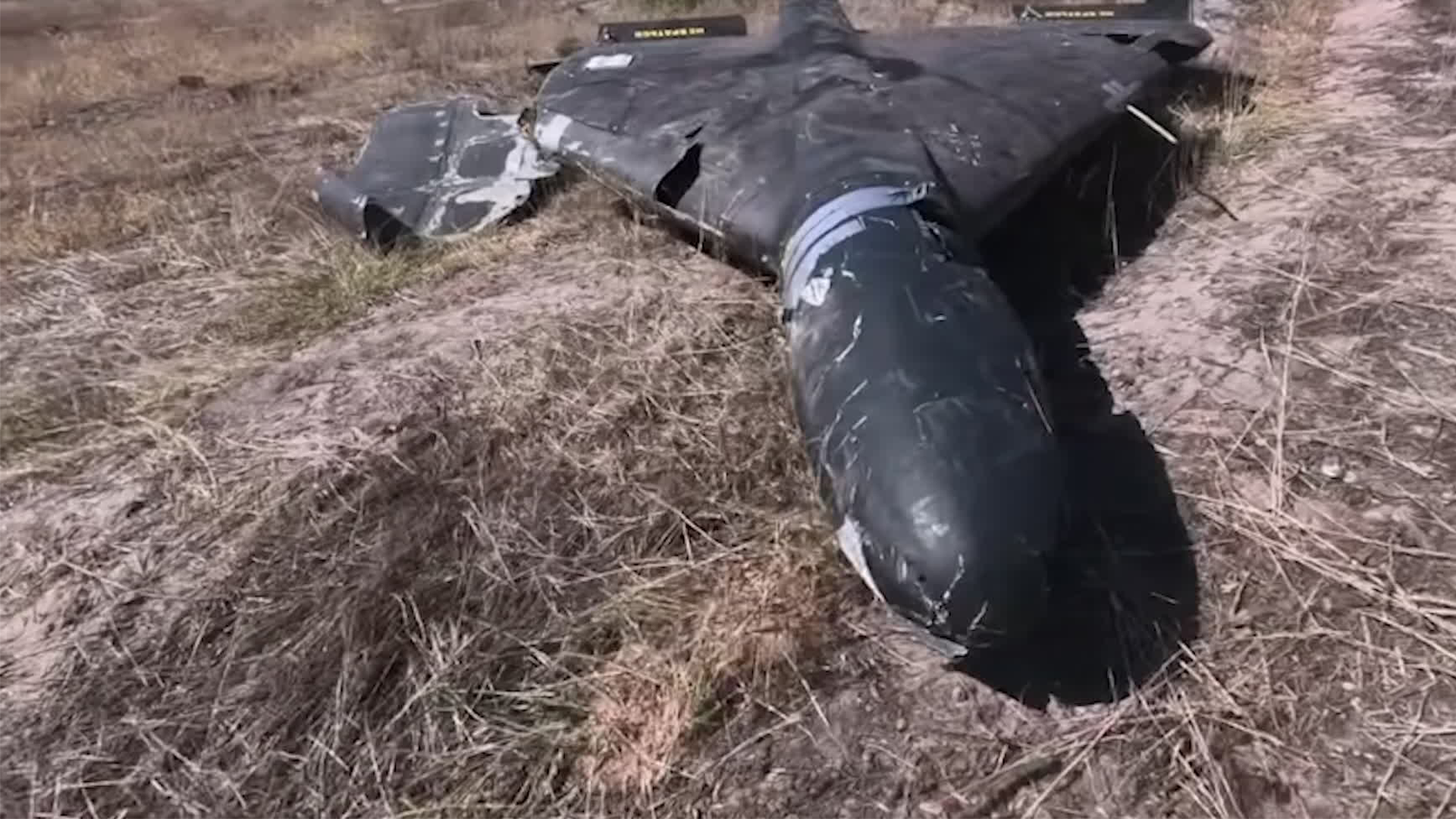
The results can be dramatic. Ukrainian footage shows advanced missiles and drones suddenly veering off course, plunging harmlessly into farmland after their navigation has been hijacked.
Many Russian weapons also rely on inertial navigation systems as a backup – allowing them to function without GPS. But those systems are inherently less accurate, and Lima exploits that weakness, pushing them even further off target.
Still, the technological race is relentless.
"Russia keeps adapting," the Alchemist says. "They've gone from four-channel antennas to eight, then 12, and now even 32."
Russia developed the Kometa EW system, a sophisticated smart antenna capable of filtering out interference and locking onto genuine satellite signals.
It has been fitted to many of Russia's long-range drones, missiles and glide bombs.
Ukraine initially struggled to counter it.
"We tested more than a hundred conventional systems against it – none worked," he admits.
"The technology isn't even originally Russian. It's based on developments from China."
But once again, Ukrainian engineers adapted.
The Alchemist and his team developed a new system called Lima Quant, which uses high-frequency signals to overcome Kometa's defences.
Against Russian glide bombs, it is said to achieve a success rate of up to 98%.
Ukraine's expertise in electronic warfare is now attracting attention far beyond its borders.
In March, Kyiv sent interceptor drones to the Middle East, and the Alchemist reveals that Lima was also tested there by the US military, although not in combat.
"Our partners were extremely impressed," he says. "They believe this capability could significantly expand their operational options."
Despite the technological edge, Ukraine faces a fundamental challenge: scale.
Over the course of the war, it has destroyed more than 140,000 Russian drones and missiles. But the volume of incoming attacks remains overwhelming.
"In terms of capability, I believe we're ahead," the Alchemist says. "The problem is deployment. We don't have enough systems covering enough territory."
The goal, he explains, is not just to protect individual targets, but entire cities.
"If we expand coverage, we can create areas where nothing can hit – not just a building, but a whole city."
There are signs this is already working. Ukraine says Lima has successfully neutralised more than 60 Kinzhal missiles – some of Russia's most advanced weapons.
And it does so at a fraction of the cost of traditional air defence. Protecting a city with Lima costs around $5 million – roughly the same as a single Patriot PAC-3 interceptor missile.
That matters, because Ukraine still relies heavily on Western-supplied air defence systems like Patriot and there is growing uncertainty over how long those supplies will continue, particularly from the United States.
In that context, Lima represents something more than just a technological innovation. It is a strategic hedge – a system that allows Ukraine to defend itself independently.
An electronic 'hijacker' that can divert – and ultimately destroy – some of Russia's most dangerous weapons before they ever reach their target.
Join Our Newsletter