City under fire: Seeing the results first-hand as Russia attacks Ukraine's cultural identity
Russia's indiscriminate aerial attacks have claimed a new victim – Kharkiv Art Museum, which houses one of the nation's oldest collections – and BFBS Forces News reporters Simon Newton and Hannah King were there when it happened.
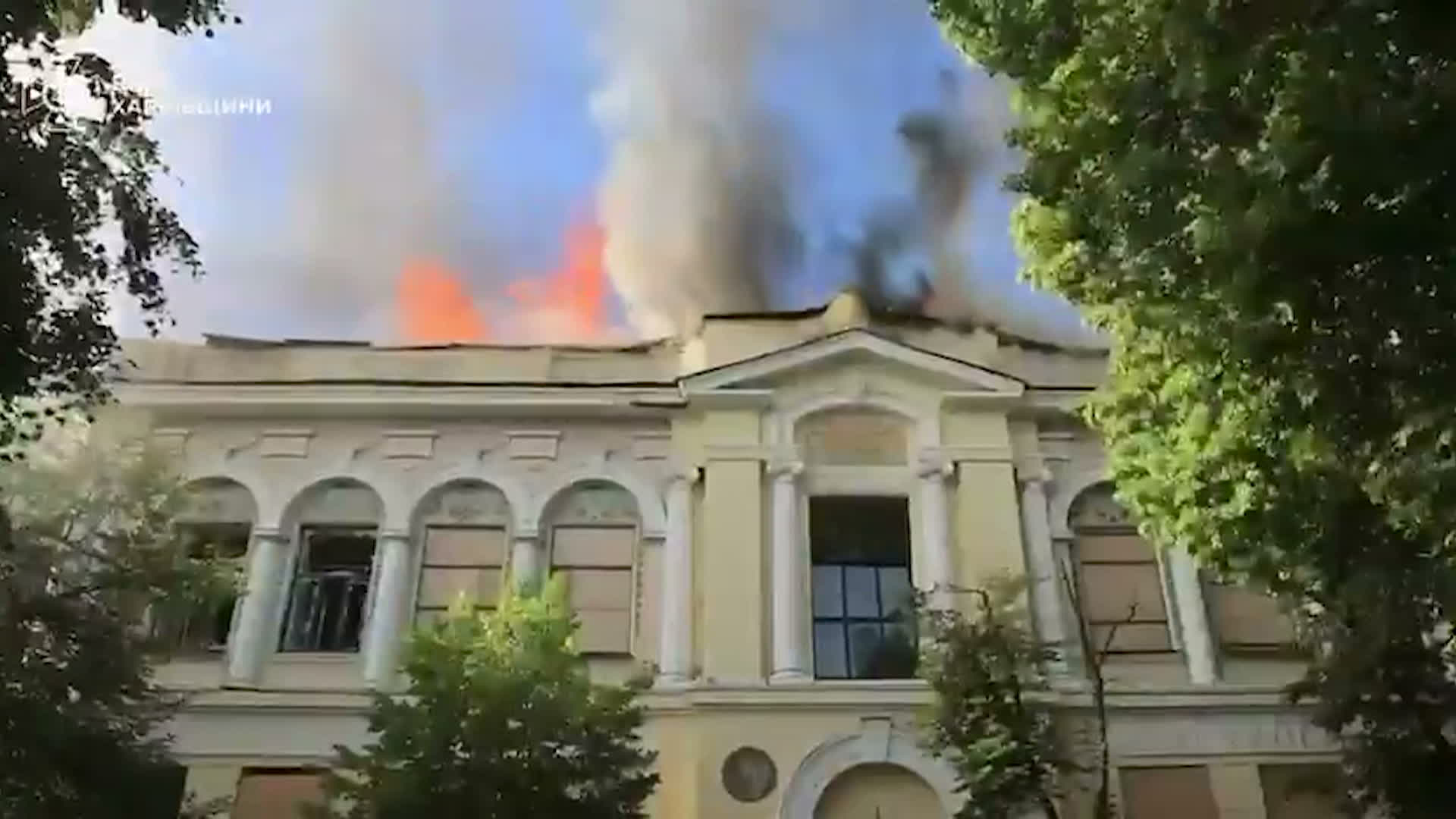
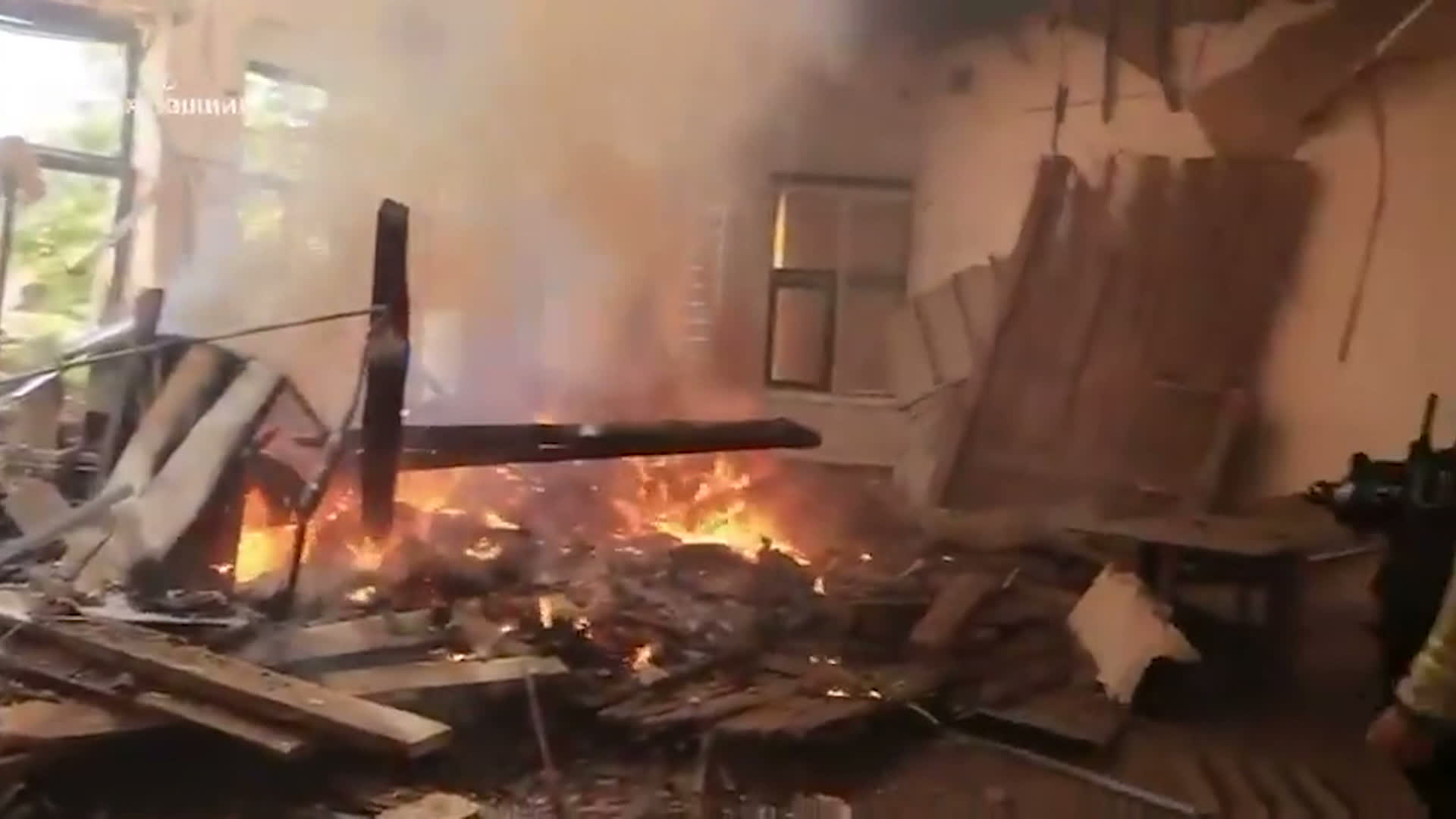
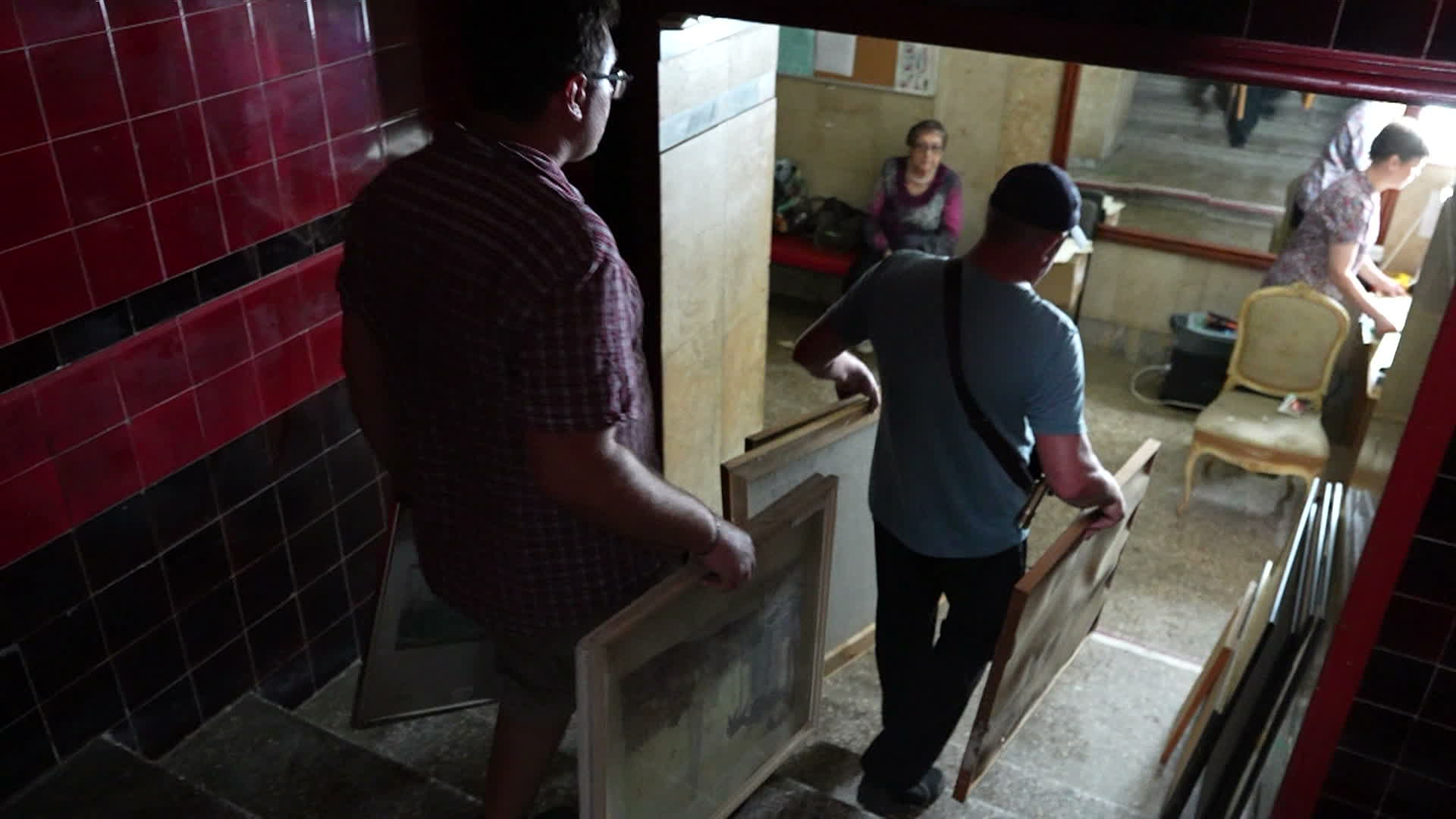
The corridors of Kharkiv Art Museum are littered with broken glass. Volunteers carefully sweep debris from the floors while staff carry paintings through darkened hallways, trying to salvage what they can after a Russian missile struck the building overnight.
One of Ukraine's oldest and most important art collections has become the latest casualty of Russia's aerial campaign.
Museum already survived one war
After some negotiation, we were allowed inside the damaged museum the morning after the attack. In the basement and galleries, staff worked methodically to assess the destruction.
In her first-floor office, now littered with debris from a collapsed ceiling, we find the museum's director, Valentyna Myzgina.
She has worked here since 1970, and for her the devastation is deeply personal.
"We had an attack nearby before. It blew out about 200 windows," she says. "After this attack we've started looking for sponsors, donors... anyone who can help.
"I'm not too proud to ask anymore. In the past we'd try to cope on our own, but now I'm willing to ask anyone 'please help the museum we simply can't do it alone'."
The museum survived the Second World War and underwent major restoration during the 1950s, becoming one of Kharkiv's best-known cultural institutions.
Now, after a single drone strike, there are real doubts about whether it will ever fully reopen.
The museum's staff had prepared for this possibility.
After Russia's full-scale invasion in 2022, they moved the museum's most valuable works into secure storage as the threat to the city intensified.
"All of the most valuable works were moved to safety," one member of staff explains.
"But the collection is huge – more than 12,000 pieces, plus our research collection. Some items are still in temporary storage, and we're continuing to work with young people."
Russia using sophistication to bring devastation
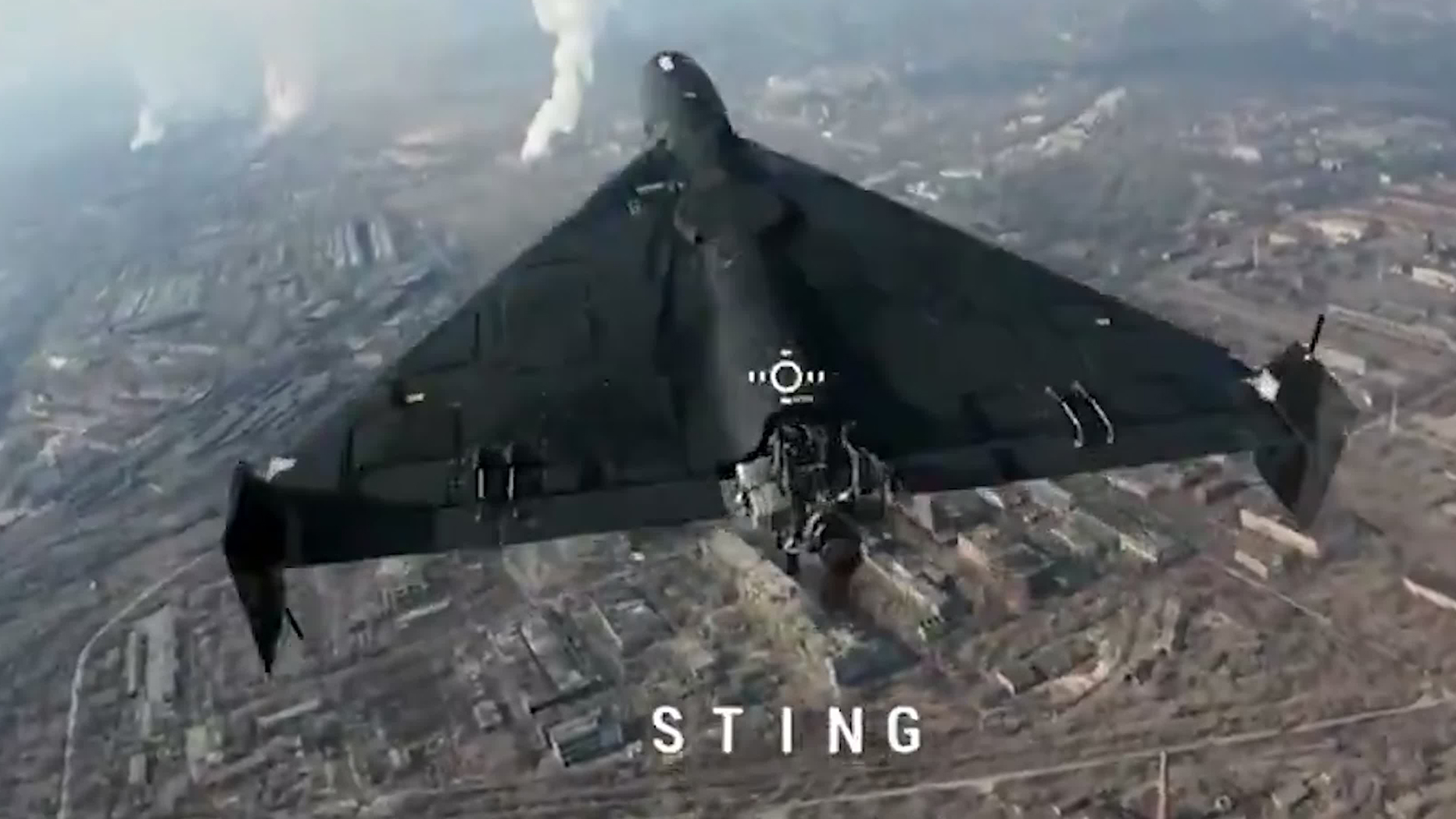
The attack on the museum came during another large-scale Russian aerial assault, part of a campaign that has grown in both size and sophistication.
Ukraine says it intercepts the majority of Russian drones and cruise missiles. But ballistic missiles – which travel at much higher speeds – are significantly harder to shoot down.
Ukraine is also facing a new threat from Russia's Oreshnik missile, a nuclear-capable hypersonic weapon that Moscow has presented as one of its most advanced systems.
The growing complexity of Russia's attacks is one reason President Zelensky has repeatedly appealed to Western allies for additional air defence systems.
Colonel Yurii Ihnat, head of communications for Ukraine's air force, says the strikes are intended to do more than cause physical destruction.
"We're currently in Kyiv, a city that endures constant drone and missile attacks," he says. "Putin is trying to intimidate everyone – Ukraine, his own people and the international community.
"Weapons like the Oreshnik are also a message to Ukraine's Western partners: 'Look at this powerful new weapon we've created.' But it's the same tactic Russia has used since the very beginning of the war – intimidation."
A layered defence
Ukraine has built an increasingly sophisticated layered air defence network over the course of the war.
Advanced Western systems such as Patriot and IRIS-T work alongside interceptor missiles, mobile fire teams and the Ukrainian air force.
Pilots flying ageing Soviet-era MiGs and Sukhoi jets now operate alongside donated F-16s and French Mirage fighters, with Swedish Gripen aircraft expected to join the fleet in the future.
Together, they hunt down incoming drones and missiles before they can reach their targets.
But Colonel Ihnat acknowledges that no air defence system can provide complete protection.
"They can't get through the kill zone controlled by our drones, artillery and aircraft," he says of Russian ground forces.
"So instead they resort to terrorising civilians. Putin wants to keep people living in fear."
Ukraine's air defences are far more capable than they were at the start of the invasion. Yet they are also under greater strain than ever before as Russia launches larger and more complex aerial assaults.
When even a single missile gets through, the consequences can extend far beyond military targets.
In Kharkiv, the damage is measured not only in shattered windows and collapsed ceilings, but in the threat to a collection that has preserved Ukraine's artistic heritage through war, Soviet rule and political upheaval.
For those trying to protect it, the museum represents far more than a building.
It is part of Ukraine's cultural identity – and another frontline in a war that continues to reach far beyond the battlefield.
Join Our Newsletter