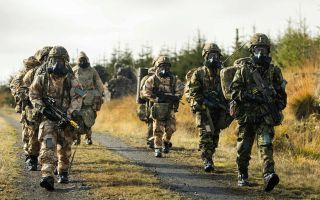
Latest Op Interflex troops head back to Ukraine having learned to command and conquer
Another group of Ukrainian personnel have left the east of England for combat with Russia in Eastern Europe after passing out of a UK training camp for Kyiv's soldiers.
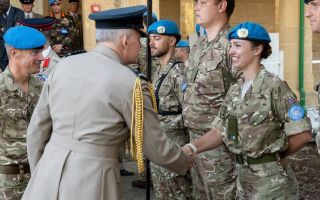
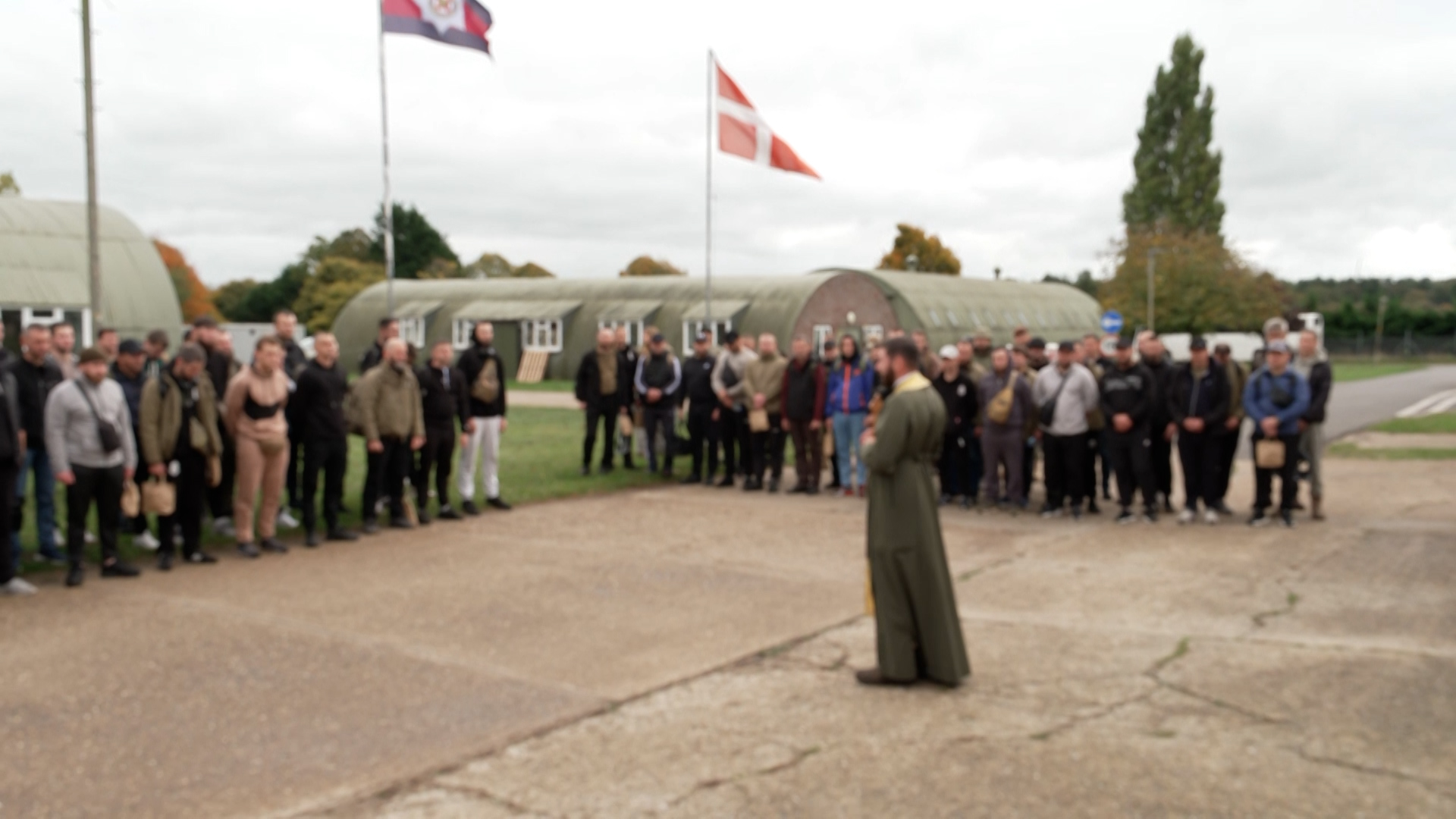
Many of them embraced during the leaving parade, and they are now bracing themselves to be on the frontline in as little as 48 hours.
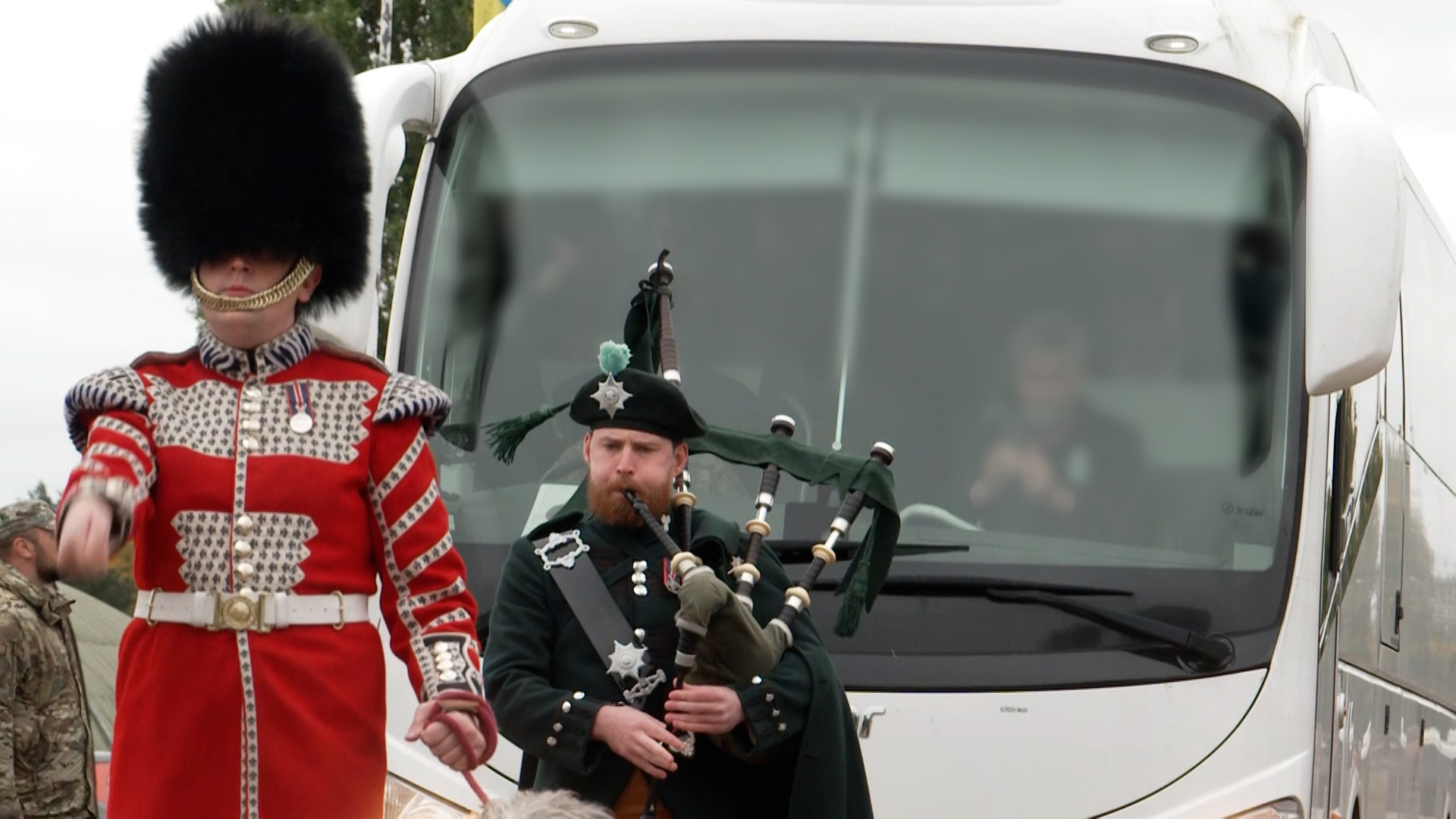
At the ceremony, a piper from the Irish Guards, largely used in ceremonies, returned to the original purpose of military music to rally troops for a real war.
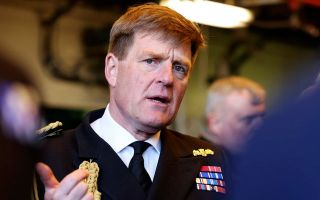
"We are putting on a leaving parade effectively for them," said Colonel Andrew Boardman, Operation Interflex's Commanding Officer.
"[It is an] opportunity for the instructors to say goodbye to their trainees."
Col Boardman said that it was "quite an emotional moment" as the instructors and trainees had bonded throughout the five weeks of training.
Training to be shared back home
The Ukrainians explained that the training given to them in the UK would be shared with their comrades back home.
"So the mod is really combat-orientated because all the experience we've gained here, we want to go back quickly to Ukraine and share it with our soldiers," an anonymous Ukrainian soldier said.
"But at the same time we're going to miss this place because we've made some good connections and we're going to miss the instructors that we've met here."
The soldier, who has completed two rotations on the frontline in the Donetsk region, said that Ukrainian soldiers needed more confidence.
Operation Interflex is the British-led effort to train Ukrainians, and many are now coming through are already battle-hardened.
UK learning from Ukrainian battlefield
However, the Armed Forces are also learning from the Ukrainians during the training.
"We learn a lot from them about the current realities of the battle, the way the section commanders and platoon commanders operate on the battlefield, which is different to the way that we have historically done it," Col Boardman elaborated.
"The way that the Ukrainians are fighting is changing over the years. And we are making sure that we are integrating that into our training."
Operation Interflex's Commanding Officer added that the Armed Forces have been expanding the use of first-person view (FPV) drones, as they are a feature of the battlefield.
Kyiv needs more military leaders
Some 60,000 Ukrainians have been trained on Operation Interflex. But now, beyond basic infantry training like trench warfare, there is a rising demand for military leaders.
This mission has enabled Ukraine to teach its own soldiers the ground-level soldiering skills.
Despite that, Kyiv wants more coming to the UK to return to their homeland with a deeper understanding of the battles they face.
"So putting them under difficult situations and we purposefully make things go wrong, mess with their plan," explained Second Lieutenant Flory from the Irish Guards.
"It's just [to see] how do they do coordinate these assets, overcome these problems and coordinate their team effectively."
Another Ukrainian, who cannot be named for security reasons, said this course had been more difficult and complicated since they were gaining an understanding of how to act at section or platoon commander level - leading troops from the front.
The latest cohort of Ukrainians, armed with another level of military doctrine, was given a send-off back to a fast-moving conflict that demands even faster learners.
Additional reporting by Jonathan Moynihan.
Join Our Newsletter