As US President Donald Trump signals that Operation Epic Fury – the codename for the current military offensive in Iran – could last four weeks or more, the future of the conflict may ultimately be shaped by supply as much as strategy.
The Iranian Shahed-136 drone, long since fired by Russian to terrorise the military and civilians alike in Ukraine, is now being deployed in the Gulf. Costing around $35,000 apiece, these loitering munitions are many multiples cheaper than traditional missiles yet offer similar destructive capabilities.
Yet despite their low costs, the UK, US and Gulf nations are deploying missile-carrying fighter jets like the F-35 or air-defence systems like the Patriot to take out the Iranian UAVs – highly effective, but an extremely costly strategy, with some interceptors stretching into the millions of pounds. As one military analyst told the Times, it's "akin to firing golden bullets at plastic targets".
But are there more cost-effective alternatives? Recently, the UK announced it was bringing Ukrainian experts along with its own to the Middle East to help Gulf partners intercept these weapons.
Having developed its drone defence exponentially over the four years of conflict with Russia, Ukraine's proven, low-cost drone defence model could prove vital in the weeks to come.
Depleted stockpiles
In the first 24 hours of the military campaign, US B-2 bombers, stealth fighter jets, reconnaissance aircraft, and other weapons were used to strike more than 1,000 Iranian targets.
Within hours of the initial attack, Iran retaliated. Since Saturday, Iran is believed to have deployed hundreds of ballistic missiles and some 2,000 Shahed drones, targeting the Gulf states, as well as US and UK bases and infrastructure.
While US-made Patriot air defence missiles have been highly successful – credited by the UAE with an interception rate of 90% – at a cost of $4m apiece, it creates a staggering imbalance when compared to its $35,000 target.
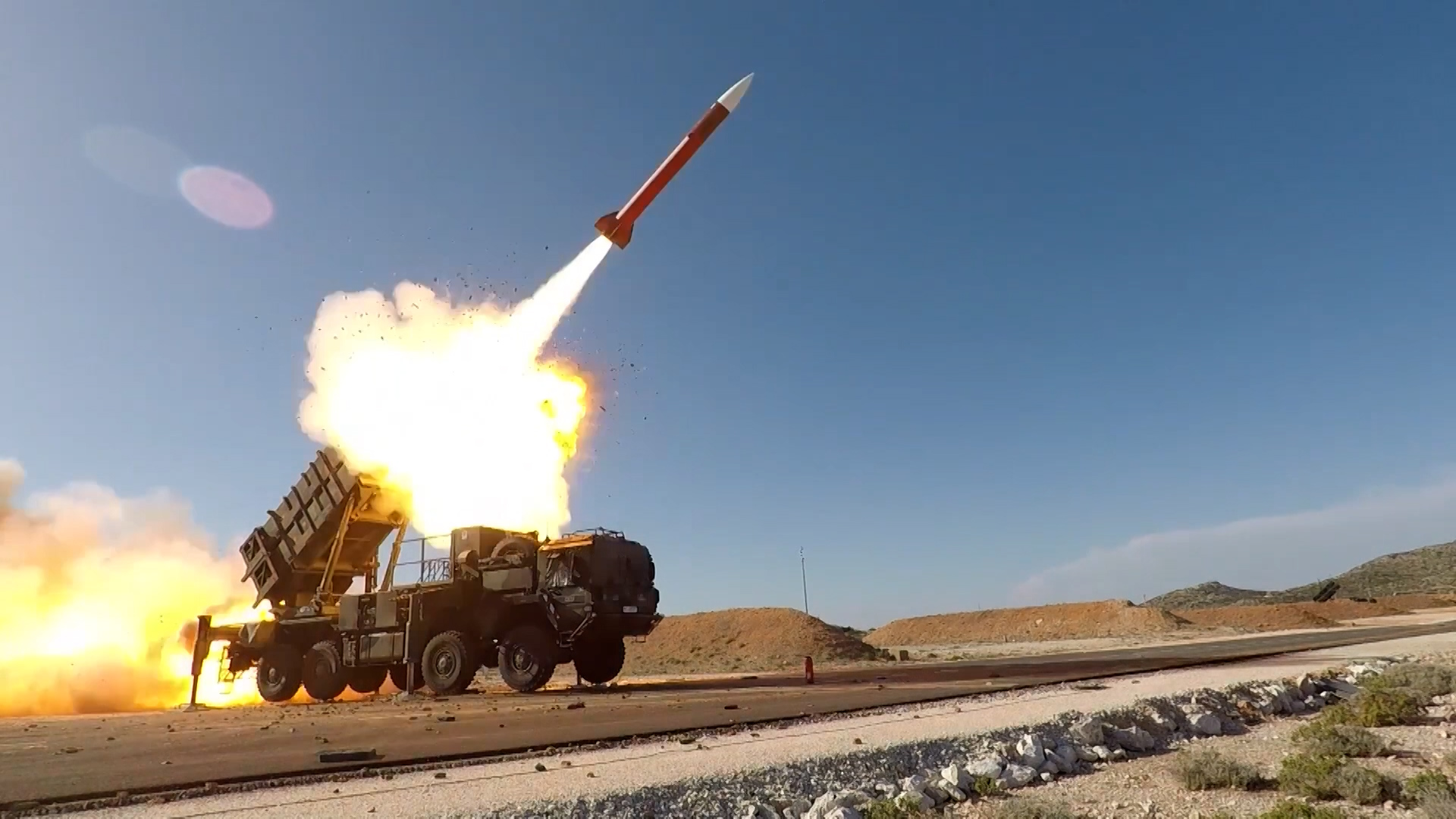
Other systems that have played a substantial role in Op Epic Fury – namely the Tomahawk land-attack cruise missile and Terminal High-Altitude Area-Defence missiles (Thaad) – are similarly costly and slow to produce.
In 2025, the US launched 150 of its Thaad missiles while striking several Iranian nuclear facilities, expending roughly a quarter of its total stockpile of 632.
At roughly $15m per missile, and with a production time of two to three years, it won't be long before the US' arsenal is struggling to keep up with its attack strategy.
US President Donald Trump has downplayed concerns over shortages, saying in a post on his Truth Social account on 3 March that munition stockpiles have "never been higher or better."
"We have a virtually unlimited supply of these weapons," he said. "Wars can be fought forever, and very successfully, using just these supplies."
But analysts are sceptical of the president's claims, with shortages in precision, high-end munitions and interceptors becoming more likely the longer the war continues.
This begs the question: with the costs so high and production so constrained, can the US sustain its attack on Iran – and at what cost?
Lessons from the war in Ukraine
For Ukrainian president Volodymyr Zelensky, whose country has been relentlessly targeted by these loitering munitions ever since the Russian full-scale invasion in 2022, the lessons are clear.
He has criticised Western militaries for relying on sophisticated systems to counter the relatively cheap Shahed drones and warns that the "world isn't ready".
"No Patriot air defence system, even with as many batteries as the Middle East has, could handle the number of Shaheds that Ukraine handles today," he said. "Three hundred, five hundred, is just impossible. There aren't that many missiles."
So what expertise can Ukraine offer to the Gulf states?
Firstly, its electronic warfare (EW) knowledge, which Ukraine has developed exponentially over the four years of conflict.
The Pokrova spoofing system is one such method. Unlike traditional jamming that creates noise to block signals, Pokrova overrides genuine satellite signals with false data, deceiving drone navigation systems into believing they are on course while actually diverting them far from their targets.
Another potential solution lies in its Sting interceptor drones. Costing around $2,500 to produce, capable of speeds up to 195mph and reaching altitudes of 3,000 metres, these 3D-printed interceptors are purpose-built to hunt Iranian-designed Shahed-136 drones – and at a fraction of the price.
According to President Zelensky, the success rate stands at around 70%, and Ukraine is ramping up production.
Late last year, the UK announced a partnership with Ukraine to develop and produce its own low-cost interceptor drones – the Octopus.
Ukrainian-designed and manufactured in Britain, this air defence costs less than 10% of the targets they destroy.
'Together we can make it happen'
Finally, there's the Sky Sentinel, which is at the forefront of Ukraine's AI-powered capability. An autonomous anti-aircraft turret on which stands a .50-calibre M2 Browning heavy machine gun, it is designed to detect, track and neutralise threats like drones and cruise missiles.
At $150,000 per unit, it is significantly cheaper than alternative anti-drone systems, such as the German-made Skynex/Skyranger, which costs millions of dollars.
"Everyone can now see that Ukraine's experience in defence is, in many respects, irreplaceable," President Zelensky said in a post on X.
"We are ready to share this experience and help those nations that helped Ukraine this winter and throughout this war.
"Europe must have enough air defence missiles, enough experience in shooting down drones, and sufficient production of modern interceptor drones. Together, we can make this happen."
With additional reporting by Simon Newton
Join Our Newsletter