Zelensky urges US to release more Patriot missiles as global supplies fall short
President Volodymyr Zelensky has urged Ukraine's partners, particularly the US, to supply more Patriot interceptor missiles after a major Russian attack killed at least 17 people in Kyiv and the surrounding region.
The overnight bombardment involved ballistic and cruise missiles alongside waves of drones, with homes, a school and a children's hospital among the buildings damaged.
Mr Zelensky said Ukraine had intercepted about 90% of the cruise missiles, but had fared significantly worse against the ballistic weapons.
- Nyan: Inside the British jet-powered strike drone at the centre of Russia's threat to UK
- Will President Putin mobilise half a million Russians after September's election?
- The drone revolution: Why rank no longer dictates expertise on the battlefield
"We need missiles for Patriots, and only our partners can provide them," he said.
The Ukrainian president said Kyiv was ready to pay for the weapons and called for political decisions from its partners "first and foremost" in the US.
Ukraine's air force said Russia launched 168 drones, 36 Kh-101, Iskander-K and Kh-59 missiles, eight Kalibr cruise missiles and two Banderol loitering munitions.
Oniks, Zircon, Iskander-M and S-400 missiles were also used in the attack, according to the air force.
It reported shooting down or disrupting 145 drones, 31 of the 36 Kh-101, Iskander-K and Kh-59 missiles, all eight Kalibrs and both Banderol munitions.
Russia's defence ministry said its forces had targeted facilities producing drone components, a military depot and a logistics hub in and around Kyiv.
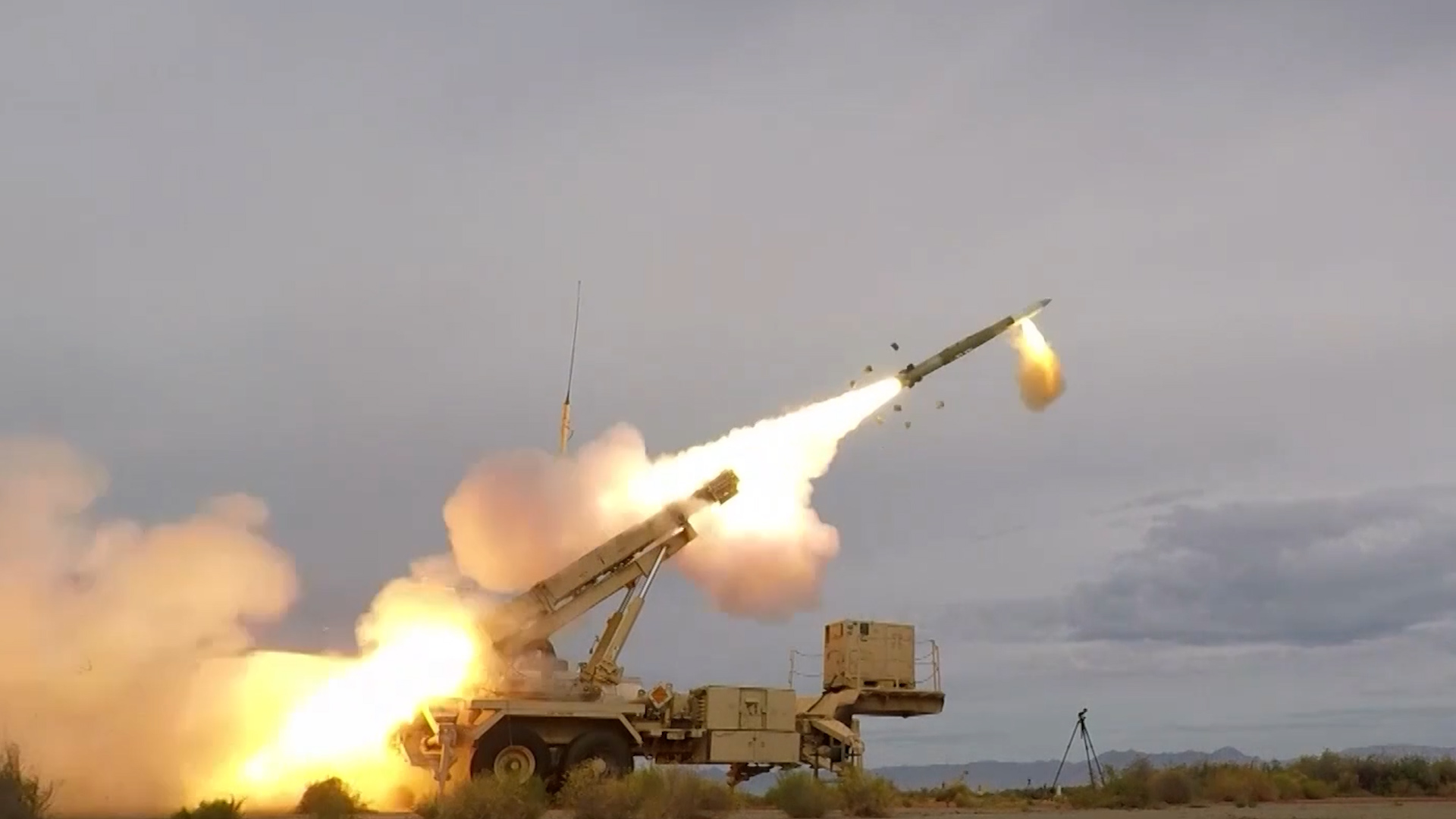
Why are Patriot missiles in such short supply?
Dr Jack Watling, senior research fellow for applied military sciences at the Royal United Services Institute, said the shortage extended well beyond Ukraine.
"The global stockpiles of those missiles that can intercept Russian ballistic missiles have largely been expended in Ukraine and Middle East," he told BBC Radio 4's Today programme.
He said production was insufficient to meet demand, blaming the shortage on a failure of defence planning and inadequate investment against a threat he described as predictable.
In an article published last week in The Guardian, Dr Watling estimated that the US and licensed manufacturers in Germany and Japan could produce about 840 Patriot interceptors annually.
That figure included around 600 PAC-3 interceptors, which strike their targets directly, and 240 of the older PAC-2 variant, which carries an explosive warhead.
Operators are generally advised to fire two or three interceptors against a ballistic missile to improve the likelihood of destroying it, he said.
Patriot launchers also protect a limited area, while Ukraine is the largest country wholly within Europe.
Dr Watling estimated that defending the country comprehensively would require three or four times the present annual global production of Patriot missiles.
The gap has been filled by countries releasing weapons from their own stockpiles, but governments have become increasingly reluctant to reduce the missiles available for their own defence.
Dr Watling said the shortage had become acute after the US attack on Iran prompted Tehran to launch ballistic missiles across the Middle East, placing further pressure on interceptor stocks.
Production is increasing – but Ukraine needs missiles now
Lockheed Martin, which manufactures the PAC-3 Missile Segment Enhancement interceptor, said it delivered 620 of the missiles in 2025.
A seven-year agreement with the US government is intended to increase annual production capacity to approximately 2,000 missiles.
Those weapons are required by the US military as well as allied and partner countries, however, and expanding production will not create an immediate supply for Ukraine.
Mr Zelenskyy said earlier this month that Ukraine had an agreement with the US for monthly supplies of interceptor missiles for its Patriot systems, but the number available was insufficient.
Join Our Newsletter