A shoreline of sacrifice: Normandy's D-Day beaches win UNESCO World Heritage honour

On a summer's day, the beaches of Normandy will be filled with families building sandcastles and splashing about in the sea – a stark contrast to the D-Day landings on 6 June 1994, a dark day that ended with about 10,250 casualties, of which more than 4,440 were killed.
Since the end of the Second World War, the beaches of Normandy have become a place of remembrance, education and reflection and now they have been granted UNESCO World Heritage status, an important recognition that matters beyond just France.
UNESCO describes this new status as something that shines a spotlight on the beaches' "outstanding universal value" and recognises locations around the world "whose significance transcends national boundaries and forms part of humanity’s shared inheritance".
Explaining why the D-Day beaches were chosen, UNESCO writes: "The property preserves significant remains of the German Atlantic Wall, including casemates, artillery batteries, fire‑control posts, and resistance nests, alongside battlefield traces, original wartime equipment and major commemorative landscapes such as the American Cemetery at Colleville‑sur‑Mer.
"Together, these elements form an exceptional cultural landscape shaped both by the events of 1944 and by their enduring remembrance."
Khaled El-Enany, UNESCO's Director-General made it clear that this new recognition matters around the world, saying: "The Committee will... oversee conservation efforts and champion their protection.
"Culture remains a living force that brings people together, enriches societies and serves as a powerful driver of sustainable development."
Operation Neptune
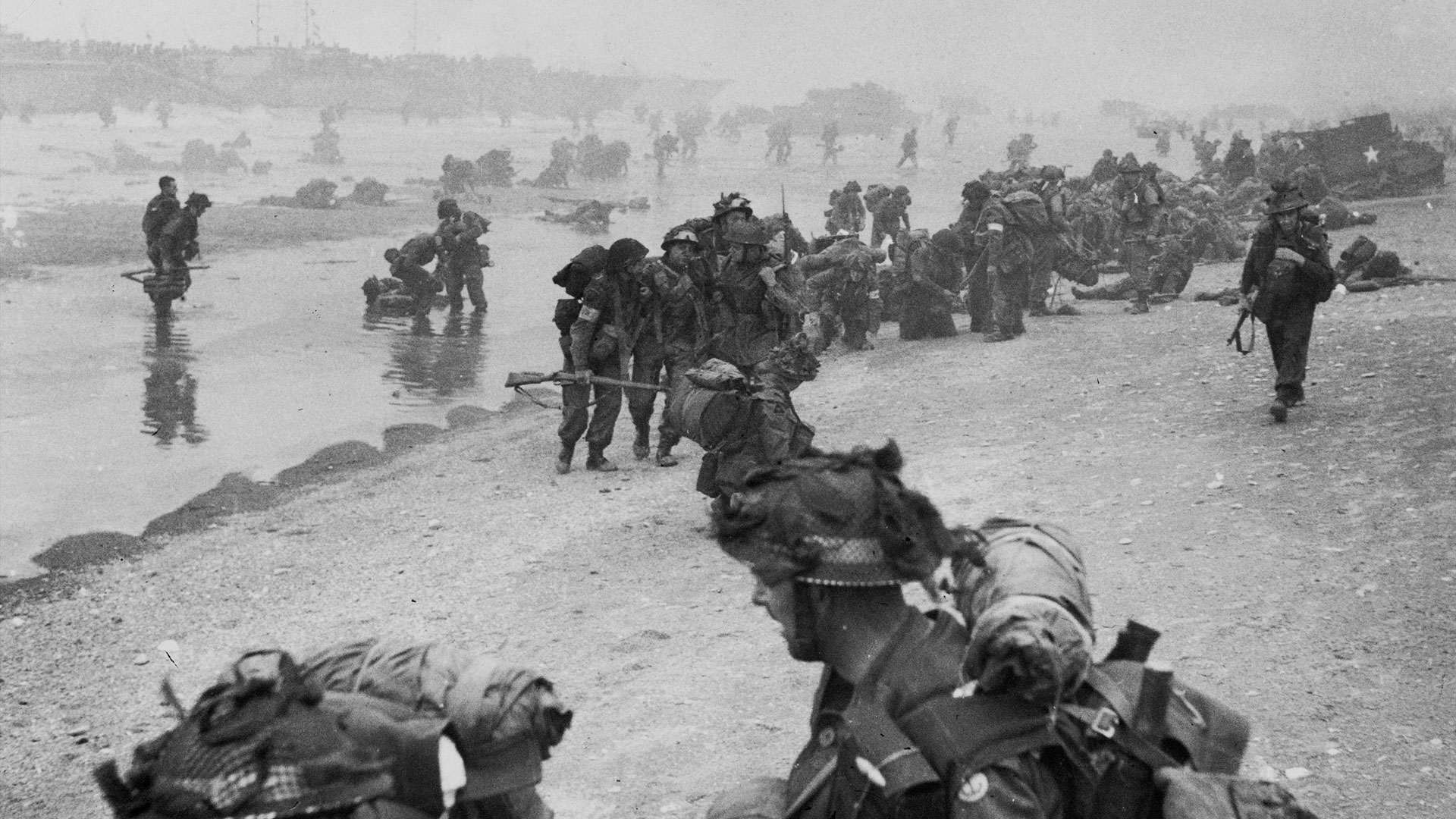
On 6 June 1944, 156,115 Allied troops were either airdropped behind German coastal defences or landed by sea on to the shores of Normandy, in Nazi-occupied France – the beaches were codenamed Gold, Sword, Juno, Utah and Omaha.
D-Day was the largest amphibious invasion in history and saw British, Canadian and American troops working together with several other nations such as France, The Netherlands and Poland on Op Neptune, the initial assault phase and naval component of the larger Operation Overlord, the codename for the Allied liberation of Europe from Nazi-Germany's occupation.
It is described by some as the beginning of the end of the Second World War but the human cost of D-Day was nothing less than catastrophic.
Many were killed the moment they stepped off their landing craft because of German artillery, mortar shells and entrenched machine-gun fire.
Some men drowned, airborne troops died because of small-arms fire upon landing and the beaches were heavily mined and rigged with structural obstacles.
And it wasn't just service personnel who paid a devastating price for the liberation of Europe.
It is estimated that on D-Day alone, about 3,000 French civilians were killed due to intense Allied aerial bombings intended to destroy German supply lines and coastal defences.
A landscape transformed
During the D-Day landings, Normandy's beaches were littered with fortifications, defensive positions, landing craft, troops and military equipment.
It was loud beyond comprehension, filled with chaos, destruction and casualties.
D-Day veteran Fred Harvey, who landed at Juno Beach, told BFBS Forces News in 2016 what stuck in his mind was how the Canadian troops were lying dead or wounded on the beach as they went up.
He said: "It killed me, I'd been playing cards with some of these blokes."
D-Day veteran Mr Coker told BFBS Forces News "it really sunk in on the second day" when hearing of friends who had died in the assault.
He added: "We'd been dug in during the night and the following day we're talking to people and you say 'Where's Charlie? Where's Billy… Oh, didn't you hear, they got killed yesterday'."
Mr Sturdy told BFBS Forces News there is a side to "an assault of the kind that D-Day was that one doesn't really want to dwell on".
"It is rather a sickening thing to think of."
However, while the coastline was left heavily scarred and littered with the wreckage of landing craft and tanks, time and reconstruction has dramatically improved Normandy's beaches.
It is nearby military cemeteries, museums and memorials that will tell the story of D-Day for future generations to come.
Today, the Normandy beaches are either vibrant seaside destinations filled with tourists and local communities or long stretches of tranquil coastline with green fields behind and cool water glistening in the sunshine.
But now and again there are physical reminders of the devastating force that once ripped its way through the sand.
Living places of Remembrance
The beaches are used each year to commemorate the end of the Second World War and in particular, the D-Day landings.
Local communities, military personnel and veterans from around the world gather for official ceremonies and there are educational activities for younger generations.
As the number of surviving veterans declines, remembrance has been forced to evolve but thanks to the UNESCO status, the beaches will remain a focal point for future generations to come.
The beaches have come to symbolise sacrifice, international cooperation, liberation and the importance of remembering the past and learning from our mistakes.
Many who enjoy what the beaches have to offer today, aren't aware of the death and destruction that the coastline endured 82 years ago.
Perhaps they are too young to know about humanity's shared traumatic history, but the UNESCO recognition ensures these beaches will continue to educate, commemorate and remind future generations of the cost of freedom.
Join Our Newsletter