The gruelling Atlantic Challenge - Why is it the 'World's Toughest Row'?
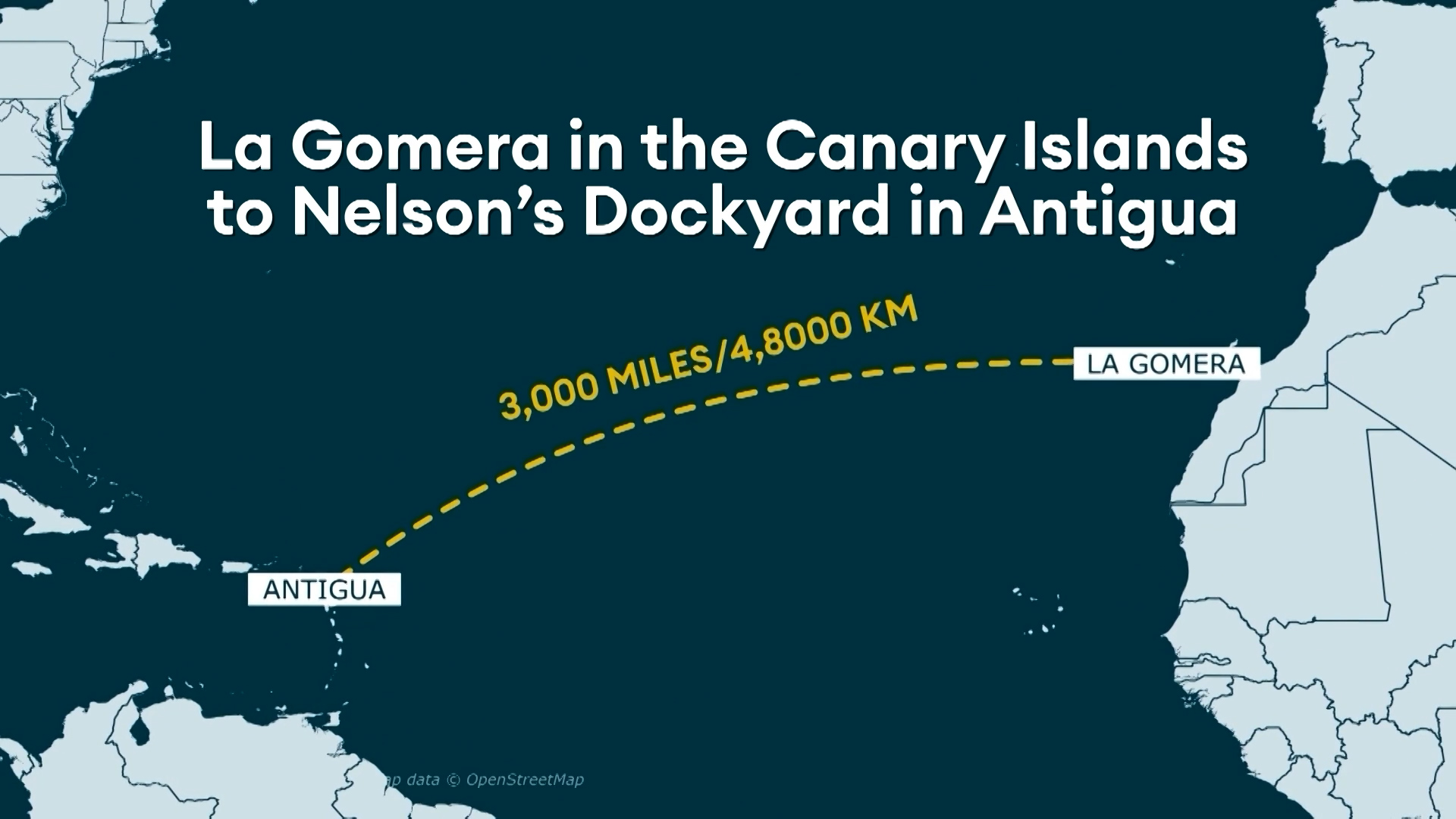
43 ocean rowing boats set off from La Gomera in the Canary Islands on Sunday 13th December.
A mix of solo rowers, pairs, trios and teams of four, all of them are headed for Nelson’s Dockyard on the Caribbean island of Antigua.
A typical crossing takes anywhere between 40 to 60 days but the current record for a team of fouris held by the Four Oarsmen (George Biggar, Dicky Taylor, Peter Robinson and Stuart Watts) who did it in 29 days, 14 hours and 34 minutes back in January 2018, when it was called The Talisker Whisky Atlantic Challenge.
- Unstoppable champion Charlotte Pudge retains services showjumping title
- Former soldier among first British snowsport athletes announced for 2026 Paralympics
- British Army badminton players falter against French forces in cross-channel contest
It’s estimated that 1.5 million oar strokes are taken per team, per race, and most crews row in a routine of two hours on, two hours off.
Each rower consumes around five to six thousand calories a day but on average loses eight kilograms of bodyweight during the challenge. In addition, they also have to contend with sleep deprivation, salt sores, blisters, rough seas, wildlife and sea storms.
Meaning that finishing the race, regardless of time, is a major human-endurance achievement. Given all of these demands, is it any wonder the military want to be involved?
This year, the Army’s Force Atlantic, HMS Oardacious of the Royal Navy and RAF boat Per Ardua 21 are pitted against each other - all with four person crews
RAF duo Air Commodore Matt Stowers and Squadron Leader Mark Jacklin are returning to the Atlantic having rowed it as a pair 21 years ago. By all accounts, their crossing was disastrous and it took them 78 days.
Matt Stowers maintains that “ocean rowing still comes back to me as probably being one of the most brutal environments I’ve been in.”
Mark Jacklin insists that both he and Matt said they would never do it again but “thankfully I forgot about all the bad bits. I forgot about the oars breaking, the seats breaking, running out of food. I just remembered the highlights.”
For them, it’s a chance to lay that particular ghost to rest in a four man crew with an average age of 56.
For Force Atlantic’s Bombardier Emma Mackenzie, this was a chance that came as a bit of a surprise as she was initially the reserve rower, but was called into action when teammate Travis Sawyer had to pull out with an injury.
“I was very scared, I thought I cannot do this, I had no time to mentally prepare for it so it was an emotional three days (when the team were on the water for 72 hours in order for Emma to complete the required number of 120 hours needed to partake) but we got there, we done it and now I’m in the mindset of OK, we’re doing this now.”
The fastest military time was recorded by the five-man HMS Oardacious crew of Matt Main, Dan Seager, Rob Clarke, Ian Allen and Mike Forrester, in the 2023 race. They made the crossing in 35 days, 4 hours and 30 minutes.
Warrant Officer 1 Liam Hoddy from HMS Oardacious is looking forward to the rivalry:
“It’s Twickenham at sea, there’ll be some inter service banter I’m sure.”
Whether it’s time, prestige or just for something to do over the festive period, there are so many reasons that these competitors choose to do this challenge. All as valuable as the other and all set to cement their name in history.
Related topics
Join Our Newsletter