UK open to Germany joining Tempest sixth-gen fighter programme, PM says

The UK is open to Germany joining the international programme to build the next generation of fighter aircraft, the Prime Minister has said.
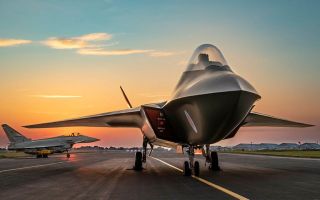
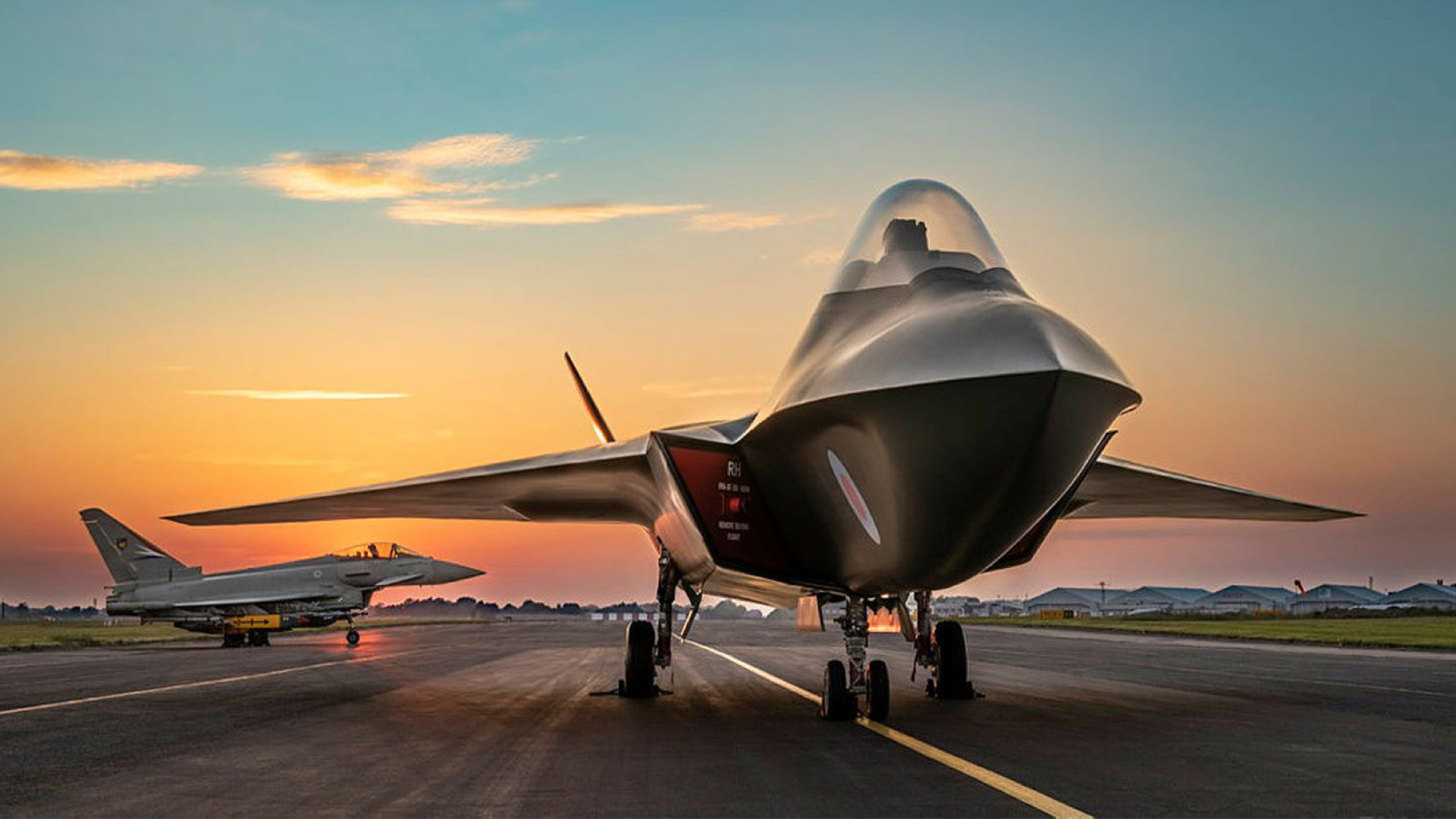
The Global Combat Air Programme (GCAP) is a joint project between the UK, Italy and Japan to develop a sixth-generation fighter jet.
GCAP is currently due to deliver new combat air capability to replace the Typhoon, which is in service with the Royal Air Force and Italian air force, and the Mitsubishi F-2 that is in service with the Japan air self-defence force.
GCAP and Germany
Speaking alongside German chancellor Friedrich Merz, in Berlin Andy Burnham said: "We are talking about defence collaboration, and I've indicated to the chancellor... our openness to Germany joining GCAP, the next generation of fighter aircraft.
"And that is something that we seek to progress in the coming period, working with our partners Italy and Japan, in relation to that as well."
In July, Canada became GCAP's first observer nation. It means that although Ottawa will not have a decision-making role, the move gives privileged access to the development of the programme.
The move also paves the way for discussions on future participation and contribution to GCAP.
The Tempest, which is following on from the Typhoon and the Tornado before it, is a collaborative effort between nations and the defence industry, and aims to deliver a new frontline fighter by 2035.
Security partnership to counter hybrid threats
The Prime Minister was in Berlin to launch a new UK-Germany joint security partnership to counter sabotage, cyber attacks and other hybrid threats from adversaries, including Russia, during his first face-to-face meeting with Mr Merz.
The joint partnership will involve sharing information and coordinating action to monitor, deter and disrupt threats and to develop resilience against threats to critical infrastructure.
Mr Burnham and Mr Merz also discussed support for Ukraine, responding to instability in the Middle East and addressed the impact of disruption to global trade routes, such as the Strait of Hormuz.
The security partnership comes after recent domestic threats against the country, including two reported drone attacks at Leipzig airport in August.
In the first incident, an explosive quadcopter was found near a Ukrainian cargo plane.
The second incident involved a cargo Boeing 757-23N which struck an unidentified object. The aircraft diverted to Hannover airport and landed safely, despite minor damage to the nose of the aircraft.
Since 2022, Berlin has been a leading military backer of Ukraine following the country's full-scale invasion.
US media said that American intelligence linked the drone to Russia, which has denied any involvement. Russian president Vladimir Putin claimed that Germany planted evidence to blame Moscow.
Subsequently, Germany said that Russia was allegedly responsible for the drone attack in September.
German interior minister Alexander Dobrindt said the Leipzig attack followed the "well-established pattern of Russian hybrid operations in Europe", and the assumption was that Germany would be targeted again.
Join Our Newsletter