Halo Shield: Passive drone detection for Army bases gets off the ground amid growing threats
With the uptick in drones in both defence and civilian hands, you may have been convinced every military base already had overwatch technology to spot them. In fact, this is only just taking off.
Project Halo Shield has seen one of the first passive counter-drone detection systems deployed at a British Army base in Warminster by the Experimentation and Trials Group (ETG).
This is a set-and-forget system to spot drones flown by civilians, friendly forces, or adversaries. The limitation? It can't shoot them down.
Permissions and policies
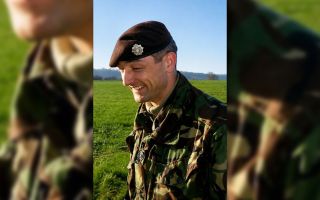
"So, the system is what we would call fitted for. At the moment, we don't have the effectors bolted on, but they are ready to go tomorrow," said Colonel Jim Howard, Commander, ETG.
"We could click them on and use them. The challenge we have in the UK is the permissions and policies. Obviously, operating on operational tour overseas, it's very, very different in terms of the threat, and that gives you freedoms.
"In the UK, you have to be a little bit more careful what you do, and that's both in terms of collecting information through the radio frequency piece, but also if you start using effectors, which starts lobbing things through the air, clearly you have to make sure you're safe, and you're in line with all the policies.
"But if the policies change tomorrow, we're ready to go."
Halo Shield is driven by the ETG and funded through UK Defence Innovation. "It's a sort of 'enemy forces' facility when you want to train your own drone pilots," the colonel added, referencing a dual use for the capability.
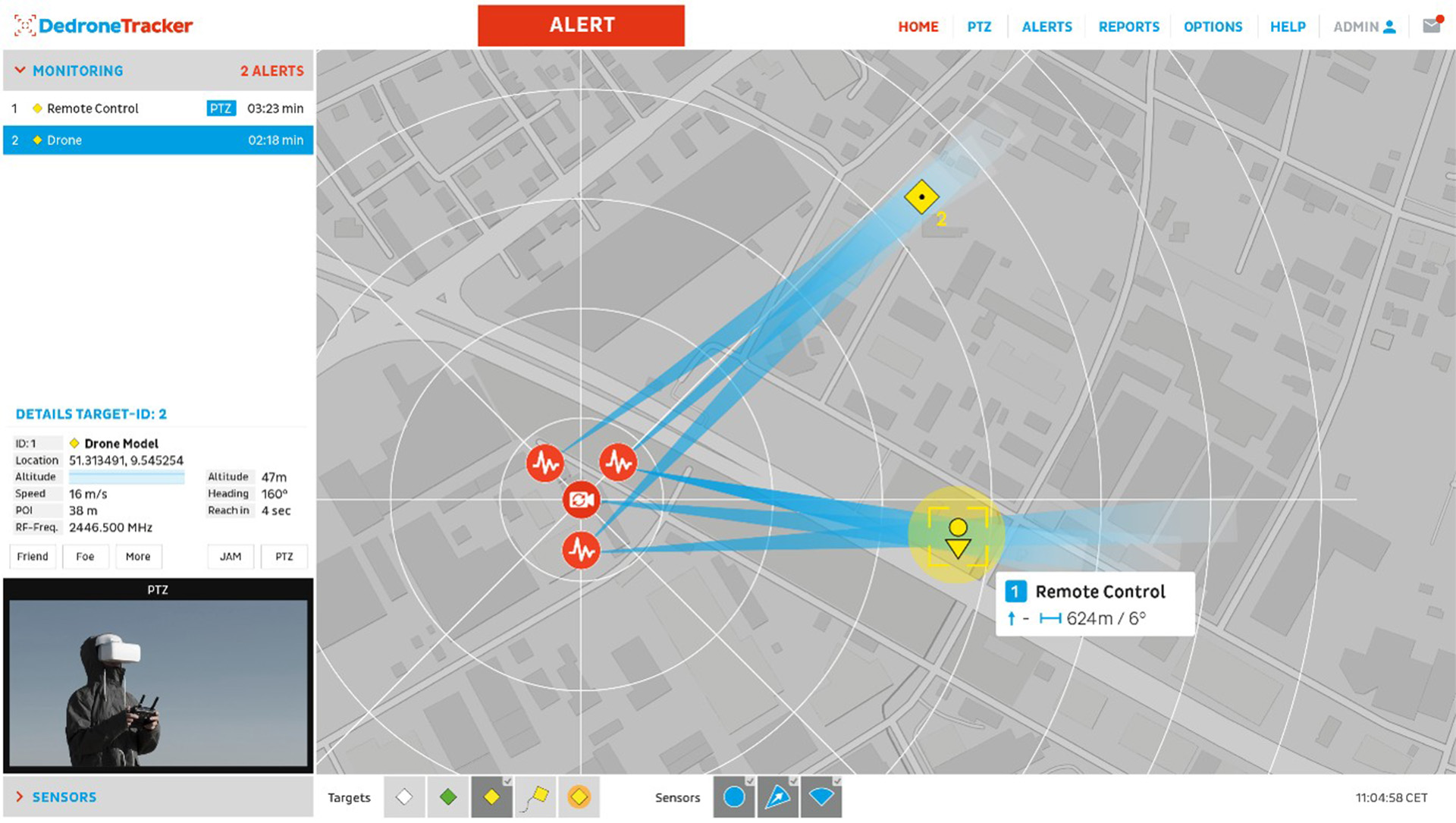
In the first 17 days of live monitoring, it recorded 29 drone position alerts with detections up to 5km away.
Layered picture of the skies
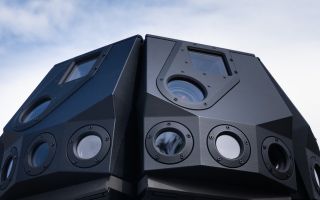
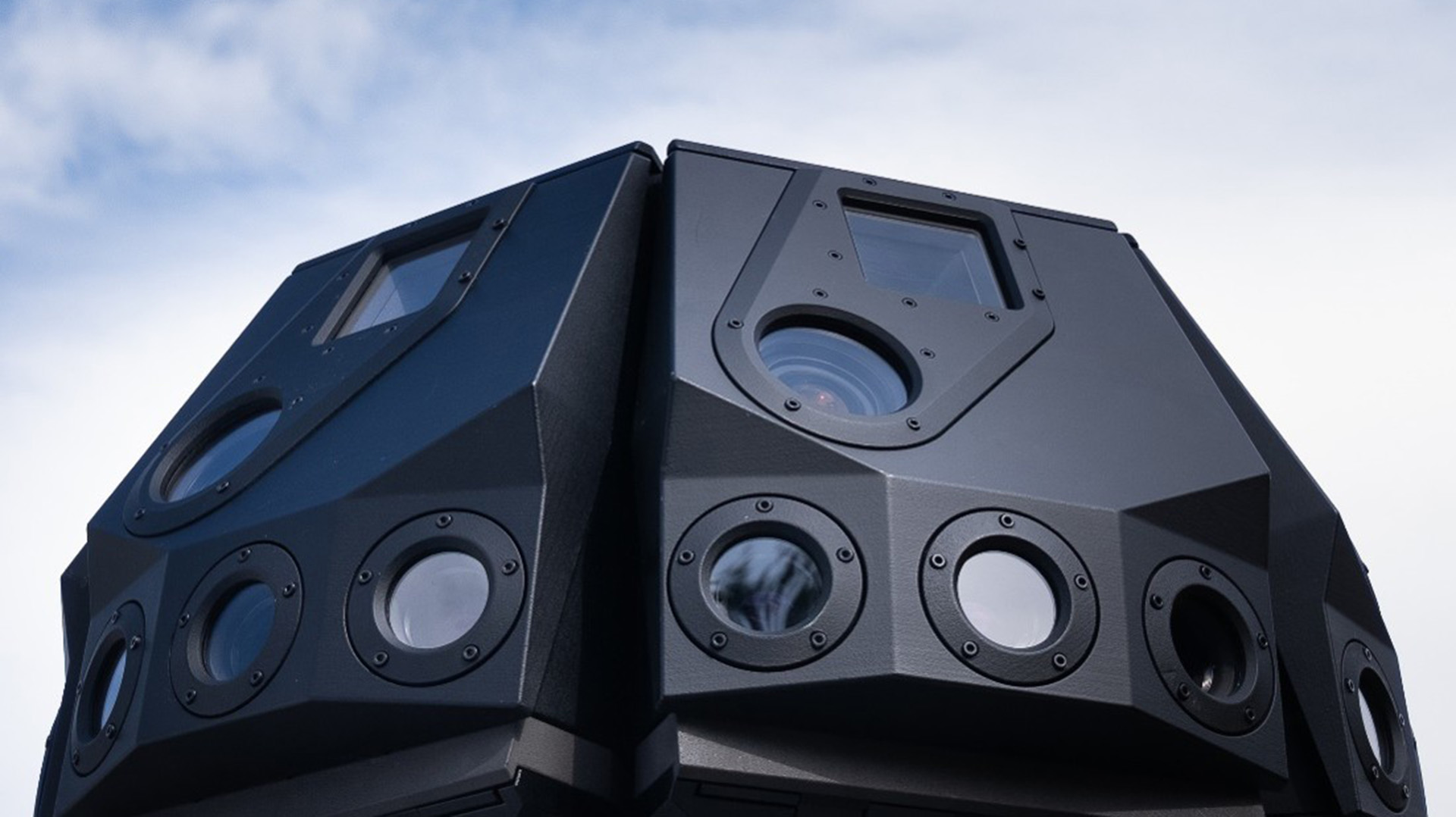
Behind it all are two companies, Dedrone and Quell, combining radio frequency and optical detection to give the Army a layered picture of the nearby skies.
Nick McRobb, senior director, sales (UK&I), Dedrone explained the benefits of this passive system.
"The first piece of information they want to know, is there a drone? We can say yes, there is, or no, there isn't. Once we've located it, we can also tell what type of drone it is, and that's quite important for them. And the most important piece is the pilot's location," Mr McRobb said.
"If you're in a military environment and you have an adversary who's trying to look for your radio signature, we don't have one on our sensors. So, unlike a radar, which is active and emits, we cannot be discovered in that regard.
"The sensors just sit there and do their thing. We're not intruding into anybody's private data, private information."
As for tackling swarms of drones, Bobby Hamilton, Quell's chief operating officer, said: "In between ourselves and the other technologies deployed, we can both pick up multiple systems all at one time, all approaching from the same angle."
The size and type of drone are significant factors in determining the pilot's likely motives, as is the length of time in the air near the Warminster garrison, said Major David Morrell, SO2 Robotics and Autonomous Systems, ETG.
"So, we are able to understand the UAV frequency use and classification of the systems being used in the area, but at the moment we don't have an active response to that," Maj Morrell added.
The companies delivering this drone detection kit work all around the world with varying laws and protocols.
If UK military bases were given the green light, these teams are confident they would be able to deal with, as well as detect, this kind of threat themselves.
Related topics
Join Our Newsletter