Are you a landlubber? The nautical questions you've always wanted answered
A Royal Navy warship can be weighed without touching a scale, travel at 30 knots without tying anything and reach eight bells at noon.
Its kitchen is a galley, its toilet is the heads, its walls are bulkheads and its ceiling is the deckhead.
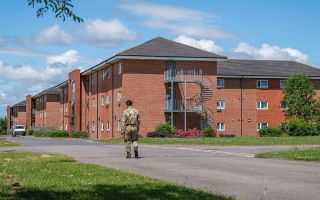
Go ashore and it is still possible to serve in a ship – even when that ship is made of bricks and mortar.
- Threat has not gone away: Navy hands over command of counter-piracy task group
- Royal Navy set for decade of most remarkable transformation, says Defence Secretary
- Russia's grey zone surge shifts North Atlantic battleground beyond sea lanes
Naval terminology can sound deliberately designed to confuse the average landlubber. Yet many of its strangest words once solved practical problems at sea.
Others have survived from the days of steering oars, sandglasses, sails and paddle steamers into an age of nuclear submarines, satellite communications and guided missiles.
How do you weigh a warship?
Since lifting an aircraft carrier and popping it onto an enormous set of scales would be a tad cumbersome, the weight of a ship is worked out from the water it displaces.
A floating vessel displaces a quantity of water equal to its own weight, in accordance with the principle identified by the Greek mathematician Archimedes more than 2,000 years ago.
If a warship has a displacement of 8,000 tonnes, it is making room in the sea for 8,000 tonnes of water.
Naval architects calculate the volume of the hull below the waterline and account for the density of the water in which it is floating.
A carrier with fuel, ammunition, food, fresh water, aircraft and hundreds of people on board sits lower in the water than the same vessel largely empty.
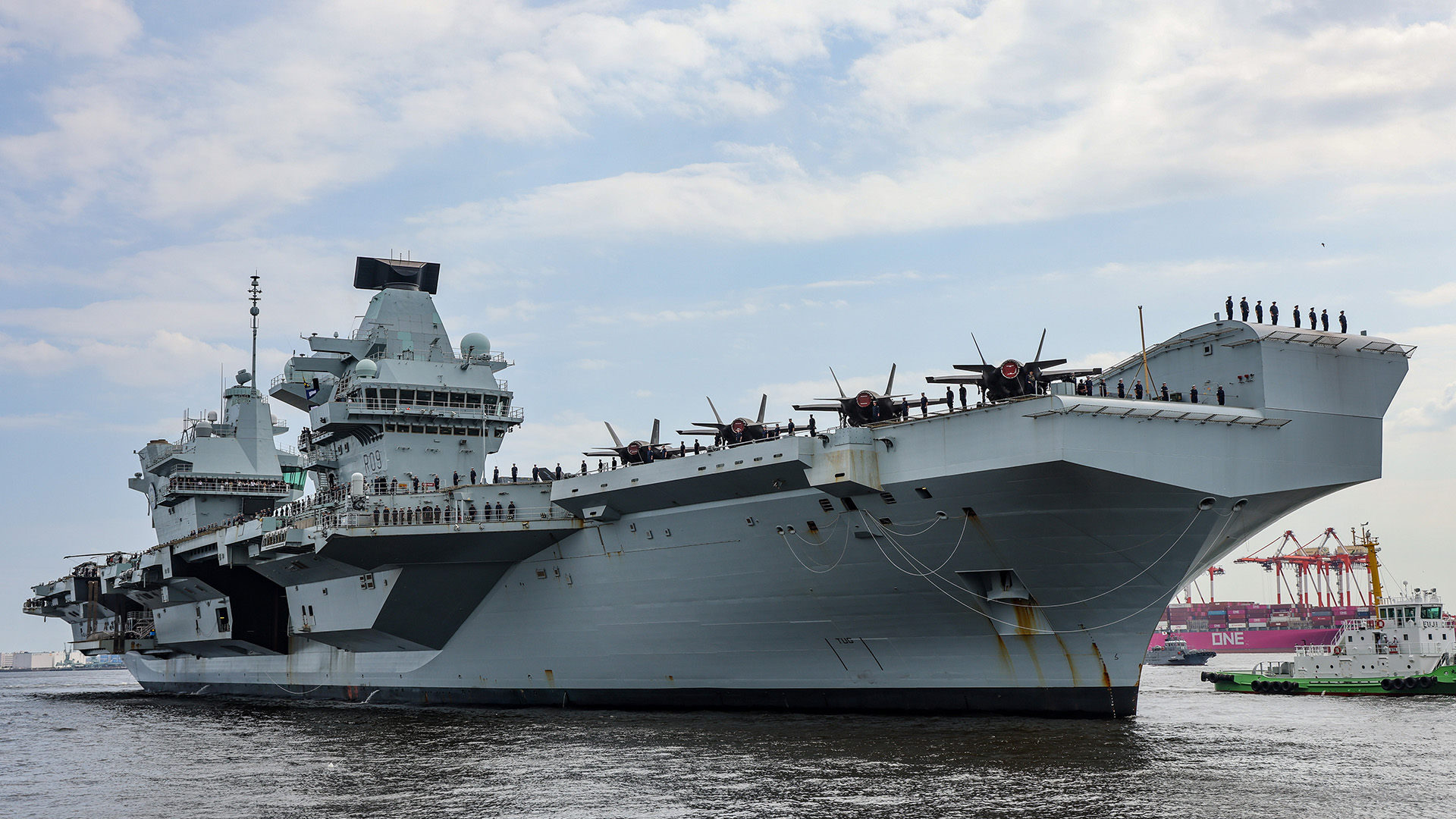
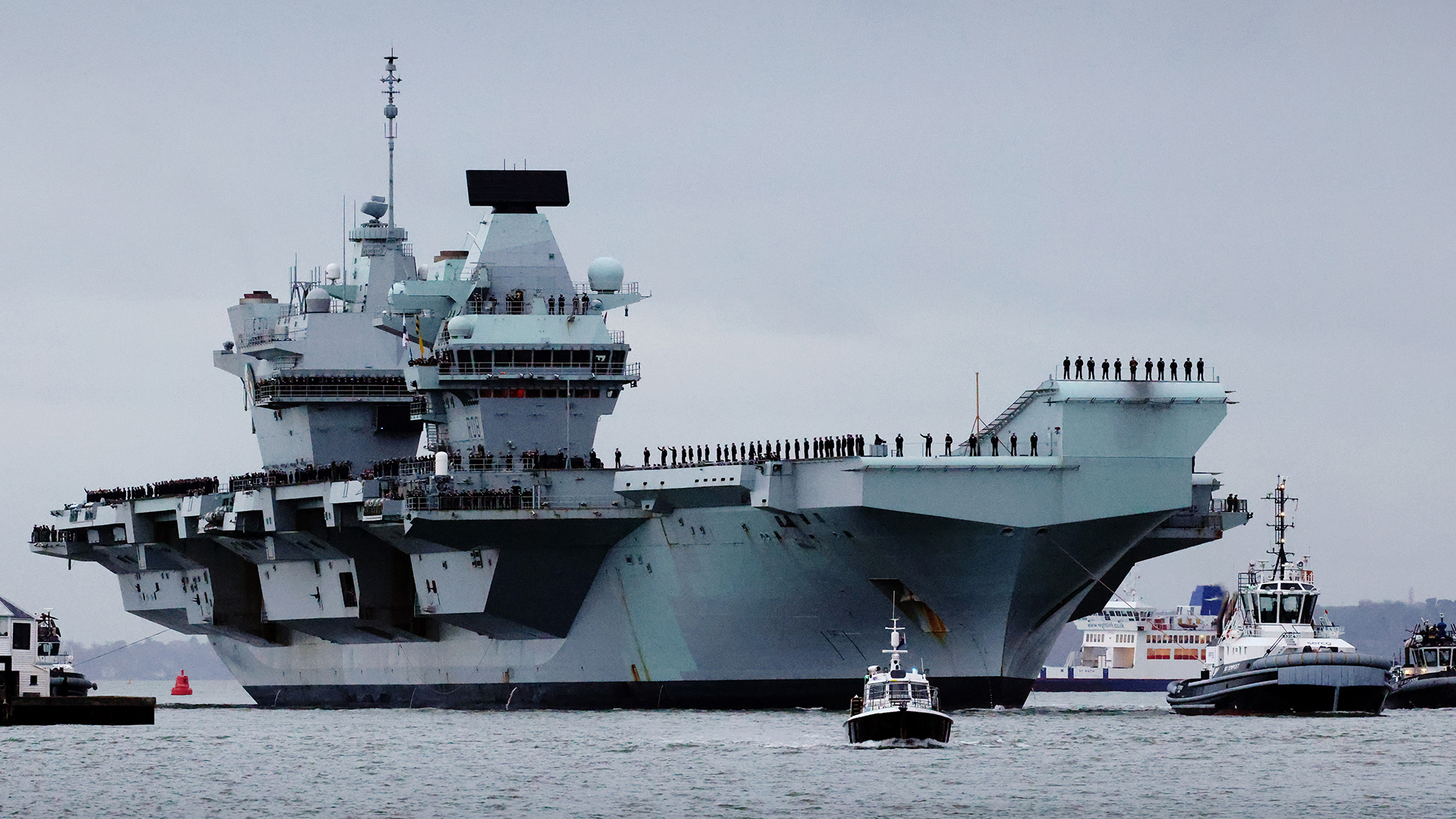
The Royal Navy gives the Queen Elizabeth-class aircraft carriers a displacement of 65,000 tonnes.
Tonnage becomes more confusing in commercial shipping.
A ship can have several very different figures attached to it – including displacement, gross tonnage and net tonnage, all measuring different things.
Why is a nautical mile longer than an ordinary mile?
The nautical mile was derived from the dimensions of the Earth rather than the distance travelled along a road.
One international nautical mile is exactly 1,852 metres, or about 1.15 ordinary – or statute – miles.
Historically, it corresponded approximately to one minute of latitude. There are 60 minutes in a degree and 90 degrees between the Equator and either pole.
That relationship allowed navigators to measure a distance on a chart using the latitude scale printed alongside it.
The modern nautical mile has been fixed at precisely 1,852 metres. The Earth is not a perfect sphere, and the actual length of one minute of latitude varies slightly depending on where you are.
Why is speed measured in knots?
Historically, sailors counted actual knots.
A wooden device known as a log was thrown over the stern, attached to a line marked with knots at calculated intervals.
As the ship moved away from the floating log, the line ran out.
Sailors counted the knots passing through their hands during a set period measured using a sandglass.
The result gave an estimate of the vessel's speed.
Today, one knot means one nautical mile per hour.
A ship travelling at 20 knots is therefore covering 20 nautical miles in an hour, equivalent to about 23mph on land.
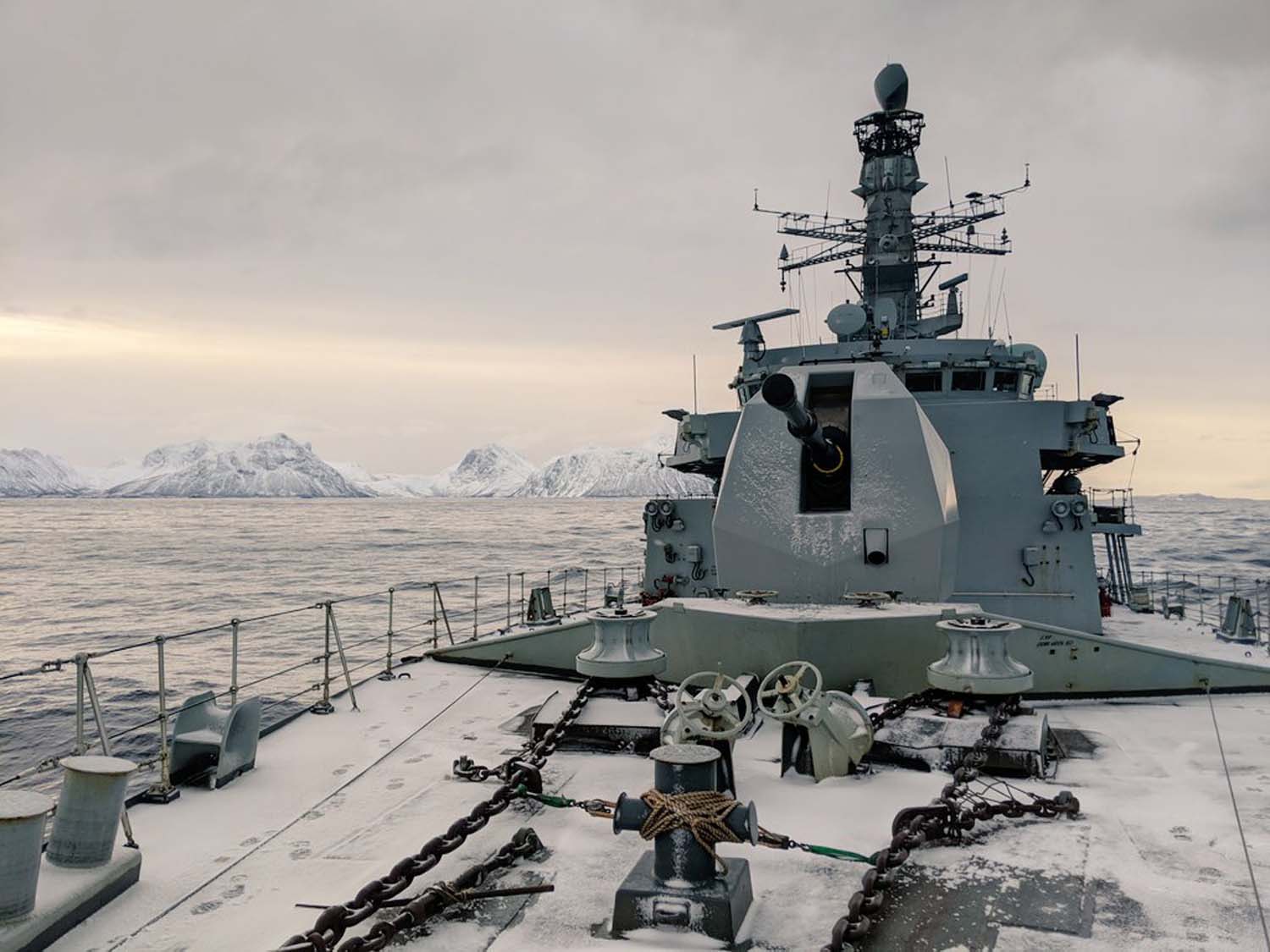
Why do sailors say port and starboard?
Left and right depend on which way a person is facing. Port and starboard remain fixed to the ship.
Facing towards the bow, port is always on the left and starboard is always on the right.
The terms remove any chance of two people facing opposite directions interpreting an instruction differently.
Starboard comes from the Old English "steorbord", or steering side.
Before ships had rudders mounted centrally at the stern, they were commonly steered using a large oar fixed to the right-hand side, where it was easier for a right-handed helmsman to operate.
The opposite side was used for loading and placed against the harbour or port, protecting the steering oar from the quay.
The left side was once also called larboard, but larboard and starboard were dangerously easy to confuse when shouted through wind, rain or battle.
An Admiralty order in the mid-19th century formalised the use of the word port.
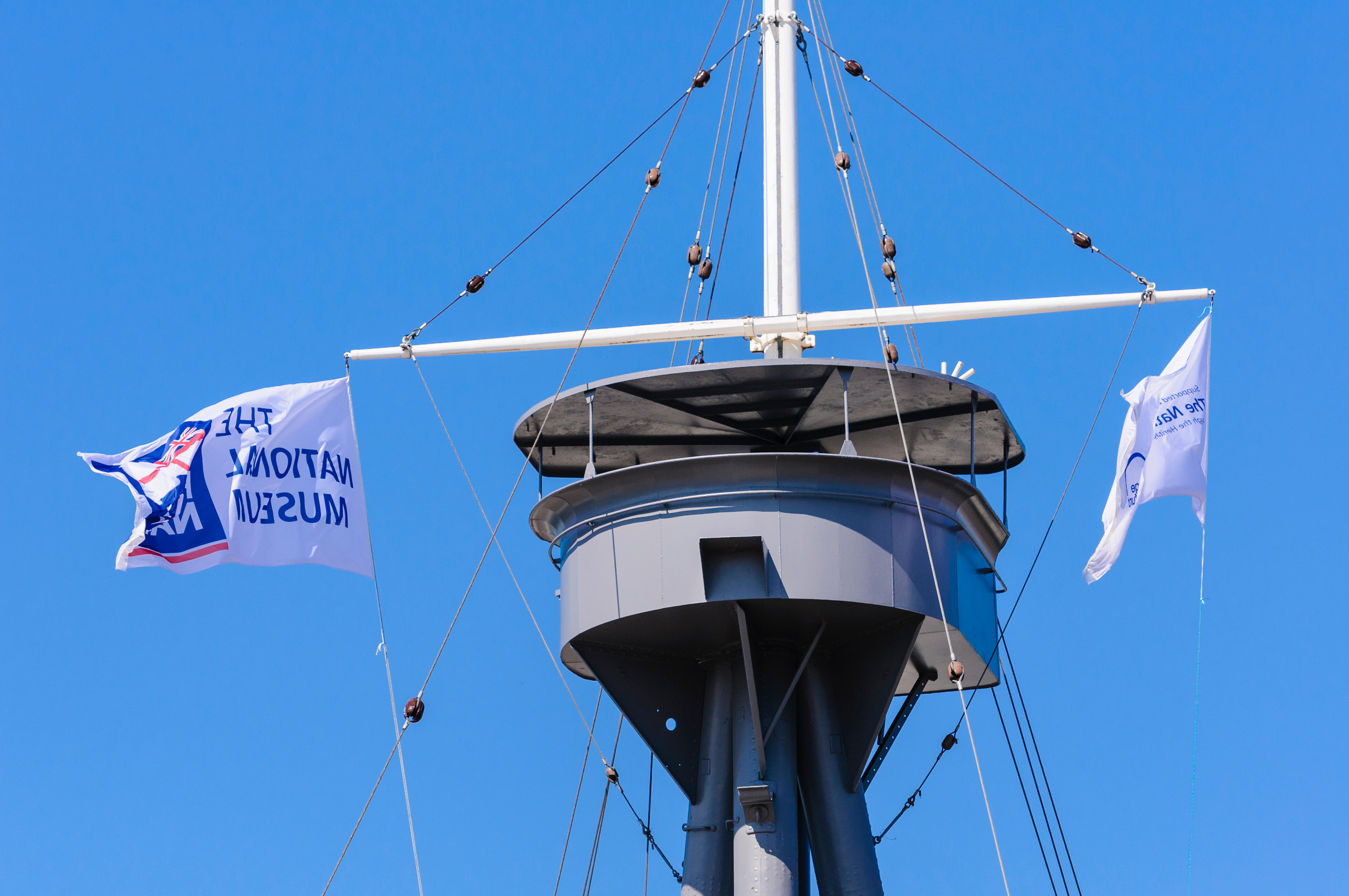
What is a crow's nest?
A crow's nest is a lookout positioned high on a ship's mast.
The height allows a sailor to see farther over the horizon than they could from the deck.
The enclosed crow's nest is associated with Whitby whaling captain William Scoresby Snr, who developed one in 1807 to shelter lookouts in Arctic conditions.
One much older legend claims Viking sailors kept crows or ravens at the masthead and released them to help find land, supposedly giving the crow's nest its name.
The name survives in the modern Royal Navy. Crowsnest is its airborne surveillance and control capability, fitted to Merlin Mk2 helicopters operated by 820 Naval Air Squadron.
Its radar allows crews to detect potential threats beyond the horizon.
Why is the toilet called the heads?
On an early sailing ship, answering the call of nature meant heading towards the bow – the head of the vessel.
The crew's basic toilets were positioned there, allowing waste to go into the sea. Waves breaking over the bow helped wash the area clean.
There wasn't much privacy for the sailors, but at least the sea supplied a natural flushing system.
Officers generally enjoyed more fitting facilities at the stern.
Plumbing has moved on, but Royal Navy sailors and officers alike still head to the heads when nature calls.
What is a poop deck?
This is a perfectly respectable part of a ship with an unfortunate name.
The poop deck is the raised deck at the stern of a sailing ship, traditionally forming the roof of the cabins below. It provided a vantage point for keeping watch and sending signals, while sailors also worked ropes controlling the sails from up there.
Guaranteed to derail a school trip, the name comes from the French word poupe, meaning stern, which in turn is derived from the Latin word puppis.
What is scuttlebutt?
Scuttlebutt began as something sailors drank from and became something they heard.
In 1700s naval parlance, a scuttlebutt was a cask of drinking water. A "butt" was a barrel, and a "scuttle" was an opening through which sailors could dip a ladle to draw water.
Like a modern day office watercooler, the barrel gave people somewhere to gather for a drink and exchange news and gossip.
In time, "scuttlebutt" came to mean the gossip itself.
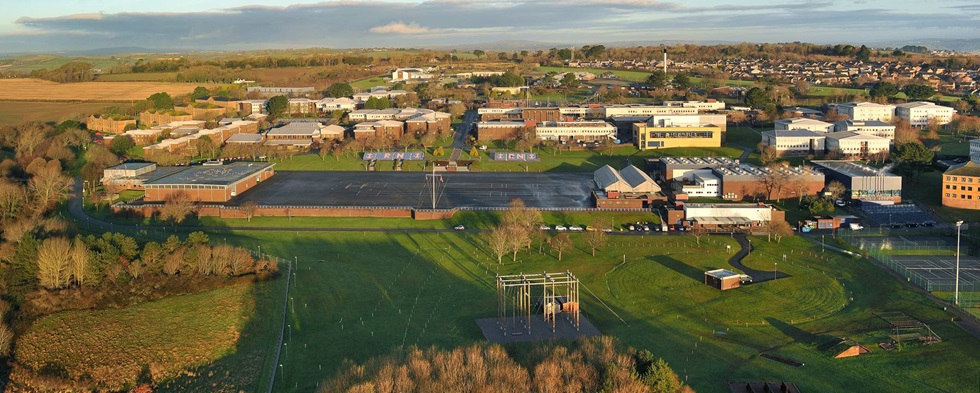
How can a building be an HMS?
Some Royal Navy establishments ashore are commissioned units bearing the title His Majesty's Ship. They are informally known as stone frigates.
HMS Raleigh, the training establishment near Torpoint in Cornwall, was commissioned in 1940. Its sailors report to a site with buildings, classrooms and training facilities.
In 2022, the Royal Naval Reserve Air Branch was formally commissioned as HMS Pegasus, despite being spread across sites rather than contained inside a conventional hull.
A sailor can therefore join an HMS and spend the working day firmly on dry land.
Why is the command centre called the bridge?
Many early steamships were propelled by large paddle wheels mounted on either side of the hull. As they rotated, their paddles pushed against the water, driving the ship forwards.
The upper part of each wheel was enclosed in a protective housing called a paddle box.
A raised walkway connected the two paddle boxes across the ship.
It was literally a bridge, and its elevated position gave officers a useful vantage point from which to direct the vessel's movements.
As ship design developed, the bridge evolved into the navigation and control position familiar today.
Propellers largely replaced paddle wheels, but the name stayed aboard.
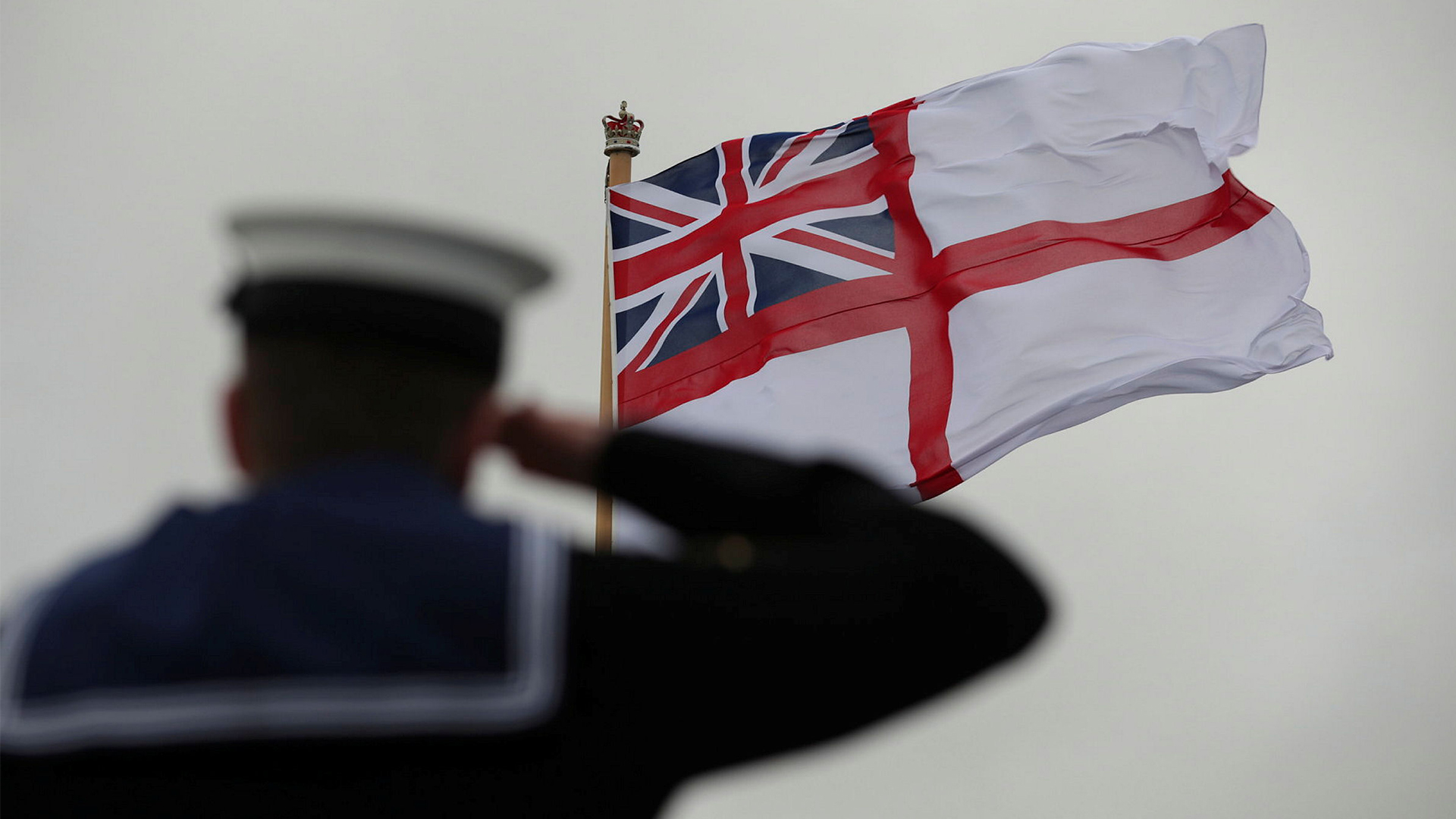
Why does a Royal Navy ship fly the White Ensign?
The White Ensign identifies a commissioned Royal Navy warship.
It consists of a red St George's Cross on a white field, with the Union Flag in the upper corner nearest the flagstaff.
The Union Jack, on the other hand, is traditionally flown from a jackstaff at the bow when a warship is in harbour.
It gained its name from that position, although the precise origin of "jack" remains debated.
Royal Navy ships may also be "dressed overall" for major celebrations, with lines of colourful signal flags running from bow to stern over the mastheads.
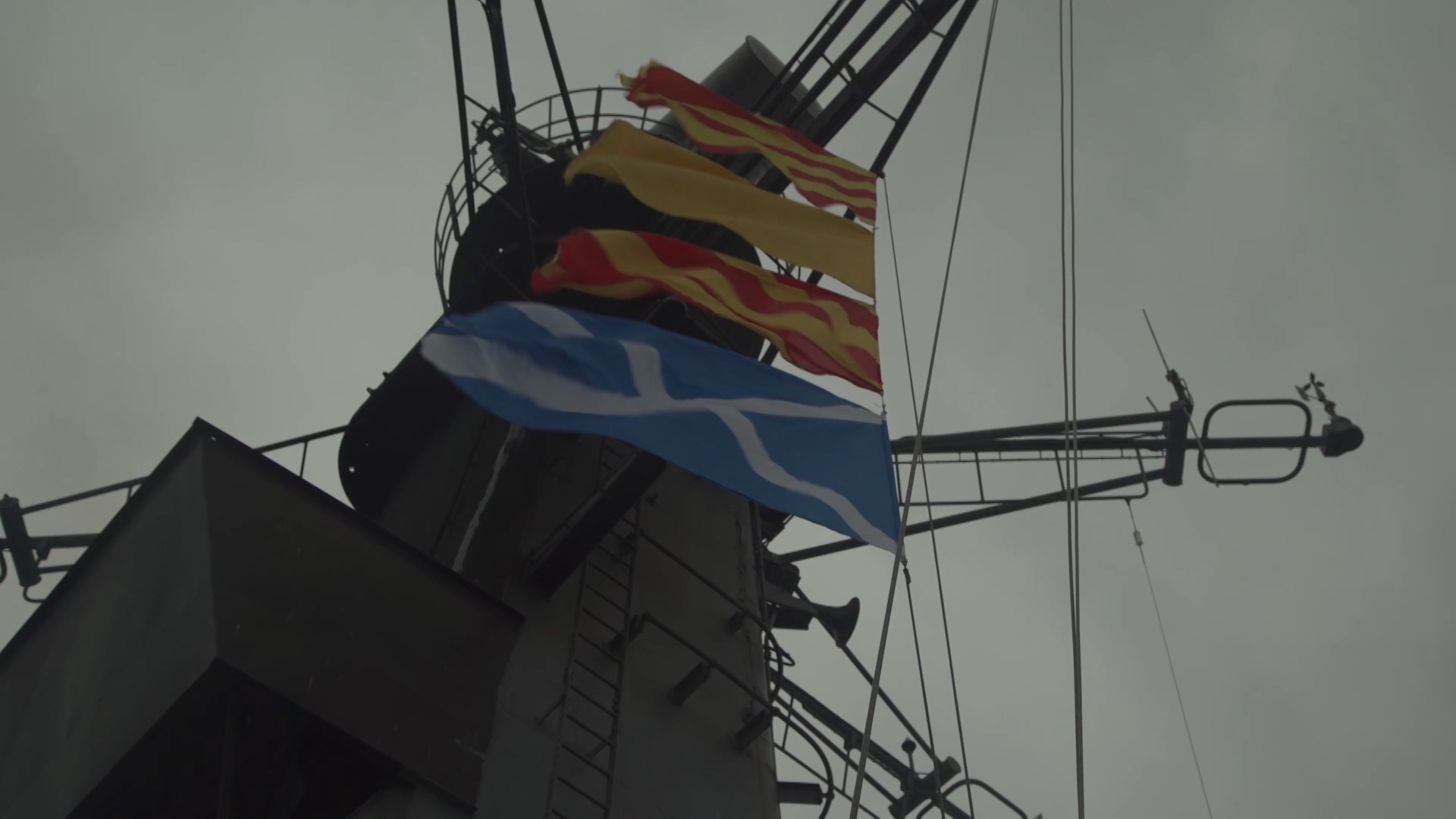
Why can eight bells mean noon?
The bell traditionally counted progress through a watch, the period during which a particular team was on duty.
For a four-hour watch, one bell marked the first half-hour, two bells the first hour, and so on until eight bells marked its end. The count then started again.
During the watch from 08:00 to noon, that means one bell at 08:30, two at 09:00 and eight at midday.
There is a further wrinkle in the traditional timetable. The period from 16:00 to 20:00 is split into two shorter dog watches.
That creates seven watches in the day. With two teams alternating, the odd number changes which team takes each watch on the following day.
The same sailors therefore avoid inheriting the same hours.
How much naval language has escaped ashore?
Quite a lot. We still learn the ropes, give people a wide berth, try to stay on an even keel and occasionally encounter a loose cannon.
Naval language has travelled so far inland that most landlubbers use it without ever noticing there was a ship involved.
But if they did venture out to sea, they may find themselves in a mess, only to discover that is where their meals are served.
Join Our Newsletter