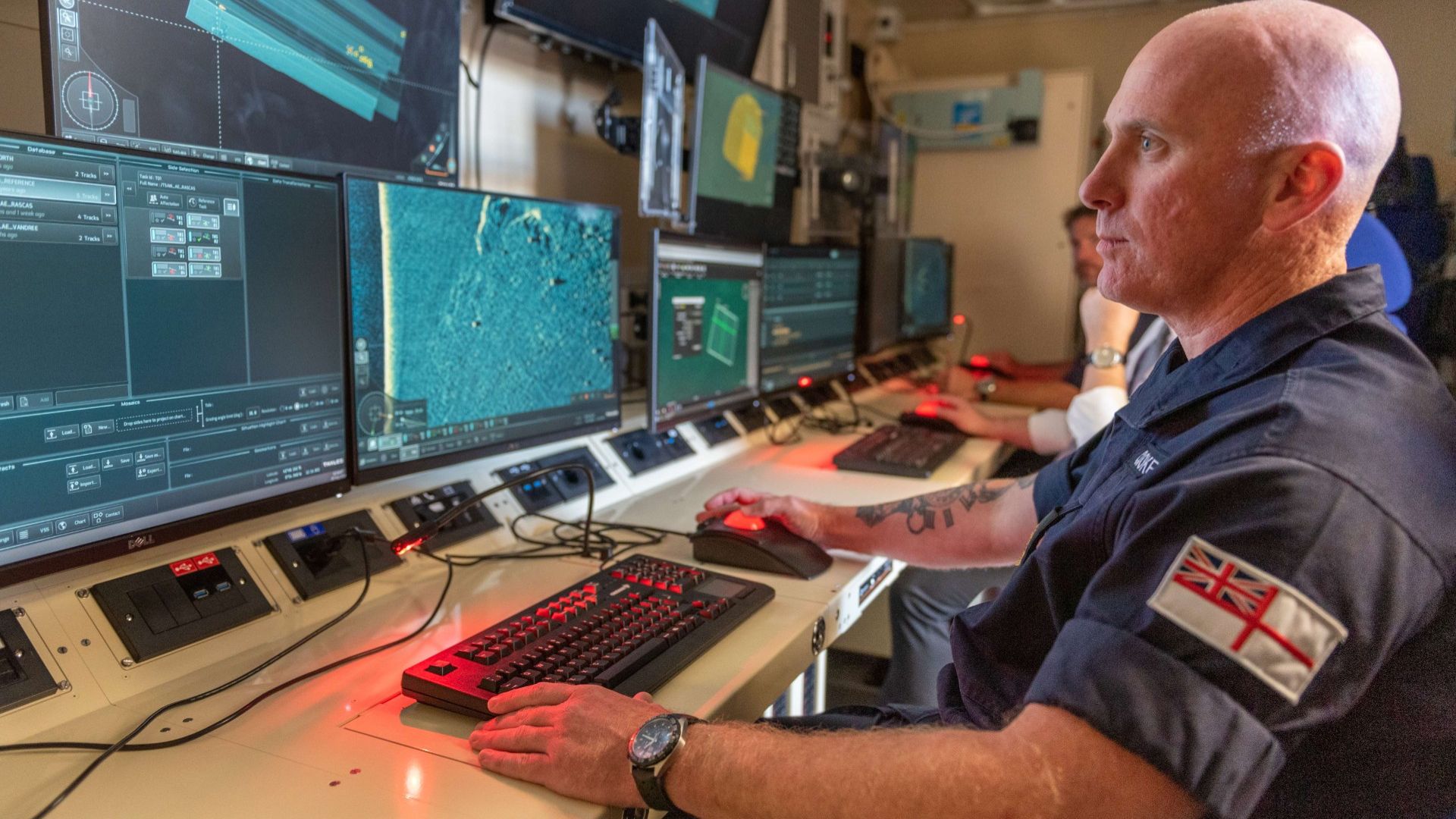
Funding has been announced for autonomous mine-clearing command hubs, allowing personnel to detect and neutralise undersea mines while remaining out of harm's way.
The £10 million contract awarded to technology company Thales will set about the creation of an AI-powered system that connects unmanned surface vehicles, autonomous underwater vehicles and sensors through a single operating platform.
It underscores the vision for a hybrid Navy under the Atlantic Bastion programme, which will see the first capabilities deployed in the water next year.
Defence Readiness and Industry Minister Luke Pollard said: "The threat to the UK is growing, driven by global instability, Russian aggression and a greater willingness of states and hostile actors to target our critical infrastructure.
"By embracing autonomous maritime technology, the Royal Navy is pioneering innovation to help keep our sailors safe at sea."
Mr Pollard's remarks reflect growing concern within UK defence, with recent sightings of the Yantar – supposedly a Russian spy ship – loitering near critical undersea infrastructure at home and further afield in the North Atlantic.
Yet what often goes unnoticed is the lingering threat posed by underwater sea mines that have lain dormant for years.
The hidden threat
The Royal Navy's effort to promote a free maritime order and protect sea lanes from underwater mines dates back as far as the Crimean War, but became a major part of operations during the First and Second World Wars.
In the latter, both Allied and Axis powers deployed hundreds of thousands of sea mines for both offensive and defensive operations.
Traditional minesweeping relied on crewed vessels towing specialised cutting gear to sever the mooring cables of tethered mines. Once cut free, the mines would rise to the surface, where they could be detonated safely with gunpowder.
This crude method remained in use until the 1980s, resulting in significant losses for the Royal Navy, with hundreds of minesweepers lost to mine detonations, the inherent dangers of the role and enemy attacks during sweeping operations.
More sophisticated Mine Hunters were introduced in the years that followed, which used high-resolution sonar and remotely operated vehicles to enable the detection and disposal of individual mines with precision.
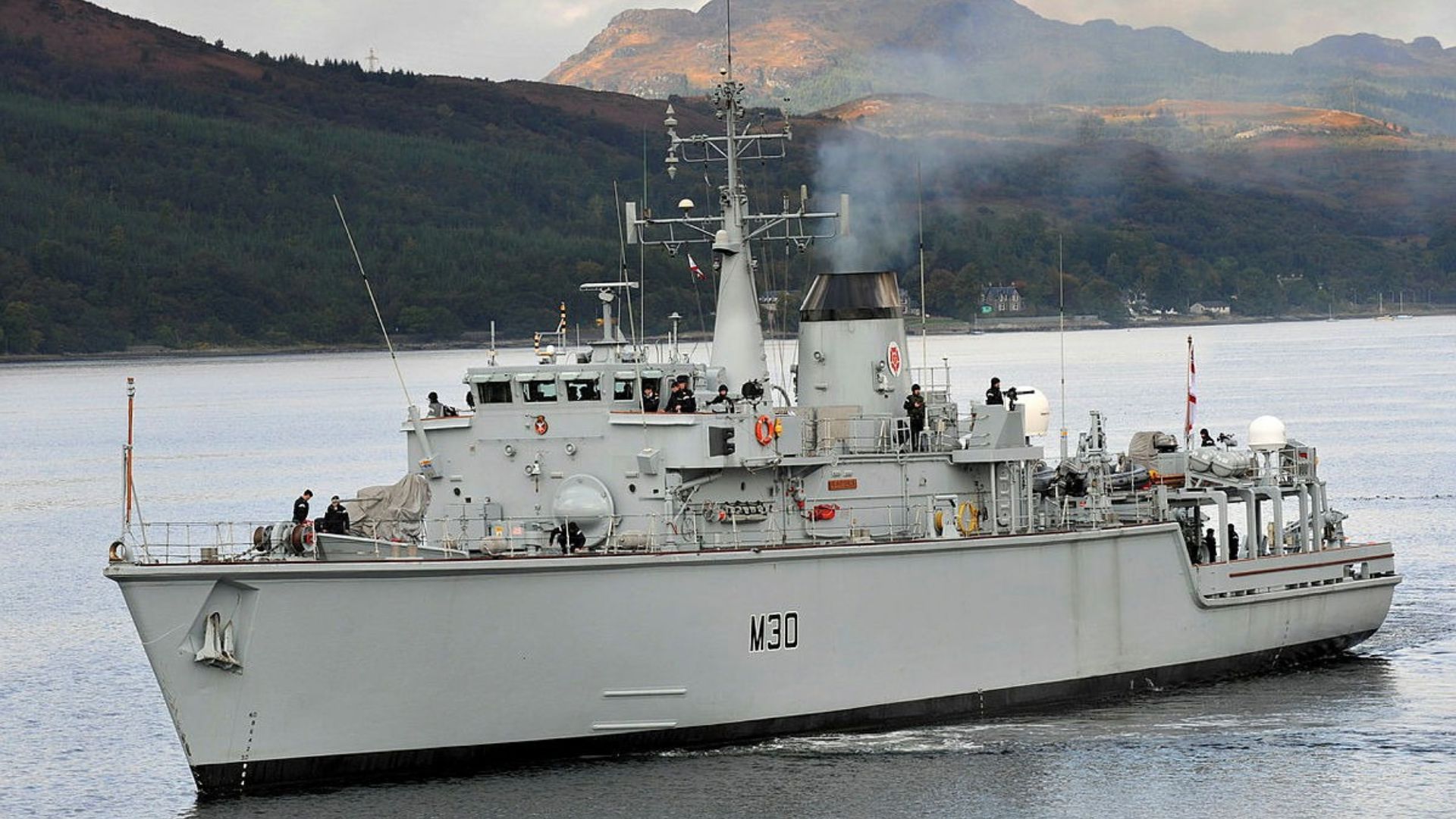
The last major minesweeping operation by the Royal Navy using traditional crewed systems was in 2005, primarily using its Hunt-class vessels HMS Ledbury and Middleton. That year marked the final deployment of sweep gear as the service shifted toward modern, unmanned mine-hunting systems.
Old threat, new technology
Earlier this year, the Royal Navy accepted into service a series of uncrewed drones - known collectively as Sweep - which are controlled remotely on the surface to hunt and detonate mines quickly.
The technology employed by this system can defeat modern digital sea mines, which can detect and target ships and submarines passing nearby.
Sweeping the seas
By replicating the acoustic, magnetic and pressure signatures of a real vessel, the mine is tricked into detonating at a safe distance.
Unlike a conventional minehunter, where a mine first needs to be detected and then safely destroyed, the Sweep system neutralises the mine threat automatically.
This is exactly the task that the new Remote Command Centres, being designed and delivered by Thales, are intended to support.
Its M-Cube management system, utilised by navies worldwide, will provide commanders with situational awareness from the task force to the individual unit level.
At its core, Mi-Map planning will use AI for target recognition, employing machine learning to analyse and process data in its database in ways that Thales says exceed human capability.
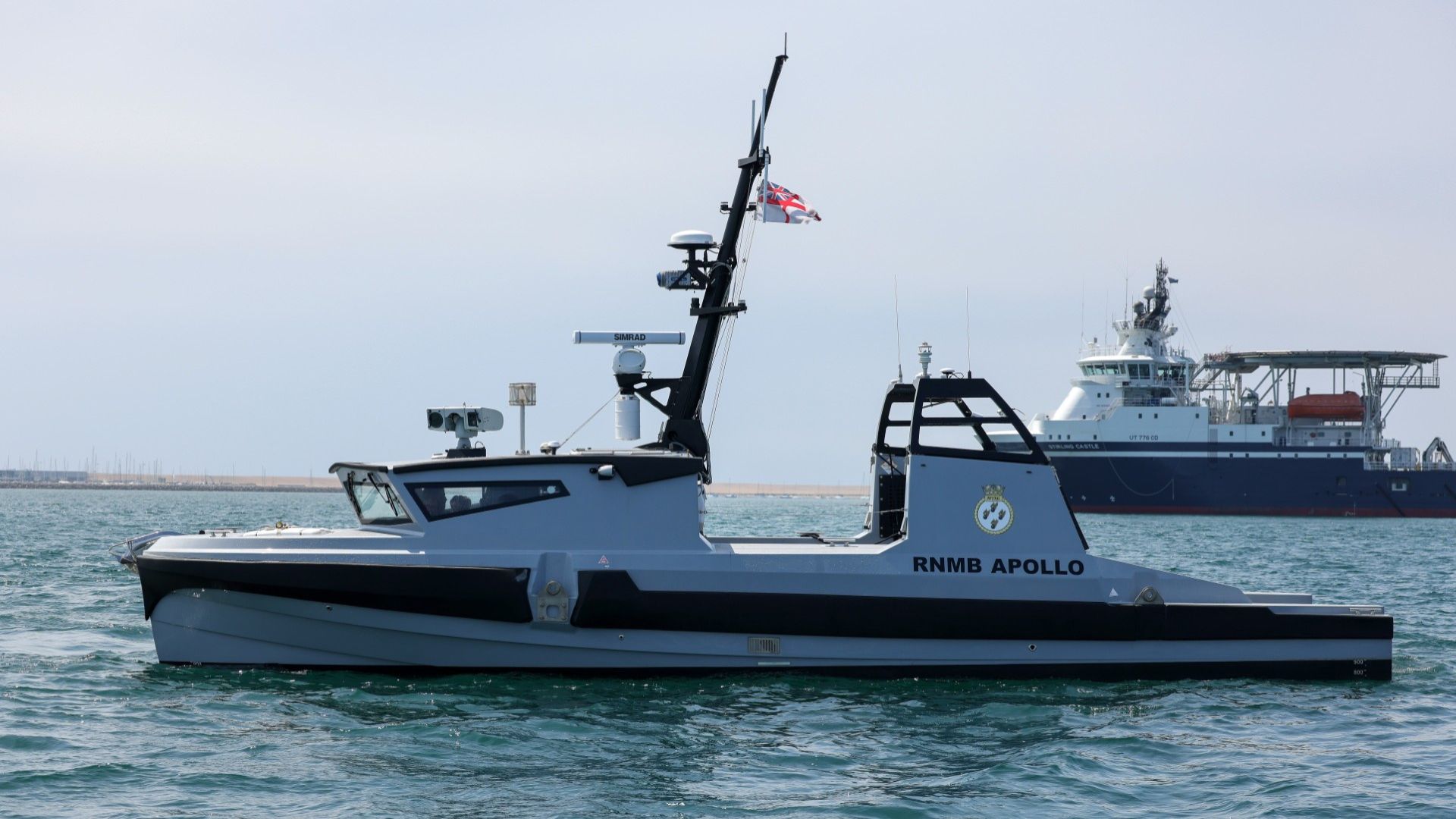
Navy Command Programme director Jon Reed-Beviere said: "The new Remote Command Centres will give Royal Navy personnel unprecedented command and control over our autonomous mine hunting systems.
"This integrated approach allows us to operate multiple unmanned platforms simultaneously and integrate new capability in the future, dramatically increasing our effectiveness whilst reducing risk to our sailors. It represents a paradigm shift in how we deliver mine countermeasures capability."
This latest development will build on the Mine Hunting Capability programme, the Royal Navy's first step on the path towards the Hybrid Navy.
Related topics
Join Our Newsletter