The Doko race: Endurance, strength and resilience – but in Pirbright, not Nepal

The Doko race is part of Gurkha selection in Nepal – and serving Gurkha soldiers have proved they still have what it takes over in the UK.
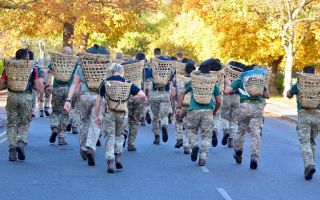
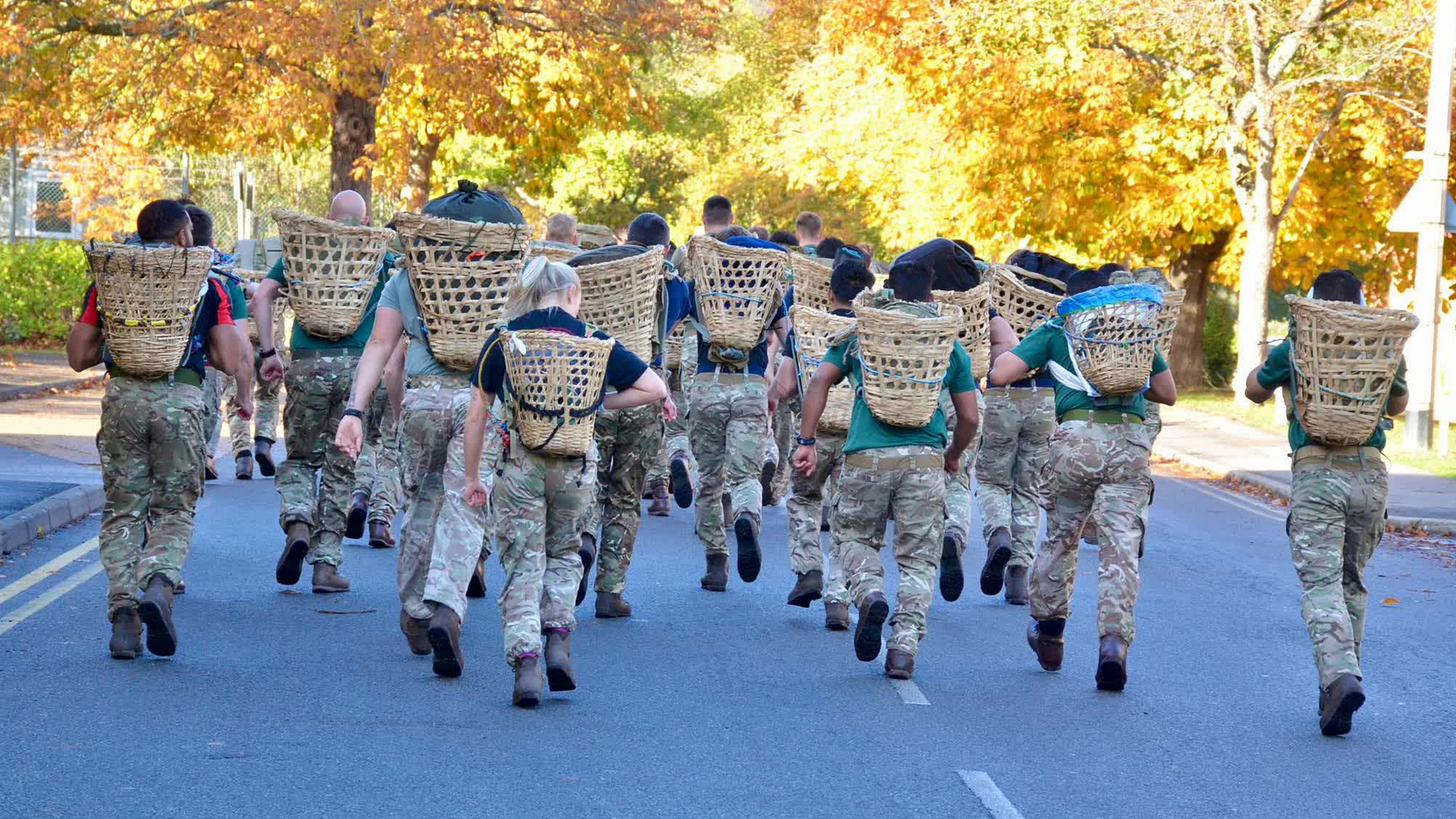
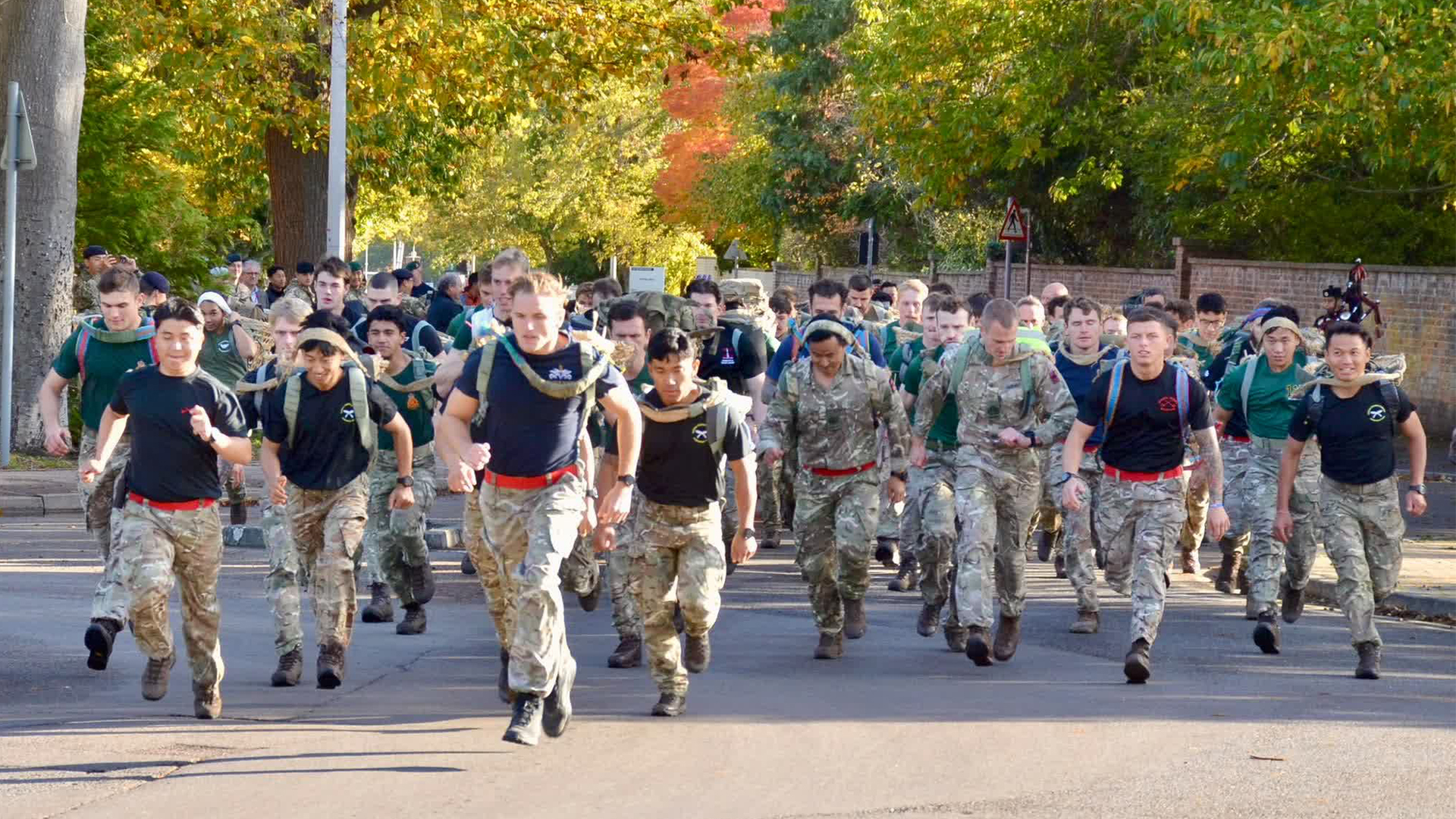
A tri-service charity event at Army Training Centre Pirbright saw around 90 competitors run a gruelling 5km course – while carrying a doko weighing 15kg.
And despite some fierce opposition from across the Armed Forces, soldiers from the Brigade of Gurkhas took top honours.
Weighty matters
Corporal Ayush Gurung took individual first place, while his colleagues from Gurkha Training Company Catterick won the team prize.
Money raised from the event will go to the Gurkha Welfare Trust.
The Doko race was introduced in 1989 – a doko is a traditional Nepalese bamboo basket, which is held in place with a head strap called a namlo.
The race is regarded as a rite of passage that all would-be Gurkhas must go through to be selected for the Brigade of Gurkhas.
It signals a pivotal moment during the selection procedure when individuals are tested to their limits.
Aspiring Gurkhas are challenged with an even more testing version of the race in the foothills of the Himalayas.
While the ATC Pirbright contest saw competitor haul a 15kg load, would-be Gurkha recruits carry a doko that's been loaded with 25kg of sand.
All participants must complete the 5km climb in 43 minutes to progress onto the next stage of selection.
The practice stems from Nepal's mountainous geography where dokos have been used for centuries to transport goods up steep hillsides.
These races test the potential recruits' endurance, strength and mental resilience – qualities that make Gurkhas exceptional soldiers.
The tradition continues both in Nepal and within Gurkha military units worldwide.
Related topics
Join Our Newsletter