Hunting hackers: How military cyber operatives protect the country from attack
Last month's hack of French supermarket fridges and freezers caused millions of euros' worth of food to spoil by remotely ramping up temperatures to over 50 degrees - and in some cases the freezers even caught fire.
And the UK's food security is also vulnerable.
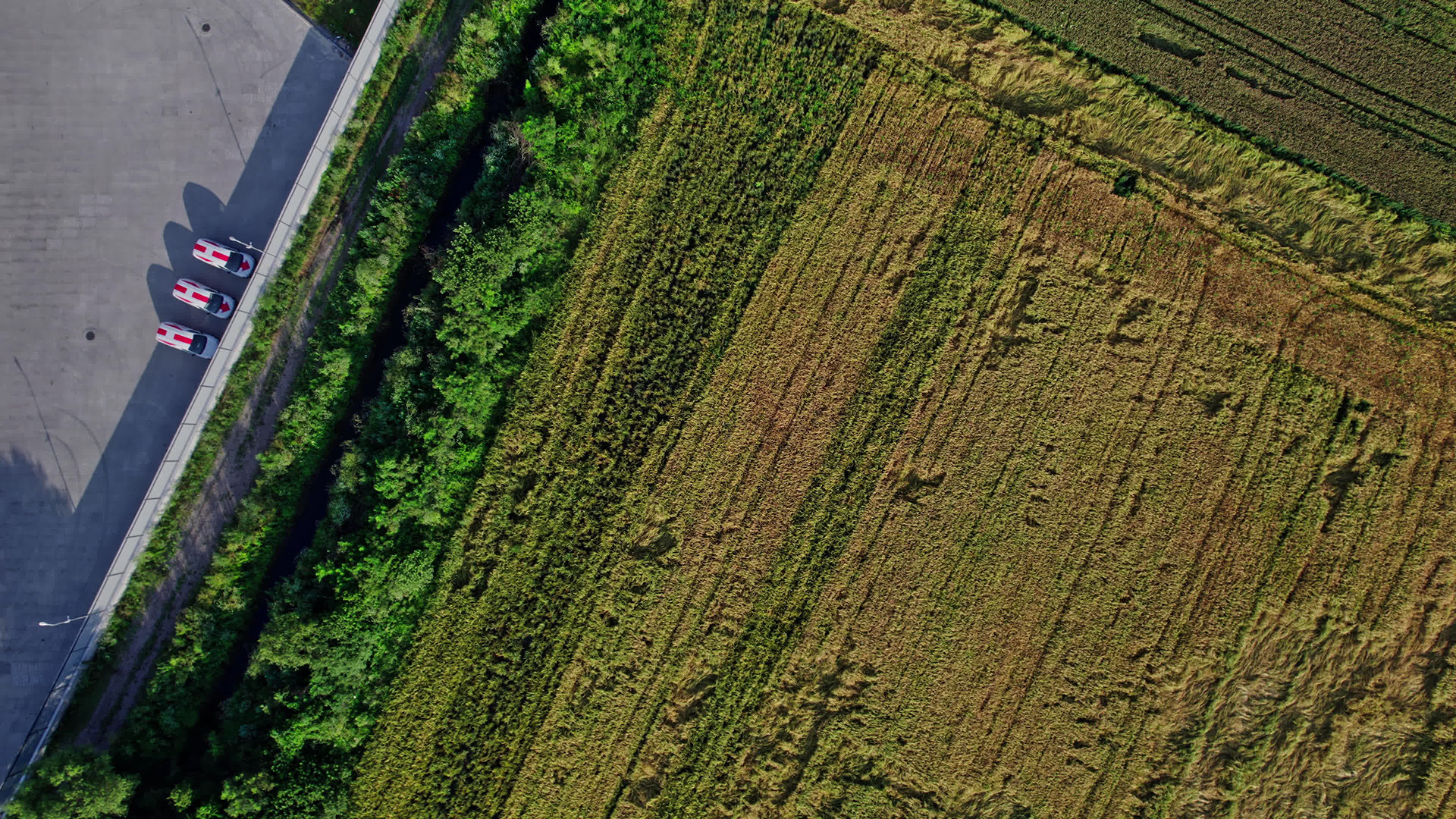
All UK retail food goes through just 131 distribution centres for the entire country, and an eminent defence expert I recently heard from believes these are all mapped and known to our adversaries.
The UK's vulnerable food security
Unlike European nations like Germany and Finland, the UK holds no national food reserves - and Professor Tim Stevens from the Department of War Studies at King's College London said we should all be concerned about this.
"Food is a very emotive subject, and we are regularly told we're nine meals away from societal breakdown," he said.
"And to see food rotting in the shops is very, very disconcerting to the consumer and should be a great concern to government, as I have no doubt that it is, and we may see more of these types of operations."
Dr Louise Marie Hurel, a senior research fellow on cyber and tech at the Royal United Services Institute (Rusi), warned these attacks could be ramped up in times of war.
"The thing that comes to mind... I imagine for many working in government is can that be exploited in the context of a conflict?" Dr Hurel said.
"Is this kind of testing [the] ground and seeing what other targets we can exploit with sometimes very basic vulnerabilities and systems that we decided to connect to the internet, but didn't even realise that they were connected to the internet?
"It is about the environment we're living in and whether any of these could turn into something that can be exploited when we are... in more direct conflict with adversaries."
The French government has now attributed the freezer hacks in its country to Iran, but before it announced this, Russian hackers released a video claiming they were responsible.
This is just one example of the potential for hostile actors to harness cyber panic, even when they're not directly involved.
Cyber specialists deployed to forward locations
In the past, UK officials have been keen to keep military cyber operations under wraps, but now they are starting to share more detail.
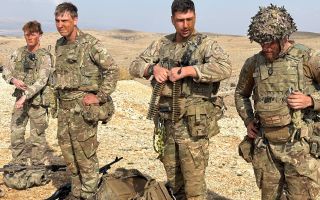
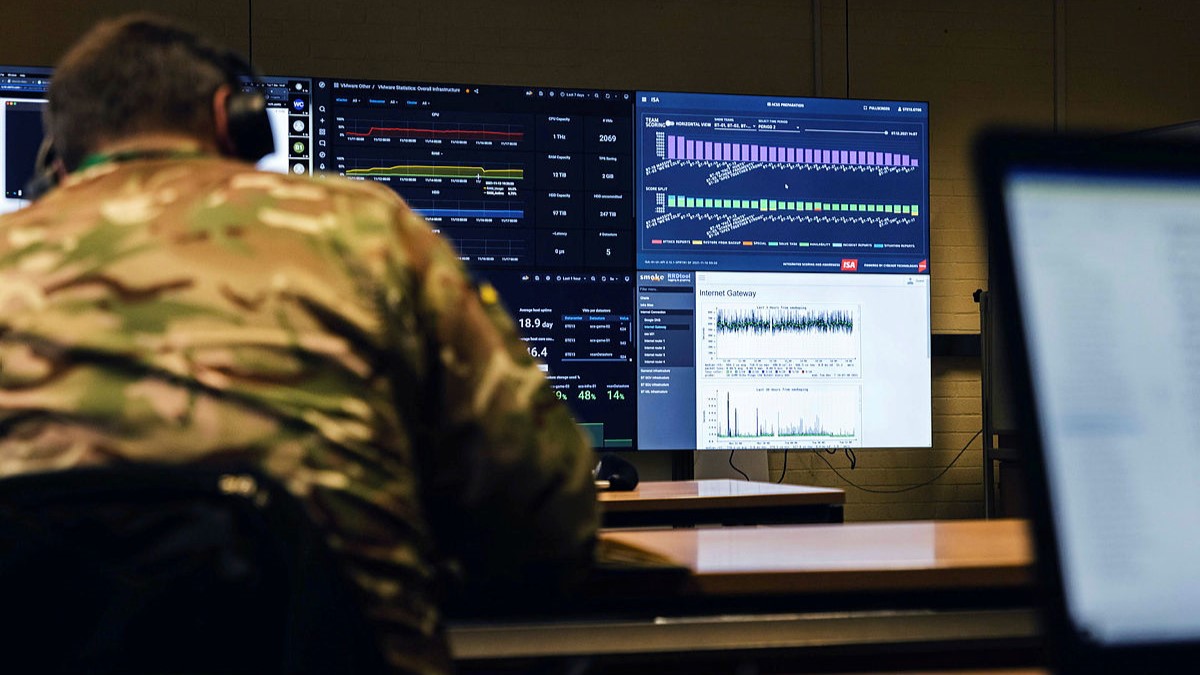
The general in charge of the recently created Defence Cyber and Electromagnetic Force (DCEMF) has spoken out in a national newspaper about the hunt forces he deploys to partner nations to work locally to prevent enemy hackers from breaking into UK military systems.
Dr Hurel explained that while cyber specialists can work remotely, there are military security reasons why they might choose to deploy to forward locations.
"There are a couple of advantages of being in person. The first one is to build operational trust; if you're talking about sensitive data and if you're talking about respective forces in other countries, most of their systems won't necessarily be connected to the internet," she said.
"So being there in person means that you don't have to transfer necessarily data."
Prof Stevens also wondered whether another reason for deploying overseas is to combine cyber ops with electronic warfare, or jamming.
"So, if you want to get into the Wi-Fi of a target organisation, you have to be local. And that may be part of this," he added.
"And similarly, if you want to conduct jamming or something electronic, you also need to be there adjacent to the target, so those may well be part of the rationale rather than pure cyber attacks."
Either way, the UK is keen to send a message to its adversaries that military cyber teams are active in this space and are looking to stamp out similar attacks before they're launched.
Related topics
Join Our Newsletter