Military parade and thanksgiving mark Caribbean service in Britain's Armed Forces
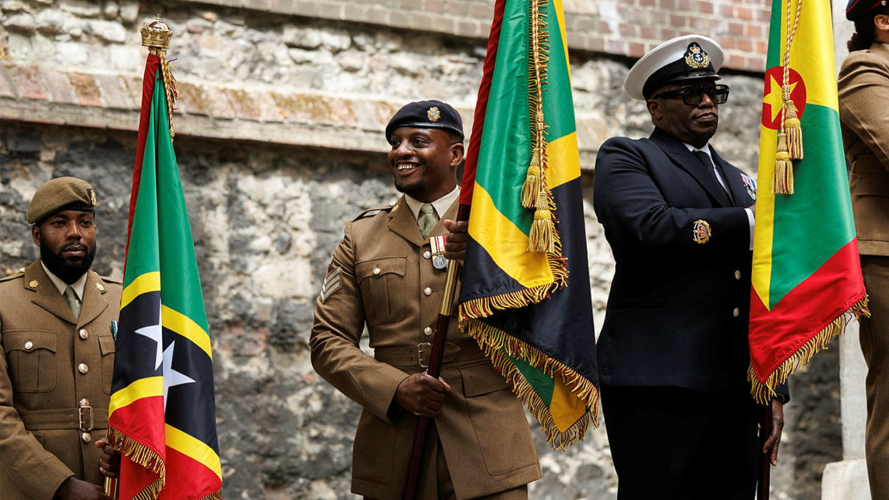
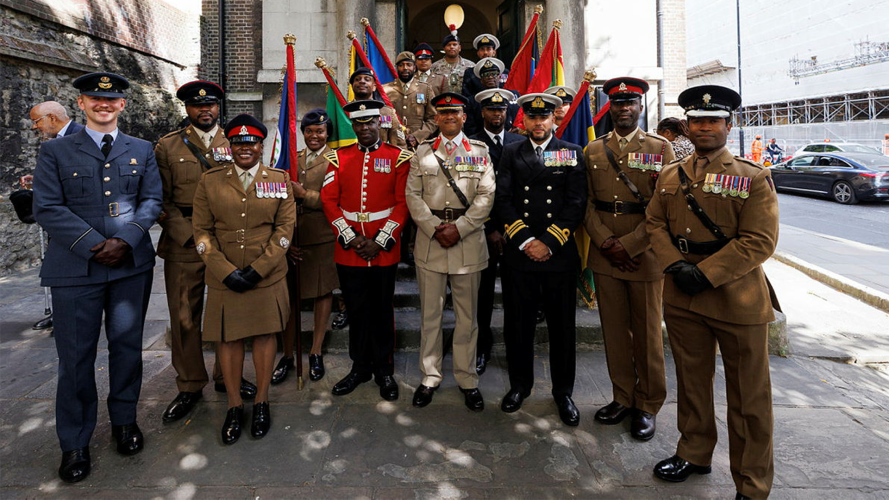
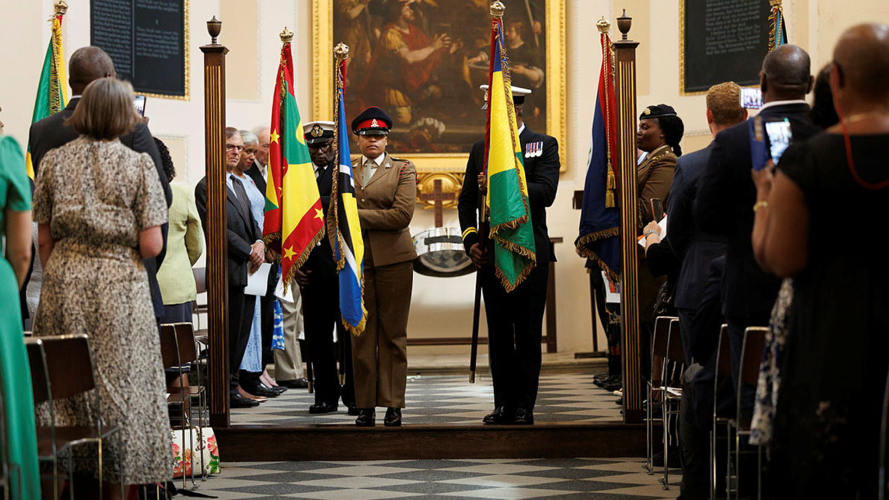
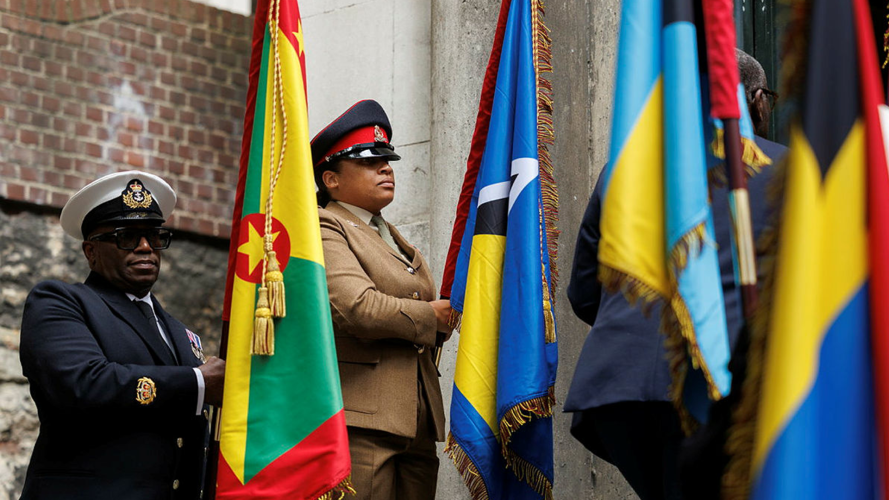
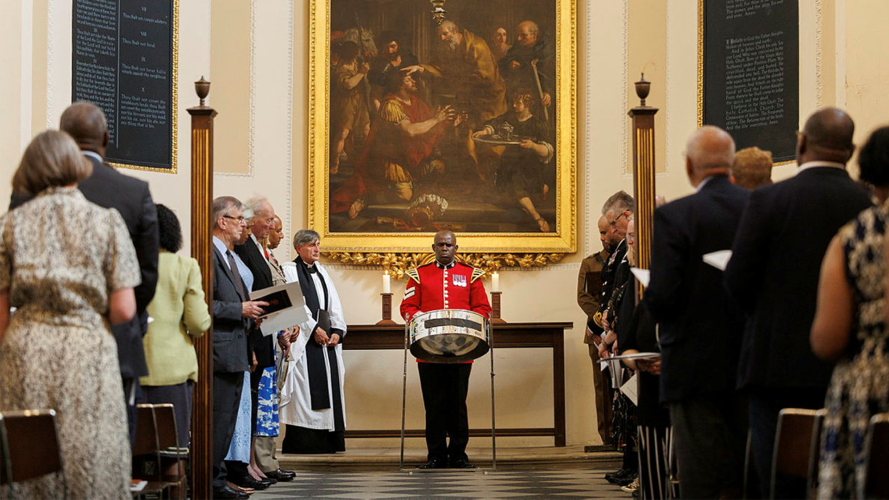
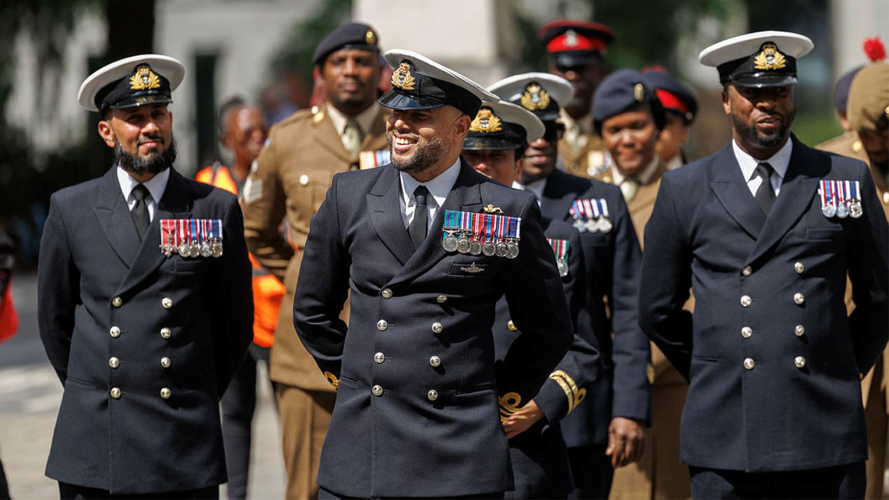
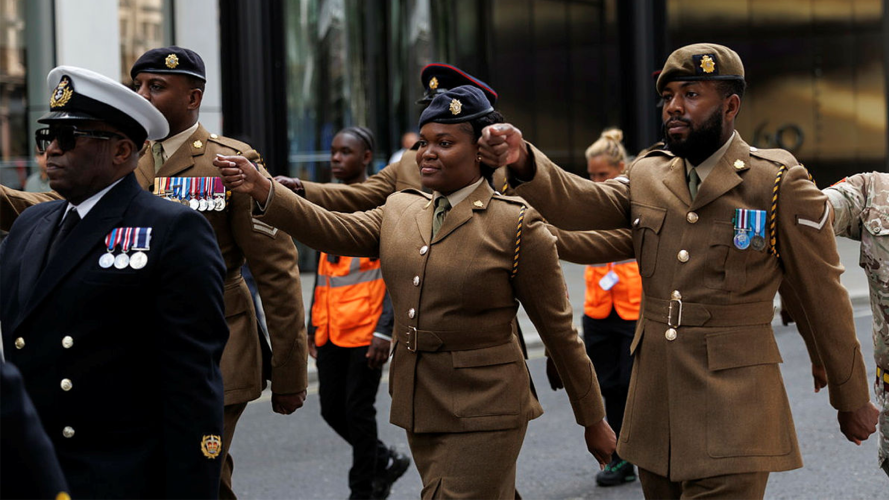
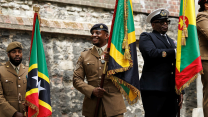
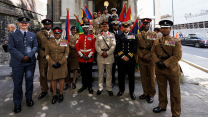
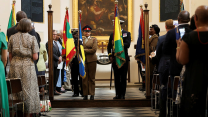
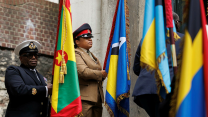
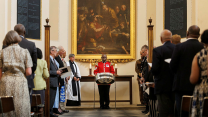
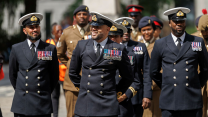
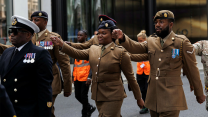
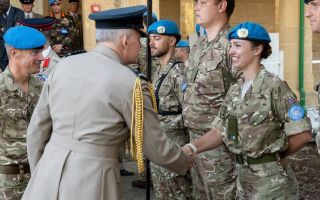
Sailors, soldiers and aviators have taken part in a military parade and thanksgiving service in the City of London, recognising the long record of West Indian service in Britain's Armed Forces.
The service included military music, readings and addresses from personnel with connections to the Caribbean, the Bahamas and Bermuda.
Lieutenant Colonel Karl Eze, the first person of African Caribbean or non-white heritage to command the Honourable Artillery Company since its founding in 1537, led the Act of Thanksgiving.
- Why the black poppy matters
- Caribbean contribution to the UK Armed Forces marked with service
- British West Indies Regiment finally honoured after a century of silence
People from the West Indies have served alongside English, and later British, forces for more than three centuries.
In 1655, thousands of people from England's Caribbean colonies enlisted for Oliver Cromwell's Western Design, the expedition which captured Jamaica from Spain.
By 1715, West Indian bandsmen were being recruited into the Household Division, a distant predecessor to the military music heard in the City this week.
The relationship took a more formal military form in 1795, when the British Army raised the West India Regiments to defend its Caribbean colonies.
The British Army raised the regiments during the wars with Revolutionary France, believing black soldiers were better able to withstand tropical diseases than European troops.
To fill their ranks, the Army "bought" enslaved people from plantations and slave ships. The National Army Museum estimates that about 13,400 men were purchased between 1795 and 1807.
This made the British Army the largest slave owner at the time.
In 1807, the Mutiny Act freed black soldiers in the West India Regiments who had been recruited while enslaved, recognising them in law as freemen and entitled to the same treatment as other soldiers.
During the First World War, thousands of Caribbean volunteers paid their own way to the UK to enlist, while the War Office resisted creating a distinct combat unit.
The British West Indies Regiment was eventually formed in 1915 after the intervention of King George V, seeing more than 15,600 men enlisting across 11 battalions.
Degrading treatment and a dispute over pay led to a mutiny at Taranto after the Armistice. The regiment was later barred from London's 1919 Victory Parade and their First World War contribution was disregarded.
The Second World War saw another major wave of Caribbean volunteers.
An estimated 16,000 men and women volunteered for the British Armed Forces.
Around 6,000 served with the RAF and Royal Canadian Air Force as pilots, technicians, air gunners and ground staff. Others joined the Army, Royal Navy and Merchant Navy, while Caribbean women served with the WAAF and ATS.
The parade from Finsbury Circus to All Hallows-on-the-Wall was developed with the West India Committee and coordinated by Headquarters London District and the Army Multicultural Network.
Related topics
Join Our Newsletter