Homegrown and feared by Russians: Inside Ukraine's 'silent death' robot units
We are in eastern Ukraine to meet soldiers from Ukraine's Third Separate Assault Brigade, part of the 3rd Army Corps – an elite unit forged in the brutal battles for Bakhmut and Avdiivka.
Reaching them means driving for miles beneath drone nets, now strung across most major roads close to the frontline to protect against constant aerial surveillance and attack.
Within the brigade is a small, highly specialised team known as NC-13.
Their focus is unmanned ground vehicles, or UGVs – small, remotely operated robots designed to take the fight to Russian positions.
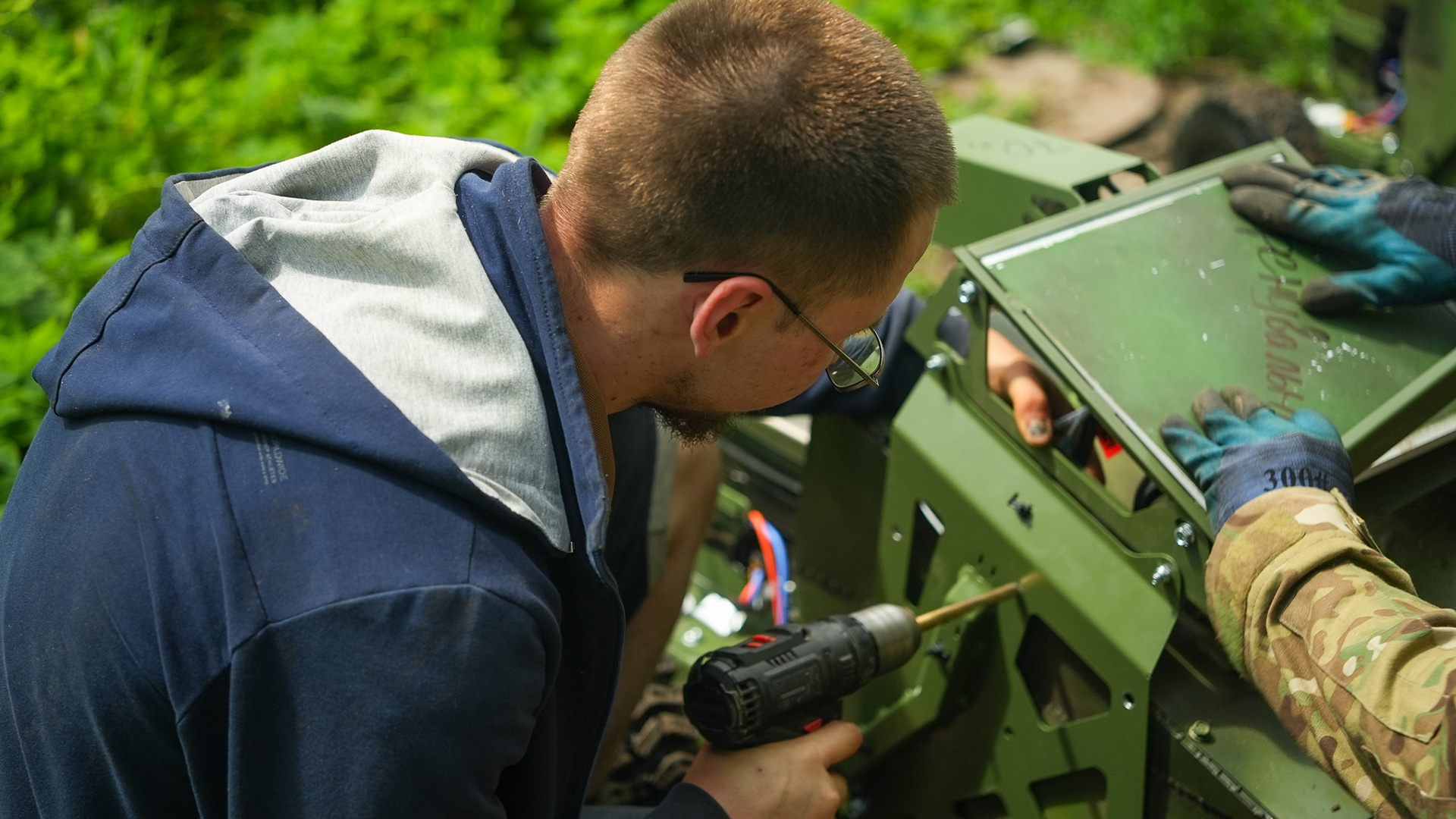
Our exact location is classified, but inside a quiet courtyard, away from prying eyes, we find what looks like a makeshift production line.
Here, engineers and soldiers are assembling a compact kamikaze robot known as the 'Spextr'.
Its purpose is simple: drive forward, reach a target, and detonate.
Causing damage without costing lives
For the men and women building and deploying them, the appeal is equally clear – these machines can do the job of soldiers, without risking lives.
"When you see them working… when you watch the footage of them exploding, it's a good feeling," a soldier with the call sign 'Disney' tells us.
"We can use them instead of sending people – to destroy positions, to capture them. They don't have families… they don't have blood."
Ukraine is already deploying these systems at scale. According to official figures, more than 24,000 UGV missions were carried out in just the first three months of this year.
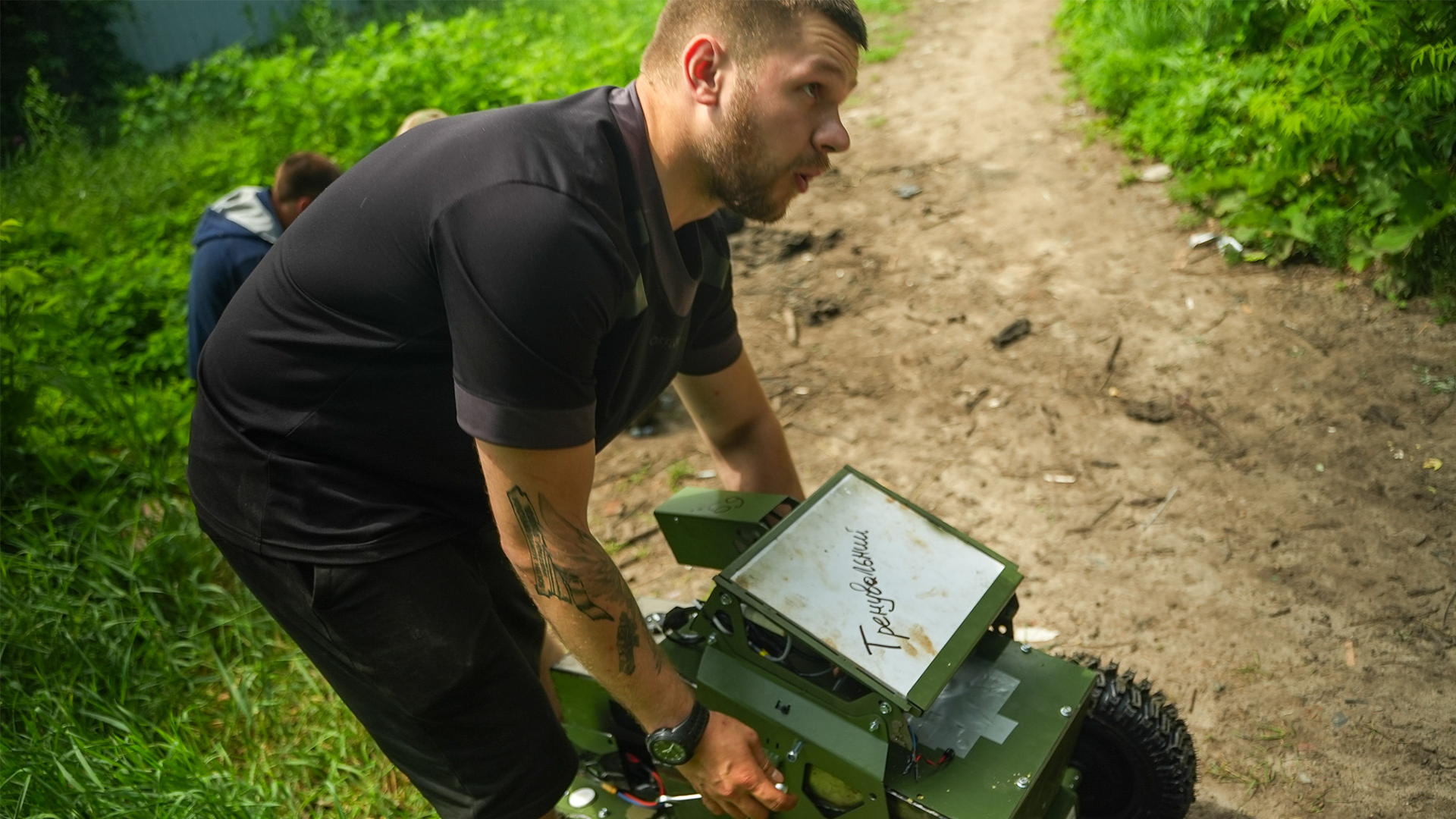
The Spextr itself is entirely domestically produced – from components to final assembly – as part of a rapidly expanding Ukrainian defence industry.
Despite its small size, it has built a fearsome reputation among Russian troops. Its electric motor makes it extremely quiet, earning it a grim nickname: 'the silent death'.
The design is also highly adaptable. Units receive a basic chassis, which can then be modified depending on the mission.
"We can make it bigger or smaller," Disney explains. "We can fit it with claymores, anti-tank mines, different payloads. It all depends on what we need it to do."
Each unit costs just a few thousand dollars – a fraction of the price of most conventional weapons systems. They are controlled using Starlink, and a young 20-something woman called Hora is the systems engineer who makes sure the connection is stable.
Some missions last 12 hours, and I ask Hora how it feels when she sees a Russian position destroyed.
"It's breathtaking," she says. "When you understand how much work goes into it – the planning, the effort – people are working 24/7. Sometimes they don't even have time to eat properly, not because there is no food, but because they want to do their job."
The Starlink advantage
In December last year, this unit achieved a world first. A tracked NC-13 UGV, fitted with an M2 Browning machine gun, held a frontline combat position for 45 days, fighting off repeated Russian assaults.
Commanders also claim their robots have helped capture sections of the frontline, with Russian soldiers choosing to surrender rather than face an attack from an unmanned system.
Before deployment, each UGV is tested at a separate site. In another building, operators sit behind screens, guiding the robot vehicles to make sure everything works as it should.
At one point an operator hands me the controls and encourages me to drive the robot. It's quite a strange feeling, after watching so many videos of UGVs in Ukraine, to actually be driving one myself.
Russia is also developing its own ground-based robotic systems – platforms such as the "Courier" are believed to be used for reconnaissance and casualty evacuation.
But there are key differences – Ukrainian operators say Russian systems often rely on short-range control links, requiring operators to remain dangerously close to the front.
"They can control them from maybe 50 metres," Disney claims. "Our operators can be much further away."
Another challenge for Russia has been connectivity. Both sides have relied heavily on Elon Musk's Starlink satellite system, sometimes sourcing terminals through third countries.
However, a decision by SpaceX earlier this year to restrict Russian access has forced Moscow's forces to adapt, using fibre-optic cables and relay drones instead.
For Ukraine, the use of combat UGVs is accelerating rapidly. From around 2,000 units purchased in 2024, Kyiv is expected to acquire as many as 25,000 this year.
Their role is also evolving. Once used mainly for resupply, they are now increasingly deployed as frontline assault platforms – ambushing enemy positions, patrolling contested ground, and striking targets with precision.
Above all, they offer something Ukraine desperately needs: a way to preserve its most valuable resource – its people.
Related topics
Join Our Newsletter