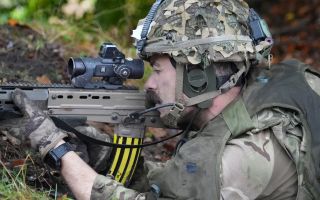
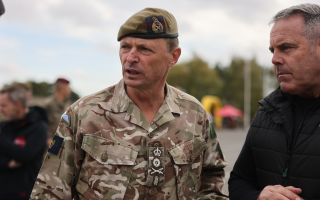
While the military might be ready, is Britain as a whole prepared for a war?
Last year's Strategic Defence Review called for a national conversation on Defence – a whole society approach – but how much progress has been made?
Lord Toby Harris, the chair of the National Preparedness Commission, is unimpressed.
"A national conversation means that every citizen is engaged in it and we're way, way short of that," he warned.
Much to learn from Europe
"There needs to be more going on in schools, there needs to be more going on in businesses," he added.
"If you spoke to most business leaders, they would not see it as their responsibility. They would see it as something government had to do and not 'well what could be our contribution?'."
A recent report for the National Preparedness Commission suggests we could learn a lot from Europe.
Elisabeth Braw, the author of The Reserve Potential: What the UK Can Learn from Top Performing Allies, explained how the Swedish government recently formed a national civil defence force focused on keeping the country running in times of war.
"The government... went through the entire registry of every licensed electrician in the country, then selected people and is now training them to become electricity repair crews," she explained.
"That's something that is indispensable in war because the Russians will target electricity infrastructure as they already do in Ukraine.
"And it's just something that I think the UK can learn from.
"If war comes, we will depend on those kinds of people, not just on people carrying arms."
Snap exercises
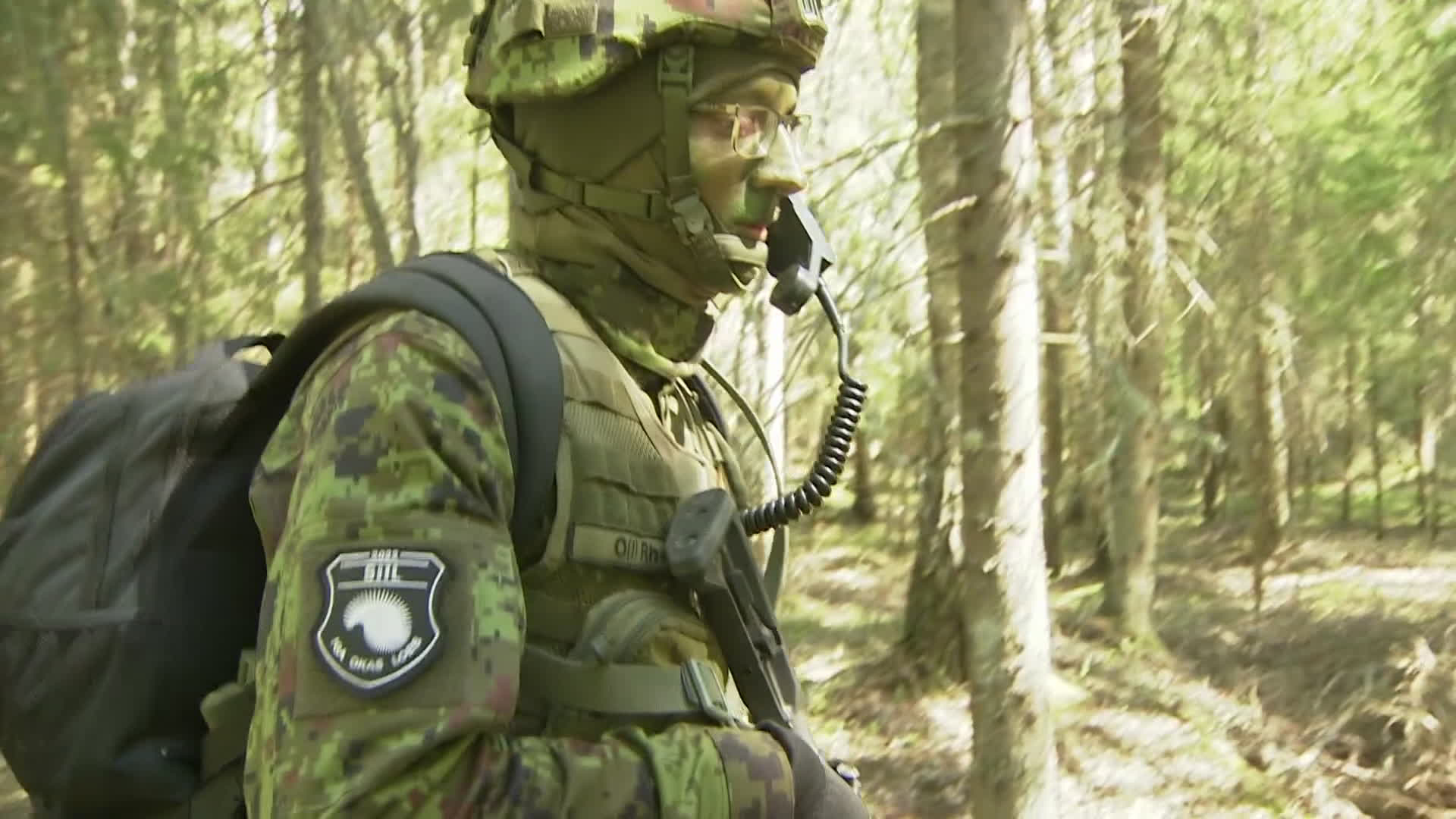
The report also commends the Estonian model which relies on conscription and reservists.
Even without adopting conscription or national service, could Britain apply Estonian methods to the reserve? Ms Braw thinks so.
"Estonia has a brilliant system of having snap exercises," she said.
"So if you can show that you can call up your reservists on 48 hours' notice, which is what the Estonians can do, and that keeps the reservists up to date and engaged, but by conducting these exercises, Estonia also signals to Russia that all those reservists... will be able to get to where they need to be very quickly.
"So it would be a pain for Russia to try anything – try any military action – against Estonia."

Rising to the challenge
Beyond the reserve, experts argue the UK Government could do more to engage regular civilians by showing greater levels of trust and being more transparent about potential threats.
Lord Toby argues there is a danger in putting this off.
"Given that there are active attempts to undermine the trust that people have in public authorities in this country, think about all the misinformation and disinformation that is now weaponised through social media," he said.
"You've got to be starting to build that confidence so that people feel, yes, they can be self-reliant and they can trust the authorities to support them."
With 21 years' experience in the British Army, former Staff Sergeant Dave Butler served between 1967 and 1998, at the height of the Cold War.
He worries the Government might have left it too late to engage. "I think society today is a lot more confused about what is real and what isn't real," he told BFBS Forces News.
"I think the general public have lost complete faith in the Government. At the moment, even if the Government was trying to tell us that we were two days away from World War Three, there would be sections of the general public who wouldn't believe it.
"They'd think it was fake news, and therefore they would react accordingly. And I think this is going to be one of the challenges over the next three to five years."
However, Ms Braw is more optimistic, citing Covid as a time of public willingness to help out, while going further back the "Blitz spirit" is often invoked as a historic example of whole-society resilience.
Certainly, the debate has rarely been more urgent.
Has the Government got the political will to start an honest conversation with the public – and would the public answer a call to action?
History suggests they might.
Related topics
Join Our Newsletter