Ghostly Nazi Germany fleet emerges from the Danube due to Europe's scorching heatwave

The skeletal, rusty and sand-covered remains of several Nazi warship wrecks, laden with tonnes of unexploded ammunition and weapons, have resurfaced in the Danube River near the Serbian port town of Prahovo.
This phenomenon is occurring because the Danube is experiencing its lowest water levels in more than 50 years in certain areas of Serbia, largely due to a heatwave affecting Europe – the highest temperature recorded in Prahovo so far this summer has reached 40.0°C.
The heatwave has triggered a drought, disrupting shipping and energy production due to reduced water levels and has led to the discovery of historical artifacts, such as Nazi warships and what historians believe to be the remains of an ancient mammoth in Bulgaria.
About 200 Kriegsmarine, Nazi Germany's naval branch of the Wehrmacht, vessels are resting on the Danube's riverbed because, in September 1944, Rear Admiral Paul-Willy Zieb ordered their deliberate sinking in a zigzag pattern to slow down the advancing Soviet Red Army.
The Danube, Europe's second-longest river, flows through four capital cities, links 10 countries and is considered by the European Commission as the "single most important non-oceanic body of water in Europe" and a "future central axis for the European Union".
However, the Nazi vessels, which appear whenever the water levels of the Danube go down this low, have nearly halved the navigable width of the Prahovo channel – a narrow shipping route on the river.
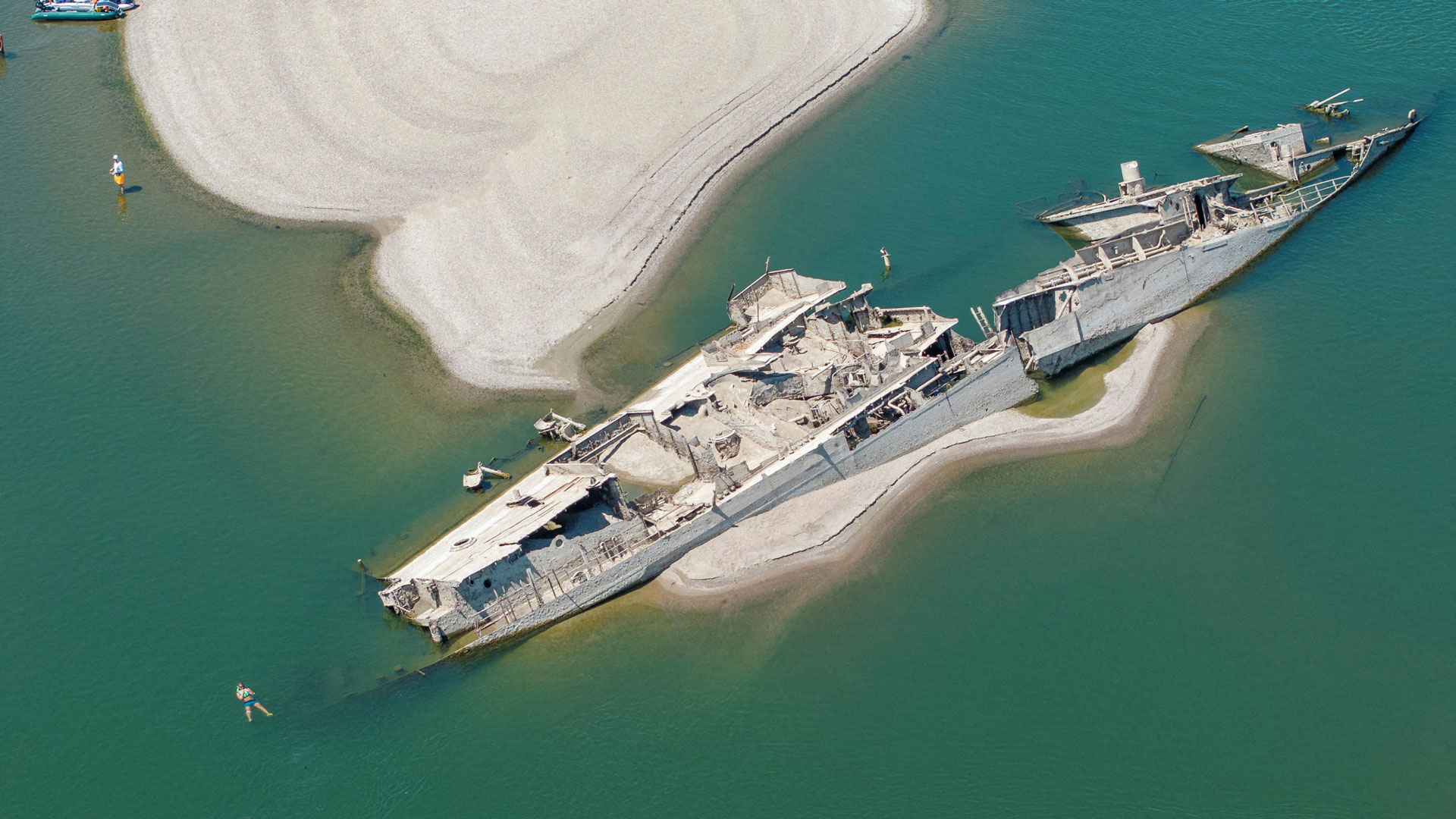
It was reported in August 2022 that the European Union and the European Investment Bank had agreed to finance the removal of some of the vessels, but it would be a massive undertaking with a price tag of about €30 million.
During a trip to the wreckage site in August 2022, Emanuele Giaufret, the former EU ambassador to Serbia, said: "These vessels... [are a] problem for the traffic on the Danube, it restricts the capacity to move, it's a hazard because certain vessels still contain unexploded ordnance."
Related topics
Join Our Newsletter