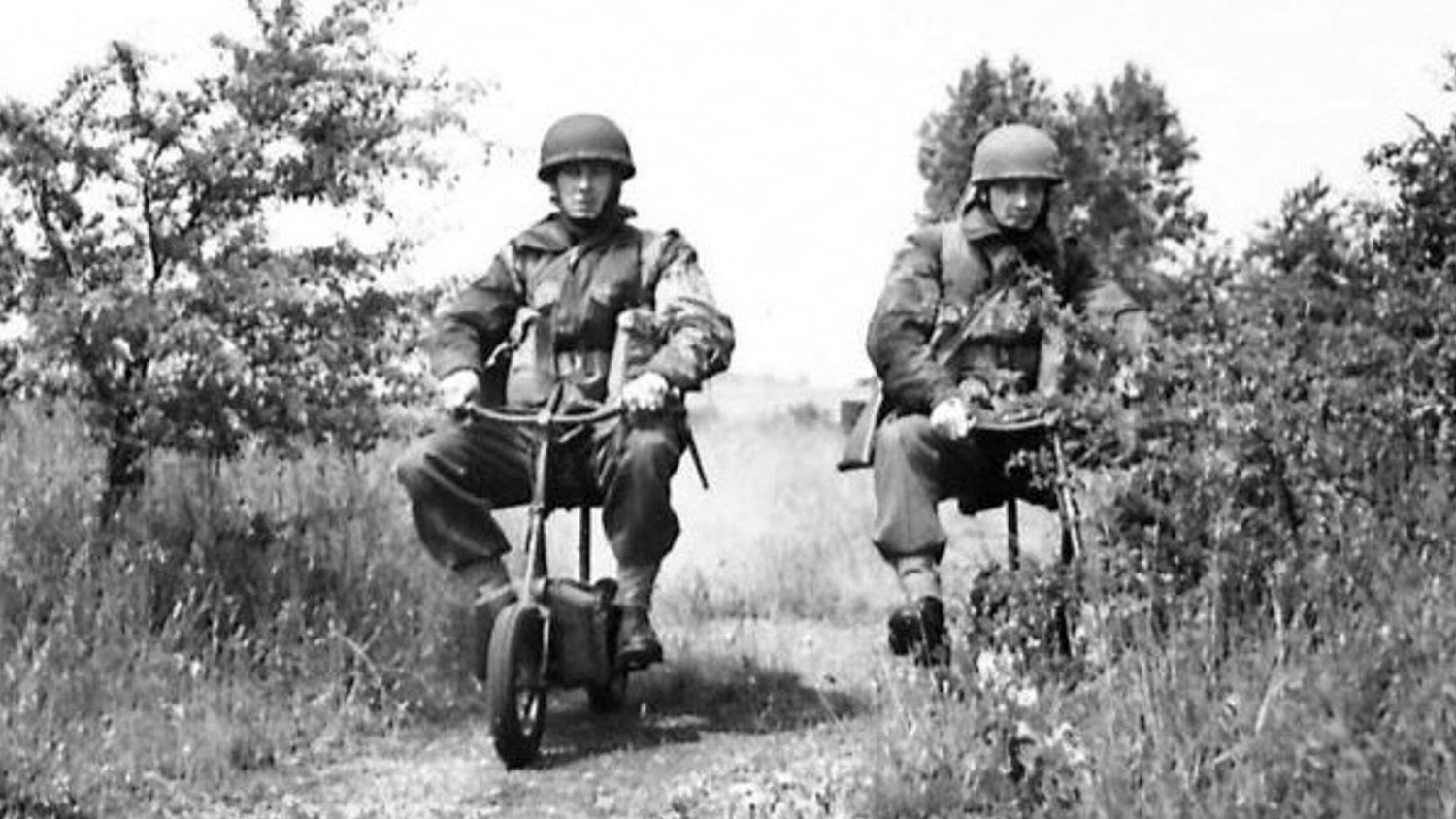
On yer bike! How the Armed Forces' smallest motorcycle assisted spies as well as soldiers
The Welbike was a lightweight, foldable motorcycle designed to be parachuted in a container and used for a quick getaway from the enemy - or take troops closer to the fight.
It was produced by the Special Operations Executive (SOE) research station, which operated under the disguise of the Inter-Services Research Bureau and used in the Second World War by Allied invasion forces.
Intended for the SOE, some were issued to the British 1st and 6th Airborne Divisions, as well as the Royal Marines, and were used in Normandy, Italy and at Arnhem during Operation Market Garden.
The SOE was a secret British organisation that used male and female agents inserted into the local population to organise and conduct espionage, sabotage and resistance.
How did it work?
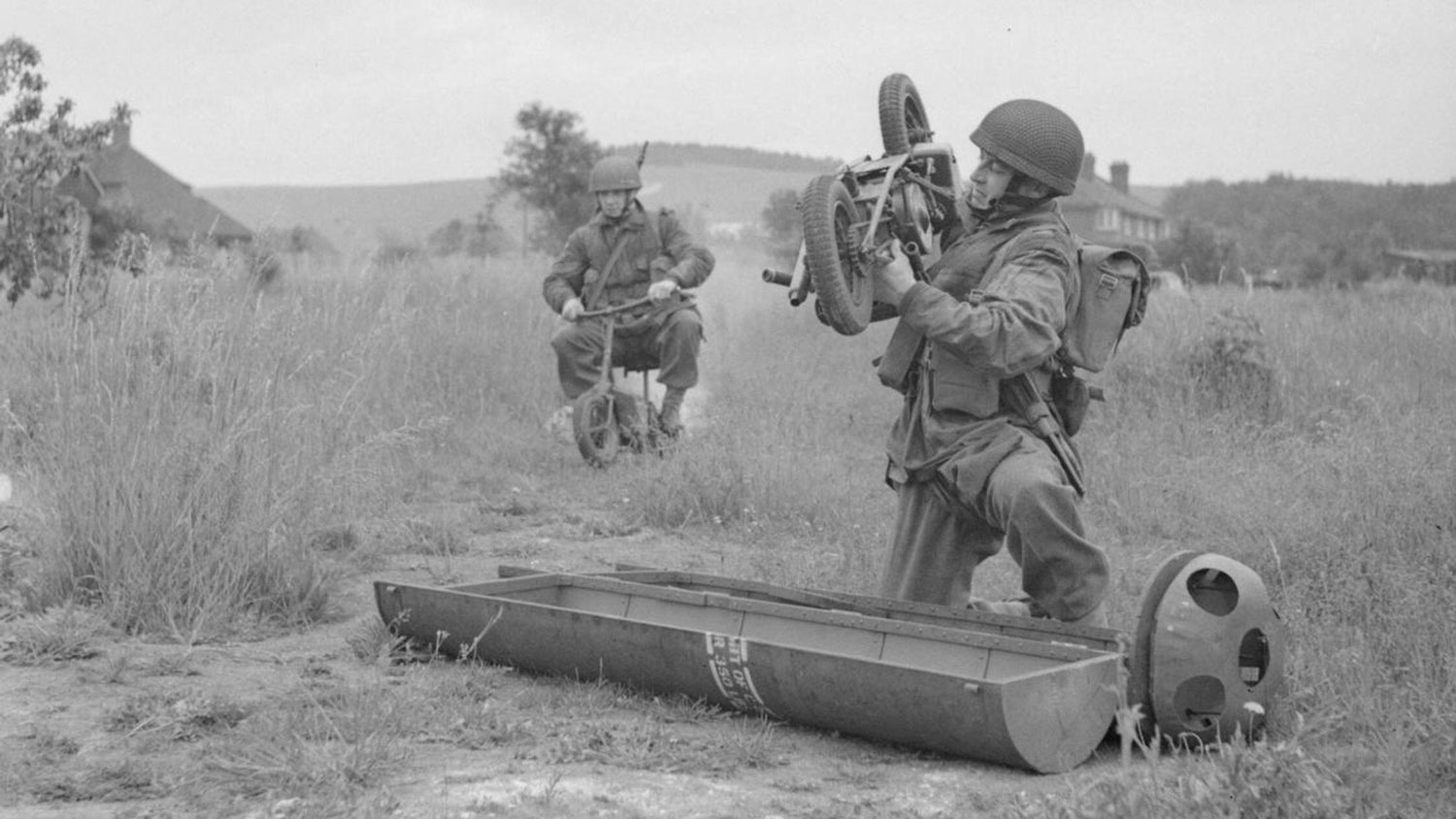
Packed snugly in drop containers, they could be parachuted for or with agents or airborne soldiers.
The Canister Light Equipment Mk1 tubular containers were about 6ft long and were dropped during supply missions to resistance groups in occupied Europe.
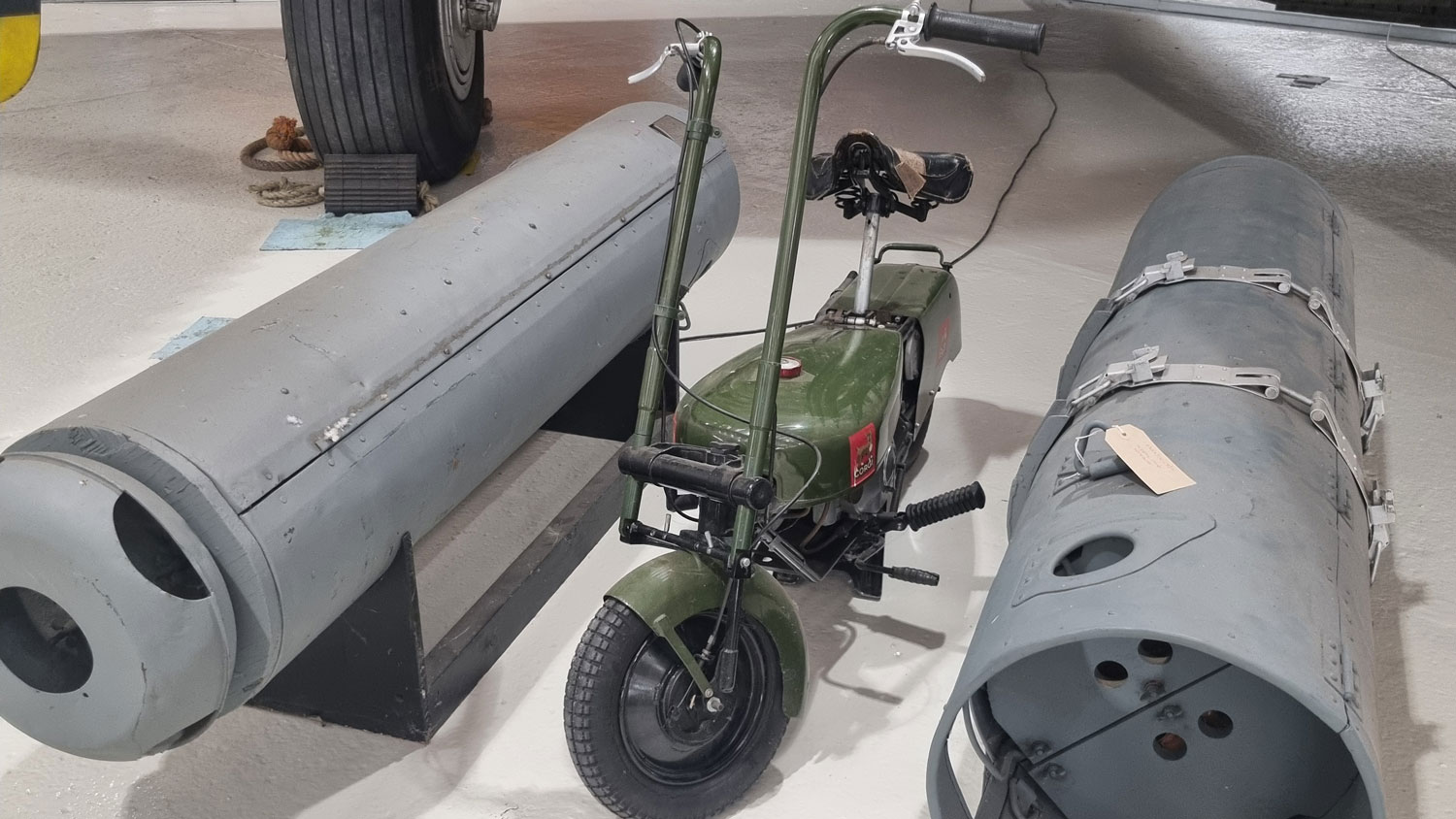
Impressively, it could be unfolded and ready for use within 11 seconds.
The handlebar was retracted by a ring-pull at its base, and the saddle could be lowered to sit neatly inside the drop canister.
They were fitted with a Villiers single-cylinder engine and had a fuel tank that could take 3.7 litres of fuel.
The motorcycle's top speed was 30 miles per hour with a range of up to 90 miles on flat ground.
And at only 4ft 3 inches, it was the smallest motorcycle ever used by the Armed Forces.
Weighing 70 pounds, they had no lights or suspension and only a single brake.
There were about 4,000 of them made between 1942 and 1943.
However, some reports suggest the motorbikes were often abandoned, with troops moving on on foot because of the little power they offered.
Related topics
Join Our Newsletter