A British endurance swimmer has navigated one of the world's most dangerous maritime chokepoints to highlight the environmental cost of the ongoing US-Israel war with Iran.
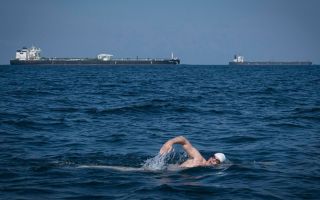
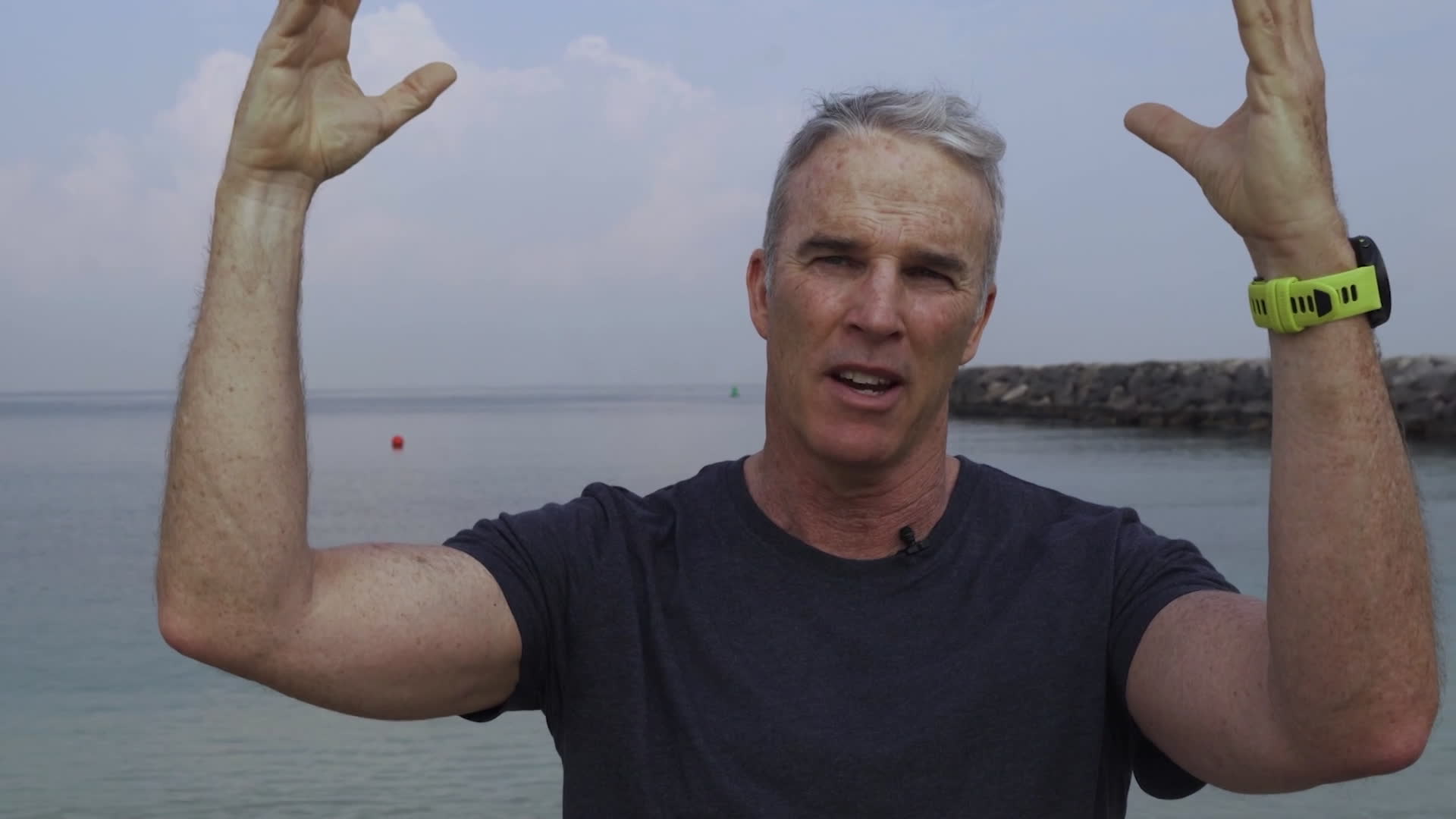
Lewis Pugh, a United Nations (UN) patron of the oceans, completed a three-day swim across the Strait of Hormuz, a major waterway through which a fifth of global oil and seaborne gas passes.
Wearing only swimming trunks, goggles, and a cap bearing the UN logo, he began his swim on the Musandam Peninsula, at the strait's southern tip, and finished by rounding the Cape of Hormuz.
Covering about 15km (9.3 miles) in total, he is believed to be the first person to attempt a long-distance swim along the strait since the start of the conflict between Iran and the US.
High-risk surroundings
Mr Pugh told Reuters that during his previous swims in the Arctic's icy waters or the heat of the Red Sea, the only threat to contend with was nature itself.
"This swim was very, very different though," he said. "Here we had drones, we had fighter jets, we have sea mines, we have oil pollution, [so] very different threats.
"On day one, 30 minutes into the swim, I hear 'boom, boom' and then I see that an oil tanker has been attacked – it was probably about four kilometres away from us, so we stopped the swim."
On the second day, he said a petroleum gas tanker was attacked.
"To witness the flames coming from this, there must have been fireballs going up 200 metres into the sky," he continued. "My immediate thought was the seafarers there – I just pray that they got out alive.
"The impact on this region now is immense," he added.
Act now
The Plymouth-born athlete has spent much of the past 40 years swimming in some of the most demanding of environments.
He boasts the accolade of being the first person to complete a long-distance swim in every ocean of the world, an endeavour that has taken him from glacial lakes on Mount Everest, to more familiar waters close to home in the English Channel.
There, he swam its entire 328-mile length in 2018 to campaign for 30% of the world's oceans to be protected by 2030.
To illustrate the environmental impact of the war, Mr Pugh drew on a moment from his childhood.
His father was an orthopaedic surgeon in the Royal Navy, and from the age of five, he would accompany him on his hospital rounds.
"One of my memories was seeing soldiers and sailors without arms and legs," he recalled.
"Some of those veterans had lost those limbs in the Second World War, and some even further back.
"The impact of war is very long-lasting – and it's the same with nature.
"When we damage nature, when we pollute nature, the impact lasts for generations. We need to stop the fighting, we need to open up the strait, and we need to clean up this mess."
He added he will now meet with world leaders to urge them "to do everything they can to stop this war".
Join Our Newsletter