Young crews and deadly missions: How RAF Bomber Command took the air war to Nazi Germany
Driven by fears in the 1930s of an aerial apocalypse, it was believed a strong force would deter enemy aggression.
It was against this backdrop that RAF Bomber Command was created, providing specialised control of the UK's bomber force between 1936 and 1968.
The organisation existed for 32 years but is best known for its role in the Second World War.
- WW2 Bomber Command veteran takes to the skies aged 102 in glider over Cambridge
- WW2 Spitfire pilot says reunion with iconic aircraft is like seeing an old friend
- What makes an ace an ace? The origins of the most elite title in aviation
This week, hundreds of guests, including Second World War veterans and senior RAF commanders, will gather at the International Bomber Command Centre (IBCC) in Lincoln to commemorate both the sixth International Bomber Command Day and 90 years since Bomber Command's creation.
What made up Bomber Command?
About a million men and women from across the world supported Bomber Command during the Second World War, with more than 50,000 of them making the ultimate sacrifice.
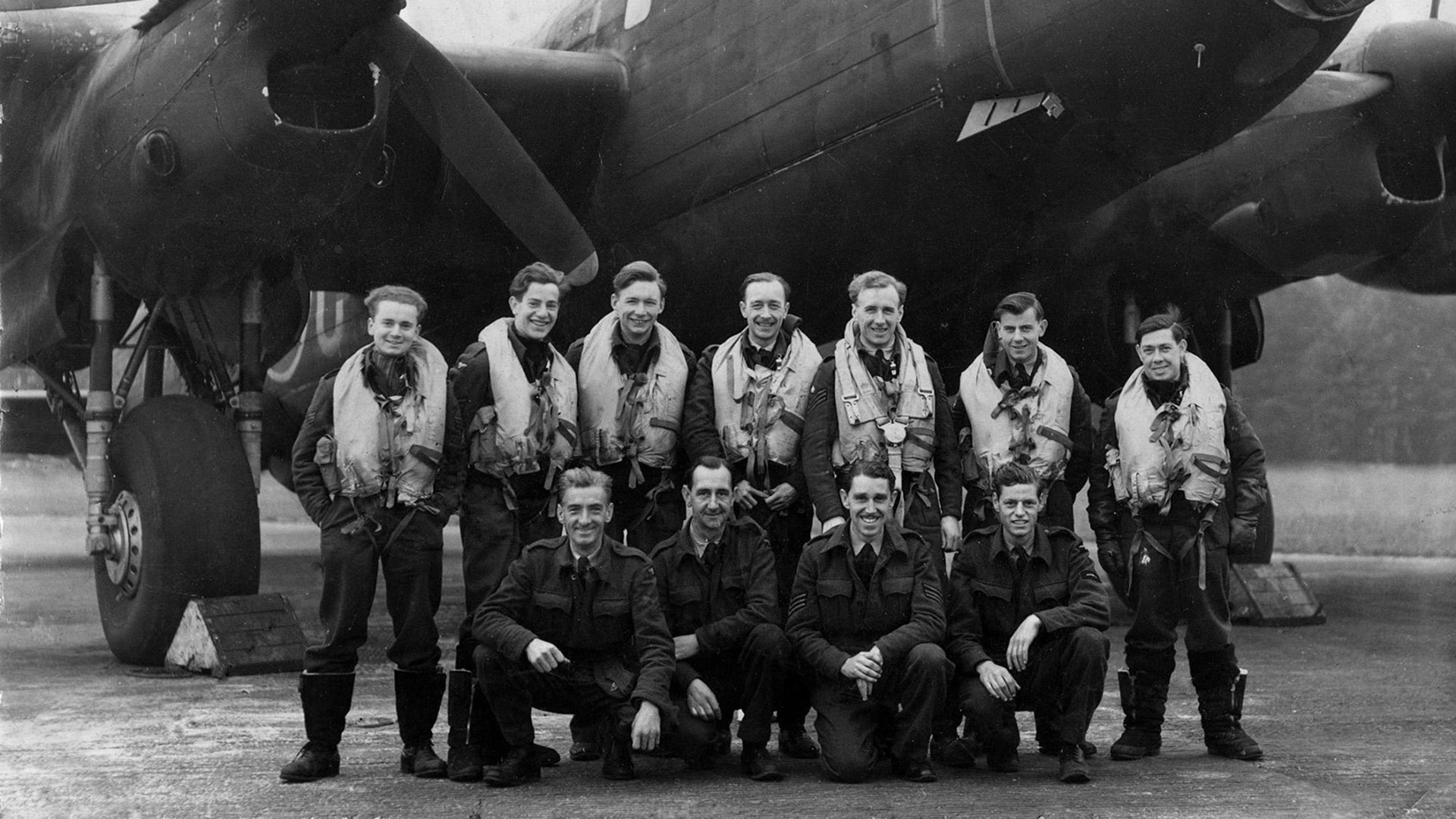
Bomber Command raised 128 operational squadrons during the war, predominantly manned by young, civilian volunteers from Britain and the Commonwealth.
Operational flying was perilous and exhausting as aircrew were expected to fly a tour of 30 operations before being able to rest.
Bomber Command flew a variety of light, medium and heavy bombers, of which about 12,000 were destroyed.
The Avro Lancaster, which came into service in April 1942, was fully equipped for night flying and usually flew with a crew of seven men.
617 Squadron flew specially-adapted Lancasters on the legendary Dambusters Raid in 1943.
What role did the Bomber Command play?
The RAF initially believed the conflict would be a bombing war decided by airstrikes.
Bomber Command was tasked with taking the fight to the enemy, not only to raise the morale of the British people but also to directly attack and weaken Nazi Germany.
Air Marshal Arthur 'Bomber' Harris was appointed as Commander-in-Chief of Bomber Command in February 1942, to destroy Germany’s industrial power and create a collapse in the morale of the civilian workforce, breaking Germany's will to fight on.
Bomber Command did cause significant disruption to the German war economy by attacking industrial, communications and fuel targets in occupied Europe and Germany.
Bomber Command's operations
Commander-in-Chief Harris believed that through a combination of improved aircraft, better training and navigational aids plus a ruthless will to press the attack, Bomber Command could knock Germany out of the war.
This led, in May 1942, to the launching of the Thousand Bomber Raid against Cologne, which shocked Germany.
Further massed attacks had a devastating effect on the Nazi war economy, but the country continued to fight.
More specialised operations also took place, such as the daring Dambusters raid of May 1943 and other attacks, such as that on battleship Tirpitz the following year, which eliminated the German Navy's last major surface ship.
All these operations demonstrated the adaptability of Bomber Command crews, taking on precision strikes with great effect.
From November 1943 to March 1944, huge raids on Berlin were launched, promising to knock Germany out of the war in the process.
More than 1,000 aircraft and 7,000 aircrew were lost during the deadly Battle of Berlin.
The Allies would have to invade to finally defeat Germany.
The controversy which followed
Bomber Command's actions undoubtedly shortened the war, but remain controversial due to the huge loss of human life.
By VE Day, 55,573 had been killed and a further 18,000 were wounded or had been taken prisoner.
With a tragically high casualty rate of 60%, there was no more dangerous occupation in the British Armed Forces.
Bomber Command has been the subject of controversy not only due to the personal loss of men but also due to the mixed feelings in British post-war society about the ethics of wartime bombing.
The three most divisive subjects are bombing accuracy, the ethics of bombing cities and particularly bombing locations such as Dresden.
Dresden was an historic, medieval town, which was bombed on 13-15 February 1945 by 769 British and 527 American heavy bombers.
City officials telegraphed Berlin that about 20,000 were killed.
Join Our Newsletter