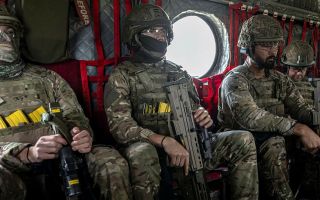
In the future of modern combat, no crewed platform should ever deploy without uncrewed ground vehicles, Chief of the General Staff General Sir Roly Walker has said.
His words, spoken at the Royal United Services Institute (Rusi) Land Warfare Conference, reflect the British Army's shift towards uncrewed and autonomous systems as a core component of the future of land warfare.
Central to this is the concept of 20-40-40, a three-layered fighting system that is redefining how the Army operates in conflicts to come.
Crewed platforms
The approach was announced last year by Gen Sir Roly and described as "the three rings of modern lethality". It is heavily influenced by lessons emerging from ongoing conflicts, particularly the war in Ukraine.
A core recommendation of the Strategic Defence Review – which includes a promise to increase the Army's lethality tenfold by 2035 – the framework is structured around three components.
At its centre is a small number (20%) of crewed survivable platforms that provide the backbone of a traditional force: armoured vehicles, helicopters and dismounted infantry.
Fundamental in seizing and holding ground, these capabilities are crucial to mission success.
Nevertheless, they are costly to acquire and sustain, meaning they take longer to produce. Hence, survivability is key.
Reusable Platforms
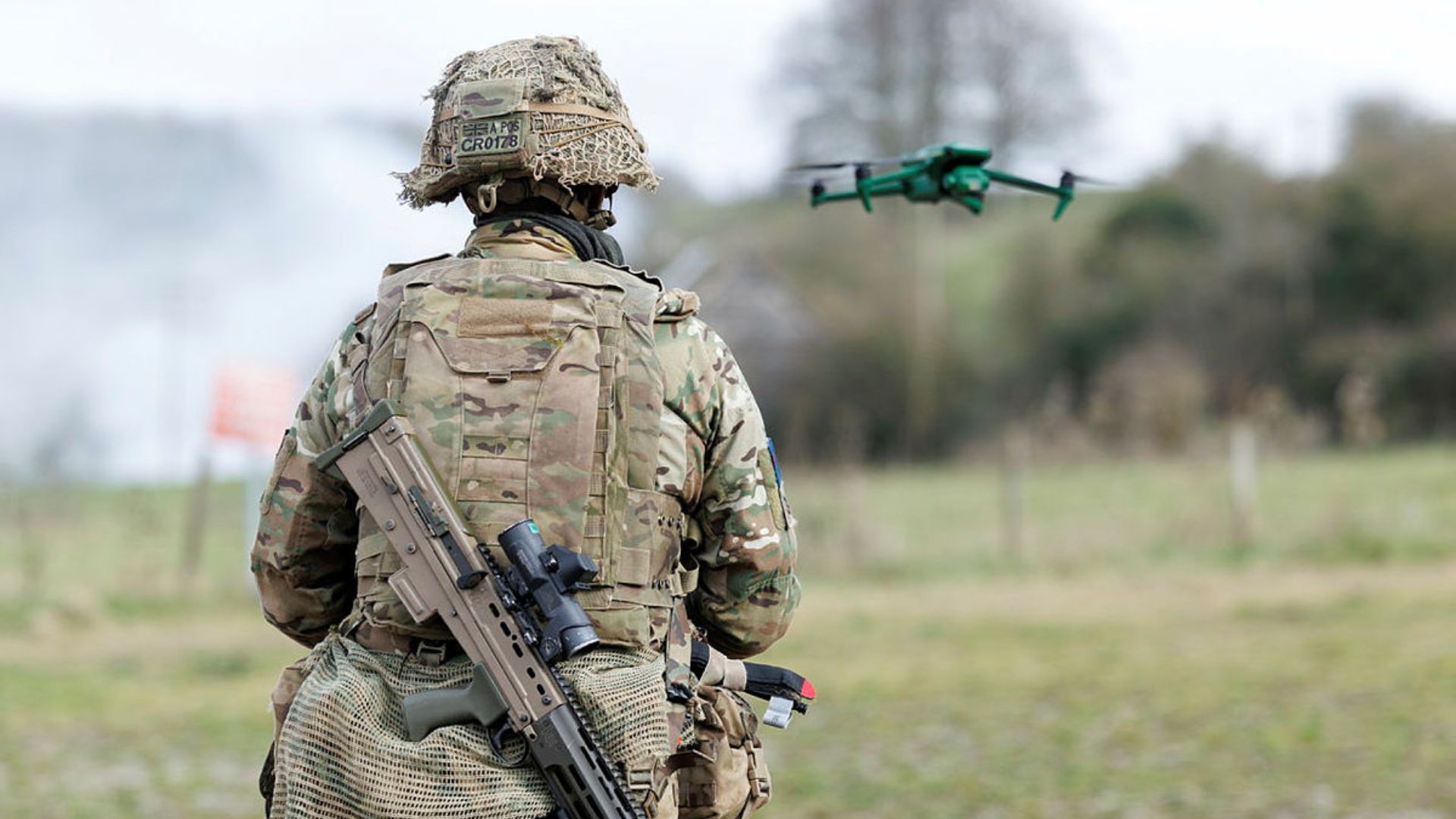
Surrounding them will be a larger (40%) distributed layer of attritable platforms: uncrewed, ground, air or surface systems which can multiply the number of sensors or munitions.
Representing a new source of combat mass, these systems are designed to be both reusable and expendable – assisting and preserving land forces while maintaining the lethality required on the battlefield.
In his speech, Gen Sir Roly said there would be a particular emphasis on "finding, fielding, training and deploying" these particular platforms.
He highlighted a £300m investment which has put "10,000 small drones in our soldiers' hands", alongside 50 new operational-level electronic warfare systems, enough cutting-edge counter UAS capability to equip an entire brigade, and thousands of autonomous systems.
Consumables
Finally, the third layer (40%) will comprise single-use, largely autonomous systems such as loitering systems and kamikaze drones.
Quick, simple to manufacture, and built on mass, they are intended for short durations to deliver a specific effect.
One-way attack drones such as the Iranian-designed Shahed have long since been a feature of Ukraine's strategy to help offset its manpower and artillery shortages, helping it to strike deep into Russian territory.
Emphasising that "we must pivot everyone hard" to the 20-40-40 system, Gen Sir Roly's recommendation comes as he outlined the most significant transformation of UK land power in a generation during his speech.
And the concept represents far more than mere adjustments to existing tactics.
As the British Army shifts away from traditional mass armies of human troops – hallmarks of its Cold War and post-Cold War strategies – it is utilising AI and data to strike deeper and faster than adversaries, with lessons drawn from previous conflicts.
Join Our Newsletter