One of the Royal Navy's River-class offshore patrol vesselshas made a short voyage to the UK capital, showcasing the future of the Senior Service.
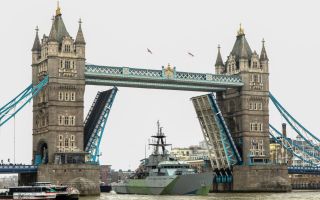
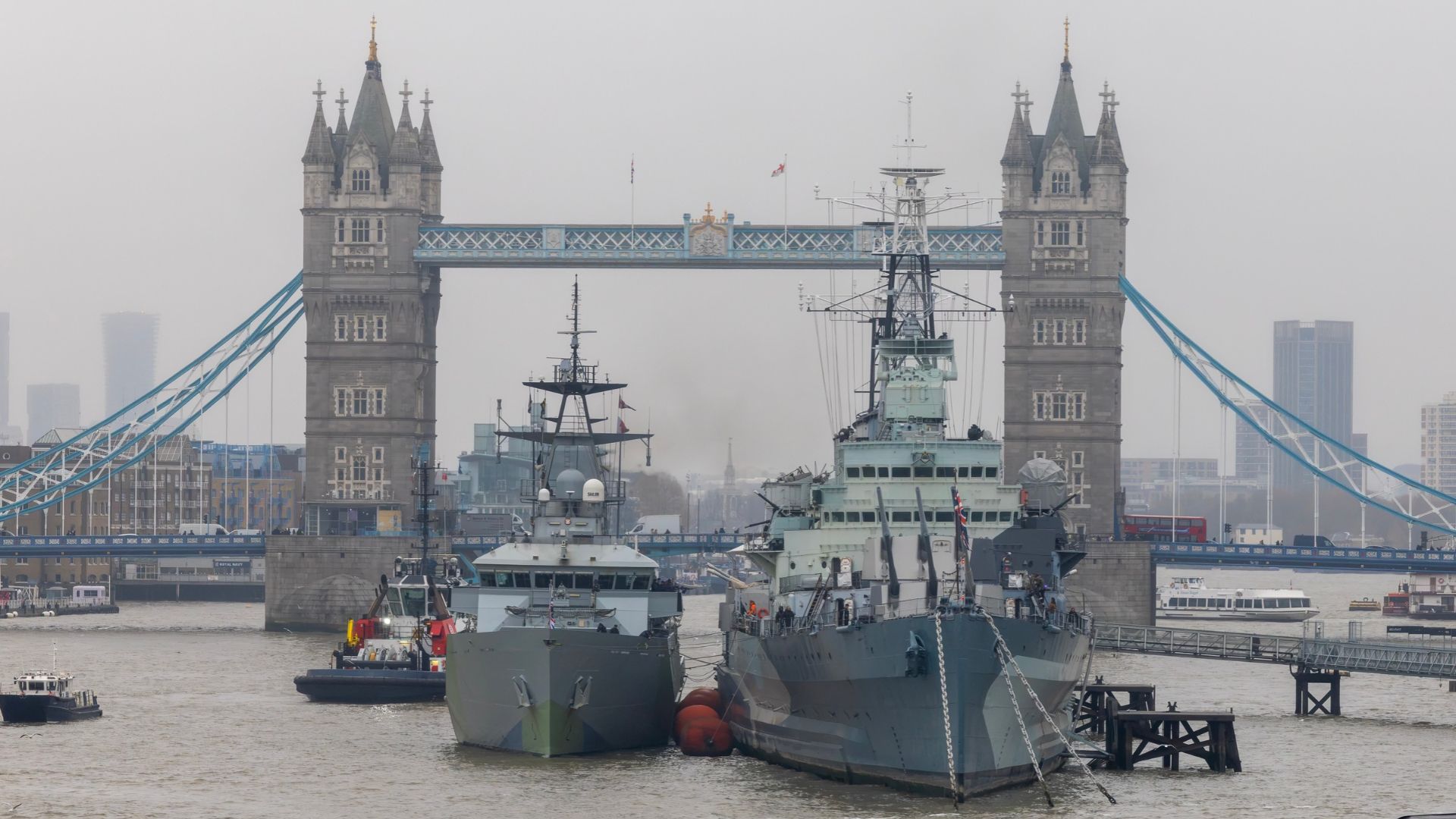
Pictured sailing beneath the iconic Tower Bridge in London, HMS Tyne gave ministers, industry leaders, and defence stakeholders first-hand insight into the Hybrid Navy concept.
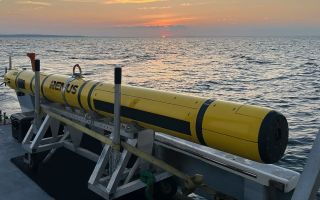
Announced by First Sea Lord General Sir Gwyn Jenkins late last year, it will combine traditional crewed ships, submarines and aircraft with uncrewed, autonomous and remotely operated systems.
Peak demand
Her visit to the Big Smoke follows a busy year for HMS Tyne and her crew, who have spent recent months repeatedly tracking Russian warships and merchant vessels in and around UK waters.
In March, she was dispatched alongside a Wildcat helicopter to intercept the Russian navy's Ropucha-class landing ship Aleksandr Otrakovsky and merchant vessel Sparta IV.
It formed part of a Nato effort to monitor Russian activity from the Mediterranean to the North Sea.
More recently, she was dispatched with Type 45 destroyer HMS Dauntless to report on the movements of RFN Neustrashimy, as the Russian frigate escorted sanctioned cargo ships through the English Channel.
After handing over responsibility to HMS Dauntless, she was then tasked with intercepting RFN Aleksandr Shabalin as the Ropucha-class landing ship escorted cargo ship MV Energy-2 accompanied by tugboat Proton.
Tyne was activated from North Shields to watch every move as the Russians sailed through the English Channel en route to the Baltic Region and was accompanied by a Wildcat helicopter from 815 Naval Air Squadron.
Beyond trials and into operations
On the visit to London, Lieutenant Commander Sam Fields, Commanding Officer of HMS Tyne, said the ship was "proud to demonstrate how the Royal Navy is evolving to meet future threats, while showcasing how emerging technologies and autonomous systems can work alongside our people to create a more capable, resilient and adaptable Navy".
Embarked on board the ship is equipment from the Royal Navy's 1st Autonomous Squadron (1AS), including the Kraken K3 Scout uncrewed surface vessel (USV).
Measuring 8.4 metres long, with a top speed of 55 knots, the USV can be used for several roles including surveillance, force protection, logistics and precision strike.
The Royal Navy ordered 20 Kraken uncrewed boats earlier this year under a £12.3m contract.
The display also features examples of uncrewed air systems from 700X Naval Air Squadron (NAS), the Navy's experimental drone unit, which plays a key role in testing, developing and integrating uncrewed aircraft across the Armed Forces.
Altogether, the embarked systems and equipment on display helped demonstrate how the Royal Navy is moving beyond trials and demonstrations, and towards operational capability.
Throughout the week, HMS Tyne will also host engagements with government departments, parliamentary audiences, academics and industry partners, as well as STEM-focused visits designed to inspire the next generation of engineers and maritime professionals.
Related topics
Join Our Newsletter