Although it usually operates hundreds of metres down in the depths of the ocean, the Nato Submarine Rescue System (NSRS) – nicknamed Nemo – was tested on a brand-new frontier: the cargo holds of two separate RAF transport aircraft.
Fully deployable, the submersible is capable of rescuing stricken submariners in distress at depths of up to 610 metres.
Nevertheless, being designed to provide a rapid global response to a deep-sea crisis within a strict 72-hour window requires a multi-stage effort long before Nemo can conduct its rescue.
A tri-national government capability jointly owned by France, Norway and the UK, the NSRS is one of the world's leading submarine rescue capabilities.
Is it a bird? Is it a plane?
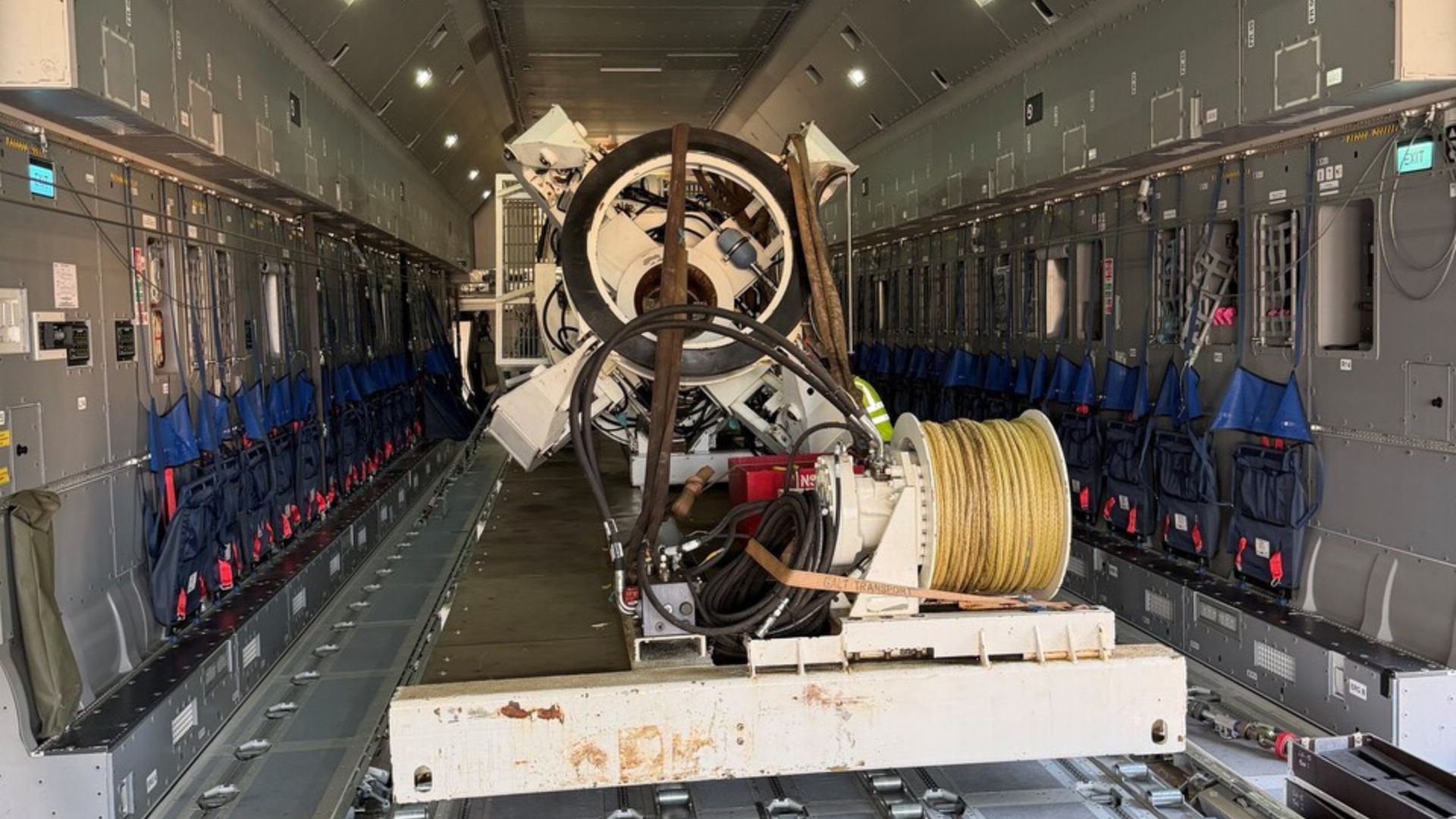
Aptly named Exercise Flying Fish, the drill was designed to test how the 350 tonnes of specialist equipment could be moved rapidly by road and RAF transport aircraft.
The large undertaking required 27 lorries and several aircraft and, with rapid response in mind, police forces maintained a constant blue-light presence at every step of the journey.
Once at the UK's largest airbase – RAF Brize Norton – the rescue vehicle was loaded onto a simulator with the exact dimensions and deck arrangement of a C-17A Globemaster, while the heaviest support equipment was loaded onto a similar simulator for the A400M Atlas.
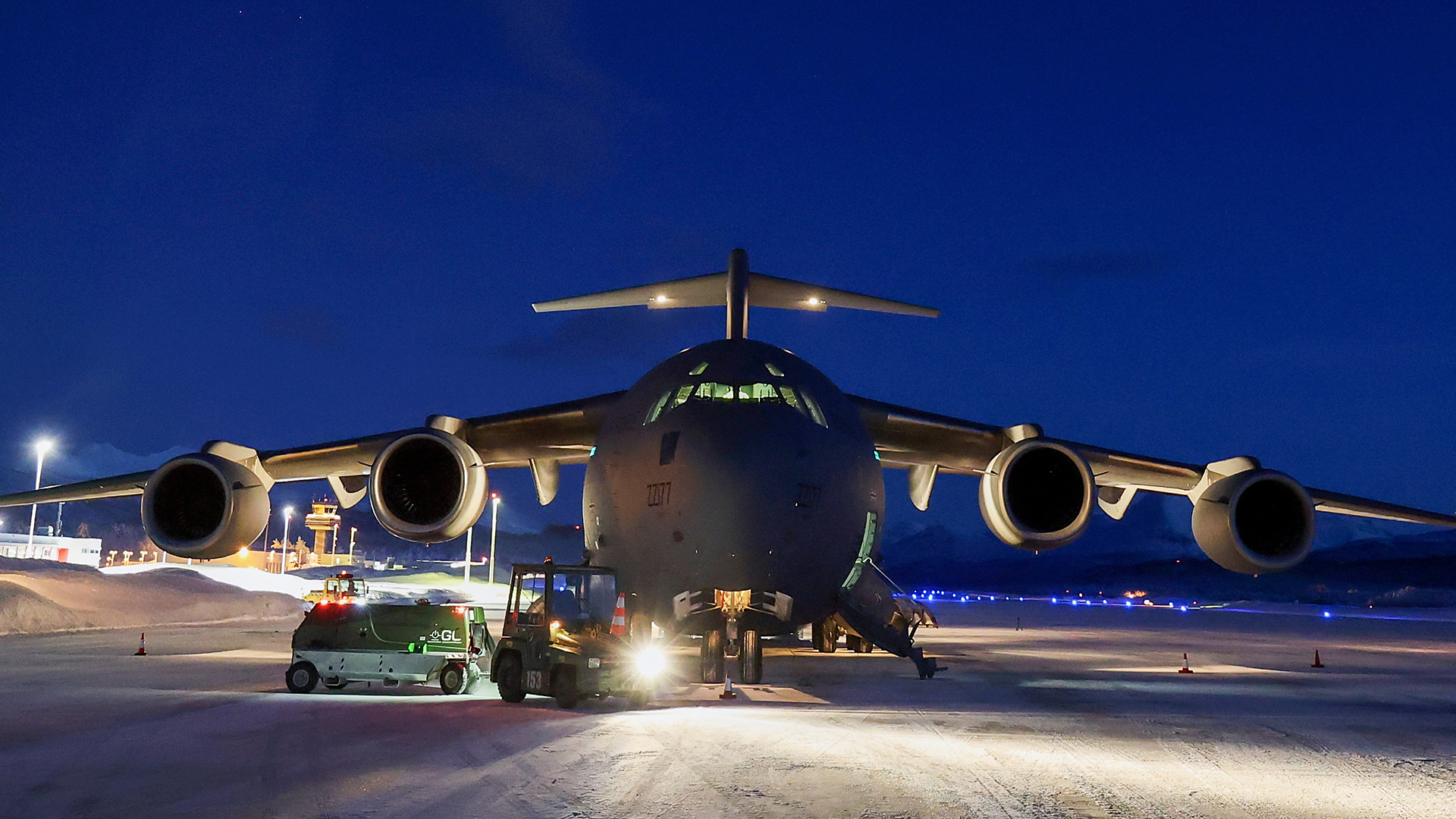
It marked the first use of the A400M for NSRS transport and means the military transport aircraft can now be used by the air forces of both the UK and Nato for future mobilisation.
Both loading events were conducted by the specialist RAF team at the Joint Air Delivery Test and Evaluation Unit.
Defence Readiness and Industry Minister Luke Pollard said the submersible is a piece of specialist equipment "we hope we never have to use".
"But the ability to mobilise Nato's Submarine Rescue System at short notice to anywhere in the world is reassuring for the UK and our allies," he said.
"If a submarine is in trouble, we will need to respond fast. Ensuring we have a tried and tested response is how we can be ready for any eventuality."
Pulled from under the waves
Crewed by UK, French and Norwegian personnel, Nemo can be used to ferry submariners to the surface.
Once the submarine in need of help is located, Nemo springs into action, connecting with the boat in distress and allowing crew members to get out.
When the pilot has manoeuvred into position, a mating skirt is used to create a watertight seal – this allows the crew to climb on board Nemo and be taken to safety.
The submersible can carry up to 12 people, meaning it can take a few trips to rescue an entire crew.
Captain Lyons, Operating Duty Holder for the NSRS, who witnessed the operation, said: "Rescue of the crew from a stricken submarine will require numerous agencies to operate efficiently as one team, and this loading exercise onto a military aircraft is a vital aspect to maintain training and currency for our RAF colleagues.
"I was delighted to see them maintain efficient and close control of this unique vehicle that is relied upon by so many nations."
Nemo is frequently deployed for planned training exercises between the three nations, and is kept on immediate readiness should the worst happen.
Join Our Newsletter