The Supermarine Spitfire: A British icon, a legend and an all-round exceptional design

The Spitfire must be the most well known aircraft in UK aviation history – and one of the people behind the Spitfire90 project has explained just why the type was so successful.
Matt Jones, whose team is making nine flights around Britain to mark 90 years since the prototype made its first flight, told BFBS Forces News how the aircraft was designed around the Rolls-Royce Merlin engine, why it had wooden propeller blades, not metal, and why so few two-seat trainers were built.
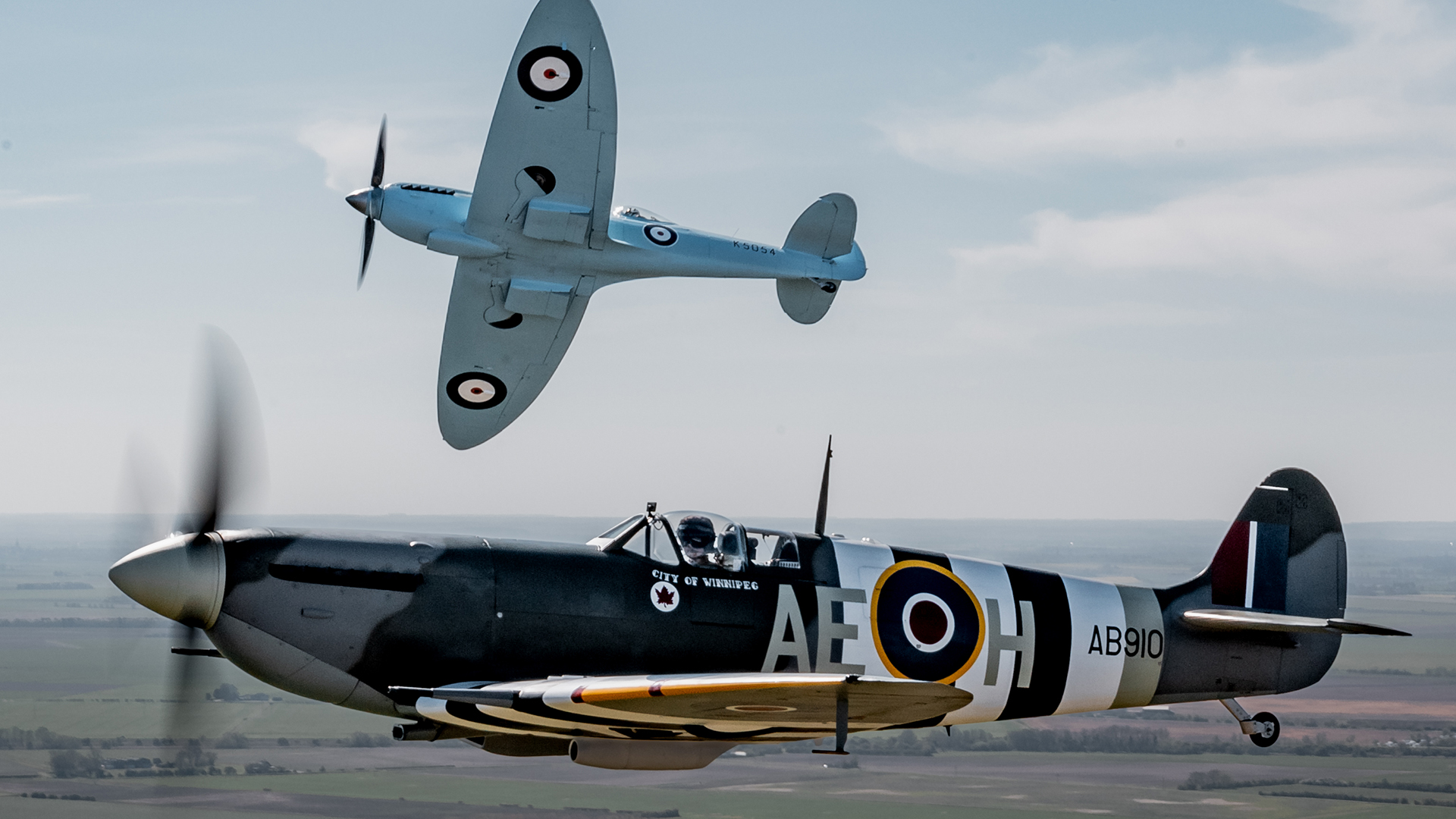
The aircraft making the round-Britain trip is a two-seat Mark IX Spitfire that's been specially painted in the colours of K5054, which was the prototype Spitfire flown on 5 March 1936 by test pilot Mutt Summers.
An exceptional design
Mr Jones, the CEO of Spitfires.com, said: "We're doing this trip because we think it's really important to keep these aeroplanes in people's lives and imaginations and to keep them flying.
"The 90-year mark for this exceptional piece of design is something that we think should be commemorated.
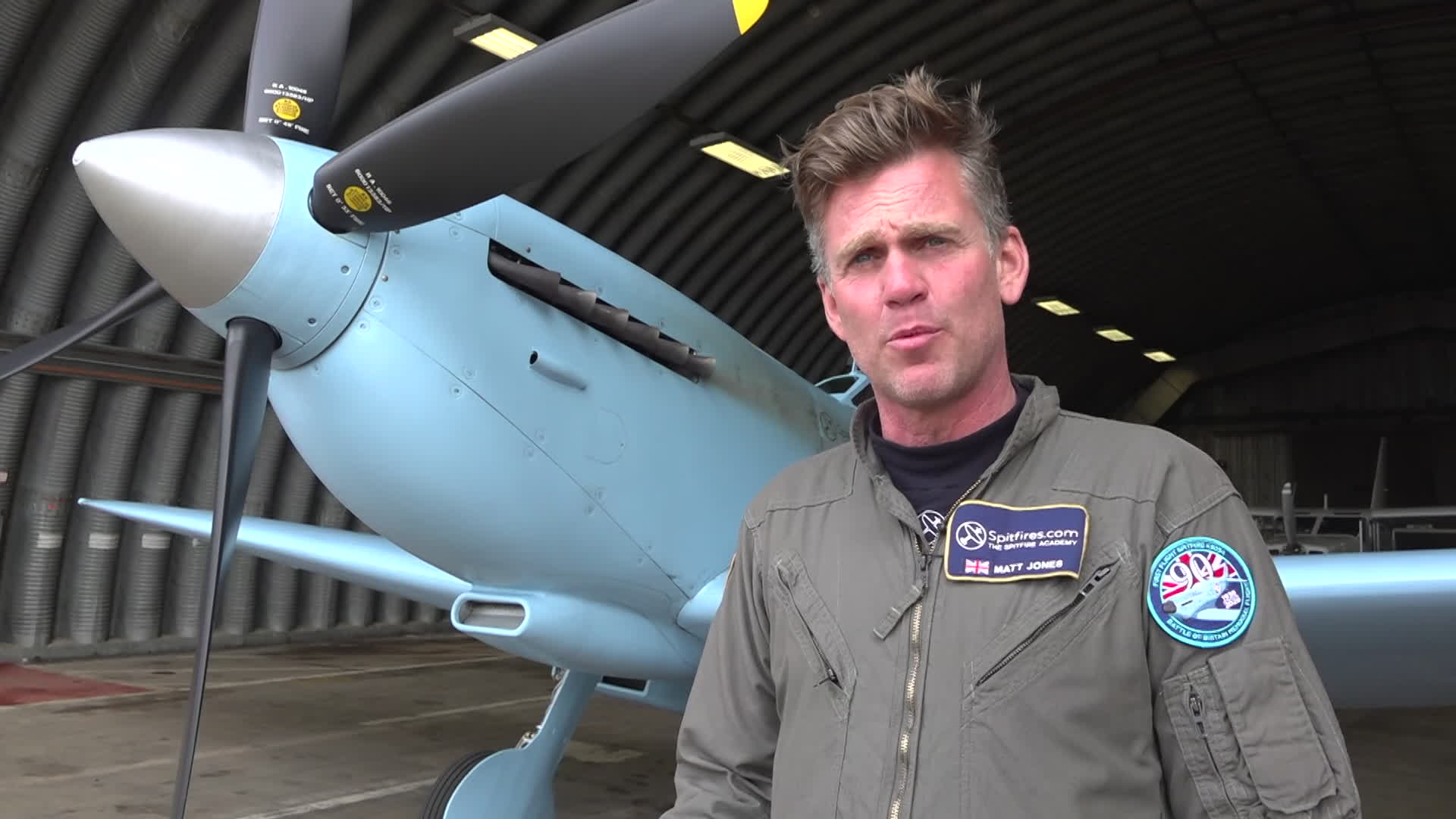
"The differences between this Mark IX Spitfire and the original K5054: it's got four blades on it. It's got a much more powerful engine.
"The first engine in in the prototype developed slightly more than 900 horsepower. This engine in here develops up to 1,750 horsepower, and to make most of that power needs more blades – so this propeller has four blades [while] the original prototype only had the two.
"So the blades are made of wood for a number of reasons. Metal was in short supply during the war. Also, it meant if the aeroplane crashed with the wheels up, it didn't shock-load the engine too much.
"[This] meant all they had to do was replace the propeller before it could fly again. If it crashed with a metal propeller it would have broken the engine at the same time – shock-loaded the engine – so a big advantage there."
A wing and a prayer – plus an engine
Mr Jones highlighted two key features of the Supermarine fighter – the elliptical wing and the Rolls-Royce Merlin engine.
"The Spitfire was always designed with the Rolls-Royce Merlin in mind – in fact, it was designed prior to the prototype being flown," he said.
"[An] enormous amount of development happened in a very short time, from the 900 horsepower I mentioned earlier, to 1,750 horsepower.
"After that the Merlin was replaced with the Griffin unit, another Rolls-Royce engine, which took the aeroplane up to 2,500 horsepower.
"That iteration of Spitfire came later on in the war and it's really the Merlin-powered aeroplanes – they're the ones that people know and love the most."
Along with the engine, he said the wing was probably the most famous part of the aircraft.
"The wing... is another reason we look to keep flying them. From here [on the ground] you can't really see its beautiful elliptical shape, but of course when one flies over you can.
"So it is important that we keep flying, so that not only can you hear the engine and that stunning sound that it makes, but also see the shape of the wing."
An aircraft not originally made for two
The Spitfire being flown round Britain did not start life as a two-seater. As Mr Jones explained: "The original was a single-seater. In fact 21,500 Spitfires roughly were built – all single-seaters. There were only ever 20 two-seaters built.
"During the war there were quite a few take-off and landing accidents and the RAF went to the Air Ministry and said 'hey, we need a trainer of this aeroplane'.
"So they went away and designed it during the war and came back and said 'yeah, we can do it – but for every one that we build, we won't be able to build you 10 fighters'.
"And the requirement for fighters was greater than the training requirement, so the plans were shelved until after the war at which point the UK started selling Spitfires around the world.
"The countries they were selling them to wanted to have a two-seat trainer, so the plans were pulled back out and the first one flew in 1946, with most of them being delivered in 1948."
Remembering the father
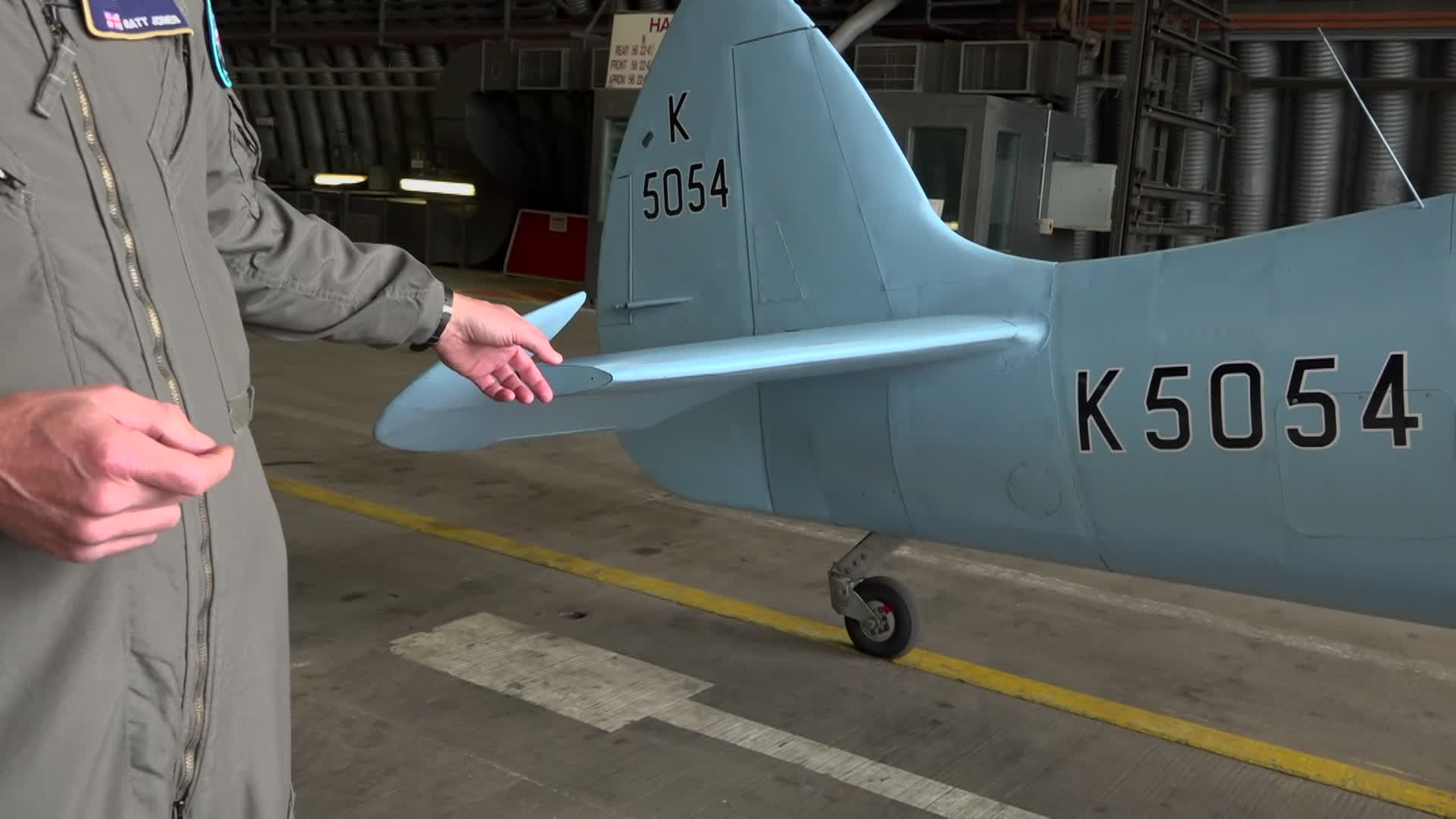
Another difference between the round-Britain Spitfire and the original K5054 is the tail wheel.
"All Spitfires during the war had that third wheel, but the prototype didn't – it just had a skid," Mr Jones explained.
"At the time aeroplanes like Tiger Moths were flying off the grass and quite a few of them had skids rather than wheels."
He also explained how, as part of the 90-year commemoration, he had permission from the Royal Air Force to use the prototype's scheme and from the Civil Aviation Authority which gave its approval for passengers to be flown.
"Our business is taking people flying in Spitfires – and we do probably 1,000 flights a year.
"That's our way of commemorating, but in this case wearing the K5054 registration that its forefather and the father of all Spitfires flew 90 years ago in March 1936."
Join Our Newsletter