Ukraine's Operation Vivaldi breaks the northern jaw of Russia's pincer
For months, Russia has tried to cut off Ukrainian forces defending the so-called fortress belt cities of Sloviansk and Kramatorsk.
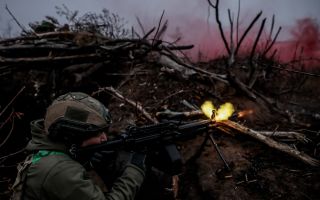
Now, Kyiv has hit back at the northern part of that pincer around Lyman in an offensive codenamed Operation Vivaldi.
Ukraine has said its forces have retaken 176 square kilometres, captured 250 Russian troops and killed a further 5,000.
Operation named after Vivaldi's The Four Seasons
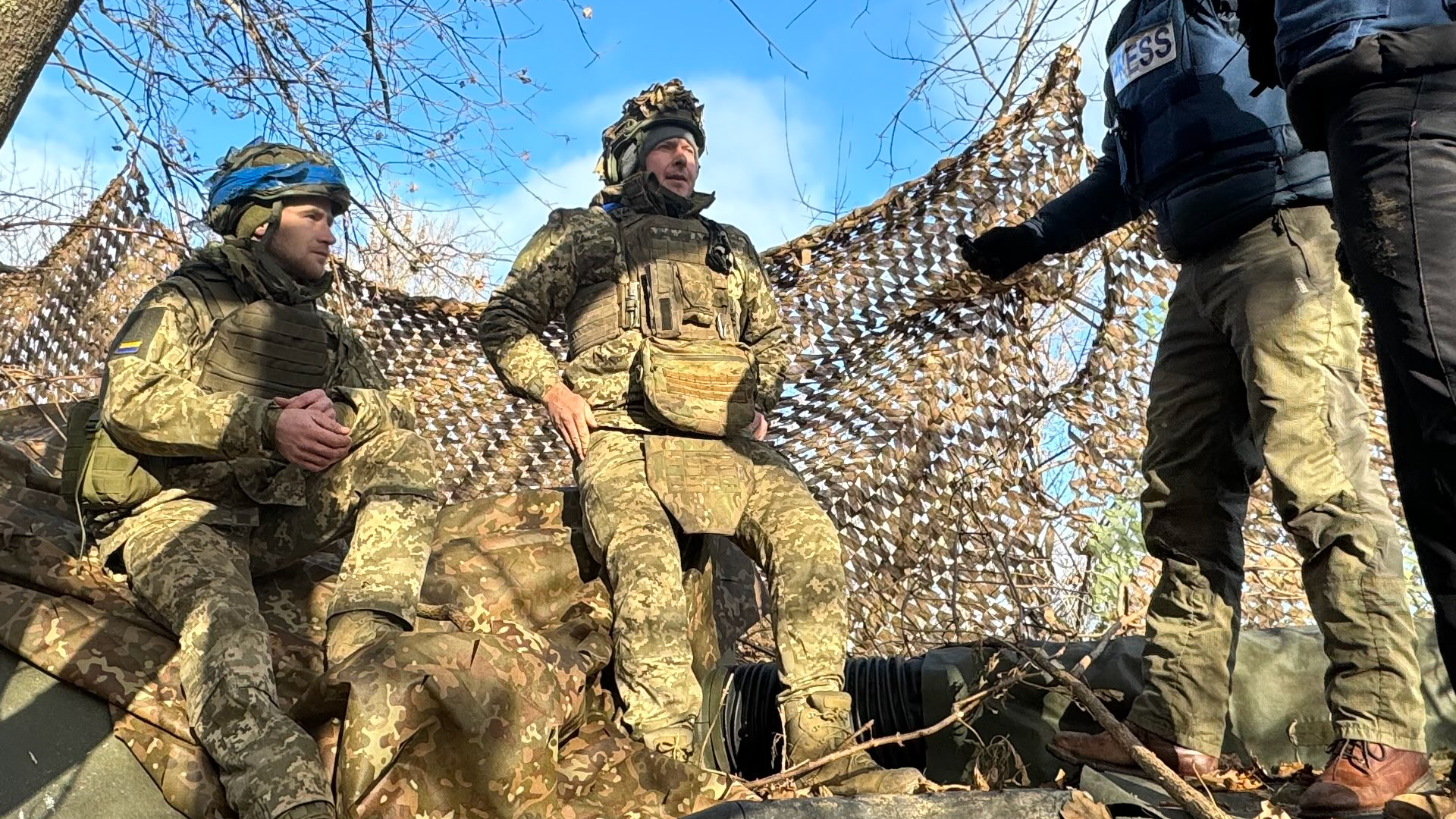
Lyman is a small city, but it sits on a critical road and railway junction, and Russia's 20th and 25th Combined Arms Armies spent 20 months grinding toward it.
Analysts have said that the Ukrainian counterattack has not only stopped Russian gains in the northern pincer, but reversed them.
The Institute for the Study of War, a leading US military think tank, has said the counteroffensive substantially shrank the Russian salient north of Lyman, undermining Moscow's attempt to outflank the Sloviansk-Kramatorsk fortified belt from the north.
The operation itself began in May, but details have only recently started to emerge.
The counter-offensive takes its name from Antonio Vivaldi's The Four Seasons concertos, and Ukraine has structured it the same way.
The first phase, commanders said, was not an advance at all, but a shaping operation.
The second "season" reclaimed 40 square kilometres. The third ended with claims of liberating the settlements of Nove, Ridkodub and Katerynivka, and restoring control over Karpivka and Novomykhailivka.
Nove was the centre of gravity, described by Brigadier General Andriy Biletskyi, the commander of Ukraine's 3rd Army Corps, as Russia's main hub north of Lyman.
Aims go beyond recovering ground

Francis Farrell, a senior reporter with the Kyiv Independent, said the aim of the operation goes beyond recovering ground.
The logic, he believes, is to make any Russian advance in the area prohibitively expensive.
"The idea is that the immense cost that it will take Russia to capture this, especially now running against a reorganised and more efficient defence, would be potentially just too high," Mr Farrell said.
That, he argued, "will be the cost that will eventually bring [Russian president Vladimir] Putin to that point of winding his war down".
For the first time, Ukrainian heavy-lift bomber drones were used to airdrop robot vehicles 10 kilometres behind Russian positions.
These unmanned ground vehicles (UGVs) were used to confuse Moscow's forces, to make them think they were being attacked by a much larger force.
The Ukrainian army also created its own vehicle-borne improvised explosive devices (VBIEDs), using remote-controlled Soviet-era BTR armoured vehicles packed with tons of explosives to drive at the Russian lines.
Footage online showed huge explosions as the vehicles reached their targets and detonated.
Kyiv's forces also saturated the Russian rear areas with drones, targeting supply routes and military trucks some 120 kilometres behind the line of contact.
Ukraine said the scale of the attacks eventually pushed Russian supply hubs back into Russia.
Putin's rumoured mobilisation
The collapse of the Lyman axis raises the question of whether Mr Putin could use it to justify his much-discussed mobilisation.
Ukraine has claimed it has intelligence that the Kremlin intends to call up 300,000 people this autumn to try to break the deadlock and force Kyiv to capitulate by spring next year.
Mr Farrell said that Ukraine's forces are increasingly well organised and, although the fighting would be tough, would deal with whatever Mr Putin puts on the battlefield.
"A potential optimistic hypothesis is that if Russia mobilises ... it would be a lot of hard work to churn through them, as crude as that might be," he said.
"Maybe that could be the moment that Russia decides 'well, you know, this is not going anywhere'."
There is also a political dimension.
According to one analysis, false reports of Russian success around Lyman had reached Mr Putin, who boasted about it just as Russian forces there were collapsing.
So far, Vivaldi has played out in three phases.
The longer-term effect it could have on the war, particularly as Ukraine braces itself for another long winter, is not yet clear.
However, the operation is not finished either.
The final fourth season, Ukraine said, is still to come.
Join Our Newsletter