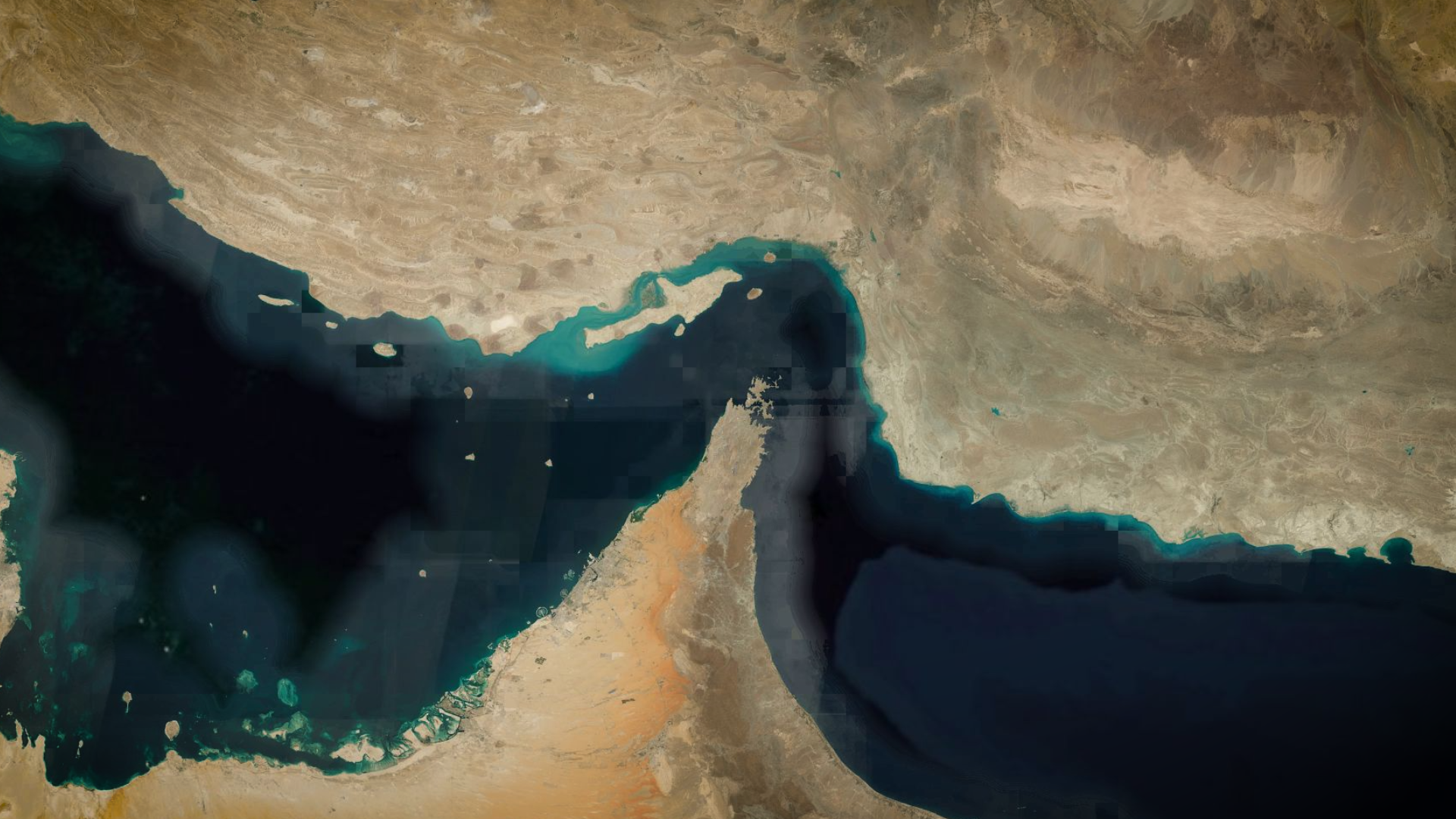
The UK's Permanent Joint Headquarters (PJHQ) convened a meeting with 30 nations to discuss how best to restore safe and secure access through the Strait of Hormuz just hours before President Trump announced a two-week ceasefire with Iran.
BFBS Forces News understands a senior British military representative opened the meeting, which sought to explore possible measures for an international coalition to ensure the safe passage of vessels through the strait.
The utility and role of that coalition is now in focus as the details of the US-Iran ceasefire are yet to be discussed at negotiations set to begin on Friday.
What do we know about the ceasefire and its implications for the Strait of Hormuz?
Less than two hours before the declared deadline, the announcement came that Iran and the US had agreed to a two-week conditional ceasefire, effective immediately. The breakthrough came as Pakistan's Prime Minister Shehbaz Sharif urged Trump to extend his negotiation deadline and called on Iran to restore access to the strait.
During this time, access through the strait will be permitted, with their passage coordinated by the Iranian military.
On Truth Social, President Trump said holding off its slated attack on Iran was subject to Tehran agreeing to a "complete, immediate and safe opening of the Strait of Hormuz."
The provisional ceasefire was agreed because "we have already met and exceeded all military objectives," he said, pointing to a 10-point proposal issued by Tehran which will be a "workable basis on which to negotiate."
According to an Iranian state broadcaster, this included a complete end of the war on Iraq, Lebanon, and Yemen, reopening the Strait of Hormuz, full commitment to lifting sanctions on Iran and the release of Iranian funds and frozen assets held by the US.
It also said that "Iran fully commits to not seeking possession of any nuclear weapons."
The two-week ceasefire agreement includes a proposal allowing Iran and Oman to charge transit fees for vessels passing through the strait, a senior Iranian official told Reuters.
The fee would vary depending on the type of ship, its cargo and unspecified other prevailing conditions, the official said, without elaborating.
Unconfirmed reports have suggested that at least one payment of $2m has been made to allow a vessel to transit the strait.
According to the official, the toll charged by Iran would be used for the reconstruction of the country.
What role could the UK and its allies play?
The meeting at PJHQ brought together military planners, allies and partners from over 30 nations to discuss the potential future role of an international coalition to safeguard the passage of goods and vessels through the Strait of Hormuz.
It follows last week's gathering led by Foreign Secretary Yvette Cooper.
Some 40 countries from every continent in the world, as well as international organisations, including the International Maritime Organisation (IMO) and the European Union, met with a unified intention for an immediate and unconditional reopening of the strait.
The areas discussed included potential sanctions should the strait remain closed, and collaboration with the IMO to secure the release of thousands of ships and sailors currently trapped in the strait.
As a central hub for UK operations, PJHQ regularly coordinates with international allies on matters of conflict, peacekeeping, humanitarian aid, and disaster relief.
Join Our Newsletter