Geoff Hoon: No regrets over decision to invade Iraq, blames misleading intelligence on WMD

Former Defence Secretary Geoff Hoon has said he has no regrets over the decision taken by him and other ministers to invade Iraq in 2003.
The invasion marked the start of an eight-year conflict, known militarily as Operation Telic. During that time, 179 British personnel lost their lives.
However, Mr Hoon admitted he did regret the incorrect intelligence received by the government indicating Saddam Hussein had access to weapons of mass destruction (WMD).
Mr Hoon, who served as defence secretary from 1999 to 2005, paid tribute to those who were lost in Iraq on the eve of a national commemoration marking 15 years since the end of the conflict.
"We were badly misled"
"I regret that the information we were given about weapons of mass destruction turned out to be wrong," Mr Hoon said.
"What I don't regret, though, is taking the decisions we took in good faith, in light of that information."
In partnership with the United States, the UK invaded Iraq on March 20, 2003. Within weeks, Saddam Hussein, who had been Iraq's president for 24 years, was toppled and his military defeated. The deposed president was later tried, convicted, and executed for crimes against humanity.
But as the conflict evolved from invasion to occupation, the weapons of mass destruction used to justify the war politically were never found.
"It's always difficult to accept that we were badly misled by the information that we were given," Mr Hoon said.
"But necessarily, I think all of those involved took the decisions in good faith – to take action against Saddam Hussein."
More than 100,000 British military personnel served in Iraq during Operation Telic, including through several years of insurgency-based warfare.
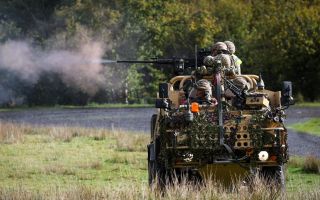
It was during this phase of the Iraq War that enemy insurgents resorted to methods designed to inflict significant injuries on soldiers patrolling the streets of Basra in lightly armoured vehicles, such as Snatch Land Rovers.
Eventually, the operation evolved into a training mission, and in 2011, UK troops withdrew from Iraq, bringing an end to the conflict.
Reflecting on the 15th anniversary of that withdrawal, Mr Hoon again acknowledged the loss of British military personnel.
"It's always a sombre day. I recall the 179 men and women who died in service in Iraq, and that's something that their friends and families will have much more painfully than I; but nevertheless, it's something that I will always remember.
"My dad served on a voluntary basis in the Second World War, and he once said to me that he would not want to do what I was doing.
"I had difficulty in understanding that, but what he meant was that I was taking responsibility for those casualties. And that's something I will always reflect on, and always remember."
Join Our Newsletter