On 22 May 2011, the UK officially ended Operation Telic, marking the conclusion of its military involvement in Iraq.
Over the course of the eight-year conflict, 179 British service personnel lost their lives, while more than 6,000 were injured.
Today, the Royal British Legion hosted Remembering Iraq: 15 Years On at the National Memorial Arboretum, marking the 15th anniversary of the end of the conflict.
BFBS Forces News provided coverage of the event – which began at 12pm – and it can be watched here.
Remembering Iraq: 15 years on
Hosted by former ITV News war correspondent Bill Neely – who reported extensively from the frontline during the conflict – around 1,500 members of the Armed Forces community attended the service. Defence Secretary John Healey was also in attendance to pay his respects.
The day featured wreath-laying, readings, a Service of Remembrance, and a flypast by a Chinook helicopter.
A reading was also delivered by Anna-Marie McDonald, who was just seven years old when her father, Joseva Lewaicei, was killed in Iraq.
Speaking ahead of her address, she recalled how the Armed Forces community became like family after her father's death, and spoke about the pride she feels in delivering the reading today.
"The Armed Forces community is the only community I know, and something I hold very close to my heart," she said.
"Events like these mean a lot to me – to be able to reconnect with my father through the shared experiences of those he served with is very special. I'm standing on stage today not only for my father, but all those who never made it home."
A Remembrance section, led by Reverend Peter William King MBE CF, followed, including talks from Warrant Officer First Class (WO1) Johnson Beharry, who was awarded the Victoria Cross for two extraordinary acts of bravery while serving in Iraq in 2004.
On two separate occasions, WO1 Beharry – despite suffering injuries himself – drove his Warrior armoured vehicle through intense enemy fire to rescue fellow soldiers trapped following an attack, refusing to leave anyone behind.
Speaking ahead of today's event, he said: "It means a huge amount to stand here today and remember the men and women I served beside in Iraq, especially those who made the ultimate sacrifice and never came home.
"Not a day goes by that many of us don't think about those moments, the friendships, the fear, the courage, and the lives forever changed by that conflict."
A reading was then given by Dame Sharon Nesmith DCB ADC, alongside stories from veterans from the end of the conflict, before music from mezzo-soprano Laura Wright, US singer Will Brown, and the Military Wives Choirs.
The service concluded with a flypast by an RAF Chinook.
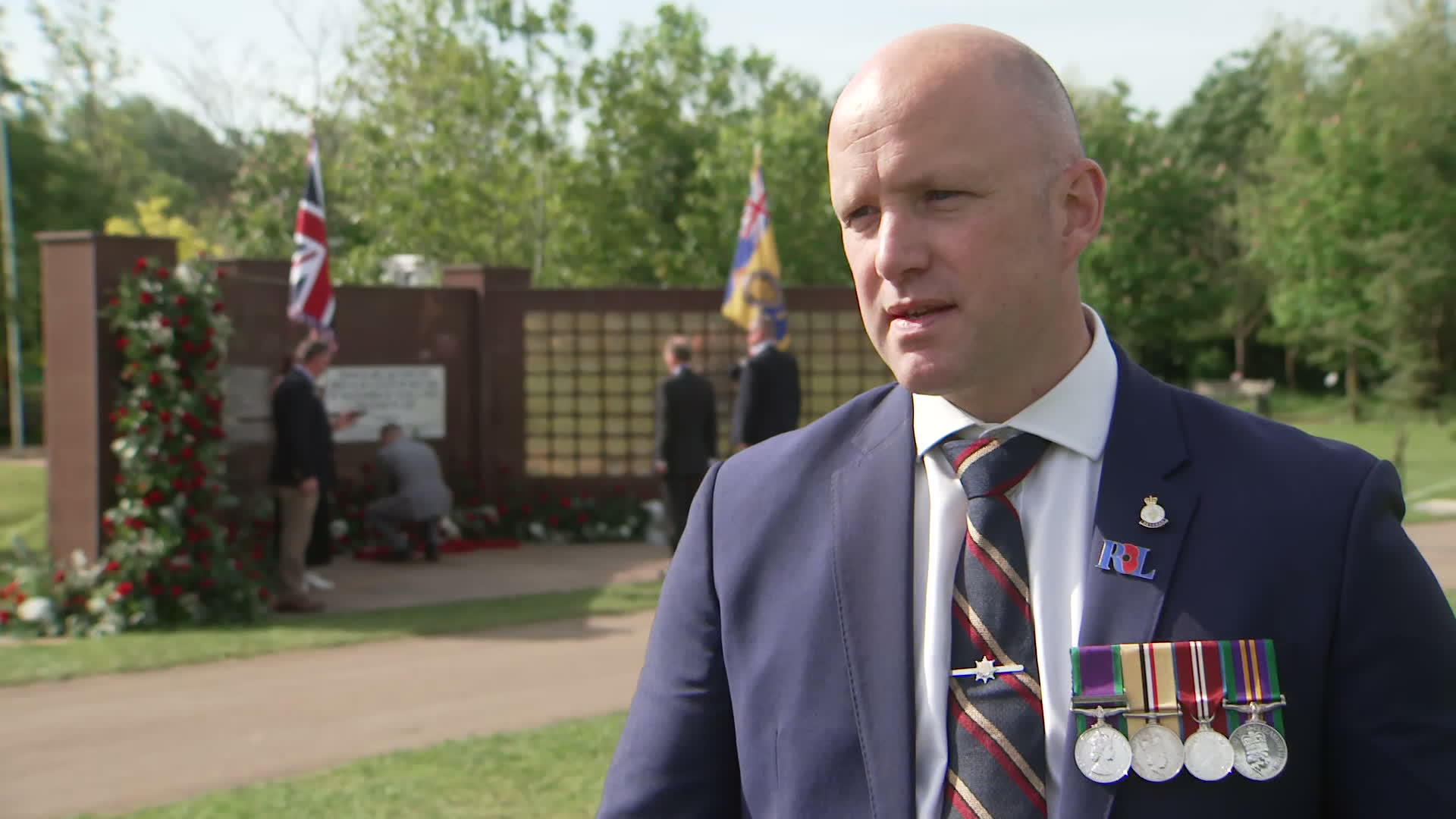
'A sobering moment'
Iraq War veteran Mike Bates, who served two tours with the Royal Anglian Regiment as a lance corporal and later a corporal, spoke to BFBS Forces News ahead of the event about his experiences during the conflict and the importance of remembering those who served alongside him.
In May 2006, during Op Telic 8, Mr Bates was based at Basra Palace when an explosion was heard overhead. He and his platoon were informed that a Lynx helicopter had been shot down, and his role was to provide an outer cordon while the rest of the troops moved in to recover the bodies.
"It was intense. You do all the training, and the training is good – but when petrol bombs, mortar fire, sniper fire come in, that's a real sobering moment for you."
He remembered the courage that was displayed that day, as members of the battalion began exiting their vehicles and pushing back a crowd of thousands.
"Because we were static, on a cordon, it wasn't long before mortar fire, rocket fire, sniper fire," Mr Bates explained.
"We had a river or gully between the road and the other road, so the crowd were a conversion on the other side, throwing across IEDs (improved explosive devices) and just generally trying to get to the troops."
Although no personnel were injured, Mr Bates described it as a deeply "sobering day", and said it brought home the realisation that "we're not all going to come back from this".
Tragically, less than a week later, two of Mr Bates's battalion were killed by a roadside bomb.
He added: "You look around and think 'oh we're all going to come back'. You don't think much about it at the time, we've got a job to do, and you get your head down and get on with it."
However, it wasn't until years later that Mr Bates, who left the British Army as a platoon sergeant, described it as "a tour that always stays with you".
The importance of remembrance
Stressing the importance of remembrance and the need for the nation to pause and honour those who served and lost their lives in the conflict, Mr Bates's response was steadfast.
"It's easy to forget that these people do this job, and that people make a sacrifice, and it's very difficult to quantify what that means unless you have served, worked with people who have served, or have been a family member.
"I knew I was in danger, I knew when I was safe, but my family back home – the news, and the anxiety, and the worry every time the news came on. Is it going to be my son's name or my brother's name?"
He added that there is a need to remember and reflect on "those who did not come home".
"There is a massive hole in that family's life, in the friends that don't get to see their friends anymore, and the children that grow up without their parents.
"It is really important to remember their sacrifice."
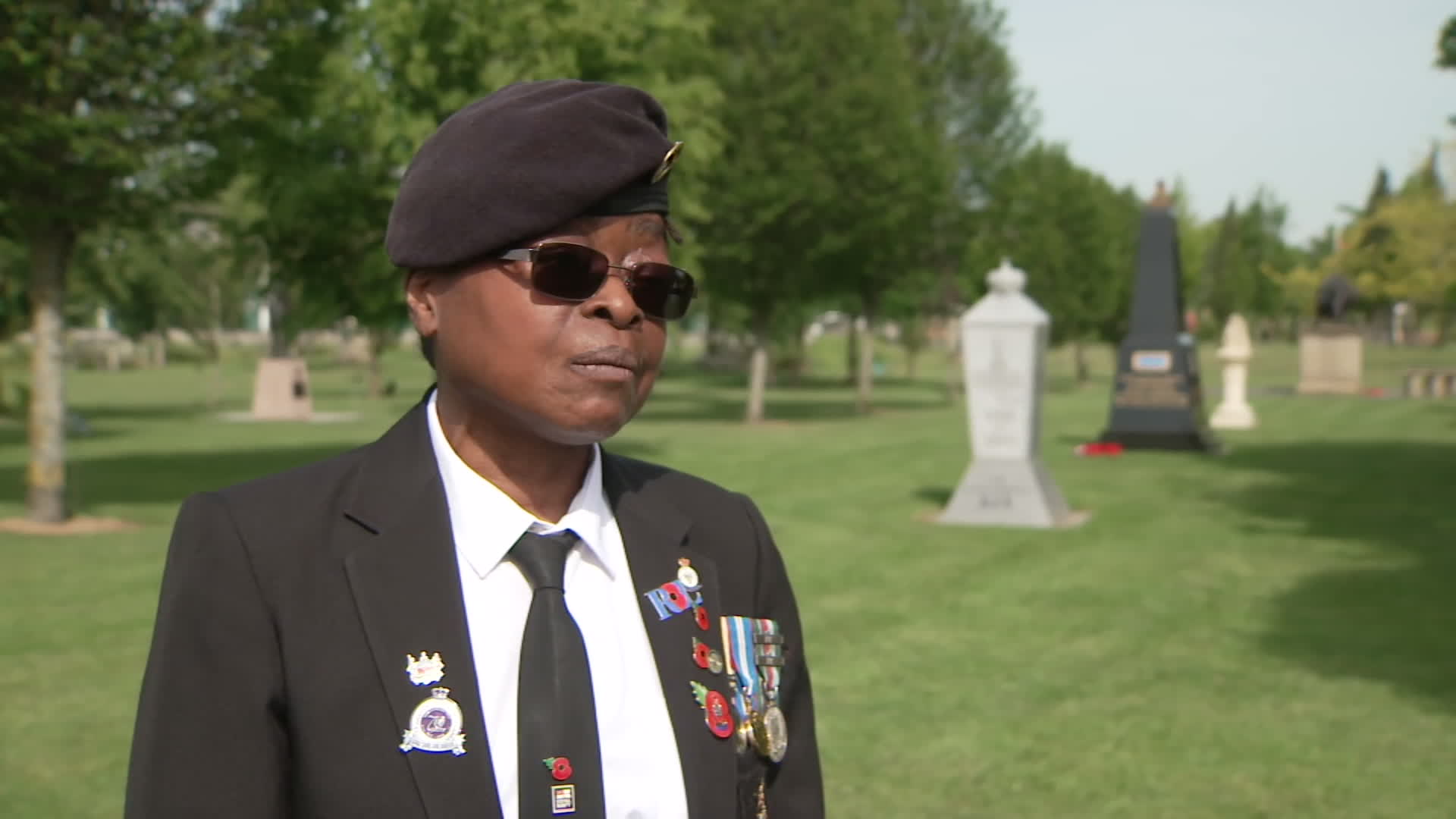
'I was there as a lifesaver'
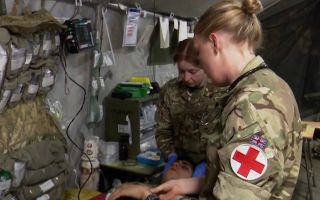
Celia Mitchell served in the Royal Navy as a leading medical support assistant.
During her deployment in Iraq, Ms Mitchell worked at a 200-bedded field hospital at Shaibah Logistics Base – a British military hub located in southern Iraq – some seven miles from Basra.
Despite being heavily fortified, it was considered highly dangerous and came under near-daily mortar and rocket attacks from local militias.
Her role as a medic meant she treated everyone, including civilians, Iraqi troops, and even members of the Republican Guard.
"I wasn't there as a combatant; I was there as a lifesaver," Ms Mitchell explained.
"So, it didn't matter to me what nationality, what side the troop was on that I was treating – it was a human being at the end of the day, and that was my goal."
To those who attended the service at the National Memorial Arboretum, Ms Mitchell expressed her gratitude.
"A big thank you to them all, whether they're still serving, veterans, or families – because families are a big thing. When you serve, your family serves; they're there all the time.
"It's always in their mind [about] what's happened, where you are, what's happening to you, and I just think that's absolutely fantastic that so many people are coming today, and it makes me feel proud of what I did – of my service," she said.
Asked what would be going through her mind during the service, Ms Mitchell reflected on the memories that still stay with her 15 years on.
"The panic. Working in ridiculous temperatures with a respirator on… standing at the wash stations and you're all standing there half-naked washing yourselves.
"You weren't bothered that it would have been male or female who stood next to you, whether it was somebody of a lower or higher rank – it didn't matter.
"Those sorts of things go through my mind, but most of all, I will be thinking of everyone who's passed."
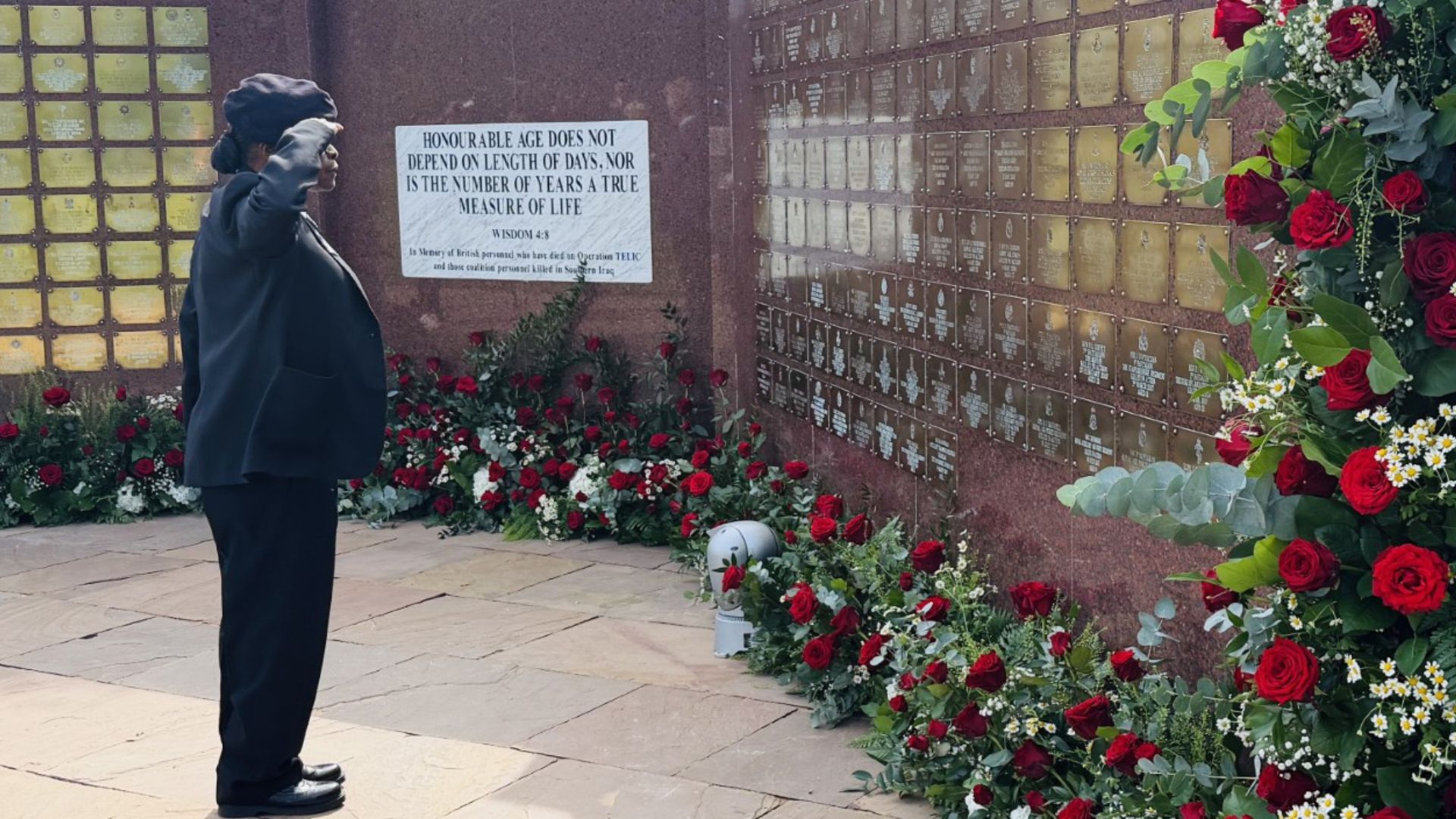
Ms Mitchell later visited the Basra Memorial Wall, which records the 178 UK service personnel and one MOD civilian who died during Op Telic.
BFBS Forces News has created a digital memorial showing the Basra Memorial Wall to help families, friends and former comrades find the names of those remembered there.
Related topics
Join Our Newsletter