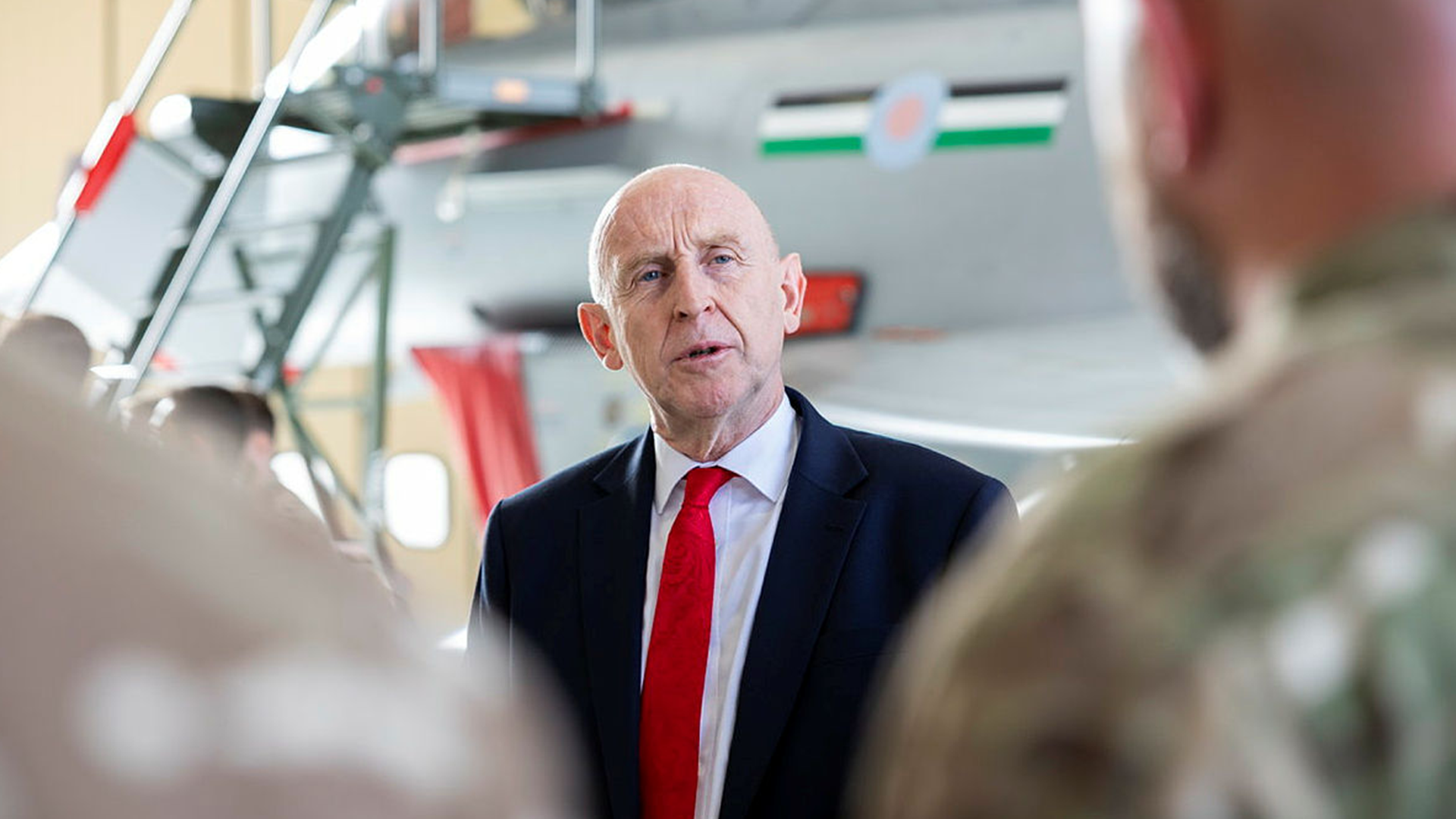
Healey returns as Chancellor, vowing UK will meet commitments on defence to allies

Former Defence Secretary John Healey, who resigned under Sir Keir Starmer in a row over military funding, is now in charge at the Treasury.
Prime Minister Andy Burnham appointed him as Chancellor in a surprise move as he named his new top team.
Mr Healey came out of the starting blocks pledging that the UK "will meet our commitments on defence to our international allies".
When he resigned as defence secretary last month, Mr Healey hit out at the Treasury for not stumping up the £28 billion military chiefs believed were needed for the defence investment plan (DIP).
At the time, he said he was "certain" that Britain should be spending 3% of GDP on defence by the year 2030, and warned the actual commitment fell far short of this.
Mr Healey wrote in his resignation letter that extra funding in the DIP would only see defence spending rise to 2.68% by the end of the decade, and expressed frustration with Sir Keir Starmer for not setting a clear timetable to reach 3%.
The Nato military alliance has meanwhile tasked all member states with spending 3.5% of GDP on their core defence spending by 2035, in preparation for the growing threat from Russia.
Former head of the Army responds
General Lord Dannatt, who was Chief of the General Staff from 2006 to 2009, said it was a "masterstroke" by Mr Burnham to put Mr Healey in as Chancellor.
Speaking to Times Radio, the former head of the Army said there is "no one that knows better than John Healey just what defence needs".
"It's very much a poacher turned gamekeeper, and physician heal thyself," he continued.
"If John Healey is going to be true to himself, knowing exactly what the defence budget needs, he's going to have to work very cleverly and very carefully at finding ways of raising more money.
"He is the one behind the desk in Number 11, and has really got to answer his own question."
The new Chancellor was asked by broadcasters on Monday night if welfare cuts or new taxes could be introduced to meet the 3% of GDP goal by 2030.
He replied: "Fiscal control is the first duty of any Chancellor. It is mine. And fiscal credibility is the bedrock for economic stability and for national security.
"You heard the Prime Minister this afternoon say, in this more dangerous world, we will meet our commitments on defence to our international allies."
Forces families and the cost of living
In one of his first acts as Prime Minister, Mr Burnham announced an £850 million tax cut on energy bills in a bid to tackle the cost of living crisis.
This means from October 1 of this year, energy bills will be VAT-free.
According to the government, Forces families will benefit from the saving, which is estimated to amount to £45.
Join Our Newsletter