Sublife: From high pay to short showers, what day to day life is really like on a submarine
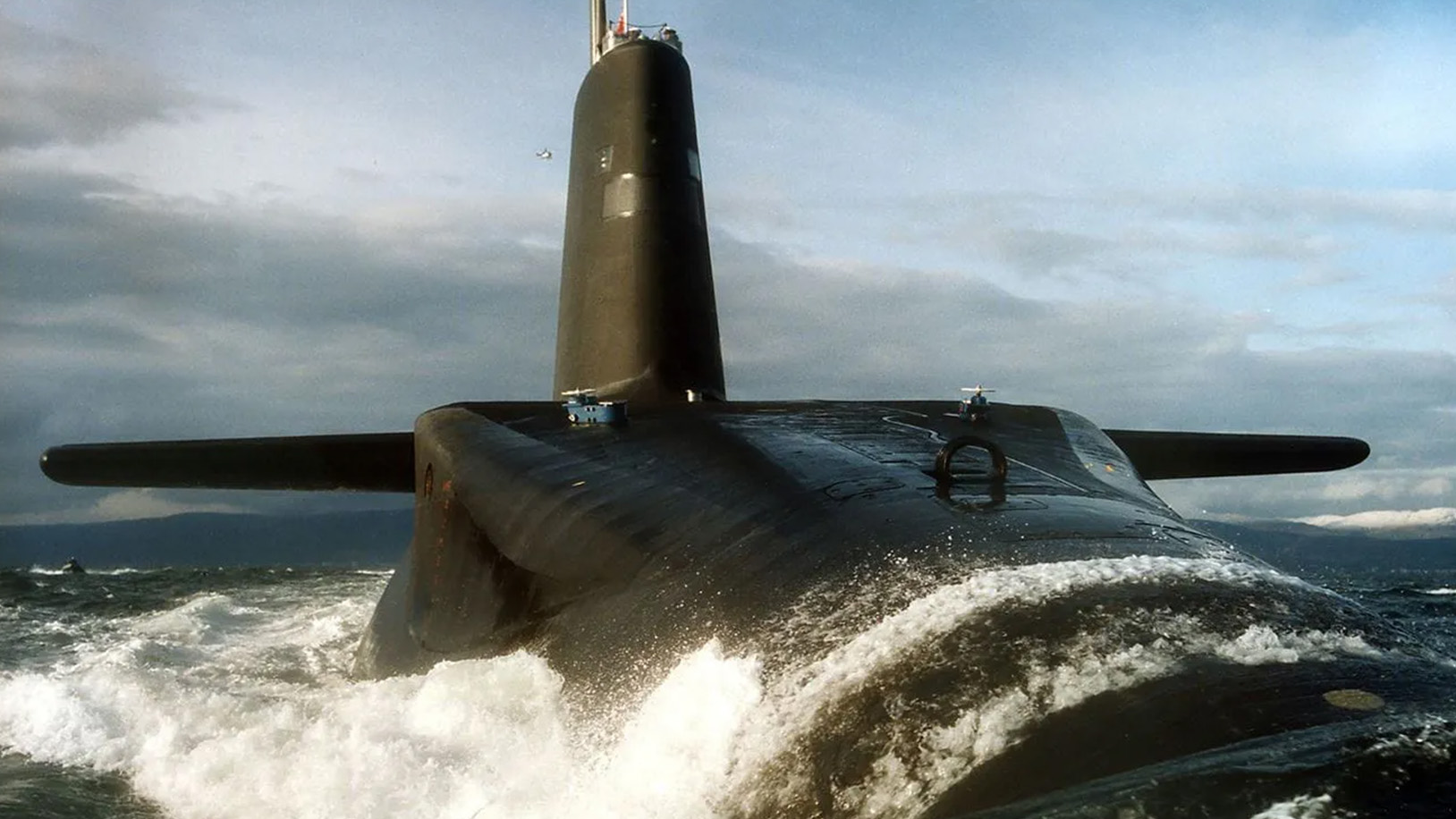
They operate unseen, unheard and undetected, carrying out missions known to only a select few.
As the Royal Navy Submarine Service marks its 125th year, BFBS Forces News has been speaking to serving submariners to find out what life is really like beneath the waves.
We delve into the mysteries of the Silent Service, debunk some of the myths surrounding life on board and explore what drives these men and women to spend much of their working lives inside a steel tube, deep beneath the sea.
Money money money
It is uncouth to talk money, but due to the critical nature of their work, the skills involved, the conditions, and the highly classified status of many missions, submariners are well paid. Aside from Special Forces, it’s likely the best paid part of the military.
Warrant officers earn up to £75k, officers up to £90k and specialist ranks like medical officers can be on up to £181k.
A weapon engineer officer, for example, needs to be at least 18 years old with certain grades in science/technology/engineering/mathematics A-levels. They will start on £34,676 with a £27,000 joining bonus. This salary will rise to around £44,288 after two years.
Plus, there is an extra £5,000 bonus on being awarded your Dolphins – the mark of a qualified Submariner and additional pay of up to £3,200 per month at sea.
Passing time – the magic time machine
With deployments of six months or even longer, submariners have become masters of passing the time.
"The best thing is definitely the time machine – it’s getting into your rack (bed) – the opportunity to sleep quite a bit of the patrol away makes it a bit easier," says Leading Hand Blair Paton.
"Playing card games with the boys," adds Able Seaman John Kelly, "the time flies by – you don’t even realise it!"
They hold events too, like mini golf tournaments where each section will build a track around the submarine.
Food under the sea
On a submarine, food is more than just fuel – it is critical to morale.
It even tells them what day it is as its easy to lose track when all you see is the inside of the sub (and yes – just like everywhere else on earth, they have fish and chips on Friday).
Our three submariners were full of praise for their talented chefs.
"It was my 23rd birthday under the water," remembers Able Seaman Kelly, "and the chefs came in with a cake, it was class!".
"Probably one of the nicest cakes I've ever had!
"I was thinking to myself, oh my god, I couldn't even make a meal like this if I had all the fresh material!"
With crews often of more than a hundred, storing food for the full deployment can be a challenge.
Some areas have fake floors with tins stashed beneath.
In the gym, for example, the taller guys might struggle to get on the spin bikes at the start, but as the deployment goes on, the floors lower and everyone has got a little more head space.
Increasingly for longer deployments now they use 'space meat' – a bit like astronaut food.
Hollywood shower vs submariner shower
In the military, appearance matters, but when you are on a submarine for months at a time, rules are relaxed a little.
Apart from anything else, it is better not to shave regularly on a sub, as tiny particles of hair in the air could be a fire hazard and the inability to sterilize razors could lead to nasty skin conditions.
"Half an hour after we left I was convinced to fully shave my head so I went bald", says Able Seaman Kelly.
"It started with me and the next thing you know we're all cutting about like a little cult, all baldies.
"We'd go into the mess and we're all sat there, all the baldies congregating on the one table!"
Water has to be used very sparingly – firstly because they have to make (treat) all their own water and secondly because that process is noisy.
Everyone’s allowed one shower a day unless you work in a particularly hot compartment in which case you can shower after each shift. They are allowed just 10 seconds to shower.
Leading Hand Paton explained how to do it. "You get yourself wet, shut the shower off, soap yourself up and then as fast as you possibly can – get the soap off again".
"A shower that you would have at home is what we class as a 'Hollywood shower!'".
Myth busting: do submariners really only have daughters?
Rumour has it that due to radiation, submariners tend to have daughters, but Petty Officer Richard Humphreys says this is not true.
There are medical staff on board and the role of the Medical Assistants is health physics – which is largely monitoring for radiation.
Each day they go around the submarine to different compartments, checking for radiation hot spots, making sure that none of the levels are rising.
"With the shielding that we have we receive less radiation on board than you would if you took a ride in an aeroplane," says Petty Officer Humphreys.
Five weird things about being back on land
Nature – "When we came back from deployment, coming up the hatch, that was amazing", says Able Seaman Kelly.
"That was like a feeling I'd never experienced before in my life. It was mad. You're seeing the trees again, you're breathing the fresh air and you're seeing the sun, the sky, the clouds."
Walking – "Having to walk places again and not just the length of a submarine is a very daunting thing coming back", says Leading Hand Paton.
"Walking down to the shops again – it's great to be able to do it, but it's the longest you're probably going to have walked since before you went to sea."
Faces – "It's weird seeing different people", says Able Seaman Kelly.
"Faces of people, you know, that you've not seen in ages. You're used to the same faces all the time, so it's weird seeing somebody different."
Silence – "People do struggle with adapting to the silence of it all," says Chief Petty Officer Humphreys.
"Because whilst you're away and on board, there is always a noise being generated by something.
"So when you come back and you're lying in your bed that first night and it's complete silence, it's a very daunting sort of feeling."
- Weather – "Silly things like being caught in the rain for the first time when you get back is an absolute delight," added Chief Petty Officer Humphreys.
Joy of submarine life
To many, the thought of being confined to a small tube deep beneath the sea for months at a time, unable to communicate with family or friends or even find out the football results, sounds like a nightmare.
But our three submariners clearly love their roles beneath the waves.
"The mates you make, you forget you're under the water in a tin can after a while, you know," says Able Seaman Kelly.
"You're getting along well, having a laugh every day – it's great really, it's just like a holiday with the boys!"
"I think we're all very proud of the work we do," says Chief Petty Officer Humphreys.
"Once we start talking with other people about it then we just can't stop talking."
Related topics
Join Our Newsletter