How often do Hawks crash? Accident record, groundings and life-saving ejector seats
Two parachutes opened over Anglesey as an RAF Hawk T2 came down near RAF Valley.
The trainee pilot and instructor survived with minor injuries in last week's incident. Both pilots ejected from the aircraft before it crashed near Pencarnisiog and are expected to make a full recovery.
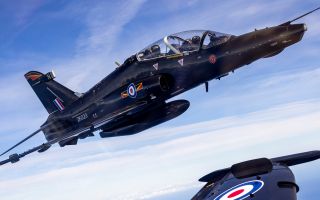
The RAF has since paused flying by both the T2, used to train fast-jet pilots, and the older T1 model flown by the Red Arrows.
- RAF Hawk T1 and T2s grounded for investigation following crash on training flight in North Wales
- Hawk T1 and T2: All you need to know
- Replacing the Red Arrows' jet: What could follow the outgoing iconic Hawk?
Investigators have yet to establish why the aircraft crashed.
How often do Hawks crash?
The original Hawk has been flying with the RAF since 1976. The aircraft family with half a century of intensive training and display flying behind it has had a number of T1s lost in accidents.
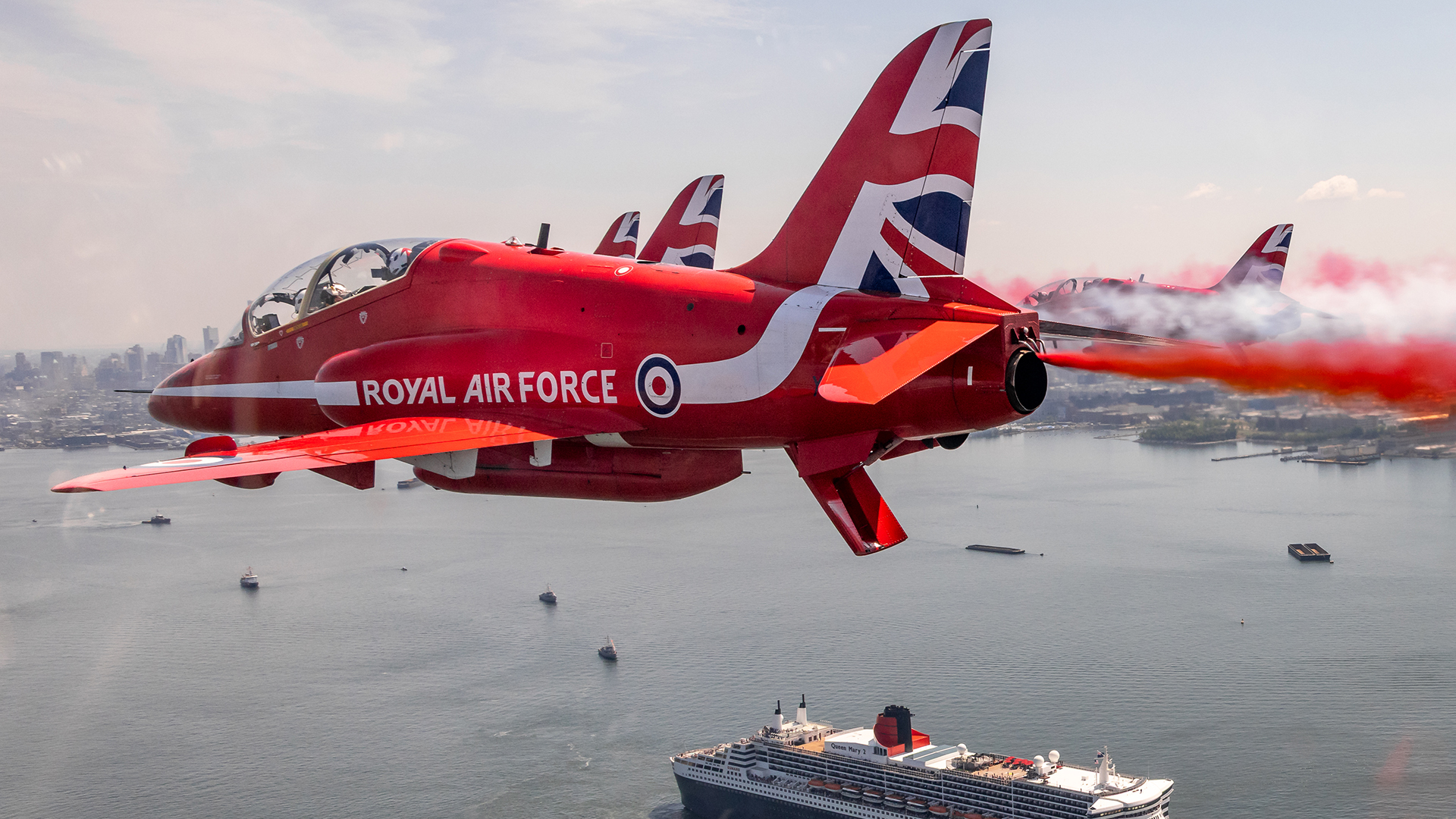
Red Arrows pilot Flight Lieutenant Jon Egging was killed when his T1 crashed near Bournemouth after a display in August 2011.
Another Red Arrows T1 crashed at RAF Valley in March 2018.
Its pilot ejected, but engineer Corporal Jonathan Bayliss, who was in the rear cockpit, did not and was killed.
In March 2021, both crew escaped a Royal Navy T1 that crashed near RNAS Culdrose.
The investigations found different circumstances for each crash.
The official investigation into Flt Lt Egging's death found that high G-forces had impaired his cognitive abilities, leaving him unable to recover the aircraft before it hit the ground.
The 2018 jet crashed while the pilot was practising how to respond to an engine failure immediately after take-off, a routine training exercise known as a PEFATO.
And investigators found the 2021 crash was caused by an incorrectly fitted engine plug coming out on start-up, allowing the engine oil to drain away and causing the engine to fail shortly after take-off.
By June 1990, the MOD told Parliament that 14.2% of the Hawks it had bought for the RAF had been lost in accidents.
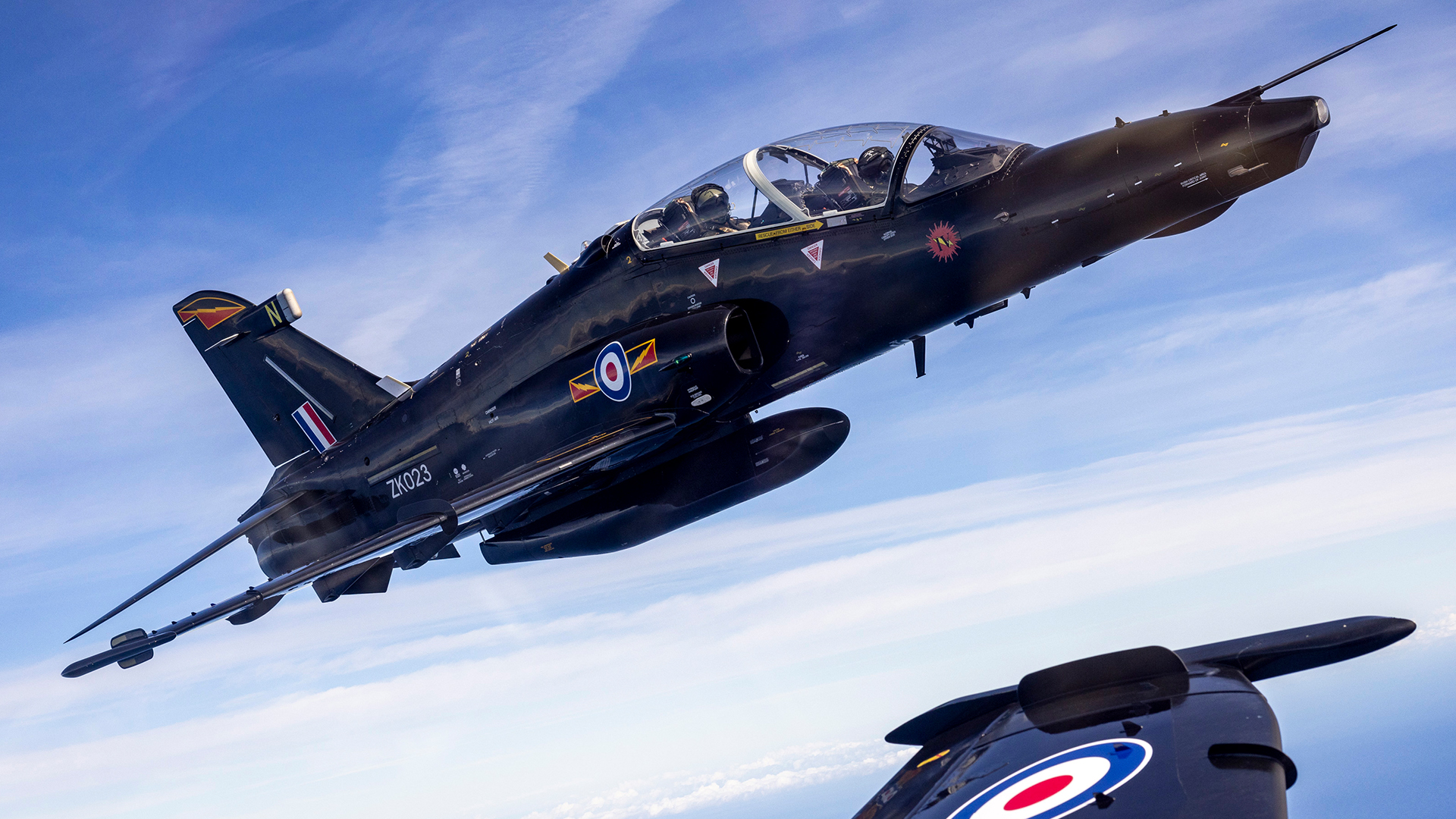
The T2 is a much newer aircraft. It first flew at RAF Valley in 2009, with advanced fast-jet training on the type beginning in April 2012.
Twenty-eight were acquired to prepare RAF and Royal Navy pilots for frontline fast jets.
Temporarily grounded
Stopping a fleet from flying after an unexplained accident is not unusual.
It allows engineers and investigators to establish whether what happened was unique to one aircraft or could affect others of the same type.
The RAF itself has described the latest measure as a temporary "pause" and a precaution while the investigation continues.
Hawk flying has been stopped on several previous occasions for very different reasons.
After Flt Lt Egging's fatal accident in 2011, all Hawk operations were paused while investigators began their work.
Later the same year, another incident raised a completely different problem – this time involving an ejection seat.
Flight Lieutenant Sean Cunningham was killed at RAF Scampton after the ejection seat in his stationary Red Arrows Hawk T1 initiated during pre-flight checks.
He was propelled out of the aircraft but his main parachute failed to deploy.
Flying by several aircraft types using related escape equipment was restricted while the problem was investigated.
How do you eject from a Hawk?
The escape visible in the footage from 23 September happens extraordinarily quickly.
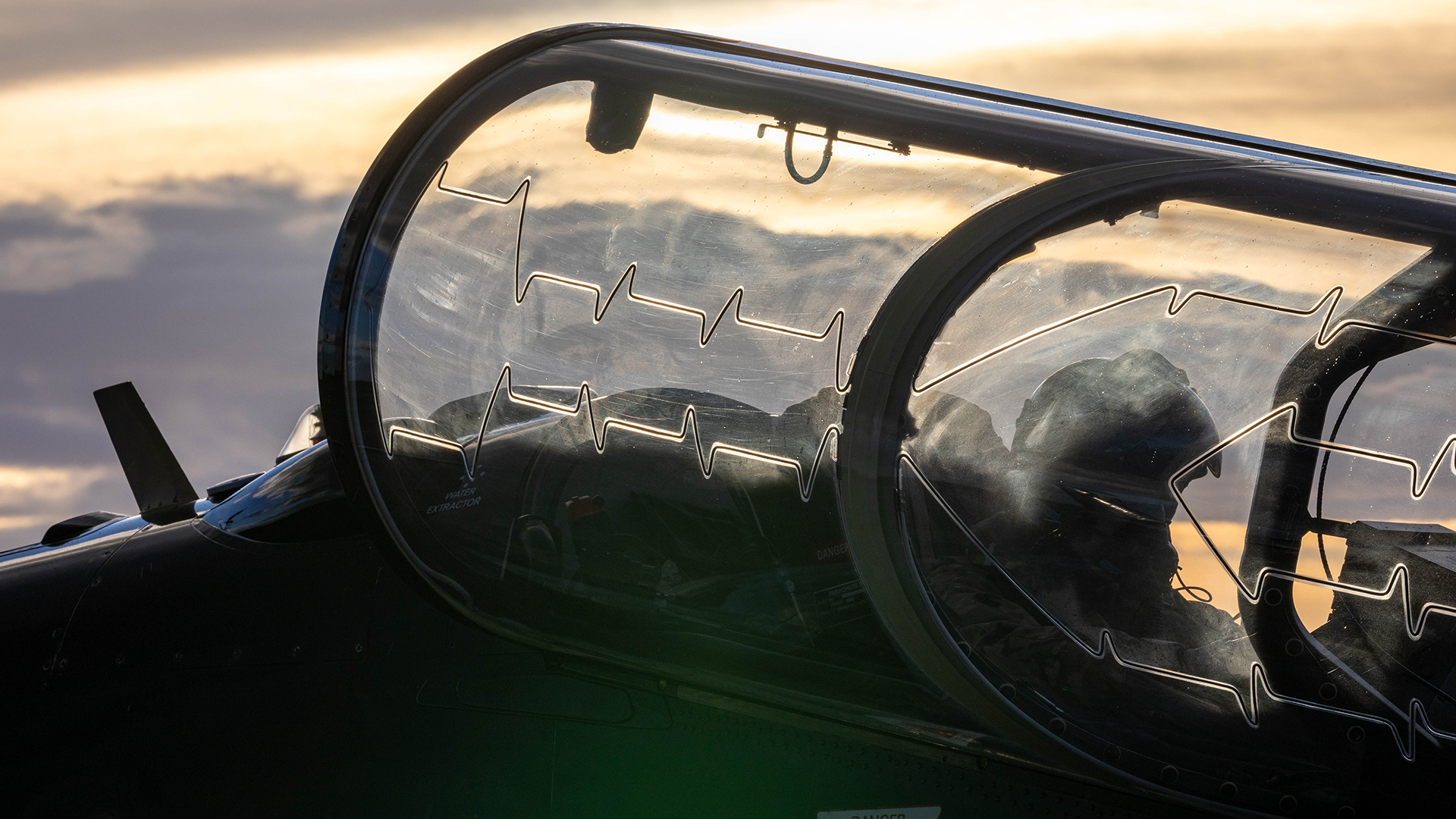
Hawks use British manufacturer Martin-Baker ejection seat systems designed to take over much of the process once an aircrew member pulls the firing handle.
As the seat begins to rise, explosive cord shatters the section above the cockpit.
The rocket-assisted seat then carries the pilot clear of the aircraft before the seat and pilot separate and the main parachute opens automatically.
The Hawk's escape system also allows the seats in a two-seat aircraft to be fired in sequence.
On the older Hawk T1, the command-ejection system reflected the aircraft's original role as a trainer, with the instructor normally sitting in the rear cockpit and the student in front.
With command ejection selected, the rear occupant could initiate both seats, with the rear seat leaving first and the front following around 0.35 seconds later.
Can you really eject while standing still?
Modern rocket-assisted ejection seats are often described as having "zero-zero" capability.
It means that under the specified conditions a seat can provide an escape from an aircraft at zero altitude and zero forward speed – even while stationary on the ground.
That does not mean every ejection at very low altitude is equally safe.
The Hawk T1 aircrew manual, for example, says its seat can provide escape from ground level and zero speed when the aircraft is substantially level, but warns that bank angle, pitch, rate of descent and speed all affect the minimum height needed for a successful escape.
At altitude there is more time for the sequence to unfold. Close to the ground there may be only seconds – or fractions of a second – for the seat to clear the aircraft, separate its occupant and get a parachute inflated.
The 2018 RAF Valley crash illustrated just how small those margins can become.
Flight Lieutenant Stark ejected only about half a second before the Hawk struck the ground.
The Service Inquiry later modelled what might have happened had both occupants been ejected through the command system and calculated that the rear seat could have left the aircraft at just 38ft above the ground and the front seat at 12ft.
It assessed both as potentially survivable, although investigators stressed that the modelling was hypothetical.
How reliable are ejection seats?
There is no simple public failure rate that can meaningfully answer that question across every aircraft, seat type and ejection condition.
Martin-Baker says its seats had saved 7,825 aircrew worldwide by June 2026 and that more than 16,500 of its seats were then in service.
In Cunningham's fatal 2011 accident, the seat launched him from a stationary Hawk, but the main parachute did not deploy.
Martin-Baker later admitted a breach of health and safety law in connection with his death and was fined £1.1 million.
A trainer already approaching replacement
The crash has happened just as the RAF has begun looking for the Hawk's successor.
The 2026 Defence Investment Plan included £860m to keep the Hawk T1 and T2 operating safely until the new system arrives, as well as £360m towards overhauling the UK's jet-training system.
In August, the MOD began sounding out industry over the new Jet Training System, which will include new aircraft designed to prepare pilots for fifth- and sixth-generation combat jets and will also provide a replacement for the Hawks flown by the Red Arrows.
The Hawk T1 is due to leave service in March 2030. The T2 had previously been expected to remain until 2040, but the MOD now says the new training system will replace it because it does not meet future training demands.
For now, however, the Hawk T2 remains the aircraft used for the RAF's most advanced fast-jet training.
Join Our Newsletter