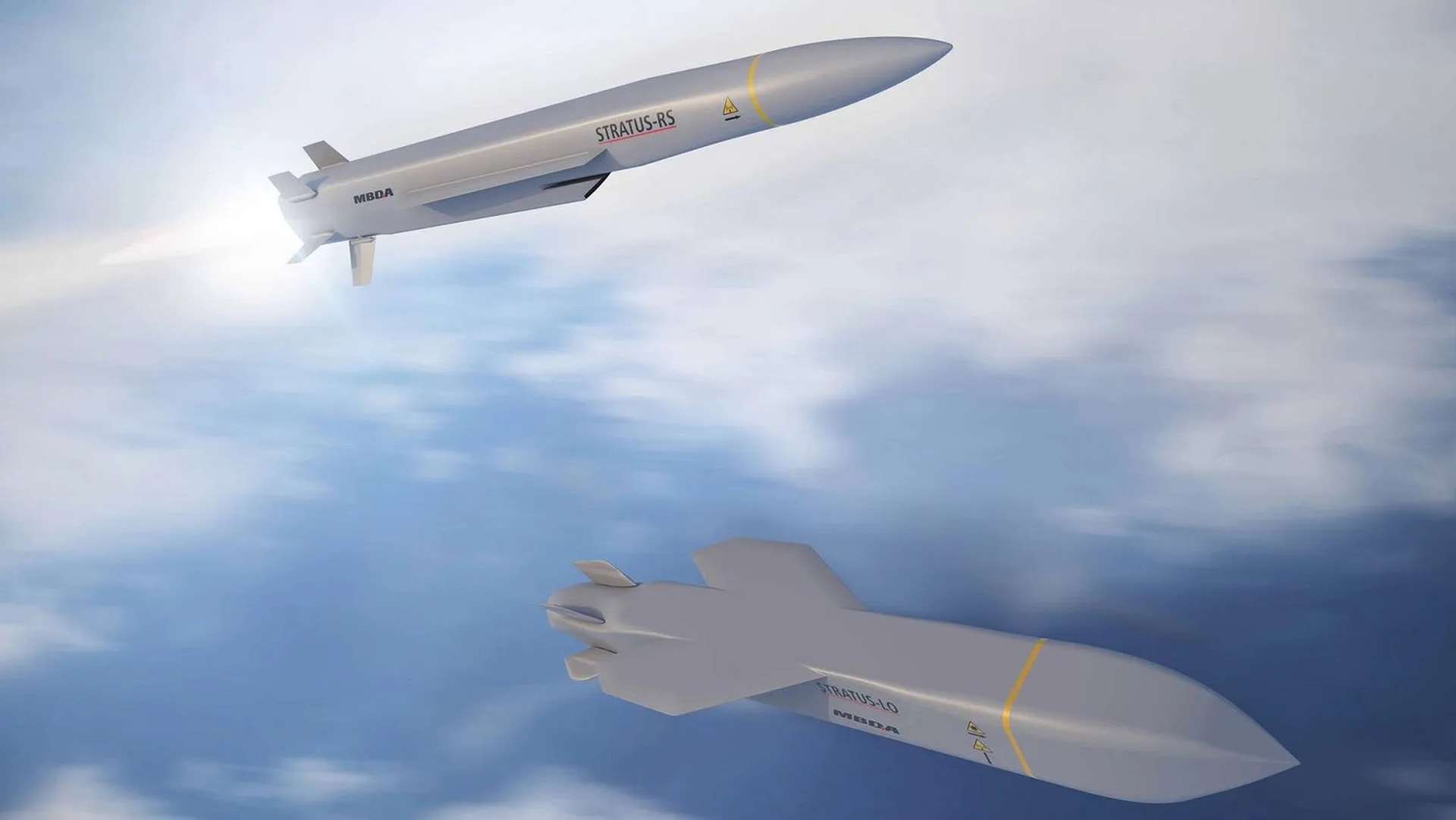
What is Stratus? Inside UK's long-range cruise missile as first tests planned for 2028

The first Stratus missile is scheduled for testing in 2028, a defence minister has said, as the UK Armed Forces look to improve their deep strike precision capability.
Defence Readiness and Industry Minister Luke Pollard said that the missile has finished testing on various elements of the missile, including its airframe design, engine, warhead and seeker performance.
"The Stratus programme continually advances the technology readiness levels and system maturity through a combination of modelling, sub-system testing and trials," Mr Pollard said in reply to a question from shadow defence secretary James Cartlidge.
Separately, Mr Pollard said that the missile will "soon" enter its demonstration phase, during which prototypes will be developed to analyse the missile's technical capabilities and operational effectiveness in response to a question posed by Ben Obese-Jecty, a Conservative MP.
The missile system will be added to RAF Typhoons, Rafale and naval platforms, such as the Royal Navy's Type 26 frigate.
BFBS Forces News has taken a closer look at the missile and its capabilities.
What are the Stratus missiles?
The Stratus, which is being created by the defence company, MBDA, is actually two missiles: Stratus LO, the low-observable missile, and Stratus RS, the rapid strike variant.
MBDA has said that both types can be launched by themselves, together or partnered with different systems.
The Stratus missiles are part of a greater effort, led by the UK and Europe, to build the next generation of missiles after seeing the success of the so-called "deep precision strike" missiles in the Ukraine war, as these missiles have allowed Kyiv to hit targets far beyond the frontline.
The cost of a single missile has not been disclosed. However, the Defence Investment Plan, published in June, said that the UK government will invest £3bn towards deep precision strike weapons by 2030.
What are their capabilities?
The missiles will be used for various mission types, including deep strike, anti-ship, SEAD/DEAD (suppression/destruction of enemy air defence), and anti-HVAA (high-value air asset), according to MBDA.
The Stratus RS will be used in the anti-ship and SEAD missions, while the Stratus LO will be utilised as a bunker killer and for surface targets.
The missiles' key capabilities are their high speed, agility, and stealth.
Asked about the range of the missiles, Mr Pollard said: "The range is significantly greater than the Storm Shadow and Harpoon weapons that it is replacing."
Which other countries are involved?
France, through the Lancaster House Accords, is involved in the development of the missiles, as is Italy.
Related topics
Join Our Newsletter