From bouncy castles to the battlefield: Ukraine deploying inflatable AFVs
While the conflict in Ukraine has brought huge advances in things like drone technology, some more old-fashioned ways of waging war are also being used.
One of them is the use of decoys designed to fool the enemy – a trick that goes back to the First World War.
I've been speaking to one of the world's foremost experts in decoys and deception about the use of these dummy weapons in Ukraine.
A master of deception
A video released by Russia shows a drone homing in on a Ukrainian M270 multiple launch rocket system. Moscow makes much of these strikes, but they are not all that they seem.
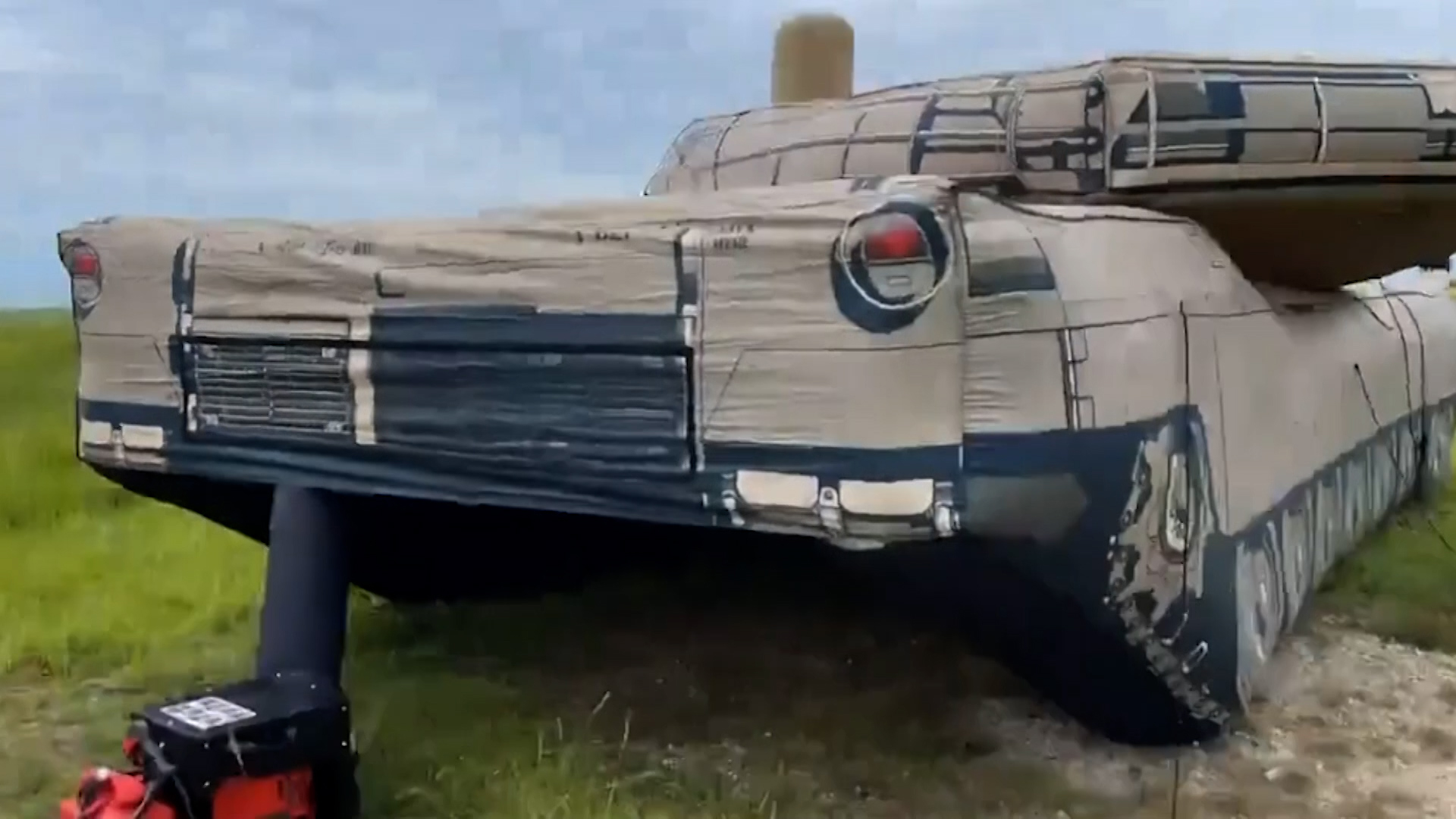
That rocket launcher is something Victor Talanov designed – and it wasn't a multimillion-dollar weapon system, just a relatively cheap inflatable decoy.
Viktor started his career designing inflatable sports equipment, hot air balloons and even children's bouncy castles.
But he soon found his skills were in high demand from armed forces around the world.
He's made inflatable decoys of Soviet equipment for both the British and US armies.
Sowing the seeds of doubt
In Ukraine, drones have made it far easier to spot decoys – but in many ways that's made these fakes even more effective.
While some decoys see an enemy firing off ammunition at a fake target, wasting the ammo, it's also beneficial if a Russian drone operator recognises a potential target as being a fake.
Viktor explained how his decoys can cause disruption and doubt, especially if the decoy is moved to a new location.
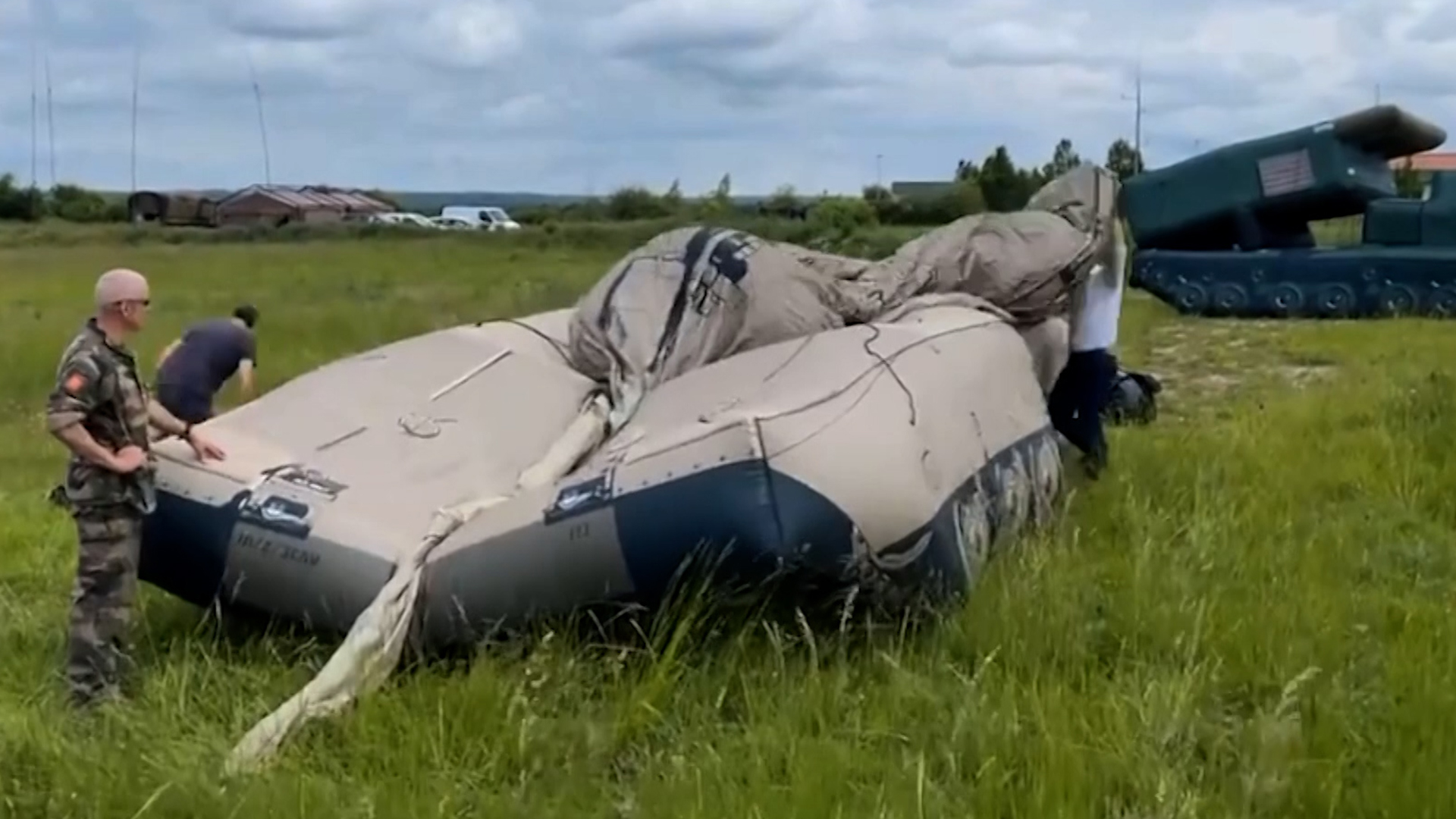
Most of his decoys can be deployed and inflated in minutes, minimising the time personnel are exposed.
They're also easy to move, so they can be repositioned, adding to the realism.
But it doesn't stop there, as his designs also incorporate a heat source, giving his fakes an infra-red signature that on radar resembles the real thing.
Copycat tactics
Of course, the Russians are doing this too. They've used inflatable jet fighters at some of their northern airfields as well as fake T-72 tanks in Ukraine.
China also makes decoys, but they're not considered that convincing.
In Ukraine, decoy drones have started to appear – and even mock Starlink terminals.
So what's next in the deception – how can these decoys be improved?
Well, using smoke machines to produce fake exhaust fumes is one way, and the inflatable dummies could also be fitted with electronic equipment making false transmissions.
In Ukraine, these decoys are playing a vital part in forcing Russia to expend valuable ammunition while at the same time protecting soldiers' lives.
This is proof that even in the age of the digital battlefield, old-fashioned decoys and deception still have a place.
Join Our Newsletter